

...
Daily Current affairs 27 June 2026

Daily Current Affairs 27-June-2026

Share this Post

AN OLD BOND STRENGTHENING INDIAN OCEAN STRATEGY

TOPIC: (GS2) INTERNATIONAL RELATIONS: THE HINDU

Prime Minister Narendra Modi is visiting Seychelles as the Guest of Honour at its 50th Independence Day celebrations (June 29, 2026), reaffirming India’s strategic and cultural partnership in the Western Indian Ocean.

Historical & Demographic Linkages

  • Early Migration (1770): First settlers included five Indians; today Persons of Indian Origin (PIOs) form ~5% of Seychelles’ population (~6,000 citizens).
  • Communities: Predominantly Gujarati and Tamil, with ~9,000 NRIs employed in construction, retail, and professional services.
  • Colonial Connection: Seychelles was once administered under the Bombay Presidency, facilitating trade and migration.

Diplomatic Relations

  • Established in 1976 (year of independence).
  • Indian Navy’s INS Nilgiri participated in the first Independence Day; tradition continues with Indian Armed Forces contingents.
  • PM Modi’s MAHASAGAR vision (Mutual and Holistic Advancement for Security and Growth Across Regions) places Seychelles as a key maritime partner.
  • Past visits: Indira Gandhi (1981), Modi (2015), now 2026.

Cultural Ties

  • Diaspora-driven cultural exchanges.
  • Mahatma Gandhi statue (2022) unveiled at Peace Park, Victoria, alongside Nelson Mandela.
  • Recognition through Pravasi Bharatiya Samman Awards (Justice D. Karunakaran, 2015; V. Ramadoss, 2006).

Development Partnership

  • India provides grants, concessional credit, and training.
  • Over 1% of Seychellois trained in India under ITEC and ICCR programmes.
  • $175 million Special Economic Package (2026) announced for infrastructure, healthcare, and education.
  • Medical tourism: Seychellois patients often treated in Chennai hospitals.

Strategic Significance in Indian Ocean

  • Geostrategic Location: Near Africa, Middle East, and Asia — vital for maritime security.
  • Security Cooperation: Joint efforts against piracy, illegal fishing, and seaborne terrorism.
  • Counterbalance to China: India’s presence in Seychelles strengthens its role in the Indian Ocean Region (IOR).
  • Global South Strategy: Seychelles is a cornerstone in India’s outreach to small island developing states (SIDS).

Conclusion

India–Seychelles ties blend diaspora, development, and strategic cooperation, making Seychelles a crucial partner in India’s Indian Ocean vision.

SUPREME COURT PUSHES STATES TO BUILD TRAUMA CARE SYSTEMS

TOPIC: (GS2) POLITY: THE HINDU

The Supreme Court has directed states to establish a uniform trauma care system, highlighting that none of them have fully implemented the five essential measures needed to save lives during the Golden Hour after road accidents.

Road Safety & Trauma Care in India

  • India records nearly 1.77 lakh road fatalities annually (MoRTH data).
  • The Golden Hour — first 60 minutes post-crash — is critical for survival.
  • Weak post-crash response systems remain a major cause of preventable deaths.
  • Petition by Save LIFE Foundation led to judicial intervention.

Supreme Court’s Mandate

  • States must ensure:
    • Common emergency number (integration into 112).
    • GPS-equipped ambulances for real-time tracking.
    • Good Samaritan protection to encourage public help.
    • Trauma registry for treatment audits.
    • Rescue protocols for safe extraction and transfer.

Current Status (Based on SC Data)

  • Emergency Number Integration: Most states have not fully merged services into 112.
  • Good Samaritan System: Only 8 states have grievance redressal mechanisms.
  • Trauma Registry: 22 states lack it; Tamil Nadu is relatively advanced.
  • Rescue Protocols: Only 17 states have standard procedures.
  • GPS Ambulances: Coverage is partial; dashboards often not public.

Comparative Insights

  • Tamil Nadu: Real-time trauma registry and detailed rescue protocol.
  • Uttar Pradesh: Highest fatalities; lacks full integration of medical helplines.
  • Global Practices: Countries like the US and UK maintain national trauma registries and public ambulance dashboards, ensuring accountability.
  • NITI Aayog–AIIMS Report (2021): 30% of trauma deaths in India linked to delays in emergency care.

Significance

  • Road safety is not just about better roads or driving discipline but also about post-crash response.
  • Key questions:
    • Can victims be located quickly?
    • Can ambulances reach on time?
    • Will bystanders help without fear?
    • Can treatment outcomes be tracked?

Conclusion

Without a functioning trauma care system, India cannot meaningfully reduce its road fatality crisis.

DRUG CONTROL IN INDIA AND NCB ANNUAL REPORT 2025

TOPIC: (GS2) POLITY: THE HINDU

Union Home Minister Amit Shah released the Vision Document on Drug Control (2026–2029) and the NCB Annual Report 2025 at the 10th ApexLevel NCORD meeting, outlining India’s new antidrug strategy and highlighting the scale of the narcotics threat.

Vision Document 2026–2029

  • Foundation: Built on detect, disrupt, destroy.
  • Network Focus: Shift from chasing carriers to dismantling cartels, financiers, handlers, and facilitators.
  • Mission Mode: Targeting 100 major interstate and transnational cartels through intelligencedriven operations.
  • WholeofGovernment: Over 40 ministries, states, districts, civil society, and citizens under one framework.

Commitments

  • Legal Reform: Amend NDPS Act & Rules to close loopholes; adopt reformative approach for addicts.
  • Speedy Justice: Exclusive NDPS courts for faster convictions.
  • Financial Probe: Mandatory financial investigations; use PITNDPS Act to attach assets.
  • Global Reach: Pursue traffickers abroad via Red Corner Notices.
  • Technology: AI profiling, antidrone systems, container scanning.
  • Synthetic Drugs: Focus on methamphetamine, mephedrone; tighter precursor controls.

NCB Annual Report 2025 Highlights

  • Scale: 1.48 lakh cases; 1,200+ tonnes seized (plantbased, synthetic, diverted pharma, precursors).
  • Supply Shift: Myanmar overtakes Afghanistan as India’s main opium source.
  • Eastern Front:
    • Manipur corridor (NH102) → heroin & meth tablets.
    • Champhai corridor (Mizoram) → routes via Aizawl to Assam’s Barak Valley.
    • Linked to arms smuggling & insurgent financing.
  • Western Front:
    • Drone smuggling in Punjab rose 100fold (2021–2025).
    • Afghan stockpiles still feed routes via Punjab, Rajasthan, Gujarat coasts.
  • Digital Trafficking: Telegram, WhatsApp, Signal used for advertising & crypto payments.
  • Emerging Threats:
    • Nitazenes (synthetic opioids, 500× stronger than heroin).
    • Nexus of trafficking with organised violence.

Comparative & Policy Dimensions

  • Global Context: Golden Triangle (Myanmar) now a polydrug hub; mirrors UNODC findings.
  • Domestic Policy: Aligns with National Policy on Narcotic Drugs (MoRTH, MHA) and Digital India surveillance initiatives.
  • Security Angle: Drug trade linked to terror financing and insurgency in border states.
  • Societal Impact: NDPS reforms aim at rehabilitation over punishment for addicts, echoing WHO and UNODC recommendations.

Conclusion

India’s new drug control vision marks a shift from piecemeal enforcement to systemic dismantling of cartels, combining law, technology, and global cooperation to secure both society and national security.

MAHARISHI SUSHRUTA

TOPIC: (GS1) INDIAN ART AND CULTURE: THE HINDU

A bronze statue of Maharishi Sushruta, revered as the Father of Surgery, was recently unveiled at the Royal College of Surgeons of Edinburgh, UK, honouring his global legacy in medicine.

Life and Background

  • Lived between 600–1000 BCE.
  • Disciple of Lord Dhanvanthri, the deity of Ayurveda.
  • Practised and taught medicine in Varanasi.
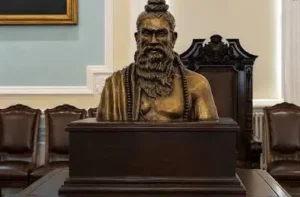
Maharishi Sushruta

Contributions

  • Authored the Sushruta Samhita — 184 chapters covering surgery, medicine, toxicology, pediatrics, and pharmacology.
  • Listed 300+ surgical procedures and 120+ instruments.
  • Detailed descriptions of wounds, fractures, dislocations, and treatments.
  • Documented 100+ medicinal plants with properties and uses.

Surgical Innovations

  • Rhinoplasty (nose reconstruction) — earliest record of cosmetic surgery.
  • Lithotomy — removal of bladder stones.
  • Obstetric procedures — including removal of dead fetus.
  • Introduced cadaver dissection for anatomy study.
  • Advocated herbal anaesthetics and postoperative care.

Global Influence

  • His methods shaped reconstructive surgery, orthopaedics, ophthalmology worldwide.
  • Standards of documentation, training, and practical experience continue to guide modern surgical education.
  • UNESCO and WHO recognise Ayurveda’s contributions, with Sushruta as a central figure.

Conclusion

Maharishi Sushruta’s pioneering work laid the foundation of surgical science, making him a timeless icon of India’s medical heritage.

CCPA ACTION AGAINST MISLEADING FOOD LABELS

TOPIC: (GS3) ENVIRONMENT: THE HINDU

The Central Consumer Protection Authority (CCPA) fined two food companies ₹1 lakh each for misleading “100%” claims on product packaging and advertisements, strengthening consumer rights under the Consumer Protection Act, 2019.

Consumer Protection Framework

  • Governed by the Consumer Protection Act, 2019.
  • CCPA ensures:
    • Protection of consumer rights.
    • Action against misleading advertisements.
    • Recall/discontinuation of deceptive promotions.
  • Section 2(28): Defines misleading ads.
  • Section 2(47): Defines unfair trade practices.
  • Guidelines (2022): Ads must be truthful, verifiable, and not misleading.
  • FSSAI Advisory (2023): Warned against misuse of “100%” claims.

Case Studies

Case 1: “100% Atta Bread”

  • Company claimed 100% whole wheat bread.
  • Actual content: 87% wheat flour.
  • CCPA held that ordinary consumers expect 100% atta, not partial.
  • Combined claims like “Zero Maida” created false impressions.

Case 2: “100% Tender Coconut Water” & Juices

  • Products reconstituted from concentrates (9.6% coconut water, 4–16% fruit pulp).
  • Misleading health claims: “Combats Virus”, “Kills Fatigue”.
  • CCPA ruled that fineprint disclaimers cannot justify bold misleading labels.

Legal Principle

  • Compliance with FSSAI norms ≠ safe harbour under consumer law.
  • Ads judged from the perspective of a reasonable consumer.
  • Shift from caveat emptor (buyer beware)caveat venditor (seller beware).

Significance

  • Reinforces frontofpack honesty in food labelling.
  • Clarifies that regulatory compliance under one law cannot excuse misleading conduct under another.
  • Likely to impact the entire food & beverage industry, where terms like “100%”, “natural”, “pure”, and “healthy” are common marketing tools.
  • Supports India’s broader consumer rights agenda under Digital India & fair trade practices.

Conclusion

The CCPA’s orders mark a strong step towards truthful advertising, ensuring that consumer trust is protected against exaggerated “100%” claims.

GOLDEN LANGUR

TOPIC: (GS3) ENVIRONMENT: THE HINDU

Seven endangered Golden Langurs (Trachypithecus geei) were recently rescued from traffickers and released in Sikhna Jwhwlao National Park, highlighting conservation challenges in Northeast India.

Golden Langur

  • Known as Gee’s Golden Langur, an Old World monkey species.
  • Easily identified by its golden fur, which changes shade with seasons.
  • Young ones are almost pure white in color.
  • Arboreal and diurnal, living mainly in the upper forest canopy.
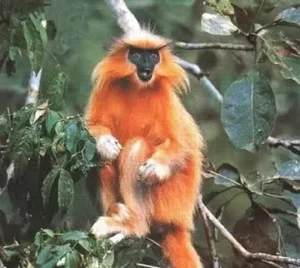
Golden Langur

Distribution & Habitat

  • Restricted to a narrow corridor: western Assam and southern Bhutan.
  • Bounded by: Bhutan foothills (N), Manas river (E), Sankosh river (W), Brahmaputra river (S).
  • Found in moist evergreen, tropical deciduous, riverine forests, and savannas.
  • Elevation range: sea level in Assam → 3000 m in Bhutan.

Conservation Status

  • IUCN: Endangered.
  • CITES: Appendix I (highest protection in trade).
  • Wildlife Protection Act, 1972: Schedule I (legal protection in India).

Significance & Threats

  • Indicator of forest health in Assam–Bhutan landscape.
  • Threats: habitat loss, fragmentation, trafficking, and human disturbance.
  • Example: Manas Biosphere Reserve is a key stronghold for the species.
  • Conservation requires crossborder cooperation between India and Bhutan.

Conclusion

The Golden Langur embodies the fragile biodiversity of Northeast India, and its survival depends on strict protection, habitat restoration, and regional collaboration.

RISING DRUG TRAFFICKING FROM MYANMAR

TOPIC: (GS3) SEQURITY: THE HINDU

The Narcotics Control Bureau (NCB) Annual Report 2026 highlights that after Afghanistan’s 2022 drug ban, Myanmar has emerged as a major opium source, with India’s Manipur corridor becoming the most direct entry point for narcotics into the country.

Shift in Global Supply

  • Afghanistan: Taliban’s 2022 ban reduced opium output by 93%, but stockpiles (~13,200 tonnes) still fuel trafficking.
  • Myanmar: Poppy cultivation expanded by 56% (2021–23), reaching 45,200 hectares.
  • Golden Triangle: Now a hub for opiates and methamphetamine (Yaba tablets), controlled by ethnic armed groups in Shan State.

Eastern Border Corridors

  • Manipur Corridor (NH102): Primary land route for heroin and meth tablets.
  • Champhai Corridor (Mizoram): Drugs routed via Aizawl towards Assam’s Barak Valley.
  • Nagaland: Increasing exposure due to porous border and Free Movement Regime (FMR).
  • Seizures (2025): Mizoram (1,477 kg stimulants), Manipur (535 kg), showing frontline vulnerability.
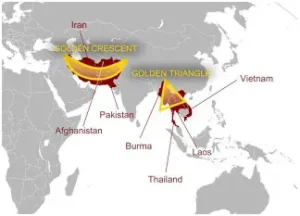
Rising Drug Trafficking From Myanmar

Western Border & Drone Trafficking

  • Despite Afghan decline, trafficking persists via Pakistan land frontier and maritime routes (Gujarat, Maharashtra coasts).
  • Drone smuggling in Punjab:
    • 3 cases (2021) → 305 cases (2025).
    • Seizures: 468 kg narcotics in 2025, Punjab alone accounted for 58% of national seizures.
  • UAVs bypass traditional border controls, showing operational maturity of cartels.

Broader Implications

  • Internal Security: Drug trade linked to arms smuggling and insurgent financing in Northeast.
  • Public Health: Rising addiction risks in border states.
  • Technology Challenge: UAVs and encrypted apps complicate enforcement.
  • Policy Dimension: Need for stronger border fencing, surveillance, and regional cooperation with Myanmar.
  • Global Context: UNODC notes Myanmar’s Golden Triangle as a growing polydrug hub, impacting South Asia.

Conclusion

India’s fight against narcotics now faces a dual front Myanmar’s eastern corridors and Pakistan’s droneenabled western routes demanding integrated security, health, and diplomatic strategies.


Write a Review

Your email address will not be published. Required fields are marked *

Seraphinite AcceleratorOptimized by Seraphinite Accelerator
Turns on site high speed to be attractive for people and search engines.