
On November 10, India’s Directorate General of Foreign Trade (DGFT) prohibited exports of lithium-ion battery black mass to support domestic mineral recovery.
What Is Black Mass?
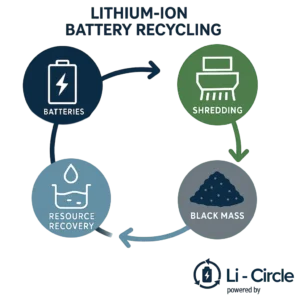
- Definition: A powder-like material obtained by shredding used lithium-ion batteries and manufacturing scrap.
- Composition: Contains valuable lithium, cobalt, nickel, manganese and graphite.
- Importance: Further chemical processing can recover materials for manufacturing new batteries.
- Urban mining: Recovering minerals from discarded products instead of extracting fresh mineral deposits.
Why Has India Restricted Exports?
- Domestic availability: Retains valuable recycling material for Indian processing industries.
- Import substitution: Reduces dependence on overseas suppliers of battery raw materials.
- Industrial growth: Encourages investment in refining and battery manufacturing.
- Strategic security: Supports electric vehicles, renewable energy storage and critical mineral supply chains.
Global Lithium and Battery Industry
- Largest lithium resources: The United States Geological Survey identifies the United States among the largest holders of identified lithium resources; Bolivia also has exceptionally large deposits.
- Largest lithium reserves: Chile has historically led in economically recoverable reserves.
- Leading lithium producer: Australia is a major global producer.
- Largest battery manufacturer: China dominates global lithium-ion battery manufacturing capacity and mineral processing.
- Example: Chinese companies such as CATL and BYD are major battery producers.
Challenges
- Limited refining: Mechanical shredding is easier than advanced chemical recovery.
- High investment: Processing plants require expensive technology and reliable supplies.
- Weak incentives: Low-priced Extended Producer Responsibility (EPR) certificates discourage efficient recycling.
- Environmental risks: Improper handling may cause fires, toxic contamination and landfill pollution.
- Informal recycling: Unsafe practices reduce material recovery and worker protection.
Government Initiatives
- Battery Waste Management Rules, 2022: Introduced EPR obligations for battery producers.
- National Critical Mineral Mission: Supports secure mineral supplies, recycling and domestic capabilities.
- Production-Linked Incentive Scheme: Encourages Advanced Chemistry Cell battery manufacturing.
- DGFT restrictions: Aim to strengthen domestic availability of black mass.
Way Forward
- Establish specialised refining plants and safe collection networks.
- Introduce cost-reflective EPR certificate pricing and digital waste tracking.
- Encourage research into high-recovery technologies and battery reuse.
- Develop separate recovery incentives for rare-earth magnets in electronic waste.
- Strengthen international mineral partnerships and environmental safeguards.
Conclusion
India must combine recycling incentives, advanced refining and responsible waste management to turn discarded batteries into a reliable source of strategic minerals.
The leaders of the Quadrilateral Security Dialogue (QUAD) — India, the US, Japan and Australia — are expected to meet in Manila, Philippines, in November 2026.
What Is QUAD?
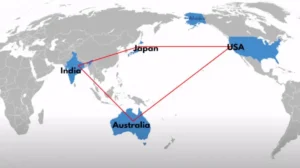
- Members: India, United States, Japan and Australia.
- Origin: Cooperation began after the 2004 Indian Ocean tsunami; the diplomatic grouping emerged in 2007.
- Revival: Re-established in 2017 amid growing Indo-Pacific security concerns.
- First Leaders’ Summit: Held virtually in March 2021.
- Nature: An informal strategic partnership, not a military alliance or treaty-based organisation.
- Objective: Promote a free, open, inclusive and rules-based Indo-Pacific.
Why Is QUAD Important?
- Maritime security: Supports freedom of navigation and peaceful settlement of maritime disputes.
- Regional stability: Addresses concerns arising from China’s expanding presence in the Indo-Pacific.
- Economic security: Encourages resilient supply chains and trusted technology partnerships.
- Public goods: Promotes cooperation in disaster relief, healthcare, infrastructure and emerging technologies.
- ASEAN centrality: Recognises Southeast Asian countries as important partners in regional security.
Major Challenges Facing QUAD
- US policy uncertainty: Washington’s changing priorities may weaken long-term strategic commitments.
- China’s assertiveness: Disputes in the South China Sea and Taiwan Strait increase regional tensions.
- Different national interests: Members maintain distinct economic and diplomatic relationships with China.
- Institutional limitations: QUAD lacks a permanent secretariat and binding decision-making structure.
- Strategic differences: India follows strategic autonomy, while Japan and Australia maintain formal US security alliances.
Recent Developments
- Maritime cooperation: The article highlights the Indo-Pacific Maritime Surveillance Collaboration framework launched in May 2026.
- Diplomatic engagement: Foreign ministers continued meetings despite uncertainty surrounding the leaders’ summit.
- JAI cooperation: Japan, Australia and India are strengthening defence coordination independently.
- Manila summit: Holding the proposed meeting alongside ASEAN would reinforce Southeast Asia’s strategic importance.
Significance for India
- Indian Ocean security: Strengthens maritime awareness and cooperation against emerging threats.
- Act East Policy: Deepens engagement with Southeast Asian and Pacific partners.
- Strategic autonomy: Allows India to cooperate with multiple powers without entering a military alliance.
- Economic opportunities: Supports critical technologies, infrastructure investment and supply-chain diversification.
Way Forward
- Institutionalise regular summits and improve implementation of agreed initiatives.
- Expand maritime surveillance, disaster response and technology cooperation.
- Strengthen ASEAN partnerships while respecting sovereignty and international law.
- Maintain diplomatic dialogue with China to prevent unnecessary escalation.
Conclusion
QUAD’s long-term relevance depends on sustained political commitment, practical cooperation and a shared vision of a peaceful, inclusive and rules-based Indo-Pacific.
Israel’s Rafael Advanced Defense Systems has unveiled the SUPER ICE cruise missile, reportedly equipped with a 454 kg warhead.
What Is the SUPER ICE Missile?
- Developer: Rafael Advanced Defense Systems, an Israeli defence technology company.
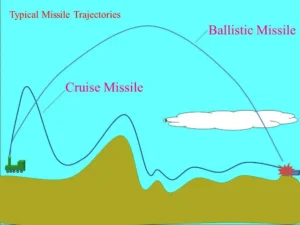
- Type: Long-range cruise missile designed for precision strikes against important military targets.
- Missile family: Related to the Sea Breaker, introduced in 2021, and ICE BREAKER, introduced in 2023.
- Purpose: Enables stand-off attacks, allowing launch platforms to remain away from defended targets.

Major Technical Features
- Warhead: Carries a 454 kg payload, reportedly four times that of ICE BREAKER.
- Compatibility: Designed around the MK83-class aerial bomb warhead.
- Launch platforms: Can be deployed from aircraft, ships and ground-based systems.
- Navigation: Uses autonomous guidance and low-altitude terrain-following flight.
- Target identification: Electro-optical sensors compare captured images with stored reference imagery.
- Range: Exact figures remain undisclosed; ICE BREAKER has a reported range of 300 km.
- Speed: Its precise speed has not been publicly disclosed.
Strategic Significance
- Precision warfare: Advanced sensors improve target identification and reduce dependence on satellite navigation.
- Operational flexibility: Multiple launch platforms support different military missions.
- Defence challenges: Low-flying cruise missiles increase demands on radar surveillance and air-defence systems.
- Regional security: Such weapons may influence deterrence and military competition in West Asia.
Relevance for India
- Defence modernisation: Highlights the importance of indigenous precision-strike technologies, including BrahMos.
- Self-reliance: Reinforces the need for domestic guidance systems and integrated air defence.
Conclusion
SUPER ICE demonstrates how precision guidance, heavier payloads and flexible deployment are reshaping modern missile warfare.
The Cabinet Committee on Economic Affairs approved ₹3,230 crore for developing the Yuge Yugeen Bharat Museum in New Delhi.
About the Museum
- Location: North Block and South Block, New Delhi.
- Nodal Ministry: Ministry of Culture, Government of India.
- Project: Part of the Central Vista Redevelopment Project.
- Objective: Showcase India’s historical continuity, cultural diversity and artistic achievements.
- Area: Approximately 1.79 lakh square metres of proposed built-up space.

Major Features
- Adaptive reuse: Converts heritage government buildings into public cultural spaces.
- Modern technology: Uses interactive displays and immersive experiences.
- Thematic galleries: Cover architecture, astronomy, mathematics, languages, spirituality and trade.
- Collections: Around 18 lakh objects identified from national, state, ASI and private collections.
Implementation
- Timeline: Phased development from FY 2026–27 to FY 2030–31.
- First gallery: The Adornment gallery is expected to open in late 2027.
- International inspiration: Draws from France’s Grands Projets cultural development initiative.
Significance
- Cultural preservation: Protects tangible and intangible heritage.
- Tourism: Strengthens India’s cultural tourism and international image.
- Education: Promotes awareness of indigenous knowledge systems.
- Employment: Creates opportunities in conservation, research and tourism.
Way Forward
- Ensure scientific conservation, accessibility and accurate historical interpretation.
- Encourage regional representation, community participation and transparent collection management.
Conclusion
The Yuge Yugeen Bharat Museum can become a bridge between India’s civilisational past and future generations through inclusive, technology-driven heritage preservation.
Three Maharashtra beaches — Ladghar, Guhagar and Shrivardhan — reportedly received Blue Flag certification for 2026–27.
What Is Blue Flag Certification?
- Definition: An internationally recognised voluntary eco-label for beaches, marinas and sustainable tourism boats.
- Awarding body: Foundation for Environmental Education (FEE), headquartered in Copenhagen, Denmark.
- Origin: Started in France in 1985 and subsequently expanded worldwide.
- Indian agency: Centre for Environment Education (CEE) serves as the National Operator.
Certification Criteria
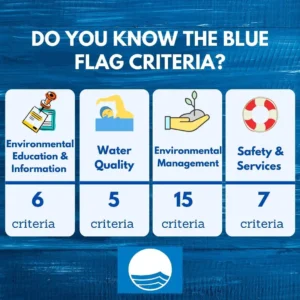
Beaches are assessed against 33 criteria under four categories:
- Environmental education: Public awareness, coastal information and responsible tourism.
- Water quality: Regular testing to ensure safe bathing conditions.
- Environmental management: Waste disposal, sanitation and ecosystem protection.
- Safety and services: Lifeguards, emergency facilities and visitor accessibility.
Importance for India
- Environmental protection: Encourages cleaner coastlines and reduced marine pollution.
- Blue economy: Promotes sustainable employment in tourism and coastal services.
- Public health: Improves sanitation and recreational water safety.
- Local governance: Strengthens cooperation among Panchayats, municipalities and coastal authorities.
Government Initiatives
- BEAMS: Beach Environment and Aesthetics Management Services promotes sustainable beach management.
- Swachh Bharat Mission: Supports sanitation and waste-management infrastructure.
- Coastal Regulation Zone norms: Help protect sensitive coastal ecosystems.
Conclusion
Blue Flag certification can transform India’s beaches into models of environmental protection, responsible tourism and community-led coastal development.