Table of Contents
ToggleETHANOL BLENDING IN PETROL
TOPIC: (GS3) ENVIRONMENT: INDIAN EXPRESS
Why in News?
Petrol samples collected in Karnataka reportedly contained ethanol concentrations of up to 31.2%, exceeding the prescribed 20% ethanol-blending level (E20).
About Ethanol blending
- Ethanol blending involves mixing ethanol, a renewable alcohol-based fuel, with petrol to reduce dependence on imported crude oil.
- India promotes E20 petrol, containing 20% ethanol and 80% petrol, under its Ethanol Blended Petrol (EBP) Programme.
- However, excessive blending can create problems for vehicles not designed for higher ethanol concentrations.
Key Findings of the Report
- The Karnataka Food, Civil Supplies and Consumer Affairs Department collected petrol samples from different districts.
- Samples were obtained from outlets associated with IOCL, HPCL, BPCL, Nayara Energy and Shell.
- Reported ethanol concentrations included:
- IOCL: Up to 31.2%.
- HPCL: Up to 30.5%.
- BPCL: Up to 26.5%.
- Nayara Energy: Up to 26.1%.
- Shell: Up to 25.5%.
- The State government raised concerns over testing procedures, transparency and compliance with prescribed fuel standards.
- The report also noted that the oil companies questioned the testing methodology.
Significance of Ethanol Blending
- Energy Security: Reduces dependence on imported petroleum.
- Environmental Benefits: Can reduce certain tailpipe emissions and support lower lifecycle greenhouse gas emissions.
- Farmers’ Income: Creates demand for sugarcane, maize and other ethanol feedstocks.
- Rural Economy: Encourages investment in distilleries and biofuel industries.
- Foreign Exchange Savings: Helps reduce expenditure on crude oil imports.
Concerns Over Excessive Ethanol Blending
- Vehicle Compatibility: Older vehicles may not be designed for ethanol concentrations above E20.
- Fuel Efficiency: Ethanol has lower energy content than petrol, potentially reducing mileage.
- Maintenance Costs: Higher concentrations may affect incompatible fuel-system components.
- Consumer Transparency: Motorists may not know the actual ethanol percentage.
- Regulatory Concerns: Differences in test results can weaken consumer confidence.
- Environmental Trade-offs: Feedstock cultivation may increase pressure on water and agricultural resources.
Government Initiatives
- National Policy on Biofuels, 2018: Promotes biofuel production and blending.
- Ethanol Blended Petrol Programme: Encourages ethanol use in petrol.
- E20 Rollout: Supports the transition towards petrol containing 20% ethanol.
- Second-Generation Ethanol: Encourages ethanol production from agricultural residues and other cellulosic materials.
Conclusion
India must combine its ethanol-blending ambitions with strict fuel-quality monitoring, vehicle compatibility standards and consumer transparency to ensure a safe and sustainable energy transition.
SUPREME COURT CLARIFIES OBC CREAMY LAYER VERDICT
TOPIC: (GS2) POLITY: PIB
Why in News?
The Supreme Court has clarified that its March 11, 2026 judgment on determining the OBC creamy layer will not affect previously completed recruitment and service allocations.
Creamy layer principle
- The creamy layer principle excludes socially advanced sections of Other Backward Classes (OBCs) from reservation benefits.
- It aims to ensure that affirmative action reaches genuinely disadvantaged communities.
- The Supreme Court’s clarification addresses concerns regarding the retrospective application of reservation-related judgments.
Background of the Issue
- A 1993 Office Memorandum excluded certain categories from OBC reservation benefits.
- The controversy involved whether parental salary and agricultural income could be considered for determining creamy layer status.
- In its March 2026 judgment, the Supreme Court addressed the criteria used to identify the creamy layer.
- The judgment raised concerns about its possible impact on earlier recruitment examinations and service allocations.
Key Clarifications by the Supreme Court
- No Retrospective Application: The judgment does not require reopening completed selections.
- Protection of Appointments: Previously appointed candidates will not lose their positions merely because of the judgment.
- Seniority and Promotions: Existing service allocations, seniority and promotional prospects remain unaffected.
- CSE 2025: The Court clarified that its ruling did not direct a fresh allocation of services through the Civil Services Examination 2025.
- Government’s Role: The Centre may formulate a new creamy layer policy consistent with the Constitution.
Constitutional Framework
- Article 14: Guarantees equality before the law.
- Article 15(4): Enables special provisions for socially and educationally backward classes.
- Article 16(4): Permits reservation in public employment for inadequately represented backward classes.
- Article 340: Provides for commissions to investigate the conditions of backward classes.
Important Judicial Developments
- Indra Sawhney v. Union of India (1992): Upheld OBC reservation and established the creamy layer exclusion principle.
- Ashoka Kumar Thakur v. Union of India (2008): Reinforced creamy layer exclusion in OBC reservations in educational institutions.
Way Forward
- Establish transparent and constitutionally valid creamy layer criteria.
- Ensure uniform implementation across government departments.
- Protect legitimate expectations arising from completed selections.
- Periodically review reservation policies using reliable socioeconomic data.
Conclusion
The Supreme Court’s clarification balances social justice with administrative certainty by protecting completed appointments while permitting constitutional reform of OBC creamy layer criteria.
ASSET MONETISATION IN INDIA
TOPIC: (GS3) ECONOMY: INDIAN EXPRESS
VWhy in News?
An Inter-Ministerial Group (IMG) has recommended asset monetisation proposals worth over ₹1,100 crore for government approval.
About Asset Monetisation
- Asset Monetisation refers to generating revenue by commercially utilising underused or surplus public assets.
- It helps the government mobilise resources for infrastructure development, economic growth and better public asset management.
- Unlike outright privatisation, monetisation may allow the government to retain ownership while transferring usage or operating rights for a specified period.
Types of Assets Eligible for Monetisation
- Land and Buildings: Surplus properties of CPSEs and government departments.
- Infrastructure Assets: Highways, pipelines, transmission networks and telecom towers.
- Financial Assets: Equity shares, debt instruments and structured financial assets.
- Non-Core Assets: Properties not essential for the primary operations of government enterprises.
Institutional Framework
A. Inter-Ministerial Group (IMG)
- Examines monetisation proposals and recommends suitable projects.
- Includes representatives from concerned ministries and departments.
- Evaluates financial feasibility, legal issues and asset valuation.
B. Alternative Mechanism (AM)
- A Cabinet-delegated decision-making body.
- Includes the Union Finance Minister, Road Transport Minister and concerned Administrative Minister.
- Considers proposals recommended by the IMG.
C. National Land Monetisation Corporation (NLMC)
- A wholly government-owned company under the Department of Public Enterprises, Ministry of Finance.
- Facilitates monetisation of surplus land and non-core assets.
- Undertakes valuation, due diligence, transaction planning and competitive bidding.
National Monetisation Pipeline 2.0
- Announced for preparation in the Union Budget 2025–26.
- Provides a roadmap for monetising operational public infrastructure assets.
- Encourages private investment and sustainable infrastructure financing.
Major Monetisation Methods:
- Time-Bound Leasing: Granting operating rights for a fixed period.
- Strategic Auctions: Competitive allocation of commercial rights.
- Cash-Flow Securitisation: Raising funds against future revenues.
- Partial Divestment: Selling portions of equity in listed entities.
Allocation of Monetisation Proceeds
- Consolidated Fund of India: Receives applicable revenues from Central Ministry projects.
- Public Sector Enterprises: Retain proceeds from their monetised assets.
- State Consolidated Funds: Receive applicable royalties and other state revenues.
- Private Investment: Records capital invested by private entities in relevant projects.
Significance
- Infrastructure Financing: Mobilises resources without relying entirely on borrowing.
- Efficient Asset Utilisation: Converts idle assets into productive economic resources.
- Private Participation: Attracts investment and managerial expertise.
- Fiscal Management: Supports government finances and capital expenditure.
- Economic Growth: Encourages employment, infrastructure development and investment.
Conclusion
Asset monetisation can strengthen India’s infrastructure financing and economic development through transparent, efficient and accountable utilisation of public resources.
CHEAPER CANCER MEDICINES: NEW MARGIN CAP AND AFFORDABLE HEALTHCARE IN INDIA
TOPIC: (GS3) SCIENCE AND TECHNOLOGY: THE HINDU
Why in News?
The government has highlighted trade margin regulation as an important measure to make expensive cancer medicines more affordable.
What is Trade Margin Rationalisation?
- Trade Margin: The difference between the price charged to patients and the price at which a medicine enters the distribution chain.
- Margin Regulation: Limits excessive markups by wholesalers, distributors and retailers.
- Objective: Make expensive medicines more affordable while maintaining their availability.
- Consumer Protection: Encourages transparent pricing throughout the pharmaceutical supply chain.
Why is Regulation of Cancer Medicine Prices Important?
- High Treatment Costs: Cancer treatment may involve chemotherapy, targeted medicines, surgery and radiation.
- Financial Hardship: Families may borrow money or sell assets to meet medical expenses.
- Treatment Discontinuation: Unaffordable medicines can lead to delayed or incomplete treatment.
- Health Inequality: Rural and low-income patients face greater barriers to specialised cancer care.
- Public Health: Affordable medicines can support timely treatment and improve patient outcomes.
Significance of Trade Margin Regulation
- Affordable Healthcare: May reduce the retail prices of selected cancer medicines.
- Reduced Out-of-Pocket Expenditure: Helps lower the direct financial burden on patients.
- Market Transparency: Discourages unjustified price differences across distribution channels.
- Equitable Access: Supports access to essential treatment for vulnerable groups.
- Public Procurement: Competitive prices may help government hospitals treat more patients.
Government Initiatives
National Pharmaceutical Pricing Authority (NPPA)
- Regulates prices of scheduled medicines and monitors compliance with drug-pricing rules.
Drug Prices Control Order (DPCO), 2013
- Provides the legal framework for controlling medicine prices.
National List of Essential Medicines (NLEM)
- Identifies priority medicines required for public healthcare.
Pradhan Mantri Bhartiya Janaushadhi Pariyojana (PMBJP)
- Promotes access to affordable, quality-assured generic medicines.
Ayushman Bharat PM-JAY
- Provides eligible beneficiaries with financial protection for specified hospital-based treatments.
Challenges
- Complex Supply Chains: Multiple intermediaries can increase medicine prices.
- Availability Concerns: Price controls must not lead to shortages.
- Limited Awareness: Patients may lack information about affordable alternatives.
- High Non-Drug Costs: Diagnostics, hospitalisation and travel remain expensive.
- Innovation Balance: Pricing policies must consider access alongside incentives for pharmaceutical research.
Way Forward
- Strengthen NPPA monitoring and enforcement of pricing regulations.
- Expand quality-assured generic medicine availability.
- Improve cancer screening, diagnosis and treatment facilities.
- Promote transparent billing and patient awareness.
- Encourage domestic pharmaceutical manufacturing and research.
- Regularly evaluate price regulation based on patient affordability and medicine availability.
Conclusion
Affordable cancer treatment requires effective medicine-price regulation, strong public healthcare, reliable drug supplies and financial protection for patients.
PRALAY MISSILE
TOPIC: (GS2) SECURITY: INDIAN EXPRESS
Why in News?
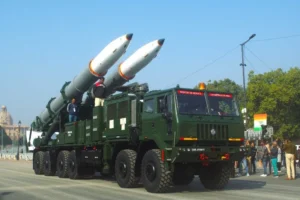
The Defence Research and Development Organisation (DRDO) successfully flight-tested the Pralay missile. The test was conducted from Dr. APJ Abdul Kalam Island, off the coast of Odisha.
About Pralay
- Pralay is an indigenously developed surface-to-surface, quasi-ballistic missile designed for precision strikes against enemy targets.
- It strengthens India’s conventional deterrence and tactical missile capabilities.
Key Features
- Developer: Research Centre Imarat (RCI), Hyderabad, with other DRDO laboratories.
- Type: Short-range, quasi-ballistic missile.
- Propulsion: Solid-fuel rocket motor.
- Strike Range: Approximately 150–500 km.
- Payload: Can carry around 1,000 kg over 350 km or 500 kg over 500 km.
- Mobility: Launched from road-mobile platforms, enabling rapid deployment.
- Warhead: Primarily designed for conventional strikes.
Strategic Significance
- Precision Strikes: Targets important military installations.
- Operational Flexibility: Mobile launchers improve deployment capability.
- Defence Preparedness: Strengthens India’s short-range missile inventory.
- Self-Reliance: Supports Atmanirbhar Bharat in defence manufacturing.
MALABAR TREE TOAD
TOPIC: (GS3) ENVIRONMENT: PIB
Why in News?
Karnataka has officially declared the Malabar Tree Toad as its State Amphibian.

About Malabar Tree Toad
- The Malabar Tree Toad (Pedostibes tuberculosus) is a rare, tree-climbing amphibian endemic to India’s Western Ghats.
- Locally known as Malenadina Mara Gantikappe, it was first described in 1876.
Habitat and Distribution
- Distribution: Karnataka, Kerala, Goa, Maharashtra and Tamil Nadu.
- Habitat: Moist evergreen forests and lateritic plateaus.
- Nature: Semi-arboreal, meaning it spends part of its life on trees.
- Breeding: Generally occurs between March and June, before the monsoon.
Important Characteristics
- Possesses adaptations that enable tree climbing.
- Has a fragmented geographical distribution.
- Acts as an indicator species of forest ecosystem health.
- Helps maintain ecological balance by feeding on small invertebrates.
Conservation Status
- IUCN Red List: Least Concern.
- Wildlife (Protection) Act, 1972: Listed under Schedule II, as reported.
- Major Threats: Habitat fragmentation, deforestation and climate change.
DISPORUM KAMAKHASIENSE
TOPIC: (GS3) ENVIRONMENT: DTE
Why in News?
Botanists have discovered a new flowering plant, Disporum kamakhasiense, in the forests of Assam and Meghalaya.
About Disporum kamakhasiense
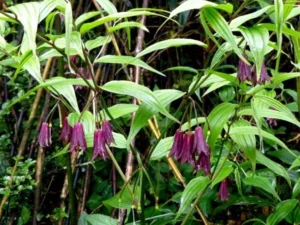
- Disporum kamakhasiense is a newly identified perennial flowering herb belonging to the Colchicaceae family.
- Its name reflects the historical Kamrupa region of Assam and the Khasi Hills of Meghalaya.
Distribution and Habitat
- Garbhanga Reserve Forest: Assam.
- Laisong: Dima Hasao district, Assam.
- Barapani: Meghalaya.
- Habitat: Semi-evergreen forests, particularly cliffs beneath bamboo vegetation.
- Elevation: Approximately 200–1,100 metres above sea level.
Important Characteristics
- Height: Can grow up to 180 cm.
- Flowers: White, star-shaped, with distinctive straight spurs.
- Leaves: Dark green, glossy, with seven prominent parallel veins.
- Stem: Extensively branched.
- Flowering Season: June–July.
- Fruiting Season: Expected during July–August.
- Distinguished from its relative Disporum calcaratum by its greater height and floral structure.
Ecological Significance
- Highlights previously undocumented plant diversity.
- Demonstrates the importance of protecting semi-evergreen forest habitats.
- Encourages botanical surveys and scientific research.
- Supports conservation planning in the Indo-Burma biodiversity hotspot.