
...
Daily Current affairs 09 July 2026

Daily Current Affairs 09-July-2026

Share this Post

SCHOOL DROPOUT RATE AND TEACHER STRENGTH

TOPIC: (GS2) POLITY: THE HINDU

The Ministry of Education released UDISE+ 202526 and PGI 2.0 reports, showing falling dropout rates, improved teacher strength, and better infrastructure, though challenges in retention and learning outcomes remain.

UDISE+ and PGI

  • UDISE+: Digital database tracking school infrastructure, enrolment, teacher metrics, and facilities.
  • PGI 2.0: Assesses states/UTs across six domains (learning outcomes, access, infrastructure, equity, governance, teacher training) using a 10tier grading system.

UDISE+ 202526

  • Dropout Rates:
    • Preparatory: fell from 2.3% → 1.8%.
    • Secondary: fell from 8.2% → 7.0%.
    • Highest dropout: Ladakh, Gujarat, Chhattisgarh, Karnataka.
  • Retention:
    • Middle: 82.8% → 83.7%.
    • Secondary: 47.2% → 51.9%.
    • Concern: Only half of Class I students reach Class XII.
  • Gross Enrolment Ratio (GER): Secondary GER improved from 68.5% → 71.7%.
  • Teacher Strength: Crossed 1.02 crore, majority women (54.9%).
  • PupilTeacher Ratio (PTR): Surpassed NEP target (30:1): Foundational 10, Preparatory 12, Middle 17, Secondary 21.
  • School Rationalisation: Zeroenrolment schools down 29%; singleteacher schools down 3%.
  • Girls’ Enrolment: Slight rise to 48.4%.
  • Digital Access: Computers in schools 64.7% → 69.9%; internet 63.5% → 67.4%.
  • Basic Amenities: Drinking water 99.5%, girls’ toilets 98.5%, boys’ toilets 97.2%, electricity 95%.
  • Inclusion: Disabilityfriendly ramps/handrails 54.9% → 58.2%.

PGI 2.0 Findings

  • No state/UT reached top three grades (71–100%).
  • Top performer: Chandigarh (‘Uttam3’).
  • Strong states: Delhi, Kerala, Punjab, Dadra & Nagar Haveli (Prachesta1).
  • Aspirational states: UP, Bihar, West Bengal, MP, Jharkhand, J&K, NE states.
  • Domain leaders: Punjab (learning outcomes), Kerala (access & teacher training), Tamil Nadu (equity).
  • Interstate gap: Chandigarh 766 vs Meghalaya 525.7 → gap narrowed from 51% (201718) to 31.4%.

Significance & Concerns

  • Positives: Falling dropout rates, stronger teacher workforce, improved PTR, better digital access, nearuniversal amenities.
  • Challenges: High attrition beyond Class X, weak PGI scores, marginal decline in earlystage retention, regional disparities, declining playground availability, uneven learning outcomes.

Conclusion

India’s school education system shows progress in access and teacher strength, but quality and retention gaps remain critical, requiring targeted support for aspirational states and higherlevel schooling.

RAM TEMPLE TRUST GOVERNANCE

TOPIC: (GS2) POLITY: THE HINDU

The Ram Janmabhoomi Teerth Kshetra Trust has accepted the resignations of two senior officebearers and announced the appointment of its first Chief Executive Officer (CEO), marking the biggest governance reform since its creation in 2020.

Origin of the Trust

  • Formed after the Supreme Court’s Ayodhya judgment (Nov 2019).
  • Constituted by the Central government in Feb 2020 under the Ayodhya Acquisition Act (1993) and Gazette notification.
  • Unique structure: neither a private religious trust nor a statutory temple board; instead, a public religious trust created by executive action.

Governance Structure

  • 15 members including permanent, nominated, and exofficio representatives.
  • Chaired by Mahant Nritya Gopal Das; daytoday leadership earlier handled by Champat Rai.
  • Construction overseen by a separate committee led by Nripendra Mishra (former Principal Secretary to PM).

How It Differs from Other Temples

  • Tirupati, Jagannath, Vaishno Devi, Kashi Vishwanath: run under state legislation with governmentappointed executive officers.
  • Ram Temple: managed directly by trustees without a professional CEO until now.

Governance Challenges

  • Donation theft controversy exposed weak management.
  • Staff appointments were ad hoc, with missing appointment letters.
  • Outsourced donation counters recommended by trustees themselves.
  • Internal audit (2020) flagged lack of SOPs, financial records, HR processes, and accountability checks.

Why Appoint a CEO Now

  • To professionalise administration and separate policy from daily operations.
  • CEO will manage HR, finances, SOPs, and pilgrim services.
  • Trustees will focus on policy and spiritual oversight.
  • Brings governance closer to models of other major temples with executive officers.

Transparency Concerns

  • Trust’s rulebook and deed not public; Centre treats them as confidential.
  • CIC ruled Trust is not a “public authority” under RTI Act.
  • Contrast: other temples’ governing Acts are publicly available.

Broader Significance

  • Reflects need for professional management in large pilgrimage centres.
  • Highlights balance between faith and accountability.
  • Demonstrates how judicial mandates can create unique governance structures.

Conclusion

The appointment of a CEO marks a shift from founderled management to professional governance, ensuring the Ram Temple can handle its scale while safeguarding transparency and trust.

WAYANAD TUNNEL TRAGEDY

TOPIC: (GS3) DISASTER MANAGEMENT: THE HINDU

The Wayanad tunnel landslide tragedy in Kerala has been termed a manmade disaster, as warnings issued by officials between June 20–25, 2026 were ignored, leading to loss of lives and property.

Tunnel Project

  • The Anakkampoyil–Kalladi–Meppadi tunnel project was planned to improve connectivity between Kozhikode and Wayanad.
  • The site was flagged for soil piping, slope instability, and erosion risks.
  • Agencies involved: District Collector, Public Works Department (PWD), Kerala Road Fund Board (KRFB), and Kerala State Disaster Management Authority (KSDMA).
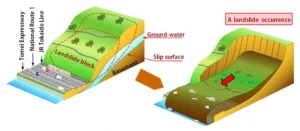
Wayanad Tunnel Tragedy

Timeline of Negligence

  • June 20, 2026: First warning issued about slope instability.
  • June 25, 2026: Second warning reiterated risks.
  • No preventive action was taken despite alerts.
  • Result: Landslide struck, causing casualties and destruction.

Why Called a ManMade Disaster

  • Ignored scientific warnings despite clear risk assessments.
  • Administrative lapses in coordination between agencies.
  • Failure of disaster preparedness despite Kerala’s past experiences with floods and landslides.
  • Reflects broader issue of development vs. environmental safety.

Broader Dimensions

  • Environmental governance: Projects in ecologically fragile zones must undergo strict Environmental Impact Assessments (EIA).
  • Disaster management: NDMA guidelines stress early warning systems and preventive action, which were not followed.
  • Comparative example: Similar negligence seen in Joshimath subsidence (Uttarakhand), where warnings were ignored until crisis unfolded.
  • Policy gap: Need for stronger accountability mechanisms in infrastructure projects in sensitive regions.

NDRF Act

Constituted under the Disaster Management Act, 2005. Provides for creation of a specialized force for disaster response at national level.

Control & Supervision:

  • Operates under the Ministry of Home Affairs.
    • Supervised by the National Disaster Management Authority (NDMA).

Composition:

    • Battalions drawn from Central Armed Police Forces (CAPFs) like CRPF, BSF, ITBP, CISF, and SSB.
    • Personnel trained in search, rescue, relief, and rehabilitation.

Deployment:

    • Deployed during natural disasters (floods, cyclones, earthquakes, landslides) and manmade disasters (industrial accidents, chemical leaks).
    • Works in coordination with State Disaster Response Forces (SDRFs).

Conclusion

The Wayanad tunnel tragedy underscores that ignoring scientific warnings turns natural hazards into manmade disasters, demanding accountability and sustainable planning in fragile ecosystems.

CHAR KAMAN RESTORATION

TOPIC: (GS1) INDIAN ART AND CULTURE: THE HINDU

The Telangana government has sanctioned restoration work on the Char Kaman, four ornamental gateways near Charminar, marking a major heritage conservation initiative in Hyderabad.

What is Char Kaman

  • Built around 1594 by the Qutb Shahi rulers after the Charminar.
  • Four arches enclosing Gulzar Houz fountain:
    • Kali Kaman (East)
    • Sher-e-Batil ki Kaman (West)
    • Machli Kaman (North)
    • Charminar Kaman (South)
  • Served as royal vestibule (Jilau Khana) and entry to palace complex.
  • Each arch had three floors with guard chambers.
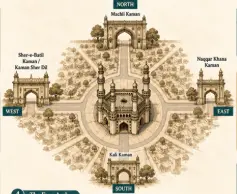
CHAR Kaman Restoration

Historical Role

  • Functioned as administrative and ceremonial gateways.
  • Nobles assembled here before audience with the king.
  • Machli Kaman named after bamboopaper fish suspended during lunar new year.
  • Palaces once stood near the western arch, now lost.

Restoration Plan

  • Focus on structural repairs and heritage conservation.
  • Aim: Preserve historical character while improving physical condition.
  • Consultant appointment and tender process approved.
  • Conservationists highlight damage from urbanisation and pollution.

Broader Heritage Context

  • Charminar (1591) built by Muhammad Quli Qutb Shah; Char Kaman followed soon after.
  • Together, they represent IndoPersian architectural fusion of Qutb Shahi dynasty.
  • Restoration aligns with UNESCO’s emphasis on safeguarding urban heritage.
  • Similar conservation efforts: Golconda Fort, Purana Pul, Mecca Masjid.

Significance for Hyderabad

  • Enhances tourism potential around Charminar precinct.
  • Revives cultural identity of old Hyderabad.
  • Supports urban heritage management under Smart Cities Mission.
  • Symbol of cooperative federalism in heritage conservation, with Centre and State collaboration.

Conclusion

The Char Kaman restoration is not just about repairing arches — it is about reviving Hyderabad’s historic urban core and preserving Qutb Shahi legacy for future generations.

HIMALAYAN PANGOLIN

TOPIC: (GS3) ENVIRONMENT: THE HINDU

Researchers have confirmed that the Himalayan pangolin (Manis aurita) is a distinct species, separate from the Chinese pangolin, highlighting its conservation importance.

About the Species

  • Scientific name: Manis aurita.
  • Evolutionary history: Experienced population contraction during the 14th century Little Ice Age in the Himalayas.
  • Physical traits:
    • Larger body and skull compared to Chinese pangolin.
    • Smaller ears, shorter and broader nasal bone.
    • Enlarged olfactory bulb and turbinals for strong smell sense, aiding in foraging ants and termites.

Himalayan Pangolin

Distribution

  • Found in southern Himalayan foothills.
  • Confirmed populations in Nepal, South Tibet, and Northeast India (Assam).
  • Restricted range makes it more vulnerable to habitat pressures.

Threats

  • Illegal wildlife trade: Scales and body parts trafficked for traditional medicine.
  • Market infiltration: Products entering regulated medicinal markets.
  • Genetic risk: Inbreeding due to small, fragmented populations.
  • Habitat loss: Deforestation and human encroachment in Himalayan foothills.

Conservation Significance

  • Pangolins are among the most trafficked mammals globally (UNODC reports).
  • India’s Wildlife Protection Act, 1972 already provides Schedule I protection to pangolins.
  • Revalidation of Himalayan pangolin as a distinct species strengthens the case for speciesspecific conservation strategies.
  • Supports India’s commitments under Convention on International Trade in Endangered Species (CITES).

Conclusion

Recognising the Himalayan pangolin as a separate species is crucial for targeted conservation, ensuring this rare mammal survives against trade, habitat loss, and genetic threats.


GUWAHATI DECLARATION

TOPIC: (GS2) INTERNATIONAL RELATIONS: THE HINDU

At the BRICS Heads of AntiDrug Agencies Meeting in Guwahati (Assam), member nations adopted the Guwahati Declaration (2026) to intensify cooperation against illicit drug trafficking and transnational organised crime.

About the Declaration

  • Adopted under India’s BRICS chairship (2026), themed “Building for Resilience, Innovation, Cooperation and Sustainability.”
  • Calls for:
    • Information exchange and intelligence sharing.
    • Use of digital tools and datadriven approaches for enforcement.
    • Best practice sharing among agencies.
  • Stresses reducing drug demand, promoting healthy lifestyles, and protecting youth and vulnerable groups.

Participants

  • BRICS members: Brazil, Russia, India, China, South Africa.
  • Expanded members: Egypt, Ethiopia, Iran, Saudi Arabia, UAE, Indonesia.
  • Meeting also included partner countries like Belarus, Nigeria, Vietnam, Kazakhstan etc.

BRICS

  • Origin: Coined as BRIC (2001) by economist Jim O’Neill; South Africa joined in 2010 → BRICS.
  • Expanded in 2024–25 to include new members.
  • Represents 49.5% of world population, ~40% of global GDP, and ~26% of global trade.
  • Functions as a major emerging economy bloc with growing geopolitical influence.

Significance for India

  • Strengthens India’s leadership in global drug control diplomacy.
  • Supports domestic initiatives like NCB’s Vision Document 202629 and NDPS Act reforms.
  • Enhances regional security cooperation, especially against trafficking routes in South Asia.

Conclusion

The Guwahati Declaration highlights BRICS’ resolve to fight drug trafficking collectively, reinforcing India’s role in shaping global security and cooperative governance.

PERFORMANCE GRADING INDEX (PGI)

TOPIC: (GS2) SOCIAL JUSTICE AND HEALTH: THE HINDU

The Ministry of Education has released the Performance Grading Index 2.0 (PGIS) for States/UTs and PGID for districts for 202526, assessing school education quality and governance.

About PGI

  • PGI framework: Developed by the Department of School Education & Literacy (DoSEL).
  • Objective: Uniform evaluation of States/UTs and districts to encourage better performance.
  • Indicators: PGI 2.0 uses 73 indicators across 6 domains.

PGI – States/UTs

  • Weightage: 1000 points across 70 indicators.
  • Categories:
    • Outcomes
    • Governance & Management
  • Domains: Learning outcomes, access, infrastructure, equity, governance, teacher education.
  • Data sources: UDISE+, PARAKH Rashtriya Sarvekshan 2024, PM POSHAN Portal, PRABANDH Portal, Vidyanjali Portal.

PGI – Districts

  • Weightage: 600 points across 70 indicators.
  • Categories: Outcomes, classroom transaction, infrastructure, safety, digital learning, governance.
  • Domains (11): Learning outcomes, access, teacher availability, enrichment activities, safety, digital learning, funds utilisation, attendance monitoring, leadership development, etc.
  • Data sources: UDISE+, PARAKH 2024, PRABANDH Portal.

Significance

  • Provides comparative benchmarking for States/UTs and districts.
  • Helps identify gaps in learning outcomes, infrastructure, and governance.
  • Supports NEP 2020 goals of equity, quality, and digital integration.
  • Encourages evidencebased policymaking and targeted interventions.

Conclusion

The PGI 2.0 is a comprehensive tool for measuring school education quality, enabling States and districts to improve outcomes through datadriven governance.

INDIA ROAD ACCIDENT FATALITIES

TOPIC: (GS2) GOVERNANCE: THE HINDU

Recently, India’s road accident fatalities came into news as official figures for 2024 showed discrepancies between reports released by the Ministry of Road Transport and Highways (MoRTH) and the National Crime Records Bureau (NCRB), raising concerns over data consistency and reliability for policy planning.

Sources of Road Accident Data

  • Police records: Primary source, as police are first responders.
  • MoRTH data collection: Through its Transport Research Wing (TRW), using formats under the UNESCAP Asia-Pacific project.
  • Information gathered: Accident identification, road conditions, vehicles, driver details.
  • Shift to eDAR/iRAD: Designed for real-time reporting, but state-level delays persist.
  • NCRB data: Compiled via State Crime Record Bureaus (SCRBs), District Crime Record Bureaus (DCRBs), and local police stations.

Legal Basis of Road Accident Data Recording

  • Section 106 of Bharatiya Nyaya Sanhita: Fatal road accidents caused by negligence are registered under this section (earlier covered under IPC Section 304-A).
  • WHO Global Practice: Nearly half of the countries worldwide rely primarily on police data for accident reporting.

Reasons for Discrepancies

  • Different reporting channels: NCRB (Home Ministry) vs MoRTH (coordination with States).
  • Mandatory reporting bias: Police must report to NCRB, but MoRTH depends on state cooperation.
  • Data limitations: TRW formats restrict details, leading to gaps.
  • Under-reporting risks: Victims dying after 30 days often not updated.
  • Subjective bias: Police judgments may affect accuracy.
  • Persistent challenges: Despite eDAR/iRAD, states report inconsistently.

India’s Global Position

  • India has the highest total fatalities worldwide, followed by China and the USA.
  • Countries like Iran report higher per capita death rates.
  • Several developing nations (Pakistan, Nigeria, Ethiopia, China) show lower per capita fatality rates compared to India.

Measures to Improve Data Accuracy

  • Unified Reporting System: Establish a single national platform integrating police, transport, and health departments to ensure consistency.
  • Real-time Digital Tools: Strengthen use of e-DAR/iRAD systems with mandatory updates from all states to reduce delays and mismatches.
  • Standardized Formats: Adopt uniform templates across ministries and states for accident reporting to avoid variation in categories and definitions.
  • Health Department Integration: Include hospital and emergency care data to capture fatalities occurring after the accident, reducing under-reporting.

Conclusion

Reliable statistics are essential for effective policy design, infrastructure planning, and enforcement strategies. Strengthening real-time reporting systems, harmonising data channels, and reducing under-reporting are critical to addressing India’s road safety crisis.

Write a Review

Your email address will not be published. Required fields are marked *

Seraphinite AcceleratorOptimized by Seraphinite Accelerator
Turns on site high speed to be attractive for people and search engines.