

Daily Current affairs 21 June 2026

Daily Current Affairs 21-June-2026

Share this Post

BIOCHAR TURNING FARM SMOKE INTO BLACK GOLD

TOPIC: (GS3) ENVIRONMENT: THE HINDU

Biochar is being discussed as a sustainable solution to crop residue burning in India, offering soil health improvement, climate resilience, and potential income through carbon credits.

What is Biochar

  • Biochar is a carbonrich material produced by heating agricultural waste (like crop residues, husks, stalks) in lowoxygen conditions (process called pyrolysis).
  • Highly porous structure that improves soil aggregation and enhances water retention capacity by 10–25% (ICAR trials).
  • Stimulates growth of beneficial soil microbes and breaks down very slowly, ensuring longterm carbon sequestration (100–1000 years).
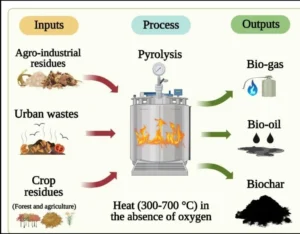
Biochar Turning Farm Smoke into Block Gold

Agricultural Value

  • Enhances soil fertility and organic carbon content.
  • Improves crop productivity by 10–30% and waterholding capacity by 10–25% (especially in nutrientpoor soils).
  • Examples:
    • Akola, Maharashtra: maize stalk biochar improved black soils.
    • Kerala: coconut leaf stalk biochar enhanced soil quality.
  • Supports natural farming, soil health management, and carbon farming initiatives.

Challenges

  • Biochar use in India is still limited to research trials and pilot projects; farmer adoption remains negligible.
  • Punjab & Haryana burn 20–23 million tonnes of paddy straw annually (ICAR data), due to short harvest cycles and lack of alternatives.
  • Crop residue burning contributes up to 40% of Delhi’s winter PM2.5 pollution (SAFAR report).
  • Burning releases GHGs equivalent to 9–10 million tonnes CO₂ annually, besides loss of soil organic matter.
  • Soil degradation:
    • Maharashtra black soils: low organic carbon (<0.5%).
    • Kerala red soils: rapid nutrient loss despite irrigation.
  • India’s overall soil organic carbon stock is declining at 0.3–0.5% per year (FAO estimates).

Climate & Environmental Benefits

  • Enhances resilience against droughts, heatwaves, and erratic rainfall.
  • Improves waterholding capacity by 10–25% and crop yields by 10–30% (ICAR field trials).
  • Reduces dependence on chemical fertilisers and external inputs, crucial for small & marginal farmers (86% of India’s farming population).
  • Supports circular economy:
    • India generates 62 million tonnes of municipal solid waste annually, >50% biodegradable (MoHUA data).
    • Sewage sludge and crop residues can be converted into biochar, reducing methane emissions from landfills.

Carbon Credit Potential

  • Biochar qualifies as a persistent carbon dioxide removal technology under international standards.
  • VM0042 methodology quantifies avoided emissions from residue burning + longterm sequestration.
  • Each tonne of certified biochar can generate 2–2.8 tonnes CO₂equivalent credits.
  • Examples:
    • KISAN kiln (IITKharagpur): enables smallholders to monetise farm waste.
    • Kenya: rice husk biochar produced thousands of credits, improved soil pH & phosphorus.
    • Thailand: linked biochar to national carbon registry for soil rehabilitation.
    • Brazil (Embrapa Institute): sugarcane bagasse biochar improved yields by 15–20%.

Way Forward

  • Integrate biochar into National Mission on Sustainable Agriculture (NMSA), Soil Health Card scheme, and natural farming initiatives.
  • Promote decentralised pyrolysis technology with strong MRV (Measurement, Reporting, Verification) systems.
  • Link farmers to carbon markets; at $20–30 per tonne CO₂, biochar can provide ₹3,000–₹5,000 per tonne additional income.
  • Encourage use of urban organic waste and sewage sludge for biochar production, aligning with Swachh Bharat Mission and circular economy goals.
  • Build entrepreneurship and cooperatives around biochar to create rural jobs and reduce residue burning.

Conclusion

Biochar represents a carbonnegative, soilpositive solution that can transform India’s waste streams into “black gold,” ensuring sustainable agriculture and contributing to global climate goals.

BRITAIN AFTER BREXIT

TOPIC: (GS3) ECONOMY: THE HINDU

Ten years after the Brexit referendum (2016), Britain faces economic slowdown, rising nonEU immigration, and political instability.

Brexit

  • Referendum Result (2016): Britain voted 52% Leave vs 48% Remain, ending nearly 47 years of EU membership.
  • Economic Scale: UK lost access to the €18 trillion EU economy, though EU still accounts for 41% of exports and 50% of imports.
  • Economic Impact: UK GDP growth slowed to 0.1% in 2023 vs EU average 1.5%, trade volumes fell ~15% below preBrexit trend (LSE study).
  • Social & Political Fallout: Brexit entrenched divisions (Leavers vs Remainers), triggered six Prime Ministers in a decade, and weakened Britain’s global standing.
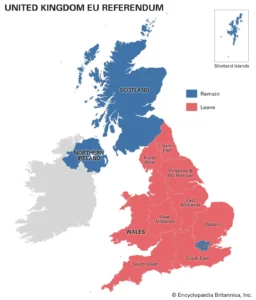
United Kingdom EU Referndum

Structural Problems

  • Post2008 crisis: real wages stagnated, austerity cut public spending by nearly £30 billion.
  • NHS, education, and local government faced chronic funding shortages, reducing service quality.
  • Populism thrived on immigration fears, though the real issue was domestic inequality and regional imbalance.
  • UK’s productivity growth fell to 0.4% annually vs EU’s 1.2%, widening competitiveness gap.
  • Regional divide: London prospered, but northern and coastal towns saw industrial decline and job losses.

Economic Consequences

  • GDP growth slowed: UK grew 0.1% in 2023 vs EU average 1.5%.
  • Trade volumes dropped 15% below preBrexit trend (LSE study).
  • London’s eurodenominated trading fell 30%, weakening its global financial hub status.
  • Customs paperwork added £7 billion annually in costs (UK Treasury).
  • Inflation peaked at 11% in 2022, highest in 40 years, worsening costofliving crisis.
  • Business investment fell by 25% compared to preBrexit projections (Bank of England).

Immigration Trends

  • EU immigration declined steadily after Brexit.
  • NonEU immigration surged: 541,000 work visas in 2023, fell to 186,000 in 2025.
  • Net migration added 207,000 foreignborn workers in 2024 (ONS data).
  • NHS reliance: Indian nurses rose from 10,000 preBrexit to 40,000 today.
  • Major sources: India, Nigeria, Egypt, Pakistan, Philippines.
  • Irony: despite antiimmigration rhetoric, nonEU migrants filled critical skill gaps in healthcare and services.

Political Fallout

  • Britain saw 10 Home Secretaries, 9 Foreign Secretaries, 8 Chancellors, 6 Prime Ministers since 2016.
  • Immigration debate hijacked by farRight rhetoric (“invasion of southern shores”).
  • Centre ground weakened; politics dominated by populist extremes.
  • Scotland renewed calls for independence referendum, citing EU membership benefits.
  • Northern Ireland faced trade frictions under the Protocol, reviving sectarian tensions.
  • Governance instability: frequent cabinet reshuffles undermined policy continuity.

EUROPEAN UNION

  • Emerged after World War II to prevent future conflicts through cooperation.
  • 1951 Treaty of Paris: Established the European Coal and Steel Community (ECSC).
  • 1957 Treaty of Rome: Created the European Economic Community (EEC).
  • 1992 Maastricht Treaty: Formally established the EU, introduced EU citizenship, and common foreign/security policy.
  • 2007 Lisbon Treaty: Strengthened democratic governance and institutional efficiency.
  • Expanded from 6 founding members (Belgium, France, Germany, Italy, Luxembourg, Netherlands) to 27 countries today.

Membership

  • Current members: 27 countries including France, Germany, Italy, Spain, Poland, Sweden, etc.
  • United Kingdom left in 2020 after the Brexit referendum.
  • Candidate countries: Montenegro, Serbia, Albania, North Macedonia, with possible expansion to the Balkans.

Objectives

  • Promote peace, democracy, and rule of law.
  • Ensure economic growth and social justice.
  • Uphold human rights, equality, and freedom.
  • Create a single market for goods, services, capital, and people.
  • Coordinate on foreign policy, security, immigration, and climate change.

Conclusion

Brexit has left Britain economically weaker, politically unstable, and socially divided, with its search for identity and stability still unresolved.

DNA TESTING FOR PATERNITY: RIGHTS VS TRUTH

TOPIC: (GS2) POLITY: THE HINDU

The Supreme Court recently upheld DNA testing as a last resort in paternity disputes, balancing the need for scientific truth in justice delivery.

Legal Background

  • Evidence Laws: Under the Indian Evidence Act, 1872 and the new Bharatiya Sakshya Adhiniyam, 2023, the rule is simple: if someone denies being a child’s father, they must prove it.
  • Purpose: This approach was designed to protect children from the stigma of being called illegitimate, so the law supports their dignity first.
  • DNA Testing Challenge: With modern science, DNA tests can confirm paternity, but they also raise new issues like privacy of genetic data, personal autonomy, and the child’s legitimacy.
  • Balance Needed: Courts now have to balance scientific truth vs individual rights, making DNA testing a tool of last resort rather than routine.

Judicial Landmarks

  • Goutam Kundu (1993): DNA tests not routine; strong prima facie case required.
  • Shri Banarsi Dass (2005): legitimacy protection prioritized over forensic curiosity.
  • N.D. Tiwari case (2012): Delhi HC & SC ordered DNA test despite privacy objections.
  • Nandlal Badwaik (2014): scientific proof can override legal fiction.
  • Dipanwita Roy (2014): refusal to test may lead to adverse inference.
  • K.S. Puttaswamy (2017): privacy, including genetic data, recognized as a fundamental right; introduced threefold test: legality, legitimate aim, proportionality.
  • Aparna Ajinkya Firodia (2023): DNA tests only if necessary and proportionate.
  • Ivan Rathinam (2025): privacy and knowledge not absolute; stigma must be weighed.
  • CP vs AP (2026): upheld DNA test when no other evidence could resolve paternity.

Constitutional Dimensions

  • Article 21: protects bodily autonomy and privacy.
  • DNA testing must pass legality, necessity, and proportionality tests.
  • Courts balance truthseeking with protection of dignity and rights.

Broader Implications

  • Child Protection: Safeguards children from the social stigma of illegitimacy while ensuring justice in family disputes.
  • Genetic Privacy Concerns: Raises issues of data misuse, consent, and bodily autonomy, especially after recognition of privacy as a fundamental right in K.S. Puttaswamy (2017).
  • Shift in Jurisprudence: Reflects India’s move towards rightsbased constitutional interpretation, balancing truth with dignity postPuttaswamy.
  • Global Practices: Countries like the UK and US permit DNA testing, but enforce strict privacy safeguards and consent protocols to protect individuals.
  • Policy Imperative: Highlights the need for clear guidelines on genetic data protection under the Digital Personal Data Protection Act, 2023, ensuring proportionality and accountability.

Conclusion

DNA testing in paternity cases is a powerful but limited tool — courts must use it only when absolutely necessary, ensuring that the pursuit of truth does not compromise fundamental rights.

NTA AND THE ACCOUNTABILITY GAP IN PUBLIC EXAMINATIONS

TOPIC: (GS2) POLITY: THE HINDU

The cancellation of NEETUG 2026 after a paper leak forced 22.8 lakh candidates to reappear, raising questions about the design flaws and lack of accountability in the National Testing Agency (NTA).

NTA’s Institutional Design

  • Formation: The National Testing Agency (NTA) was set up in 2017 as a society under the Societies Registration Act, 1860, not through a Parliamentary Act.
  • No Statutory Backing: It lacks a legal framework of accountability, meaning candidates have limited rights against institutional failures.
  • Limited Obligations: In case of exam cancellation, NTA only ensures registration continuity and refunds the exam fee (₹1,700 for general category).
  • No Compensation: There is no mechanism to cover costs of coaching, accommodation, or repeated preparation years, which often run into lakhs of rupees per student.
  • Accountability Gap: The absence of codified liability standards leaves aspirants bearing the entire burden of institutional failures, despite Article 14’s guarantee against arbitrary state action.

Structural Problems in NEET

  • Single Sitting Exam: NEETUG 2025 was conducted in one shift across 552 Indian cities and 14 international centres, with 22,09,318 candidates appearing. A breach in one paper collapses the entire cycle.
  • No Distributed Fallback: The design offers no backup sessions or multiple windows; cancellation forces all candidates to reappear, amplifying stress and uncertainty.
  • Seat Matrix Mismatch: National Medical Commission (2025) listed 1.26 lakh MBBS seats against 22.7 lakh aspirants, meaning only ~5.5% candidates secure admission. This structural bottleneck ensures repeated attempts.
  • Multiple Attempts & High Costs: Many aspirants spend ₹2–5 lakh annually on coaching and accommodation; cancellation refunds only ₹1,700 exam fee, leaving families to absorb heavy losses.
  • Qualification Data: In 2025, 12,36,531 candidates qualified (~59% success rate), but only a fraction gained seats. Uttar Pradesh led with 1,70,684 qualifiers, followed by Maharashtra (1,25,727) and Rajasthan (1,19,865).
  • Learning Gaps: ASER 2024 report highlighted persistent disparities: government school students lag behind private peers in foundational learning, making disadvantaged groups least able to absorb disruptions.
  • Topper Trends: NEET 2025’s highest score was 686/720, lower than 2024’s perfect 720, reflecting tougher papers. Only one student (Mahesh Kumar, Rajasthan) secured AIR1, unlike 17 joint toppers in 2024.

Legal Framework

  • Public Examinations (Prevention of Unfair Means) Act, 2024 introduced strict deterrence.
  • Provides up to 10 years imprisonment and ₹1 crore fine for organised exam leaks.
  • Does not establish compensation rights for candidates affected by cancellations.
  • No liability standards for examining bodies like NTA.
  • Focus remains on punishing offenders, not protecting aspirants.

ComputerBased Testing (CBT) and Its Limits

  • NEET is set to shift to ComputerBased Testing (CBT).
  • However, UGCNET 2024 (already CBT) was cancelled after a darknet paper leak.
  • Shows CBT only changes delivery mode, not the singlepoint failure design.
  • Without distributed architecture, one breach still disrupts the entire exam cycle.

Constitutional Dimensions

  • Article 14: prohibits arbitrary state action; current exam design is disproportionate in effect.
  • Directive Principles (Articles 41 & 46): state duty to ensure equal educational opportunity and protect weaker sections.
  • Current system shifts costs of institutional failure onto candidates, undermining constitutional fairness.

Way Forward

  • Statutory Backing: Convert NTA into a statutory body through an Act of Parliament, ensuring codified obligations and accountability. (Example: UPSC functions under Article 315 with clear liability standards).
  • Multiple Exam Windows: Introduce 2–3 sittings annually (like JEE Main), reducing risk concentration. This would prevent a single breach from collapsing the entire admission cycle.
  • Digital Security & Decentralisation: Strengthen cybersecurity protocols and adopt distributed exam architecture. Example: GRE/GMAT allow multiple secure sessions worldwide, limiting impact of leaks.
  • Transparent Accountability: Mandate annual audit reports of NTA’s functioning, published publicly, similar to CAG audits of government institutions.
  • Equity Measures: Bridge learning gaps highlighted in ASER 2024, where government school students lag behind private peers. Special preparatory programs can reduce disadvantage in competitive exams.

Conclusion

A fair examination system must ensure that institutional failures do not punish candidates, making accountability as important as integrity in public exams.

FURTHER INVESTIGATION UNDER CRPC AND COURT’S PERMISSION

TOPIC: (GS2) POLITY: THE HINDU

The Supreme Court in Paliniswamy Veeraraja vs State of Karnataka (2026) quashed an FIR and chargesheet, holding that police cannot reopen investigation after filing a closure report without prior permission from the Magistrate.

Legal Framework

  • Section 173(2) CrPC: Police must submit a final report to the Magistrate after completing investigation.
  • Section 173(8) CrPC: Allows filing of a supplementary report if new evidence emerges after the final report.
  • Textual Gap: The provision is silent on whether Magistrate’s permission is needed before filing such a report.
  • BNSS 2023 (Section 193(9)): Similar to CrPC; provision mandates court’s permission if trial has already begun.

Judicial Interpretation

  • State of Haryana v. Bhajan Lal (1992): FIR can be quashed if dispute is civil in nature.
  • Vinay Tyagi v. Irshad Ali (2013): The law under Section 173(8) CrPC says police can send a supplementary report if new evidence is found after the final report. But it does not clearly say whether Magistrate’s permission is needed before doing so.
  • Doctrine of Contemporanea Expositio: A longstanding practice can become part of law. Since courts have always required police to take Magistrate’s permission before reopening a case, this practice is now treated as a legal rule.
  • Rama Chaudhary v. State of Bihar (2024): The Supreme Court clearly said that permission from the Magistrate is essential, even though the CrPC does not explicitly mention it.
  • Robert Lalchungnunga Chongthu v. State of Bihar (2025) – The Court confirmed that supplementary chargesheets cannot be filed without court approval, reinforcing judicial oversight.
  • Paliniswamy Veeraraja (2026): Applied these principles in practice; the Court quashed the FIR and chargesheet because the police had not obtained the Magistrate’s permission before reopening investigation.

Constitutional Dimensions

  • Ensures checks and balances by keeping police powers under judicial supervision.
  • Protects citizens from arbitrary reopening of cases without proper legal grounds.
  • Safeguards Article 21 rights, guaranteeing fair trial and due process for every individual.

Policy significance

  • Strengthens judicial control once a final report is filed, preventing unlimited police discretion.
  • Stops misuse of police powers in civil disputes, where criminal law should not interfere.
  • Fits with BNSS reforms, which aim to modernise and streamline criminal procedure in India.
  • Comparative note: In countries like the UK and US, reopening closed investigations always requires court approval, showing India’s approach is aligned with global standards.

CRPC

CrPC (Criminal Procedure Code)

    • Full form: Code of Criminal Procedure
    • It is the law that lays down the procedure for investigation, trial, bail, arrest, and criminal cases in India.
    • The old CrPC, 1973 was replaced by the Bharatiya Nagarik Suraksha Sanhita (BNSS), 2023 (effective from 2024).

CRPC (in medical field)

    • Full form: Castration-Resistant Prostate Cancer
    • A type of prostate cancer that continues to progress despite low testosterone levels.

The new law that replaced CrPC (Code of Criminal Procedure, 1973) is:

Bharatiya Nagarik Suraksha Sanhita (BNSS), 2023

  • Full form: Bharatiya Nagarik Suraksha Sanhita
  • Replaced: Code of Criminal Procedure (CrPC), 1973
  • Came into force: 1 July 2024
  • Purpose: To modernise criminal procedure in India.

Conclusion

The Supreme Court has made it clear: police cannot reopen investigations or file supplementary reports after closure without the Magistrate’s permission, ensuring fairness and judicial oversight in criminal justice.

PROJECT NIMBUS AND GLOBAL PROTESTS

TOPIC: (GS3) SCIENCE AND TECHNOLOGY: THE HINDU

Google CEO Sundar Pichai’s speech at Stanford (June 2026) was disrupted by students protesting Project Nimbus, a cloud contract with Israel, alleging its use in surveillance and military operations against Palestinians.

What is Project Nimbus

  • A $1 billion cloud services contract signed in 2021 between the Israeli government, Google, and Amazon.
  • Provides cloud infrastructure, AI services, and data storage to Israeli ministries, agencies, and stateowned firms.
  • Initial term: 7 years, extendable up to 23 years.
  • Investigations (2024, +972 Magazine & Local Call) revealed Israeli army data stored on AWS servers, allegedly used for surveillance of Palestinians and planning airstrikes.

Why Protests are Happening

  • Ethical Concerns: Employees and students argue the contract enables surveillance and violence against civilians.
  • Worker Resistance: In 2021, 90 Google employees and 300 Amazon employees signed a letter condemning the deal.
  • Escalation Post2023 Gaza Conflict: Protests intensified after Hamas attacks and subsequent Israeli strikes.
  • Internal Unrest: Google sitins (2024) led to 28 employees being fired; similar protests at Microsoft’s 50th anniversary (2025).
  • Leaked Documents: Show Israel mandated that Google and Amazon cannot restrict usage, even if terms of service are violated.

Other Tech Companies’ Links

  • Microsoft Azure: Reported to host surveillance data of Palestinians’ phone calls.
  • Microsoft later claimed to have disabled services to Israel’s Ministry of Defense, but activists allege continued cooperation.
  • Boycott, Divestment and Sanctions (BDS) Movement:  Identifies Big Tech firms as enablers of Israeli military surveillance and settlement expansion.

Broader Dimensions

  • Human Rights: Raises questions about corporate complicity in conflict zones.
  • Corporate Governance: Highlights lack of transparency in Big Tech contracts with governments.
  • Global Comparisons: Similar debates in the US and EU on regulating tech firms’ role in defense and surveillance.
  • Policy Need: Stronger ethical guidelines and accountability frameworks for technology contracts impacting civilians.

Conclusion

Project Nimbus shows how technology, geopolitics, and ethics intersect, making accountability in Big Tech contracts as crucial as innovation itself.

CREDIT GUARANTEE FUND OF MICROFINANCE INSTITUTIONS (CGSMFI 2.0)

TOPIC: (GS3) ECONOMY: THE HINDU

The government announced CGSMFI 2.0 with ₹20,000 crore allocation, aimed at reviving the microfinance sector struggling with liquidity shortages and high indebtedness postpandemic.

What is Microfinance

  • Definition: Microfinance means providing small loans, savings, insurance, and financial literacy to people excluded from formal banking.
  • Target Group: Lowincome households, rural poor, women entrepreneurs, landless labourers, and small traders.
  • Loan Size: Typically unsecured microcredit, often ranging from ₹10,000 to ₹50,000.
  • Purpose: Used for incomegenerating activities, agriculture, consumption needs, or small businesses.
  • Social Goal: Promotes financial inclusion and poverty alleviation, not just profit.

Evolution of Microfinance in India

  • 1974: SEWA (SelfEmployed Women’s Association) pioneered microfinance in India.
  • 1992: NABARD launched the SelfHelp Group (SHG)–Bank Linkage Program, enabling collective savings and credit access.
  • 2000s onwards: Rise of NBFCMFIs (NonBanking Financial Companies – Microfinance Institutions) as structured providers of microcredit.
  • Inspired by the Grameen Bank model of Bangladesh (Dr. Muhammad Yunus).

Regulation of Microfinance

  • Reserve Bank of India (RBI) – Primary regulator for NBFCMFIs. Issued Regulatory Framework for Microfinance Loans, 2022.
      • Loan repayment cannot exceed 50% of borrower’s monthly income.
      • Interest rates capped as per RBI guidelines.
      • Household income threshold for eligibility: up to ₹3 lakh annually.
  • Directions apply to:
    • All commercial banks (including small finance banks, RRBs).
    • Urban cooperative banks and state cooperative banks.
    • NBFCs including MFIs and housing finance companies.
  • SelfRegulation: Industry associations like MFIN (Microfinance Institutions Network) and SaDhan issue codes of conduct.
  • NABARD: Oversees SHG programs and provides refinance support.

About the Scheme

  • Purpose: Started as a revival plan to support microfinance institutions (MFIs) facing liquidity problems.
  • Fund Size: Total allocation of ₹20,000 crore, which is almost three times bigger than the Covidera fund.
  • Support for Smaller MFIs: 15% of the fund is reserved for small and midsized MFIs so that benefits are shared fairly.
  • Borrower Limit: Each borrower can get loans up to 20% of the institution’s Assets Under Management (AUM), ensuring money is spread across more people.
  • Institutional Cap: Maximum amount an MFI can access is capped at ₹100 crore, ₹200 crore, or ₹1,000 crore, depending on its size.
  • Extended Timeline: The scheme has been extended till August 31, 2026, giving institutions more time to use the support.

Sectoral Context

  • MFIs provide collateralfree loans to lowincome households, women, and small entrepreneurs.
  • Sector was hit hard during Covid19, leading to overleveraging and repayment stress.
  • Many lenders tightened norms or withdrew support, worsening liquidity.
  • Households faced high indebtedness due to mismatch between credit flow and economic revival.

SelfRegulation Measures

  • Industry guardrails introduced in July 2024 and April 2025, jointly by MFIs and CEOs.
  • Focused on responsible lending, monitoring indebtedness, and risk management.
  • Helped restore discipline and stability in the sector.

Broader Implications

  • Strengthens financial inclusion for vulnerable groups.
  • Provides confidence to lenders and reduces systemic risk.
  • Supports women entrepreneurs and rural households, aligning with SDG goals.
  • Demonstrates government’s role in balancing credit growth with social protection.

Conclusion

CGSMFI 2.0 is a critical safety net for microfinance, ensuring revival while protecting vulnerable borrowers from systemic shocks.

NONMETHANE HYDROCARBONS (NMHCS)

TOPIC: (GS3) ENVIRONMENT: PIB

Researchers at ARIES (Aryabhatta Research Institute of Observational Sciences) measured NMHCs in Munsyari (2022–23) to study their role in regional air pollution and ozone formation.

What are NMHCs

  • NMHCs are trace gases in the atmosphere other than methane.
  • Examples: ethane, ethene, propane, propene, isoprene.
  • Sources: fuel use, vehicles, biomass burning, and industrial activity; also produced naturally from plants and soils.
  • Marine environments contribute smaller amounts.

Role in Atmosphere

  • NMHCs are highly reactive gases that directly affect ozone levels in the lower atmosphere.
  • They act as building blocks for tropospheric ozone and secondary organic aerosols (SOA), which influence air quality.
  • Function as a sink for hydroxyl radicals (OH), thereby shaping atmospheric chemistry.
  • Their impact changes with temperature, sunlight, and environmental conditions, making them sensitive to climate variations.

Impact on Air Quality & Health

  • Contribute to urban smog formation, especially in polluted cities.
  • Lower regional air quality, leading to breathing difficulties and respiratory illnesses.
  • Longterm exposure is linked to heart and lung diseases, raising public health concerns.
  • Tracking NMHCs helps policymakers design better pollution control strategies.

Policy Dimensions

  • India’s National Clean Air Programme (NCAP) includes monitoring of volatile organic compounds (VOCs), which cover NMHCs.
  • Data from ARIES studies can strengthen regional emission inventories and improve climate modelling.
  • Globally, organisations like UNEP and WHO stress NMHC monitoring as key to urban air quality management.

Conclusion

NMHCs are small in quantity but big in impact, making their monitoring vital for cleaner air and healthier lives.

Write a Review

Your email address will not be published. Required fields are marked *