
Table of Contents
ToggleParrot Bornavirus 4 Identified in India
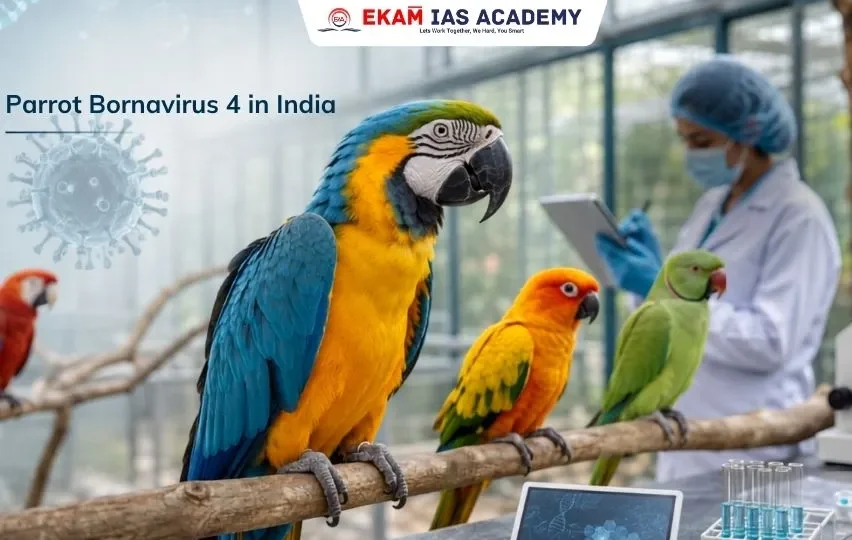
India has reported its first confirmed detection and genetic characterisation of Parrot Bornavirus 4 (PaBV-4), marking an important milestone in the country’s avian disease surveillance. The discovery has revealed a previously undocumented viral threat affecting captive and exotic pet birds, raising concerns about bird health, biosecurity, and conservation breeding programmes.
The study found that the virus is associated with Proventricular Dilatation Disease (PDD), a severe neurological and digestive disorder that can be fatal in parrots and related species. The findings highlight the need for enhanced disease monitoring, quarantine measures, and improved veterinary care for captive birds.
For UPSC aspirants, this topic is important under Environment & Ecology, Biodiversity, Animal Health, Veterinary Science, and One Health Initiatives.
Why is Parrot Bornavirus 4 in the News?
India has recorded its first confirmed detection and genetic characterisation of Parrot Bornavirus 4 (PaBV-4) in captive and exotic birds.
The discovery provides valuable scientific evidence regarding the spread of the virus in India and emphasizes the need for improved disease surveillance, quarantine protocols, and biosecurity measures to protect captive bird populations.
What is Parrot Bornavirus 4 (PaBV-4)?
Parrot Bornavirus 4 (PaBV-4) is a viral pathogen that infects psittacine birds, a group that includes various species of parrots and related birds.
The virus belongs to:
- Family: Bornaviridae
- Genus: Orthobornavirus
PaBV-4 primarily affects the nervous and digestive systems of infected birds and is considered one of the most significant viral diseases affecting captive parrots worldwide.
Birds Susceptible to PaBV-4
The virus infects several members of the psittacine family, including:
- Parrots
- Parakeets
- Macaws
- Cockatoos
- Cockatiels
- Budgerigars (Budgies)
- Lovebirds
Both captive and exotic pet birds are considered vulnerable to infection.
Classification of Parrot Bornaviruses
Scientists have identified eight Parrot Bornavirus (PaBV) genotypes, which are divided into two major evolutionary groups.
Alphapsittaciforme Clade
Includes:
- PaBV-1
- PaBV-2
- PaBV-3
- PaBV-4
- PaBV-7
- PaBV-8
Betapsittaciforme Clade
Includes:
- PaBV-5
- PaBV-6
This classification is based on differences in their genetic sequences.
Disease Caused by PaBV-4
Parrot Bornavirus is the primary cause of Proventricular Dilatation Disease (PDD).
PDD is a serious disease affecting both the nervous system and digestive tract of birds.
Symptoms
Affected birds may exhibit:
- Progressive weight loss
- Regurgitation of food
- Weakness
- Poor coordination
- Neurological abnormalities
- Behavioural changes
- Digestive problems
- Sudden death in severe cases
Without timely diagnosis and management, the disease can be fatal.
Key Findings of the Indian Study
The study produced several significant findings:
- 83 birds were tested.
- 44 birds tested positive for PaBV-4.
- Around 88% of birds that died due to Proventricular Dilatation Disease were infected with PaBV-4.
- Nearly 19% of apparently healthy birds also tested positive, indicating that infected birds may carry and spread the virus without showing symptoms.
These findings suggest that silent transmission may occur within captive bird populations.
Significance of the Discovery
The first confirmed detection of PaBV-4 in India is important for several reasons.
Strengthening Disease Surveillance
It highlights the need for systematic monitoring of infectious diseases affecting captive and exotic birds.
Improved Biosecurity
Bird breeding centres, aviaries, rescue centres, and pet facilities need stronger biosecurity measures to prevent disease transmission.
Better Veterinary Care
Routine health screening and early diagnosis can reduce mortality among infected birds.
Conservation Breeding
The findings are particularly important for conservation breeding programmes involving endangered parrot species.
Exotic Pet Trade
The study raises awareness regarding disease management in the growing exotic bird pet industry.
Preventive Measures
Experts recommend several measures to reduce the spread of PaBV-4.
- Quarantine newly acquired birds.
- Conduct routine veterinary screening.
- Maintain hygienic cages and aviaries.
- Improve biosecurity practices.
- Isolate infected birds.
- Ensure regular veterinary treatment and monitoring.
- Promote responsible breeding practices.
Importance for India
The discovery supports India’s efforts to strengthen:
- Wildlife disease surveillance
- Animal health management
- Veterinary diagnostics
- Biodiversity conservation
- One Health approach
- Scientific research on emerging diseases
Improved surveillance will help protect both captive bird populations and conservation breeding initiatives.
UPSC Mains Perspective
| Topic | Fact |
|---|---|
| Virus | Parrot Bornavirus 4 (PaBV-4) |
| Family | Bornaviridae |
| Genus | Orthobornavirus |
| First Detection in India | Confirmed through genetic characterisation |
| Disease | Proventricular Dilatation Disease (PDD) |
| Affected Birds | Parrots, Macaws, Cockatoos, Cockatiels, Lovebirds, Budgerigars, Parakeets |
| Birds Tested | 83 |
| Positive Cases | 44 |
| Major Concern | Captive and exotic birds |
| UPSC Relevance | Environment, Biodiversity, Animal Health, One Health |
UPSC Prelims Quick Facts
GS Paper III
- Biodiversity Conservation
- Wildlife Health
- Emerging Animal Diseases
- Veterinary Science
- One Health Framework
Environment & Ecology
- Wildlife Disease Surveillance
- Conservation Biology
- Captive Breeding Programmes
- Biosecurity Measures
Conclusion
The first confirmed detection of Parrot Bornavirus 4 (PaBV-4) in India represents a significant advancement in the country’s avian disease surveillance efforts. As the virus is closely associated with Proventricular Dilatation Disease (PDD), its identification underscores the importance of early diagnosis, quarantine, routine health screening, and enhanced biosecurity in aviaries and conservation facilities. The findings are particularly relevant for protecting captive and exotic bird populations while supporting conservation breeding programmes. For UPSC aspirants, this topic is important under Environment & Ecology, Biodiversity, Wildlife Health, One Health, and Veterinary Disease Surveillance, making it relevant for both Prelims and GS Paper III (Mains).



Frequently Asked Questions (FAQs) About Parrot Bornavirus 4 (PaBV-4)
What is Parrot Bornavirus 4 (PaBV-4)?
Parrot Bornavirus 4 (PaBV-4) is a virus belonging to the Bornaviridae family and the Orthobornavirus genus. It primarily infects psittacine birds such as parrots, macaws, cockatoos, parakeets, cockatiels, budgerigars, and lovebirds, and is associated with serious neurological and digestive diseases.
Why is Parrot Bornavirus 4 in the news?
Parrot Bornavirus 4 is in the news because India has reported its first confirmed detection and genetic characterisation of PaBV-4. The discovery highlights a previously undocumented threat to captive and exotic birds and underscores the need for stronger avian disease surveillance and biosecurity.
What disease is caused by Parrot Bornavirus 4?
PaBV-4 is the primary cause of Proventricular Dilatation Disease (PDD), a severe neurological and digestive disorder in birds. Common symptoms include weight loss, regurgitation, poor coordination, weakness, behavioural changes, and, in severe cases, death.
Which birds are most affected by PaBV-4?
PaBV-4 mainly affects psittacine birds, including parrots, parakeets, macaws, cockatoos, cockatiels, budgerigars, and lovebirds. Both captive birds and those involved in conservation breeding programmes are susceptible to infection.
Why is the detection of PaBV-4 important for India?
The first detection of PaBV-4 in India is significant because it strengthens avian disease surveillance, promotes better quarantine and biosecurity measures, supports veterinary healthcare, and helps protect captive bird populations, the exotic pet trade, and conservation breeding programmes from the spread of infectious diseases.