
...
Daily Current affairs 19 May 2026

Daily Current Affairs 19-May-2026

Share this Post

INDIA–NORWAY GREEN STRATEGIC PARTNERSHIP

TOPIC: (GS2) INTERNATIONAL RELATIONS: THE HINDU

India and Norway have upgraded their bilateral ties to a Green Strategic Partnership, focusing on renewable energy, climate action, and sustainable investments.

India–Norway Relations (2026)

Trade and Investment

  • The India–EFTA Trade and Economic Partnership Agreement (TEPA) came into force in October 2025, after 16 years of negotiations.
  • Norway and other EFTA states aim to mobilize USD 100 billion in investments into India over 15 years, creating 1 million jobs.
  • India’s exports to Norway rose from USD 270 million (2014) to USD 439 million (2025), while services exports stood at USD 876 million (2024).

Clean Energy and Climate Cooperation

  • Both countries agreed to a Green Strategic Partnership in May 2026, focusing on carbon capture, offshore wind, hydrogen, and renewable energy projects.
  • Norway is investing in India’s clean energy transition, including green hydrogen and CCUS (Carbon Capture, Utilization, and Storage) technologies.
  • India’s renewable energy capacity (195 GW in 2026) offers scope for Norwegian expertise in offshore wind and sustainable energy solutions.

Ocean and Arctic Cooperation

  • Norway joined India’s IndoPacific Oceans Initiative, strengthening collaboration in marine ecosystem protection, shipbuilding, and green shipping.
  • Both countries reaffirmed commitment to UNCLOS principles and freedom of navigation.
  • Arctic cooperation includes polar research, logistics, and environmentally responsible practices, leveraging Norway’s expertise in Arctic studies.

Major Areas of Cooperation

Renewable Energy and Technology

  • Norway is a global leader in hydropower and offshore wind, while India is expanding its solar and green hydrogen capacity.
  • Joint projects aim to mobilize USD 100 billion investment and create 1 million jobs in India by 2030.
  • Collaboration in battery storage and carbon capture technologies enhances India’s clean energy transition.

Climate Action and Sustainability

  • Both countries align with the Paris Agreement (2015) and emphasize achieving netzero targets.
  • India’s National Hydrogen Mission and Norway’s expertise in green shipping complement each other.
  • Shared stance against weaponized trade and energy diplomacy strengthens global climate governance.

Geopolitical Cooperation

  • Discussions included conflicts in Ukraine and West Asia, highlighting the need for peaceful resolution.
  • Norway’s role in peace negotiations and India’s emphasis on multipolarity converge in global forums.
  • Both nations support UN Sustainable Development Goals (SDGs) and multilateral cooperation.

Economic and Trade Relations

  • Norway invests in India’s marine, fisheries, and IT sectors, while India exports pharmaceuticals and textiles.
  • Bilateral trade crossed USD 2.5 billion in 2025, with scope for expansion in green technology and maritime industries.
  • The partnership also encourages startup collaboration in clean tech and innovation.

Significance of Partnership

  • Strengthens India’s energy security and green transition.
  • Positions Norway as a key partner in IndoNordic cooperation.
  • Enhances India’s global image as a leader in sustainable development.

Conclusion

India–Norway ties reflect a new era of green diplomacy and sustainable growth. In short: It is a partnership that blends climate action with economic opportunity.

INDIA AND NAXALISM

TOPIC: (GS2) POLITY: THE HINDU

The Union home minister recently declared that India is now free from Naxalism, highlighting the success of security operations and development initiatives in affected regions like Bastar, Chhattisgarh.

Naxalism violence in India

  • Violence declined by over 80% since 2010, with only 120 incidents in 2025 compared to 620 in 2010.
  • Casualties dropped from over 1,000 annually in the 2000s to fewer than 150 in 2025.
  • Development indicators: Bastar now has 1,200 km of new roads, 300 schools, and 70+ service centers, showing transition from conflict to growth.
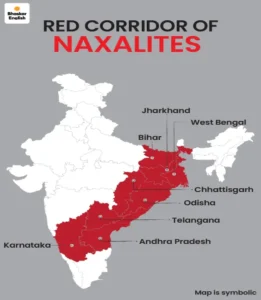
Red Corridor of Naxalites

Causes of Naxalism

  • SocioEconomic Deprivation: Poverty, land alienation, and lack of basic services in tribal areas.
  • Governance Deficit: Weak state presence, corruption, and exploitation by local elites.
  • Ideological Factors: Influence of Maoist ideology advocating armed revolution against the state.

Government Response

  • Security Operations: Launch of Operation Green Hunt (2009) and deployment of Central Armed Police Forces in affected states.
  • Development Initiatives: Schemes like Integrated Action Plan (IAP) and Aspirational Districts Programme to improve infrastructure, health, and education.
  • Technology Use: Drones, satellite mapping, and modern surveillance to track insurgent movements.

Current Status

  • Incidents of LWE violence have declined by over 80% since 2010, with only 120 violent incidents reported in 2025 compared to 620 in 2010 (Ministry of Home Affairs).
  • The number of affected districts reduced from 96 in 2010 to fewer than 25 in 2025, concentrated mainly in Chhattisgarh, Jharkhand, and Odisha.
  • Bastar region, once the epicenter, now has 70+ service centers, 1,200 km of new roads, and 300 new schools, signaling a clear shift from conflict to development.

Significance of Decline

  • Strengthens internal security and governance in tribal regions, with police presence expanded to 95% of villages in affected districts.
  • Boosts economic development and investment, as mineralrich states like Chhattisgarh and Jharkhand attracted USD 12 billion FDI in mining and steel in 2025.
  • Enhances India’s image as a stable democracy, capable of tackling insurgency through combined force and welfare measures, reflected in UNDP’s 2025 report praising India’s inclusive development in conflict zones.

Naxalism

Naxalism is a Maoistinspired insurgency that began in 1967 in Naxalbari, West Bengal, and spread across tribal and mineralrich regions of India. It peaked in the 2000s with nearly 180 affected districts but has declined sharply since 2010 due to combined security and development measures.

What is Naxalism?

  • Naxalism refers to the Maoistoriented communist insurgency in India, named after the village Naxalbari (West Bengal) where the movement began in 1967.
  • It is based on the idea of a “protracted people’s war” against landlords, the state, and exploitative companies, claiming to represent tribal and marginalized communities.
  • The armed wing is the People’s Liberation Guerrilla Army (PLGA).

Origin and Timeline

  • 1967: Naxalbari uprising led by Charu Majumdar, Kanu Sanyal, and Jangal Santhal; peasants revolted against landlords.
  • 1969: Formation of Communist Party of India (Marxist–Leninist) (CPIML).
  • 1970s–80s: Spread to Bihar, Andhra Pradesh; government launched Operation Steeplechase (1971) to suppress.
  • 1990s: Rise of groups like Maoist Communist Centre (MCC) and People’s War Group (PWG).
  • 2004: Merger of MCC and PWG into Communist Party of India (Maoist), intensifying insurgency.
  • 2009: Launch of Operation Green Hunt by government forces.
  • 2010s: Peak influence with 180 districts affected; violence at its highest.
  • 2020s: Decline due to security operations and development; by 2025 fewer than 25 districts remain affected.

Spread and Areas

  • Known as the “Red Corridor”, stretching across Central and Eastern India.
  • Major states: Chhattisgarh, Jharkhand, Odisha, Bihar, Andhra Pradesh, Maharashtra, and West Bengal.
  • At its peak (2009–2010), nearly 180 districts were affected; by 2025, reduced to under 25 districts, mainly in Bastar (Chhattisgarh) and parts of Jharkhand and Odisha.

Conclusion

India’s success against Naxalism reflects the combined power of security action and inclusive development. In short: It marks a major milestone in internal security and democratic resilience.

INDIA’S COOKING FUEL SHORTAGE AND GLOBAL RIPPLE EFFECT

TOPIC: (GS3) ECONOMY: THE HINDU

India’s shortage of LPG (cooking gas) has led to reduced exports of alkylates, a key fuel additive, which in turn has contributed to higher gasoline prices in California, USA.

India’s Domestic Context

  • India imports nearly 55% of LPG demand, with rising consumption in rural households under the Pradhan Mantri Ujjwala Yojana (PMUY).
  • In 2025–26, LPG demand grew by 7%, creating supply pressure and forcing refiners to divert alkylates for domestic LPG production.
  • The government subsidizes LPG cylinders for over 90 million households, making supply stability politically and socially crucial.

Global Impact

  • Alkylates are essential for producing cleanerburning gasoline, especially under California’s strict emission standards.
  • India’s reduced exports created shortages in US refineries, pushing California’s average retail fuel price to USD 6.14 per gallon in May 2026.
  • This situation highlights the interdependence of global energy markets, where supply shocks in one country ripple across continents.

Economic Implications

  • India: Reduced exports mean lower foreign exchange earnings, but ensure domestic LPG stability.
  • United States: Rising gasoline prices add to inflationary pressures and increase consumer discontent.
  • Global: Demonstrates the vulnerability of supply chains to geopolitical and domestic policy decisions.

Policy Measures

  • India is expanding city gas distribution networks and promoting bioCNG and green hydrogen to reduce LPG dependence.
  • Diversification of energy imports and strengthening of strategic reserves are underway to enhance resilience.
  • Internationally, countries are exploring alternative suppliers and fuel blending technologies to reduce reliance on single sources.

Conclusion

India’s LPG shortage shows how domestic energy priorities can reshape global fuel markets. In short: It underlines the need for energy diversification and resilient supply chains.

INDIA’S RISING IMPORT BILL

TOPIC: (GS3) ECONOMY: THE HINDU

India’s merchandise trade deficit has widened sharply in recent months due to high imports of crude oil, electronics, and fertilizers, putting pressure on the rupee and foreign exchange reserves.

What is Trade Deficit?

  • A trade deficit occurs when a country’s imports exceed its exports in value.
  • It reflects an imbalance in external trade, often leading to current account deficit (CAD) and reliance on foreign capital inflows.

Causes of Trade Deficit

  • High Import Dependence: India imports 85% of crude oil and large volumes of electronics, fertilizers, and edible oils.
  • Commodity Price Surge: Rising global prices of gold and silver inflated import bills despite lower volumes.
  • Geopolitical Disruptions: The West Asia crisis (2026) reduced India’s exports to the region by 57.9% in March 2026, while imports also fell, worsening trade balance.
  • Weak Export Growth: Merchandise exports grew only 1% in FY 2025–26, while imports rose 7.5%, widening the gap.

Current Scenario (2026 Update)

  • India’s trade deficit stood at USD 265 billion in FY 2025–26, up from USD 218 billion in FY 2023–24.
  • Crude oil accounts for nearly 25% of total imports, followed by electronics (18%) and fertilizers (6%).
  • The rupee averaged ₹83.2 per USD in early 2026, reflecting sustained pressure from global commodity prices.

Major Components of Import Bill

  • Petroleum and Energy Imports: India imports over 85% of its crude oil needs, making it highly sensitive to global price fluctuations.
  • Electronics and Machinery: The ProductionLinked Incentive (PLI) scheme aims to boost domestic manufacturing and reduce import reliance.
  • Fertilizers and Edible Oils: India imports nearly 60% of its edible oil and 30% of fertilizers, mainly from Indonesia, Malaysia, and Russia.
  • The National Mission on Edible Oils – Oil Palm (NMEOOP) seeks to enhance domestic production.
  • Gold and Luxury Goods: Gold imports remain high due to cultural demand, affecting foreign currency reserves. The government encourages digital gold and recycling initiatives to curb imports.

Impact on economy

Macroeconomic

  • Rising imports have widened India’s Current Account Deficit (CAD) to 2.3% of GDP in FY 2025–26, compared to 1.9% in FY 2023–24.
  • The merchandise trade deficit reached USD 265 billion, driven by high crude oil and electronics imports.
  • Persistent CAD pressures can weaken external stability and increase dependence on foreign capital inflows.

Currency and Inflation Impact

  • Heavy import bills exert pressure on the Indian rupee, which averaged ₹83.2 per USD in early 2026.
  • Depreciation leads to imported inflation, raising domestic prices of fuel, fertilizers, and consumer goods.
  • The Wholesale Price Index (WPI) inflation rose to 4.8% in April 2026, partly due to global commodity volatility.

Fiscal and Policy

  • Higher import costs increase the subsidy burden on petroleum and fertilizers, straining fiscal discipline.
  • The government promotes Atmanirbhar Bharat and PLI schemes to boost domestic manufacturing and reduce import dependence.
  • Longterm fiscal sustainability depends on diversifying energy sources and expanding export competitiveness.

Financial and Investment

  • Persistent deficits can affect sovereign credit ratings and investor confidence.
  • India’s foreign exchange reserves, though robust at USD 640 billion (May 2026), face pressure from rising import payments.
  • Portfolio investors remain cautious amid global interest rate fluctuations and rupee volatility.

Policy Measures

  • Atmanirbhar Bharat & make in India: India’s manufacturing share of GDP rose to 17.8% in FY 2025–26 (from 15.6% in FY 2020–21) due to Atmanirbhar Bharat and Make in India, supported by PLI schemes worth ₹2.3 lakh crore, which boosted electronics and pharma exports, with mobile phone exports crossing USD 16 billion in 2025.
  • Diversification of Energy Sources & Trade Agreements: India’s renewable energy capacity reached 195 GW in 2026, including 120 GW solar and 45 GW wind, reducing crude dependence;
  • IndiaUAE CEPA boosted nonoil trade by 18% in 2025, while bilateral energy deals with Saudi Arabia and Norway expanded green hydrogen cooperation.
  • Export Competitiveness & Logistics Reforms: India’s merchandise exports touched USD 460 billion in FY 2025–26, aided by the National Logistics Policy (2022) and PM Gati Shakti, which cut logistics costs to 8.9% of GDP (from 13% in 2020).
  • Fiscal & Strategic Measures: India expanded strategic petroleum reserves to cover 90 days of imports, while customs duty rationalization and foreign exchange reserves remain strong at USD 640 billion (May 2026), ensuring resilience against external shocks.

Conclusion

India’s rising import bill signals both economic growth and external vulnerability. In short: Sustainable development demands balanced trade, energy diversification, and selfreliance in production.

EBOLA OUTBREAK AND WHO’S PHEIC DECLARATION

TOPIC: (GS3) SCIENCE AND TECHNOLOGY: THE HINDU

The World Health Organization (WHO) recently declared the Ebola outbreak in the Democratic Republic of Congo (DRC) and Uganda as a Public Health Emergency of International Concern (PHEIC) due to rising cases and crossborder spread.

Ebola virus

  • Ebola is a severe viral disease caused by the Ebola virus, first identified in 1976 near the Ebola River in the DRC.
  • It is a zoonotic infection, transmitted from animals (mainly fruit bats) to humans, and spreads through direct contact with infected bodily fluids.
  • The disease has a high fatality rate, often exceeding 50%, making it one of the deadliest viral infections known.

Public Health Emergency of International Concern (PHEIC)

  • Definition: A PHEIC is the highest global health alert under the International Health Regulations (IHR, 2005), declared when an outbreak is serious, sudden, and poses risk of international spread.
  • When WHO Issues It: The WHO DirectorGeneral, after consulting the Emergency Committee, declares a PHEIC only when the event requires urgent international coordination beyond national capacities.
  • Past Examples: PHEIC has been declared for H1N1 influenza (2009), Ebola (2014, 2019, 2026), Zika virus (2016), and COVID19 (2020), showing its use in major global health crises.
  • Why This Time (2026 Ebola Outbreak): The Bundibugyo ebolavirus strain in DRC and Uganda caused over 300 suspected cases and 90 deaths, with crossborder spread risk, prompting WHO to declare PHEIC for rapid vaccination, treatment, and containment.

Current Situation (2026)

  • The outbreak is driven by the Bundibugyo ebolavirus strain, with confirmed cases reported in DRC’s Ituri Province and Uganda’s Kampala region.
  • As of May 2026, WHO has recorded over 300 suspected cases and 90 deaths, with containment measures still underway.
  • Ring vaccination using approved Ebola vaccines and monoclonal antibody therapies are being deployed to frontline workers and close contacts.

Transmission and Prevention

  • Ebola spreads through direct contact with blood, secretions, or contaminated surfaces, making infection control critical.
  • Preventive strategies include rapid isolation of patients, contact tracing, safe burials, and strict infectioncontrol practices in health facilities.
  • WHO stresses community engagement, trustbuilding, and awareness campaigns to reduce stigma and encourage early medical care.

Global Response and India’s Role

  • International agencies like WHO, UNICEF, and CDC are coordinating emergency response teams for surveillance and treatment.
  • India contributes through medical supplies, vaccine research collaboration, and specialized training under the Global Health Security Agenda (GHSA).
  • The outbreak highlights the urgent need for stronger global health surveillance systems and preparedness frameworks to tackle future pandemics.

INDIA–SOUTH KOREA DEFENCE COOPERATION

TOPIC: (GS2) INTERNATIONAL RELATIONS: THE HINDU

India and South Korea have recently intensified defence ties through highlevel visits and strategic agreements, focusing on defence manufacturing, technology transfer, and IndoPacific security.

India–Korea Relations

  • Shared History: India supported Korea’s independence struggle during the 20th century, and Indian troops served in the UN Peacekeeping Mission during the Korean War (1950–53).
  • Cultural ties date back to ancient Buddhist exchanges, with monks traveling between Nalanda and Korean kingdoms.
  • Diplomatic Relations: Formal diplomatic ties were established in 1973, upgraded to a Strategic Partnership in 2010 and a Special Strategic Partnership in 2015.
  • Defence Cooperation: India and South Korea collaborate on K9 VajraT artillery systems and submarine propulsion technologies under Make in India. Joint participation in the KF21 fighter programme and naval exchanges strengthen IndoPacific security.
  • Economic & Trade Relations: South Korea is India’s 13th largest trading partner, with bilateral trade crossing USD 27 billion in 2024. Major Korean companies like Samsung, Hyundai, and LG have invested heavily in India.
  • Diaspora & Cultural Links: Around 12,000 Indians live in South Korea, mainly professionals and students in IT, engineering, and academia.
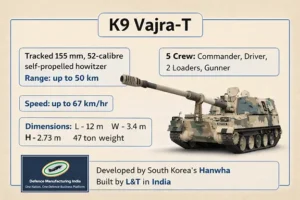
K9 Vajra-T

Key Areas of Cooperation

  • Defence Manufacturing: Collaboration in submarine projects and naval propulsion systems. Joint ventures under Make in India to boost indigenous capacity.
  • Aerospace Collaboration: Participation in the KF21 fighter programme. Supply and coproduction of FA50 light combat aircraft.
  • Technology Transfer: Sharing expertise in missile systems, avionics, and propulsion technologies. Enhancing India’s selfreliance in defence modernization.

Regional Security Concerns

North Korea’s Nuclear Programme

  • Threat Perception: North Korea’s continued nuclear tests and ballistic missile launches destabilize East Asia and threaten global nonproliferation norms.
  • Treaty Context: Despite global frameworks like the NPT (1968) and UN Security Council resolutions, Pyongyang remains outside compliance.
  • India–South Korea Response: Both nations emphasize diplomatic pressure and defence preparedness to counter escalation.

China’s Naval Assertiveness

  • IndoPacific Challenge: China’s expanding naval presence in the South China Sea and Indian Ocean threatens freedom of navigation and maritime trade routes.
  • Treaty/Initiative: India and South Korea align with broader initiatives like the Quad and UN Convention on the Law of the Sea (UNCLOS, 1982) to uphold maritime rules.
  • Example: India’s participation in Malabar naval exercises and South Korea’s cooperation with USled drills highlight shared concerns.

Russia–North Korea Military Cooperation

  • Recent Developments: Russia’s growing defence ties with North Korea, including arms transfers, complicate regional stability.
  • Global Framework: Such cooperation undermines UN sanctions imposed on Pyongyang.
  • India–South Korea Position: Both nations advocate for strict enforcement of sanctions and strengthening multilateral security dialogues.

Significance of Partnership

  • Enhancing IndoPacific Security Architecture: Both nations are part of the rulesbased IndoPacific order, supporting UNCLOS (1982) principles for freedom of navigation.
  • SelfReliance in Defence Production: The K9 VajraT selfpropelled artillery system,(Make in India Project) codeveloped with South Korea’s Hanwha, is a flagship success. Over 100 units have been inducted into the Indian Army.
  • Strategic Partnerships: India’s role in the Quad and South Korea’s US alliance converge to balance China’s influence.

Conclusion

India–South Korea defence ties are evolving into a strategic partnership for peace and stability in the IndoPacific. In essence: It reflects shared security concerns and a push for selfreliant defence growth.

NORDIC COUNTRIES

TOPIC: (GS2) INTERNATIONAL RELATIONS: THE HINDU

The Prime Minister is visiting Norway for the 3rd India–Nordic Summit, strengthening cooperation in trade, clean energy, and Arctic governance.

Nordic Countries

  • The Nordic region includes Denmark, Finland, Iceland, Norway, and Sweden, along with autonomous territories: Faroe Islands, Greenland (Denmark), and Åland Islands (Finland).
  • Often confused with Scandinavia, which refers mainly to Norway, Sweden, and Denmark.
  • Sweden is the largest and most populous; Iceland is the least populous; Denmark is the smallest.
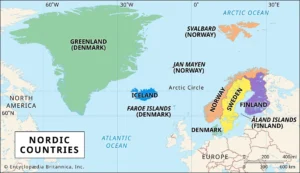
Nordic Countries

Key Features

  • High Rankings: Nordic nations consistently score among the top globally in education, civil liberties, quality of life, and competitiveness.
  • Languages: Majority speak North Germanic languages (Danish, Norwegian, Swedish, Faroese, Icelandic). NonGermanic languages include Finnish, Greenlandic, and Sami.
  • Political Systems:
    • Constitutional monarchies: Denmark, Sweden, Norway.
    • Republics: Finland, Iceland.
    • Iceland’s Althing is the world’s oldest parliament (930 AD).

Cooperation

  • Institutional collaboration through the Nordic Council and Nordic Council of Ministers.
  • EU Members: Denmark, Sweden, Finland.
  • EEA Members: Norway, Iceland (with Liechtenstein).
  • Strong focus on climate action, Arctic research, digital innovation, and maritime security.

India–Nordic Engagement (2026 Update)

  • India and Nordic countries cooperate on green energy, Arctic studies, digital innovation, and sustainable development.
  • The 3rd India–Nordic Summit in Oslo (May 2026) emphasizes renewable energy, AI, and ocean governance.
  • Nordic nations support India’s role in global climate leadership and UN reforms.

Conclusion

Nordic countries are progressive democracies with strong welfare models, and their partnership with India enhances climate, technology, and global governance cooperation. In short: The India–Nordic Summit reflects shared sustainability and innovation goals.

REDNECKED FALCON

TOPIC: (GS3) ENVIRONMENT: THE HINDU

Recently, a rare RedNecked Falcon was sighted in Kawal Tiger Reserve, Telangana, highlighting its conservation importance.

About RedNecked Falcon

  • Belongs to the falcon family (Falconidae); mediumsized bird of prey.
  • Recognised by its reddishbrown crown and neck, bluishgrey upperparts, sharp talons, and swift flight.
  • Two distinct populations: India (up to Himalayan foothills, Terai, Nepal, Pakistan, Bangladesh) and Africa (south of Sahara).
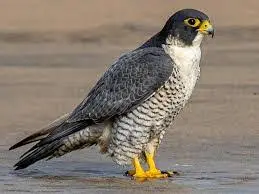
Rednecked Falcon

Habitat

  • Found in open woodlands, dry deciduous forests, scrublands, and agricultural fields.
  • Prefers semiarid zones with scattered trees for nesting.

Characteristics

  • Known for pair hunting, often at dawn and dusk.
  • Mostly resident species, but may move nomadically depending on weather.
  • Diet: Small birds, reptiles, rodents, and insects.
  • Threats: Habitat loss, deforestation, pesticide use, and disturbance in nesting areas.

Conservation Status

  • IUCN Red List: Near Threatened (2026 update).
  • Population trend: Declining, especially in South Asia due to agricultural expansion and chemical use.
  • Protected under Schedule IV of the Wildlife Protection Act, 1972 (India).

Significance

  • Acts as a bioindicator species, reflecting the health of dry forest and scrubland ecosystems.
  • Its decline signals ecological stress in semiarid landscapes.

Conclusion

The RedNecked Falcon is a rare raptor of India and Africa, facing threats from habitat loss and pesticides. In short: Its conservation is vital for ecosystem balance and biodiversity protection.


Write a Review

Your email address will not be published. Required fields are marked *

Seraphinite AcceleratorOptimized by Seraphinite Accelerator
Turns on site high speed to be attractive for people and search engines.