

Table of Contents
ToggleFEDERALISM IN INDIA
TOPIC: (GS2) POLITY: THE HINDU
The defeat of a recent Constitutional Amendment Bill reignited debates on India’s federal structure.
What is Federalism?
- Federalism is a system of governance where powers are divided between the Centre and States, ensuring both levels function independently yet cooperatively.
- It balances unity with diversity, allowing states to address local needs while the Centre manages national concerns.
Democratic Deficit in Representation
- Seat Freeze: Amendments in 1976 and 2002 froze redistribution of Lok Sabha seats based on the 1971 Census, extended until after the 2026 Census.
- Impact:
- Southern states (AP, Kerala, TN, Telangana) would lose 23 seats if updated.
- Northern states (Bihar, MP, Rajasthan, UP) would gain 31 seats.
- Fertility decline in the South vs. rising population in the Hindi heartland has created representation tensions.
Fiscal Transfers Challenge
- Redistribution widened over decades:
- 1960s: Hindi heartland received ~20% more than contribution; South/West ~20% less.
- 2023: Heartland received 90% more, South 44% less, West 58% less.
- Perception: Betterperforming states penalised for growth and population control, while poorer states are rewarded.
Structural Divergence Among States
- Rapid Growth in South & West: Since 1980, states like Tamil Nadu, Karnataka, Kerala, Maharashtra, Gujarat, and Haryana recorded per capita GDP growth rates of 6–7% annually, comparable to China’s sustained growth.
- Lagging Regions: The Hindi heartland (UP, Bihar, MP, Rajasthan) and West Bengal grew at slower rates (~3–4% annually), creating sharp economic and demographic imbalances.
- Impact on Federalism: This divergence directly influences political representation (seat allocation post2026 Census) and fiscal redistribution (Finance Commission transfers).
Federalism Under Strain
- Political Centralisation: Major national decisions—demonetisation (2016), farm laws (2020), CAA (2019), new criminal laws (2023), electoral reforms (2025)—were taken with limited state consultation, deepening mistrust.
- Shift in Federal Practice: India’s model of cooperative federalism is increasingly giving way to combative federalism, eroding trust between Centre and states.
- Regional Grievances: Rising discontent in Kashmir, Ladakh, Manipur, Southern states, and among religious minorities, reflecting uneven accommodation of regional aspirations.
- Fiscal Transfers Data (2023): Hindi heartland states received 90% more resources relative to their economic contribution, while Southern states received 44% less, intensifying perceptions of unfairness.
Democratic Sensibility as a Solution
- Definition: Democratic sensibility means the willingness to consult, compromise, and accommodate, especially by those holding greater power.
- GST Council Example (2018): When Kerala opposed taxation on gambling, the then Union Finance Minister persuaded Kerala to stay, accommodated its concerns, and preserved consensus—showing maturity in cooperative governance.
- Significance: Such practices build trust between Centre and states, essential for managing India’s diverse federal democracy.
- Lesson for 2026: Without consultation and consensusbuilding, even manageable federal issues risk escalating into major political crises.
Mechanisms for Addressing Federal Issues
- Finance Commission (Article 280): Established every five years to recommend tax devolution and grantsinaid between Centre and States. States can present concerns on fiscal imbalance, revenue sharing, and equitable distribution.
- InterState Council (Article 263): Serves as a platform for dialogue and coordination among Centre and States. Chaired by the Prime Minister, with Chief Ministers and Union Ministers as members.
- GST Council (Article 279A): Ensures fiscal federalism in indirect taxation. Decisions require consensus or threefourths majority of Centre and States.
- Supreme Court (Articles 131 & 32): States can invoke Article 131 for disputes with the Centre or other states. Example: States challenged CAA (2019) and farm laws (2020) under these provisions.
- Rajya Sabha (Article 80): Can authorize Parliament to legislate on State List subjects (Article 249) when national interest demands.
- Zonal Councils (Part III of States Reorganisation Act, 1956): Promote regional cooperation and address interstate issues like border disputes, transport, and resource sharing. Chaired by the Union Home Minister, with Chief Ministers as members.
Way Forward
- Constitution Bench clarity on representation and fiscal formulas.
- Revised fiscal compacts ensuring fairness without penalising growth.
- Timebound redistribution of seats post2026 Census.
- Strengthening institutions like InterState Council and Finance Commission.
- Above all, fostering democratic sensibility and trust in Centre–State relations.
FEDERALISM AND CONSTITUTION
- Article 1: India is a “Union of States” – emphasizing indestructible unity but flexible federalism.
- Seventh Schedule: Division of powers into Union List (97 subjects), State List (66 subjects), Concurrent List (52 subjects).
- Article 246: Defines legislative competence of Centre and States.
- Article 356: Emergency provisions, though often criticized for misuse.
- Finance Commission (Article 280): Ensures fiscal federalism by recommending devolution of taxes.
- InterState Council (Article 263): Forum for resolving disputes and promoting coordination.
- Supreme Court: Acts as the guardian of federal balance, e.g., Kesavananda Bharati (1973) upheld federalism as part of the basic structure.
Conclusion
India’s federalism is a work in progress, facing strains from demographic and economic divergence. In short: Only trust, consultation, and cooperative governance can sustain India’s federal democracy.
LPG IMPORT CHALLENGES AND INDIA’S ENERGY SECURITY
TOPIC: (GS3) ECONOMY: INDIAN EXPRESS
India’s LPG imports from the U.S. have been disrupted due to ship scarcity and longer routes via the Cape of Good Hope, raising concerns about supply stability.
LPG in India’s Energy Mix
- Critical household fuel: LPG is the primary cooking fuel for millions of households, especially after the Pradhan Mantri Ujjwala Yojana (PMUY) distributed over 9.6 crore connections by 2025.
- Secondlargest global consumer: India consumed 28.3 million tonnes of LPG in FY 2025–26, accounting for nearly 10% of global demand.
- High import dependence: Around 55% of India’s LPG requirement is imported, mainly from the Middle East and the U.S., making supply vulnerable to global disruptions.
- Rising demand trend: LPG consumption grew at 4.5% annually between 2015–2025, driven by urban households, rural penetration, and industrial use.
- Energy security concern: India’s LPG import bill crossed USD 16 billion in FY 2025–26, reflecting exposure to freight costs and geopolitical risks.
Current Challenges
- Shipping Constraints: Attacks in the Red Sea (2024–26) disrupted Suez Canal routes, forcing ships to take the longer Cape of Good Hope route, increasing voyage time by 12–15 days.
- Freight Costs: Freight rates surged by 40% in 2025–26, raising import bills.
- Supply Volatility: U.S. shipments to India fell from 4.5 lakh tonnes in March 2026 to 1.67 lakh tonnes in May 2026, due to reduced carrier availability.
- Persian Gulf Disruption: Regional instability reduced supplies from traditional Gulf exporters, making India more reliant on U.S. imports.
Economic Implications
- India: Higher import costs strain foreign exchange reserves (LPG import bill crossed USD 16 billion in FY 2025–26) and increase subsidy burden under Pradhan Mantri Ujjwala Yojana (PMUY).
- Consumers: Domestic LPG prices rose to ₹950 per cylinder (2026 average), impacting household budgets, especially rural families.
- Global: Demonstrates how geopolitical tensions (e.g., Houthi attacks in Red Sea) and logistics bottlenecks ripple across continents, raising freight rates by 40% in 2025–26.
Policy Measures
- Expanding City Gas Distribution (CGD) Networks: As of March 2026, 12,000+ LPG distributors and 300 bottling plants operate nationwide.
- PNGRB (Petroleum and Natural Gas Regulatory Board) targets 300+ CGD networks covering 70% of India’s population by 2030.
- Promoting BioCNG and Green Hydrogen: Under the National Green Hydrogen Mission (2023), India aims for 5 million tonnes annual production by 2030.
- Strengthening Strategic Reserves: India currently has 5.33 million tonnes of crude oil reserves in facilities at Visakhapatnam, Mangalore, and Padur.
- Diversifying Energy Partnerships: India signed longterm LPG supply agreements with the U.S. (2024) and is exploring partnerships with Nigeria, Mozambique, and Australia.
DIFFERENCES BETWEEN LPG AND CNG
Aspect LPG CNG
Full Form Liquefied Petroleum Gas Compressed Natural Gas
Composition Propane + Butane Predominantly Methane (CH₄)
State at Storage Liquid under moderate pressure (~7–8 bar) Gas under very high pressure (~200–250 bar)
Energy Density Higher – more compact fuel, longer range Lower – requires larger tanks for same range
Safety Heavier than air, accumulates near ground in leaks (higher risk) Lighter than air, disperses quickly in leaks (safer)
Emissions Low emissions, but higher than CNG Cleaner emissions – less CO₂, NOx, and particulates
Infrastructure Widely available in smaller towns and rural areas Growing in metros via City Gas Distribution (IGL, MGL, Gujarat Gas, Adani Total Gas)
Cost (2026) ~₹65–70/litre equivalent ~₹75–85/kg (cheaper than petrol at ₹100+/litre)
Conclusion
India’s LPG import challenges underline the need for energy diversification and resilient supply chains. In short: Ensuring domestic stability while reducing external dependence is key to longterm energy security.
TRANSGENDER PERSONS (PROTECTION OF RIGHTS) ACT
TOPIC: (GS2) POLITY: THE HINDU
The National Human Rights Commission (NHRC) has urged the Centre to review amendments to the Transgender Persons (Protection of Rights) Act, citing concerns over removal of the right to selfperceived gender identity.
Transgender Rights Law in India
- Legal Safeguard: The Transgender Persons (Protection of Rights) Act, 2019 was enacted to ensure equality, prohibit discrimination, and provide welfare measures for transgender individuals.
- Population Data: As per the 2011 Census, India had 4.9 lakh selfidentified transgender persons; community estimates in 2025 suggest the number exceeds 20 lakh, highlighting underrepresentation in official records.
- Education & Employment: NHRC’s 2025 survey found over 80% unemployment among transgender persons, with less than 50% literacy rate, showing gaps in inclusion despite legal protections.
- Healthcare Access: Only 12 government hospitals (2025 data) provide genderaffirming medical care, far below the demand.
- Policy Initiatives:
- Garima Greh Scheme (2020): Shelter homes for transgender persons; 12 functional centres by 2025.
- SMILE Scheme (2022): Focused on rehabilitation and skill development.
- National Transgender Welfare Board: Proposed to monitor implementation but yet to be fully operational.
- Judicial Backing: The NALSA v. Union of India (2014) judgment recognized the right to selfidentification of gender as part of fundamental rights under Articles 14, 15, 19, and 21.
Key Provisions of the Act
- Recognition of Identity: Transgender persons can apply for a certificate of identity through the District Magistrate.
- AntiDiscrimination: Prohibits discrimination in education, employment, healthcare, housing, and public services.
- Welfare Measures: Mandates government schemes for social security, healthcare, and rehabilitation.
- Offences & Penalties: Criminalizes denial of rights, abuse, and violence against transgender persons.
Need for Changes
- SelfIdentification Issue: Removal of “selfperceived gender identity” undermines autonomy.
- Data Inclusion: Census and educational records often fail to capture gender diversity.
- Child Protection: Current laws lack explicit provisions for genderaffirming placements under the Juvenile Justice Act.
- Healthcare Access: Limited facilities for genderaffirming medical care.
Challenges
- Implementation Gaps: Bureaucratic hurdles in obtaining identity certificates.
- Social Stigma: Persistent discrimination despite legal safeguards.
- Employment Barriers: Transgender persons face high unemployment rates (over 80% as per NHRC 2025 survey).
- Legal Conflicts: Contradictions between statutory provisions and Supreme Court’s NALSA judgment (2014), which upheld selfidentification.
Way Forward
- Restore SelfIdentification: Align law with NALSA (2014) and global best practices.
- Inclusive Data Systems: Census, school admissions, and official records must recognize diverse genders.
- Healthcare & Social Security: Expand genderaffirming medical facilities and targeted welfare schemes.
- Awareness & Training: Sensitize officials, educators, and employers to reduce stigma.
- NHRC Recommendations (2026): Review Registration of Births and Deaths Act, ensure genderaffirming placements, and strengthen monitoring mechanisms.
RIGHTS OF TRANSGENDER PERSONS IN INDIA
- Constitutional Protection:
- Article 14 – Right to equality before law.
- Article 15 & 16 – Prohibition of discrimination in employment and public spaces.
- Article 19(1)(a) – Freedom of expression, including gender identity.
- Article 21 – Right to life and dignity, interpreted to include selfidentification.
- Judicial Recognition:
- NALSA v. Union of India (2014) – Supreme Court recognized transgender persons as a third gender and upheld their right to selfidentification.
- Declared them eligible for reservations in education and employment under socially and educationally backward classes.
- Statutory Rights:
- Transgender Persons (Protection of Rights) Act, 2019 prohibits discrimination in education, healthcare, employment, housing, and public services.
- Provides right to selfperceived gender identity (though recent amendments have triggered debate).
- Mandates establishment of welfare boards and grievance redressal mechanisms.
Conclusion
The transgender rights law is a progressive step, but gaps in selfidentification and implementation hinder inclusivity. In short: A rightsbased, inclusive approach is essential for true equality and dignity.
RULE OF LAW, DUE PROCESS OF LAW, AND PROCEDURE ESTABLISHED BY LAW
TOPIC: (GS2) POLITY: THE HINDU
During the 3rd India–Nordic Summit in Oslo (May 2026), the Prime Minister emphasized democracy and rule of law as the foundation of India’s partnership with Nordic nations.
Introduction
- The Rule of Law is a fundamental principle ensuring that all individuals and institutions are subject to law, safeguarding liberty and equality.
- In India, debates often arise between “Procedure Established by Law” (Article 21) and “Due Process of Law”, shaping judicial review and protection of rights.
Key Concepts
Rule of Law
- Originated from A.V. Dicey’s theory in Britain.
- Implies equality before law, absence of arbitrary power, and supremacy of legal authority.
- Example: Kesavananda Bharati case (1973) – Rule of law recognized as part of the basic structure of the Constitution.
Procedure Established by Law (India’s Approach)
- Mentioned in Article 21: “No person shall be deprived of his life or personal liberty except according to procedure established by law.”
- Means that if Parliament passes a law following proper procedure, it is valid—even if unfair.
- Example: ADM Jabalpur case (1976) upheld suspension of liberty during Emergency, showing limitations of this approach.
Due Process of Law (US Approach, Indian Evolution)
- Broader concept ensuring not only legal procedure but also fairness, justice, and reasonableness.
- Indian judiciary gradually adopted this through interpretation.
- Example: Maneka Gandhi case (1978) – Expanded Article 21 to include fair, just, and reasonable procedure, bringing India closer to “due process.”
- Example: Justice K.S. Puttaswamy case (2017) – Recognized privacy as a fundamental right, reinforcing substantive due process.
Conclusion
India’s constitutional journey shows a shift from rigid “procedure established by law” to a more substantive “due process” approach, strengthening democracy and rights. In short: The rule of law remains the backbone of India’s governance and judicial review.
SUPREME COURT’S RULING ON STRAY DOGS AND EUTHANASIA
TOPIC: (GS2) POLITY: THE HINDU
The Supreme Court (May 2026) upheld its earlier order allowing euthanasia of rabid and dangerous stray dogs, refusing to modify directions on their removal from highfootfall public places.
Stray Dog Challenge in India
- Persistent Urban Issue: Stray dog management has long been a challenge in India, involving concerns of public safety, animal rights, and municipal governance.
- Population Size: India has an estimated 1.5–2 crore stray dogs (2025 data, Animal Welfare Board of India), making it one of the largest stray dog populations globally.
- Rabies Burden: India accounts for 36% of global rabies deaths, with nearly 18,000–20,000 fatalities annually (WHO, 2025).
- Dog Bite Cases: Over 1.6 crore dog bite incidents were reported between 2012–2025, with rising cases in urban centres like Delhi, Bengaluru, and Hyderabad.
- Supreme Court Intervention (2025–26): The SC ruling seeks to balance human safety with animal welfare, allowing euthanasia of rabid/dangerous dogs while mandating Animal Birth Control (ABC) centres in every district.
- Municipal Responsibility: Cities like Mumbai and Chennai spend over ₹50–70 crore annually on sterilization and vaccination drives, yet coverage remains below 40% of stray population.
Highlights of the Ruling
- Euthanasia Permitted: Rabid and dangerous dogs may be euthanized to prevent threats to human life.
- No Rerelease: Even sterilized or vaccinated dogs cannot be rereleased into sensitive public institutions like schools, hospitals, bus depots, and railway stations.
- ABC Centres: Mandatory establishment of at least one Animal Birth Control centre per district for sterilization and vaccination.
- Judicial Standpoint: Court stated it “cannot remain a passive spectator when preventable threats to human life proliferate.”
Challenges
- Weak Implementation: Sterilization and vaccination programmes remain patchy, covering less than 40% of stray dog populations in major cities.
- Resource Constraints: Municipal bodies face funding shortages and lack trained veterinary staff, leading to poor coordination across districts.
- Animal Rights Debate: Ethical concerns persist over euthanasia versus rehabilitation, with NGOs advocating humane sterilization instead of culling.
- Public Awareness Deficit: Limited knowledge about responsible pet ownership, vaccination, and waste management contributes to uncontrolled stray populations.
Way Forward
- Strengthen ABC Programmes: Expand sterilization and vaccination drives with dedicated funding, districtlevel centres, and trained veterinary staff.
- Community Awareness: Launch campaigns on rabies prevention, safe interaction with animals, and humane treatment, especially in schools and urban neighbourhoods.
- Institutional Coordination: Improve collaboration between municipalities, NGOs, and veterinary services to ensure uniform implementation across states.
- Adoption & Shelter Models: Encourage adoption drives, expand shelter homes, and integrate rehabilitation alongside sterilization efforts to reduce street dog density.
Euthanasia
Euthanasia, also called mercy killing, is the deliberate act of ending life to relieve suffering.
- Types:
- Active Euthanasia: Direct intervention (e.g., administering lethal drugs) – not permitted in India.
- Passive Euthanasia: Withdrawal of life support or medical treatment – allowed under judicial guidelines.
Legal Position in India
- Article 21: Right to life includes the right to live with dignity, interpreted to cover the right to die with dignity.
- Supreme Court Rulings:
- Gian Kaur v. State of Punjab (1996): Rejected right to die but acknowledged dignity in death.
- Aruna Shanbaug case (2011): Allowed passive euthanasia under strict High Court approval.
- Common Cause v. Union of India (2018): Constitution Bench recognized passive euthanasia and advance medical directives (living wills).
- Harish Rana v. Union of India (2026): Reaffirmed constitutional validity of passive euthanasia, strengthened medical board oversight.
Conclusion
The SC ruling reflects the need to balance human safety and animal welfare in urban governance. In short: Effective sterilization, vaccination, and humane management are key to resolving India’s stray dog challenge.
BAIL UNDER UAPA AND SUPREME COURT’S APPROACHES
TOPIC: (GS2) POLITY: THE HINDU
The Supreme Court (2026) granted bail to a Kashmiri man in a narcoterror case, reiterating that prolonged incarceration under UAPA cannot override Article 21.
UAPA
- Origins: The Unlawful Activities (Prevention) Act (UAPA) was enacted in 1967 to curb activities threatening India’s sovereignty and integrity.
- Evolution: Expanded through amendments in 2004, 2008, and 2019, transforming it into India’s principal antiterror legislation.
- Designation Powers: Allows the government to declare individuals and organizations as terrorists.
- Investigative Authority: Empowers the National Investigation Agency (NIA) to investigate and prosecute terrorrelated cases.
- Extended Detention: Permits detention of accused persons for up to 180 days without filing a charge sheet, compared to 90 days under ordinary criminal law.
- Stringent Bail Restrictions: Section 43(D)(5) makes bail extremely difficult—courts cannot grant bail if prosecution shows a prima facie case, reversing the burden of proof.
Key Data & Statistics
- Cases Registered: Over 5,000 UAPA cases between 2015–2025 (NCRB data).
- Conviction Rate: Around 27% in 2025, significantly lower than conviction rates under general IPC offences (~50%).
- Undertrials: More than 70% of those charged under UAPA remain undertrial, highlighting prolonged incarceration.
- Regional Trends: Majority of UAPA cases reported from Jammu & Kashmir, Delhi, and Uttar Pradesh, reflecting regional concentration.
- Judicial Concern: Supreme Court in K.A. Najeeb (2021) and subsequent rulings emphasized that Article 21 (Right to Liberty) cannot be indefinitely suspended.
Judicial Approaches on Bail
Watali Judgment (2019)
- Courts must accept prosecution’s version at bail stage.
- Evidence need not be rigorously tested.
- Result: Tightened bail standards, leading to prolonged incarceration.
K.A. Najeeb Judgment (2021)
- Constitutional courts can grant bail despite statutory bar.
- Delay in trial violates Article 21 (Right to Liberty).
- Established that personal liberty cannot be indefinitely suspended.
Divergent Rulings (2024–26)
- Gurwinder Singh (2024): Delay alone insufficient; bail must satisfy Section 43(D)(5).
- Delhi Riots Case (Jan 2026): Bail denied, citing failure to cross “constitutional threshold.”
- Recent ruling (2026): Reaffirmed Najeeb as binding precedent, stressing liberty over indefinite detention.
Constitutional Significance
- Raises core question: Can stringent bail restrictions prevail over Article 21?
- Highlights tension between national security and civil liberties.
- Shows need for doctrinal clarity from a larger constitutional bench.
Way Forward
- Constitution Bench Clarification: Define relationship between Article 21 and Section 43(D)(5).
- Timebound Trials: Special courts must ensure speedy disposal.
- Uniform Bail Guidelines: Clear principles on delay, evidence, and liberty safeguards.
- Judicial Discipline: Smaller benches must follow larger precedents.
- Parliamentary Review: Examine safeguards against misuse and ensure proportionality.
BAIL
Bail refers to the temporary release of an accused person from custody, ensuring their appearance before the court when required.
- It is based on the principle that “bail is the rule, jail is the exception.”
- Bail upholds the presumption of innocence until proven guilty and protects personal liberty under Article 21 of the Constitution.
Constitutional and Legal Basis
- Article 21: Guarantees the right to life and personal liberty; arbitrary denial of bail violates this right.
- Article 22(2): Mandates that a person arrested must be produced before a magistrate within 24 hours.
- Criminal Procedure Code (CrPC):
- Sections 436–439 govern bail provisions.
- Section 436: Bail for bailable offences (right of the accused).
- Section 437–439: Bail for nonbailable offences, subject to judicial discretion.
- Judicial Interpretation: In Hussainara Khatoon v. State of Bihar (1979), the Supreme Court held that speedy trial and bail are integral to Article 21.
Types of Bail
- Regular Bail: Granted after arrest; ensures release during trial.
- Anticipatory Bail (Section 438 CrPC): Granted before arrest when a person fears being detained; protects against misuse of arrest powers.
- Interim Bail: Temporary relief until a regular or anticipatory bail application is decided.
- Default Bail (Section 167(2) CrPC): Granted when investigation exceeds the prescribed period (60 or 90 days) without filing a charge sheet.
Conclusion
The debate on bail under UAPA reflects India’s constitutional dilemma between liberty and security. In short: A balanced framework is essential to protect national security while upholding fundamental freedoms.
NATIONAL ONE HEALTH MISSION
TOPIC: (GS2) POLITY: THE HINDU
The Fifth Meeting of the Scientific Steering Committee (May 2026) on the National One Health Mission was held in New Delhi.
National One Health Mission
- The National One Health Mission (NOHM), launched in 2024, adopts a collaborative, multidisciplinary approach linking human, animal, and environmental health.
- It aims to safeguard national health by unifying surveillance systems and ensuring robust pandemic preparedness.
- Collaborative Approach: Integrates human, veterinary, and environmental health sectors.
- Nodal Agency: Indian Council of Medical Research (ICMR) under the Office of the Principal Scientific Adviser (PSA).
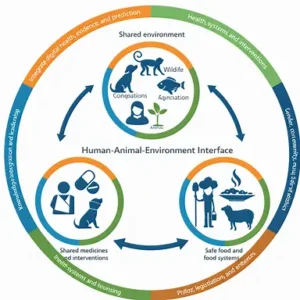
Governance Structure:
- Executive Committee: Chaired by MoHFW, PSA as vicechair, Member (Health) NITI Aayog as permanent invitee.
- Scientific Steering Committee: Chaired by PSA, includes Secretaries/DGs of stakeholder departments and two states (rotational basis).
- Surveillance Integration: Links disease monitoring across humans, livestock, and wildlife.
Latest Data & Relevance
- Global Context: WHO estimates 60% of emerging infectious diseases are zoonotic (spread from animals to humans).
- India’s Burden: Over 20 major zoonotic outbreaks reported between 2000–2025 (e.g., Nipah, Avian Influenza, COVID19).
- Economic Impact: COVID19 alone cost India ~₹30 lakh crore GDP loss (2020–22), highlighting need for integrated preparedness.
- Capacity Building: By 2026, 15 integrated surveillance labs established under NOHM across states.
Way Forward
- Expand statelevel One Health cells for localized monitoring.
- Strengthen data sharing platforms across ministries.
- Promote community awareness on zoonotic risks.
- Enhance international collaboration with WHO and FAO for global health security.
Conclusion
The National One Health Mission is a critical step in India’s pandemic preparedness and integrated health governance. In short: Building trust, coordination, and scientific capacity is essential to safeguard national health.
PMSHRI SCHEME
TOPIC: (GS2) POLITY: THE HINDU
The Union Ministry of Education (May 2026) signed an MoU with West Bengal to implement the PMSHRI Schools initiative in the state.
PMSHRI Scheme
- The Pradhan Mantri Schools for Rising India (PMSHRI) Scheme, launched in 2022, is a centrally sponsored initiative under the Ministry of Education.
- It seeks to develop 14,500+ model schools aligned with the National Education Policy (NEP) 2020, ensuring quality, equity, and innovation in school education.
Key Features
- Enhanced Infrastructure: Modern labs, libraries, art rooms, and sports facilities.
- Technology Integration: Smart classrooms, digital learning tools, and ICTenabled teaching.
- Holistic Learning: Playbased learning in early years, flexible pedagogy, and focus on critical thinking & creativity.
- School Quality Assessment Framework (SQAF): Regular evaluation to maintain high standards.
- Time Period: Implemented over five years (2022–23 to 2026–27).
Funding Pattern
- General States & UTs with Legislature: 60:40 ratio (Centre:State).
- Northeastern & Himalayan States + J&K: 90:10 ratio.
- UTs without Legislature: 100% funded by Centre.
- Budget Allocation: Around ₹27,360 crore (2022–27), covering infrastructure, teacher training, and digital resources.
Latest Data & Impact
- By 2026, over 9,000 schools have been upgraded under PMSHRI.
- Benefiting nearly 1.8 crore students across states and UTs.
- Focus on green schools: solar panels, rainwater harvesting, and waste management integrated in 30% of PMSHRI schools.
- Teacher training: More than 1.2 lakh teachers trained in NEPaligned pedagogy.
Conclusion
The PMSHRI Scheme is a transformative step in school education, aligning infrastructure and pedagogy with NEP 2020. In short: It strengthens quality, inclusivity, and innovation in India’s education system.