Table of Contents
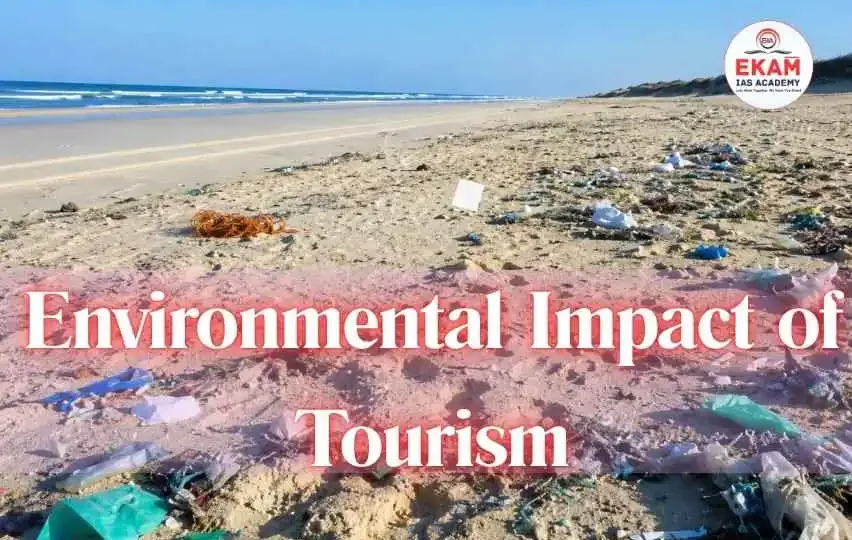
ToggleTourism has grown from a luxury pursuit into a massive global industry that shapes national economies. However, this growth has come at a high cost to the planet. The cumulative effects of tourism on environment systems represent a complex ecological paradox: the very natural beauty that draws travelers to pristine destinations is often degraded by the infrastructure built to accommodate them.
Understanding Tourism: Importance and Typologies
Tourism serves as a major source of foreign exchange earnings, promotes infrastructure growth, and creates diverse employment opportunities in remote regions. It is broadly categorized into:
- Mass Tourism: Large-scale, high-density travel to popular coastal or urban hubs, putting immense strain on local resources.
- Adventure Tourism: Travel to remote, often fragile landscapes (like high-altitude alpine zones) for trekking or climbing.
- Wildlife Tourism: Focused on exploring protected areas like national parks to view exotic fauna, which can disrupt natural animal behaviors if mismanaged.
Major Environmental Effects of Tourism
Unplanned tourism causes multi-layered, structural damage across different layers of the environment:
                        ┌──> Water: Depletion of local aquifers & untreated sewage leaks
                        │
[Mass Tourism] ─────────┼──> Land: Landscape scarring, solid waste, & plastic pollution
  Ecological Pressures  │
                        ├──> Air: High carbon footprints from aviation & cruise ships
                        │
                        └──> Biota: Wildlife stress, habitat fragmentation, & trampling
A. Resource Depletion and Pollution
- Water Crisis: Modern luxury resorts consume vast quantities of water for pools, landscaping, and guest rooms, often depleting local groundwater tables and leaving nearby villages facing severe water shortages.
- The Plastic and Waste Crisis: Popular tourist destinations generate immense amounts of solid waste. Millions of single-use plastic bottles, food wrappers, and consumer trash overwhelm local municipal waste systems, leading to open landfills that leak toxic chemicals into surrounding soils.
- Sewage Pollution: Untreated wastewater from lakeside resorts and beachfront hotels is frequently discharged directly into natural water bodies, causing nutrient overload (eutrophication) and toxic algal blooms.
B. Impact on Biodiversity and Ecosystems
The construction of hotels, roads, and viewpoint platforms leads directly to severe habitat fragmentation. Heavy foot traffic causes soil compaction and the trampling of native flora, which accelerates soil erosion. In fragile marine settings, careless scuba diving and anchor drops from tourist boats cause irreversible coral reef destruction.
C. Impact on Climate Change
The travel sector is a significant contributor to global greenhouse gas (CO2) emissions. This footprint is driven primarily by long-haul international aviation, heavy vehicular traffic in mountain terrains, and energy-intensive heating, ventilation, and air conditioning (HVAC) systems in large luxury resorts.
Effects of Tourism on Major Ecosystems and Indian Realities
India faces distinct geographic and environmental challenges where popular tourist corridors overlap with fragile ecological zones:
- The Himalayan Ecospace: High-altitude mountain destinations like Ladakh, Shimla, and Joshiyath suffer from rapid, unplanned commercial construction. This unregulated growth destabilizes steep mountain slopes, increasing the risk of severe landslides and flash floods.
- Coastal and Island Vulnerability: In coastal zones like Goa and the Andaman & Nicobar Islands, building resorts too close to the shore violates spatial regulations, destroying natural sand dunes and clearing protective mangrove forests.
Sustainable Tourism Solutions and Government Initiatives
Transitioning toward sustainable tourism UPSC modules highlight requires a firm shift away from resource-heavy consumption toward low-impact, community-driven conservation models.
Key Sustainable Frameworks:
- Carrying Capacity Assessment: Enforcing scientific caps on the maximum number of visitors allowed inside sensitive ecological zones at any given time to prevent resource depletion.
- Ecotourism: Managing travel to natural areas in ways that preserve the environment, sustain the well-being of local communities, and integrate green building designs like solar power and rainwater harvesting.
Core Government Initiatives in India:
- Swadesh Darshan 2.0: A revamped national scheme that prioritizes developing sustainable and responsible tourist destinations across India, moving away from unplanned infrastructure sprawl.
- National Strategy for Sustainable Tourism: A comprehensive policy framework designed to minimize environmental degradation, protect biodiversity, and promote plastic-free tourism zones.
- Travel for LiFE (Lifestyle for Environment): Part of India’s global LiFE movement, this initiative encourages travelers and businesses to adopt simple, eco-conscious habits—such as reducing water waste, banning single-use plastics, and supporting local economies—to clean up the tourism sector.
International Efforts
On the global stage, the United Nations World Tourism Organization (UNWTO) coordinates international policies to align travel growth with the Sustainable Development Goals (SDGs), focusing on Goal 12 (Responsible Consumption and Production) and Goal 14 (Life Below Water).
Conclusion
In conclusion, analyzing the effects of tourism on environment parameters underscores that the survival of the travel industry is tied directly to the health of the environment. Tourism can no longer operate on an extractive economic model. By enforcing strict carrying capacity limits, integrating the Travel for LiFE framework, and expanding community-led ecotourism, India can celebrate its rich cultural and geographical diversity while safeguarding its vital ecosystems for future generations.
UPSC Prelims: PYQs & Practice Questions
Previous Year Questions (Prelims)
UPSC CSE Prelims 2018
Q: In which one of the following States is Pakhui Wildlife Sanctuary located?
(a) Arunachal Pradesh
(b) Manipur
(c) Meghalaya
(d) Nagaland
Answer: (a) Arunachal Pradesh
Explanation:
Pakhui Wildlife Sanctuary, also known as
Pakke Wildlife Sanctuary, is located in
Arunachal Pradesh.
It is known for its rich biodiversity and community-led conservation efforts, especially in the protection of hornbills. For UPSC, it is a useful case study showing how controlled ecotourism can become a sustainable alternative to commercial mass tourism by protecting biodiversity while supporting local livelihoods.
UPSC CSE Prelims 2013
Q: Consider the following pairs:
1. Nokrek Biosphere Reserve : Garo Hills
2. Loktak Lake : Barail Range
3. Namdapha National Park : Dafla Hills
Which of the above pairs is/are correctly matched?
(a) 1 only
(b) 2 and 3 only
(c) 1, 2 and 3
(d) None
Answer: (a) 1 only
Explanation:
Pair 1 is correct.
Nokrek Biosphere Reserve is located in the
Garo Hills of Meghalaya.
Pair 2 is incorrect. Loktak Lake is located in Manipur and is surrounded by the Manipur hills, not the Barail Range.
Pair 3 is incorrect. Namdapha National Park is located in the Patkai hills of Arunachal Pradesh, not the Dafla Hills.
Understanding these fragile landscapes is important because unregulated wildlife tourism in such regions can disturb habitats, increase waste pressure, and affect sensitive species.
Practice Questions
Q: In the context of global effects of tourism on environment systems, consider the following statements regarding the ecological concept of Carrying Capacity:
1. It represents the maximum number of tourists an ecosystem can support without causing unacceptable
physical, economic, or socio-cultural degradation.
2. Once an ecosystem's carrying capacity is breached, the baseline ecosystem services, such as
soil binding and water filtration, begin to decline.
Which of the statements given above is/are correct?
(a) 1 only
(b) 2 only
(c) Both 1 and 2
(d) Neither 1 nor 2
Answer: (c) Both 1 and 2
Explanation:
Both statements are correct.
Ecological carrying capacity is a key principle in sustainable tourism planning. It means that every fragile landscape, such as a small island, alpine valley, coastal beach, or wildlife reserve, has a natural limit beyond which tourism becomes environmentally damaging.
When unregulated mass tourism exceeds this threshold, demand for hotels, roads, transport, water, and waste disposal increases sharply. This leads to deforestation, soil compaction, excessive waste generation, and pressure on local water resources, reducing the ecosystem’s ability to recover naturally.
Q: The newly launched Travel for LiFE campaign by the Government of India aims to transform the tourism sector by focusing primarily on which of the following?
(a) Granting fully subsidized international flight tickets to medical tourists.
(b) Encouraging individual travelers and hospitality businesses to adopt simple, eco-conscious habits to reduce waste and conserve water.
(c) Converting all protected national parks into high-density commercial amusement zones.
(d) Replacing local indigenous tour guides with automated AI systems.
Answer: (b) Encouraging individual travelers and hospitality businesses to adopt simple, eco-conscious habits to reduce waste and conserve water.
Explanation:
Travel for LiFE is an extension of India’s global
LiFE or Lifestyle for Environment movement. It promotes sustainable tourism by encouraging tourists, hotels, tour operators, and local stakeholders to adopt environmentally responsible behaviour.
Its focus includes reducing single-use plastics, conserving energy and water, managing solid waste responsibly, respecting local ecosystems, and supporting local economies. Thus, it shifts tourism from a consumption-heavy model to a more responsible and sustainable model.
UPSC Mains – Previous Year & Practice Questions
Mains Previous Year Questions
Mains 2023
Question: The National Green Tribunal (NGT) has raised concerns over the
ecological carrying capacity of hill stations. In light of this, discuss the environmental impacts of
unregulated tourism in the Himalayan ecosystem and suggest measures for
sustainable tourism.
(GS-3: Environment)
Mains 2022
Question: Each year a large amount of
plastic waste is generated in coastal tourist destinations. Discuss the impact of
microplastics on marine ecosystems and highlight institutional frameworks available in India to tackle
plastic pollution.
(GS-3: Environment & Pollution)
Mains 2020
Question: How will the melting of
Himalayan glaciers have a far-reaching impact on the
water resources of India? Analyze how
commercialized tourism accelerates this phenomenon.
(GS-1: Geography / Environment)
Mains 2019
Question: Coastal sand mining and uncontrolled construction for tourism purposes have increased vulnerability to
natural disasters along India's coastline. Elucidate with examples.
(GS-3: Disaster Management & Environment)
Mains 2018
Question: Define the concept of
Eco-tourism. How can it be used as a tool for
biodiversity conservation and
socio-economic development of indigenous communities in India?
(GS-3: Environment)
Mains Practice Questions
[15 Marks | 250 Words]
Question: “Mass tourism in ecologically fragile areas converts natural capital into short-term financial gains at the cost of long-term environmental security.” Critically analyze this statement with special reference to the Western Ghats and the Himalayan states.
[15 Marks | 250 Words]
Question: Enumerate the ecological impacts of marine and cruise tourism on the sensitive coastal biodiversity of India. Evaluate the efficacy of the Coastal Regulation Zone (CRZ) norms in mitigating these challenges.
[10 Marks | 150 Words]
Question: What do you understand by “Greenwashing” in the tourism sector? Suggest a regulatory framework to ensure that ecotourism ventures genuinely align with environmental conservation and community-led sustainable growth.



Tourism and Environment-FAQs
What is Carrying Capacity in tourism?
Carrying capacity is the maximum number of tourists a place can handle without damaging nature, reducing visitor experience, or disturbing local communities.
How does mass tourism cause Soil Compaction?
Repeated tourist movement presses soil tightly and removes air spaces. This reduces water infiltration, increases runoff, causes erosion, and prevents plant regrowth.
How does tourism cause lake Eutrophication?
Untreated sewage and detergents from hotels add nutrients like nitrogen and phosphorus to lakes. This causes algal blooms, oxygen depletion, and death of fish.
How is Travel for LiFE different?
Travel for LiFE focuses on tourist behaviour, not just infrastructure. It promotes small sustainable actions like reusable bottles, saving energy, and respecting local ecosystems.
What are Green Building certifications for hotels?
Certifications like GRIHA and LEED rate hotels on energy, water, waste, and design efficiency. They help reduce carbon footprint and environmental damage.