

Table of Contents
ToggleCYCLONE AMPHAN RELIEF AUDIT AND ACCOUNTABILITY CONCERNS
TOPIC: (GS2) POLITY: THE HINDU
The Comptroller and Auditor General (CAG) recently flagged serious irregularities in Cyclone Amphan relief distribution in West Bengal (2020), including duplicate transactions, misuse of funds, and political interference in beneficiary selection.
CAG Findings
- Duplicate Transactions: Over 9,226 beneficiaries received multiple credits through 18,891 transactions, worth crores of rupees.
- Fudged Records: Identical photographs were uploaded for thousands of claims, raising suspicion of fraudulent disbursals.
- Improper Classification: Houses were wrongly categorized as “fully damaged,” inflating compensation.
- Political Meddling: Grants were sanctioned based on recommendations of local leaders, bypassing verification.
- Irregular Fund Parking: Nearly ₹1,383 crore of ₹1,948 crore was parked in commercial bank accounts before disbursement, termed “highly irregular.”
Why It Is an Issue
- Misuse of Public Funds: Relief meant for vulnerable families was diverted or misallocated.
- Erosion of Trust: Citizens lose faith in governance when disaster aid is politicized.
- Fiscal Burden: Duplicate payments and inflated claims strain disaster management budgets.
- Ethical Concerns: Relief distribution became a tool of patronage rather than humanitarian support.
NDMA Challenges
- Verification Gaps: Lack of robust beneficiary identification systems (Aadhaar, voter ID).
- Coordination Issues: Weak integration between central and state agencies.
- Technology Use: Limited use of realtime data analytics for fraud detection.
- Capacity Constraints: Disaster relief often faces delays due to bureaucratic bottlenecks.
Accountability & Responsibility
- Polity Perspective: Relief distribution must remain free from political bias; corruption undermines democratic legitimacy.
- Ethics Dimension: Public officials have a duty of fairness, transparency, and integrity in handling disaster aid.
- Constitutional Mandate: Article 38 and Directive Principles stress equitable distribution of resources.
- Administrative Responsibility: CAG audits highlight the need for stronger checks and balances in governance.
Way Forward
- Digital Transparency: Use Aadhaarlinked DBT (Direct Benefit Transfer) to prevent duplication.
- Independent Oversight: Strengthen audit mechanisms and empower Lokpal/State Vigilance.
- Community Participation: Involve local civil society groups in monitoring relief distribution.
- Capacity Building: Train officials in ethical governance and disaster management best practices.
- Policy Reform: NDMA should adopt stricter guidelines for fund disbursement and accountability.
Conclusion:
The CAG’s findings on Cyclone Amphan relief expose systemic flaws in governance and ethics. Ensuring transparency, accountability, and depoliticized disaster management is essential to uphold public trust and democratic responsibility.
US–SAUDI NUCLEAR AGREEMENT IN WEST ASIA
TOPIC: (GS2) INTERNATIONAL RELATIONS: THE HINDU
The US approval of nuclear energy technology transfer to Saudi Arabia under the Trump administration has resurfaced in debates. Analysts warn that the absence of strong nonproliferation safeguards could trigger a regional nuclear race involving countries like Egypt, Turkey, Iran, and Israel.
Background of the Agreement
- In 2017–18, the US administration permitted nuclear cooperation with Saudi Arabia.
- The deal lacked the “Gold Standard” safeguards (no enrichment or reprocessing), raising proliferation risks.
- Saudi Arabia justified the move as part of its Vision 2030 energy diversification plan.
CAG & Expert Concerns
- Regional Security: Iran already has advanced nuclear capabilities; Saudi entry may escalate tensions.
- Israel’s Position: Israel fears erosion of its strategic edge in the region.
- Turkey & Egypt: Likely to demand similar nuclear rights, creating a domino effect.
- NonProliferation Treaty (NPT): Agreement seen as weakening global nuclear safeguards.
Why It Is an Issue
- Strategic Rivalry: Saudi–Iran competition could shift from proxy wars to nuclear brinkmanship.
- US Policy Contradictions: Promoting nuclear transfers while advocating nonproliferation undermines credibility.
- Regional Instability: Risk of nuclear technology misuse in politically volatile states.
- Global Governance: Weakens institutions like the IAEA and NPT framework.
Accountability & Responsibility – Polity & Ethics
- Polity Perspective: States must balance sovereignty in energy choices with global security obligations.
- Ethics Dimension: Nuclear technology transfer without safeguards raises moral questions of responsibility.
- US Role: As a global leader, the US is expected to uphold nonproliferation norms, not dilute them.
- International Responsibility: Agreements must ensure transparency, inspections, and compliance with IAEA standards.
Way Forward
- Gold Standard Agreements: Mandate strict safeguards in all nuclear cooperation deals.
- Regional Dialogue: Initiate West Asia nuclearfree zone talks under UN frameworks.
- IAEA Oversight: Strengthen inspection mechanisms for Saudi and other regional programs.
- Energy Alternatives: Promote renewables and nonnuclear clean energy to reduce proliferation risks.
- Global Cooperation: Align US, EU, and Asian powers on a common nonproliferation strategy.
Conclusion:
The US–Saudi nuclear deal highlights the tension between energy diversification and security risks. Without strong safeguards, such agreements risk igniting a regional nuclear arms race, undermining global nonproliferation efforts.
SUPREME COURT’S EVOLVING ENVIRONMENTAL JURISPRUDENCE
TOPIC: (GS2) POLITY: THE HINDU
The Supreme Court of India (July 2026) struck down the Centre’s 2021 Office Memorandum (OM) that allowed postfacto environmental clearances for projects already under construction. Background of Environmental Clearances
What are Environmental Clearances?
- Environmental Clearance (EC) is the formal approval required before starting projects that may impact the environment.
- It ensures that environmental, social, and health impacts are assessed and mitigated before construction begins.
- EC is mandatory for activities like mining, industry, infrastructure, power plants, and large dams.
Legal Framework
- Guided under the Environment Protection Act, 1986.
- Environment Impact Assessment (EIA) Notification, 2006 (under EPA) provides detailed procedures for clearance.
- Linked to constitutional provisions:
- Article 21: Right to life includes right to a clean environment.
- Directive Principles (Art. 48A): State must protect environment and forests.
- Fundamental Duty (Art. 51A(g)): Citizens must safeguard natural resources.
- Institutions involved: MoEFCC, State Pollution Control Boards, and National Green Tribunal (NGT) for dispute resolution.
Necessity of Strengthening Environmental Laws
- Rapid Industrialization: Projects often bypass EC norms, leading to ecological damage.
- Climate Commitments: India’s Paris Agreement targets require strict enforcement of green laws.
- Disaster Prevention: Weak clearances increase risks of floods, landslides, and industrial accidents.
- Public Trust: Transparent EC processes build confidence in governance.
- Global Standards: Aligning with UNEP guidelines and international best practices enhances credibility.
SUPREME COURT RULINGS
- 2017 – Common Cause Case: Reiterated EC must be obtained before project initiation.
- 2020 – Pharma Case: Declared postfacto clearance impermissible.
- 2021 – Electoral Steel Case: Stressed prior EC as a legal requirement.
- 2022 – Vanashakti Case: Held 2017 and 2021 OMs illegal.
- 2025 – Reaffirmation: SC reiterated Vanashakti judgment.
- 2026 – Latest Ruling: Upheld 2017 notification but invalidated 2021 OM, reinforcing strict compliance.
Challenges for NDMA & Environmental Governance
- Monitoring Capacity: Limited manpower to track thousands of projects.
- Data Transparency: Weak disclosure mechanisms hinder public participation.
- Balancing Growth & Ecology: Infrastructure push often overrides environmental concerns.
- Institutional Coordination: Fragmented roles between MoEFCC, NGT, and state agencies.
Way Forward
- Strict Enforcement: No project should commence without prior EC.
- Digital Monitoring: Use satellite and AI tools for realtime compliance checks.
- Public Participation: Strengthen Gram Sabha and civil society role in EIA process.
- Capacity Building: Train regulators and expand manpower for environmental audits.
- Policy Reform: Align EC norms with global best practices (e.g., UNEP guidelines).
Conclusion:
The Supreme Court’s stance against postfacto clearances reinforces that environmental protection is nonnegotiable. Sustainable development must rest on prior approvals, transparency, and accountability, ensuring ecological integrity for future generations.
PUBLIC EXAMINATION (PREVENTION OF UNFAIR MEANS) AMENDMENT BILL, 2026
TOPIC: (GS2) POLITY: THE HINDU
The Lok Sabha (July 2026) passed the Public Examination (Prevention of Unfair Means) Amendment Bill, 2026, introducing stricter penalties, bigger fines, and fasttrack courts to curb paper leaks and malpractice in competitive examinations.
Background
- Paper leaks in exams like UPSC, SSC, banking, and state services have repeatedly undermined credibility.
- The earlier Public Examination Act, 2024 was considered inadequate in deterring organized crime.
- The new amendment strengthens provisions to ensure fairness, transparency, and accountability in public examinations.
Key Features of the Bill
- Stricter Penalties: Individuals involved in leaks face up to 10 years imprisonment and fines up to ₹1 crore.
- Service Providers & Directors: Exam agencies or IT firms found guilty can face heavy penalties and blacklisting.
- Organized Crime: Special provisions target syndicates and networks engaged in systematic leaks.
- FastTrack Courts: Dedicated courts to ensure speedy trials and justice.
- Accountability: Responsibility fixed on both individuals and institutions to prevent malpractice.
Why It Is an Issue
- Erosion of Trust: Paper leaks damage the credibility of exams and demoralize lakhs of aspirants.
- Economic Cost: Reconducting exams leads to huge financial burden on the exchequer.
- Social Impact: Unfair practices deny deserving candidates opportunities, creating frustration and unrest.
- Governance Gap: Weak monitoring and lack of accountability in exam bodies enable malpractice.
Way Forward
- Digital Security: Use blockchain, AI, and biometric verification to secure exam processes.
- Institutional Reform: Strengthen UPSCstyle independent exam bodies with strict oversight.
- Public Awareness: Encourage whistleblowing and reporting of malpractice.
- Capacity Building: Train staff and adopt global best practices in exam management.
- Ethical Education: Promote values of honesty and fairness among aspirants and institutions.
Conclusion:
The new Bill is a step towards restoring credibility and fairness in public examinations. Strong enforcement, ethical governance, and technological safeguards are vital to ensure that merit, not malpractice, decides the future of aspirants.
US–IRAN CONFLICT AND GULF STATES’ SECURITY REORIENTATION
TOPIC: (GS3) ECONOMY: THE HINDU
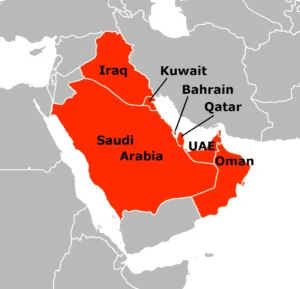
The US–Iran tensions including Iranian retaliation, Houthi attacks, and shifting alliances, have forced countries like Saudi Arabia, Qatar, and Kuwait to diversify defense partnerships and reassess reliance on the US.
Background of the Conflict
- Longstanding hostility between the US and Iran over nuclear ambitions and regional influence.
- Escalation after US withdrawal from the JCPOA (2018) and reimposition of sanctions.
- Iranian responses included missile strikes, proxy warfare, and naval confrontations in the Gulf.
- Gulf states, traditionally dependent on US security guarantees, now face uncertainty.
Regional Security Concerns
- Saudi Arabia: Targeted by Houthi drone and missile attacks, raising doubts about US protection.
- Qatar: Strengthened defense cooperation with Pakistan, diversifying security partners.
- Kuwait: Exploring new defense policies to reduce vulnerability.
- Iran’s Role: Expanding influence through proxies in Iraq, Syria, Lebanon, and Yemen.
- Israel’s Position: Closely monitoring Iran’s nuclear ambitions, aligning with Gulf states in some areas.
Why It Is an Issue
- Strategic Dependence: Gulf reliance on US military bases may no longer guarantee security.
- Regional Instability: Proxy wars and sectarian conflicts destabilize the Middle East.
- Energy Security: Threats to oil infrastructure affect global energy markets.
- Geopolitical Shifts: Gulf states seek new alliances with Asian powers (India, China) and regional actors.
Polity & Ethics Perspective
- Polity: States must balance sovereignty with external defense partnerships.
- Ethics: Security policies must prioritize civilian protection and regional peace over power politics.
- Global Responsibility: US and Iran must avoid escalation that endangers global stability.
- India’s Angle: India’s energy security and diaspora in the Gulf make regional peace vital.
Way Forward
- Diversified Alliances: Gulf states should strengthen ties with Asian and European powers.
- Regional Dialogue: Promote West Asia peace talks under UN frameworks.
- Defense Modernization: Invest in indigenous defense capabilities and cyber security.
- Energy Diversification: Reduce dependence on oil exports to mitigate risks.
- Confidence Building: Encourage cooperative security mechanisms among Gulf Cooperation Council (GCC) members.
Conclusion:
The US–Iran conflict has compelled Gulf states to rethink security beyond traditional US guarantees. A balanced approach of regional cooperation, diversified alliances, and defense modernization is essential to ensure longterm stability in West Asia.
INDIA’S INFORMAL CREDIT EXPANSION
TOPIC: (GS3) ECONOMY: THE HINDU
Recent data from TransUnion CIBIL (FY26) highlights rising risks in India’s informal credit market, including overleveraging among young borrowers and declining participation in commercial credit. This has raised concerns about financial stability and inclusion.
Informal Credit Growth
- Rapid Expansion: Over the last decade, retail and informal credit grew sharply. According to the Economic Survey 2026, personal loans rose 16.2% in FY26, compared to 11.7% in FY25, showing strong demand but also rising household debt.
- Youth Borrowers: Firsttime borrowers, especially under 30, became the fastestgrowing segment. RBI’s BSR1 data (2026) shows household borrowings increased 14.3% YoY, reflecting youthdriven demand.
- Informal Lending Role: Filled gaps left by formal banking, but lacked proper risk checks. NBFCs and fintechs drove growth, with services sector credit expanding 19% in FY26, led by NBFCs and trade.
- Financial Inclusion Push: Schemes like Jan Dhan, Aadhaar, UPI expanded access, yet credit discipline weakened as defaults rose in microfinance and retail loans.
Emerging Headwinds
- OverLeveraged Consumers: Share rose from 5% in FY17 to 18% in FY24, easing to 15% in FY26 after industry intervention. Economic Survey notes personal loans now form 33% of total credit, raising repayment risks.
- Youth Borrowing: Concentrated among younger consumers. RBI data shows districtlevel household credit surged, but repayment capacity remains weak.
- Commercial Credit Decline: Entities accessing commercial credit fell from 50% to 41%. Yet, MSME credit grew 33.1% YoY in FY26, showing uneven distribution.
- Financial Inclusion Concerns: Defaults threaten inclusion goals. Despite rural credit growth of 15.7% in FY26, overindebtedness risks longterm sustainability.
Why It Is an Issue
- Household Stress: Rising personal loans (₹212.9 lakh crore outstanding in FY26) increase debt traps for lowincome families.
- Systemic Risk: Defaults can destabilize NBFCs and fintech lenders, which drove much of the services sector’s 19% credit growth.
- Youth Vulnerability: Younger borrowers lack financial literacy; RBI data shows personal loan growth slowed to 12.9% in FY26, reflecting stress.
- Economic Impact: Decline in commercial credit participation hampers MSME expansion, despite strong sectoral lending growth.
Way Forward
- Strengthen Regulation: RBI must tighten NBFC and fintech norms. The Economic Survey 2026 noted NBFCs drove 19% services credit growth, but rising defaults demand stricter oversight.
- Financial Literacy: Expand awareness under the Financial Inclusion Fund. Household borrowings rose 14.3% YoY in FY26 (RBI data), showing urgent need for literacy to prevent debt traps.
- Credit Discipline: Promote credit score awareness. TransUnion CIBIL found overleveraged consumers peaked at 18% in FY24, easing to 15% in FY26 after interventions.
- Support MSMEs: Revive commercial credit via targeted schemes. Though MSME credit grew 33.1% YoY in FY26, participation fell from 50% to 41%, showing uneven access.
Conclusion:
India’s informal credit boom has improved access but created new risks of overindebtedness and financial instability. Strengthening regulation, promoting literacy, and ensuring responsible lending are essential to sustain inclusive and resilient growth.
TRANSMISSION HURDLES IN INDIA’S RENEWABLE ENERGY
TOPIC: (GS3) ENVIRONMENT: THE HINDU
India’s renewable energy sector is facing serious transmission challenges, with projects unable to deliver power due to inadequate grid infrastructure. This has created financial stress for developers and slowed the pace of the country’s green energy transition.
India’s Renewable Energy Targets
- India aims for 500 GW nonfossil fuel capacity by 2030 (National Electricity Plan, MoP).
- Current installed renewable capacity is over 250 GW (FY26), with solar and wind leading growth.
- Expansion is critical to meet Paris Agreement commitments and SDG 7 (Affordable & Clean Energy).
Rapid Growth vs. Infrastructure Lag
- Solar, wind, and hydro projects have grown rapidly, often commissioned within 12–18 months.
- Transmission projects take 3–5 years, creating a mismatch.
- Result: Renewable plants ready but unable to evacuate power, leading to stranded capacity.
Temporary General Network Access (TGNA)
- Introduced by the Central Electricity Regulatory Commission (CERC) to manage grid access flexibly.
- Allowed renewable developers temporary connectivity to the grid.
- However, frequent curtailments continue due to grid congestion and security concerns.
Grid Security & Planning Issues
- Mismatch in Timelines: Generation projects often outpace transmission readiness.
- Curtailments: Grid operators restrict renewable evacuation to maintain stability.
- Regional Imbalance: Highpotential states (Rajasthan, Gujarat, Tamil Nadu) face congestion, while deficit states struggle with supply.
- CEA Estimates: India requires ₹2.5 lakh crore investment by 2030 to modernize transmission corridors.
Why It Is an Issue
- Economic Loss: FY26 saw 6,900 GWh clean energy curtailed, equivalent to powering millions of households.
- Investor Confidence: Transmission delays discourage private investment in RE.
- Climate Commitments: Curtailments hinder India’s Paris Agreement and COP28 targets.
- Energy Security: Dependence on fossil fuels continues despite RE capacity addition.
Current Challenges
- Unutilized Capacity: 21 GW of RE projects await dedicated transmission lines.
- Curtailments: Around 12 GW faces restrictions on power evacuation, leading to losses.
- Financial Stress: Developers face revenue loss, making projects unviable.
- Mismatch in Planning: Generation projects often commissioned faster than transmission networks.
- Regional Imbalance: States with high RE potential (Rajasthan, Gujarat, Tamil Nadu) face grid congestion.
Way Forward
- Integrated Planning: Synchronize RE generation with transmission projects under National Electricity Plan.
- Green Corridors: Expand dedicated transmission lines for RE evacuation.
- Digital Monitoring: Use AI and smart grids to manage demand and supply efficiently.
- Financial Support: Provide viability gap funding and incentives for transmission developers.
- Regional Cooperation: Strengthen interstate transmission to balance surplus and deficit states.
- Policy Reform: Align transmission expansion with SDG 7 (Affordable & Clean Energy) and India’s 2030 targets.
RENEWABLE ENERGY CAPACITY
Total Installed RE Capacity (June 2026): 288.58 GW.
- Solar: 162.15 GW
- Wind: 57.44 GW
- Hydro: 57.24 GW
- Biopower: 11.75 GW
- Nonfossil fuel share: 51.93% of total installed capacity by Dec 2025.
- FDI inflows: USD 45.72 billion into RE sector since 2014.
- Domestic financing: ₹12.32 lakh crore deployed by public sector banks and institutions.
Conclusion:
Transmission hurdles are turning India’s renewable energy promise into distress. Only integrated planning, strong regulation, and smart infrastructure can ensure that green power reaches consumers and supports India’s climate goals.
DAANVEER INITIATIVE
TOPIC: (GS2) GOVERNANCE: THE HINDU
The Ministry of Panchayati Raj has recently launched the DAANVEER initiative, a citizendriven programme to strengthen digital infrastructure in gram panchayats through voluntary contributions of computers and IT resources.
About the Initiative
- A citizen participation programme enabling individuals and organisations to donate computers to panchayats.
- Operates through the Meri Panchayat mobile app, developed with NIC and integrated with DigiHaat marketplace.
- Designed to build digital capacity at the grassroots for governance and service delivery.
Key Features
- Provides an endtoend digital and verifiable mechanism for contributions.
- Donors can select preapproved computer bundles mapped to statespecific technical standards.
- Delivery details are autogenerated, reducing paperwork.
- Contributors can track donations from dispatch to installation.
- Digital certificates of appreciation issued to donors, enhancing transparency and motivation.
Significance
- Strengthens digital infrastructure in rural governance.
- Promotes citizen engagement in Panchayati Raj institutions.
- Supports the vision of Digital India and Atmanirbhar Bharat by empowering villages with technology.
- Encourages publicprivate collaboration in rural development.
- Helps bridge the digital divide between urban and rural areas, ensuring equitable access to egovernance services.
Conclusion:
The DAANVEER initiative is a step towards digitally empowered and selfreliant rural India, where citizens actively contribute to strengthening grassroots governance.