

Table of Contents
ToggleAIR QUALITY MEASUREMENT AND POLLUTION CONTROL IN NCR
TOPIC: (GS3) ENVIRONMENT: THE HINDU
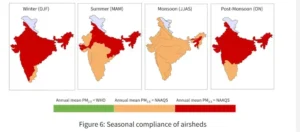
The Commission for Air Quality Management (CAQM) is collaborating with ISRO and state authorities to improve tracking of farm fires in Punjab and Haryana.
How Air Quality is Measured
- Continuous Ambient Air Quality Monitoring Stations (CAAQMS): Provide realtime data on pollutants.
- Manual Monitoring: Conducted by CPCB and SPCBs at fixed intervals.
- Satellite Monitoring: ISRO satellites track stubble burning and pollution hotspots.
- Indices Used:
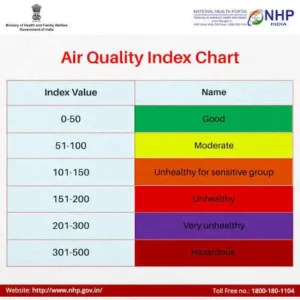
- Air Quality Index (AQI): Composite measure of pollutants.
- Pollutant Standards Index (PSI): Internationally used, similar to AQI.
- Particulate Matter Concentration: Direct measurement of PM2.5/PM10 levels.
Parameters Used by Government
- PM2.5 & PM10: Fine particles harmful to lungs and heart.
- SO₂ & NOx: Emitted from coal combustion and vehicles, cause acid rain.
- Carbon Monoxide (CO): From incomplete combustion, toxic to humans.
- Ozone (O₃): Secondary pollutant formed in sunlight.
- Ammonia (NH₃): From agricultural activities and waste.
- Lead (Pb): Industrial emissions, harmful to nervous system.
Serious Air Pollutants
- PM2.5: Penetrates deep into lungs, linked to respiratory and cardiovascular diseases.
- PM10: Causes asthma, bronchitis, and reduced lung function.
- SO₂ & NOx: Lead to acid rain, smog formation, and respiratory irritation.
- Ozone: Damages lung tissue, reduces crop yields.
- CO: Reduces oxygen delivery in the body, dangerous for heart patients.
Government Measures in NCR
- Graded Response Action Plan (GRAP): Emergency measures during severe pollution episodes.
- National Clean Air Programme (NCAP): Targets 40% reduction in PM levels by 2026.
- Stubble Management: Subsidies for Happy Seeders, biodecomposers, and crop diversification.
- Switch to Cleaner Fuels: Promotion of natural gas, bioCNG, and renewables.
- Vehicle Emission Norms: Implementation of BSVI standards.
Conclusion
Air pollution in NCR is a multisource crisis, Accurate measurement through CAAQMS, NCAP, and ISRO collaboration, is crucial to safeguard public health and ensure sustainable urban living.
YOUTH AS A ELECTORAL FORCE IN THE MAKING
TOPIC: (GS2) POLITY: THE HINDU
India, with the largest youth population in the world, and media are actively engaging with Gen Z (14–29 years) and Gen A (born after 2010), reflecting the growing importance of youth in India’s democratic future.
Youth in India’s Electorate
- 65% of India’s population is below 35 years.
- 23% of electorate falls in the 18–29 age group.
- No consistent youth voting bloc has emerged in India’s 75year electoral history.
- Studies suggest youth partly influenced 2014 and 2019 general elections, but without a consolidated agenda.
Electoral Trends
- In recent Assembly elections (Tamil Nadu, Bihar, Assam, West Bengal, Kerala, Puducherry), youth voting showed no clear direction.
- Margins of victory in states like Uttar Pradesh and Punjab could be swayed by Gen Z voters, but regional variations remain strong.
- Women’s vote has consolidated more effectively than youth vote, driven by welfare schemes (housing, toilets, LPG, cash transfers).
Youth Initiatives
- Government Schemes: Employment, entrepreneurship, skill enhancement, sports, and volunteering programs.
- NEP 2020: Focused on innovation and quality learning.
- National Youth Policy 2026: Preparing 15–29 age group for digital age.
- Despite initiatives, 8.7 crore youth remain NEET (Not in Education, Employment, Training), highlighting the gap between degrees and job prospects.
Challenges
- Unemployment: Persistent mismatch between education and job opportunities.
- Political Narrative: Opposition accuses ruling dispensation of neglecting youth concerns.
- Identity Politics: Caste, community, and gender identities overshadow youth identity.
- Low Electoral Participation: Youth voting remains low compared to other demographics, despite Election Commission campaigns.
Way Forward
- Blueprint for Youth: Political parties must move beyond rhetoric to concrete youthcentric policies.
- Employment & Education: Address structural gaps between degrees and jobs.
- Electoral Literacy: Strengthen Election Commission campaigns to ensure informed youth participation.
- Digital Engagement: Use social media responsibly to connect with young voters.
- Inclusive Politics: Recognize youth as a distinct constituency alongside caste, class, and gender identities.
Conclusion
India’s youth are Amrit Peedhi (generation of nectar) in the vision of Viksit Bharat 2047. While their electoral power is still crystallising, the growing activism and street protests signal a wakeup call for political parties. The challenge lies in transforming youthful energy into a cohesive electoral force that shapes India’s democratic future.
NEWBORN CARE IN INDIA
TOPIC: (GS2) POLITY: THE HINDU
On August 24, 2026, three newborns died in a fire at the Amravati District Women’s Hospital, Maharashtra. This recurring pattern of clustered newborn deaths in government hospitals, highlights urgent systemic gaps in neonatal care.
What is Institutional Delivery?
- Definition: Childbirth conducted in a hospital, clinic, or health centre under trained doctors, nurses, or midwives.
- Purpose: Ensures safe delivery, reduces maternal and infant mortality, provides immediate neonatal care.
- Policy Link: Promoted under schemes like Janani Suraksha Yojana (JSY) and Janani Shishu Suraksha Karyakram (JSSK).
- India has achieved remarkable success in promoting institutional deliveries, rising from 39% in 2005–06 to 90% in 2023–24 (NFHS6).
Gadchiroli Model
- SEARCH Field Trial (1999): Trained community health workers reduced neonatal mortality by 62.2% in rural Gadchiroli.
- Key Practices: Breastfeeding support, warmth, infection management, care for lowbirthweight babies.
- Results: Between 1996–2003, 97% of lowbirthweight/preterm babies managed at home with low fatality rates.
- Integration: By 2011, MoHFW trained 8 lakh ASHAs in HBNC using Gadchiroli modules.
Government Measures
- Janani Suraksha Yojana (JSY): Promoted institutional deliveries, reducing maternal and infant mortality.
- ASHAs for HBNC: Community health workers trained to provide neonatal care at home.
- Strengthening SNCUs: Expanding infrastructure, oxygen supply, incubators, and staffing.
- Safety Protocols: Fire detection, electrical safety, evacuation drills, and independent audits.
Challenges in Newborn Care
- Overcrowding: Institutional deliveries rose from 109 lakh (2005) to 194 lakh (2024–25). Sick newborn admissions in SNCUs increased by 28% in two years.
- Highrisk case mix: Premature, lowbirthweight, and referred sick babies dominate government hospitals.
- Infrastructure failures: Oxygen supply interruptions (Gorakhpur, 2017) and fires (Bhandara 2021, Bhopal 2021, Jhansi 2024, Amravati 2026) expose systemic risks.
- Infections & staffing: Poor nursetobaby ratios, equipment shortages, and weak infection control spread hospitalacquired infections.
Way Forward
- Decongest SNCUs: Shift stable newborns to HBNC under trained ASHAs.
- Strengthen Facilities: Ensure adequate staff, reliable oxygen/electricity, and infection control.
- Safety First: Mandatory fire suppression systems, audits, and emergency drills.
- Integrated Strategy: Hospital care for critical cases + home care for stable newborns.
Conclusion
India’s newborn care must balance hospitals and home; strengthening HBNC alongside SNCUs reduces overcrowding, prevents tragedies, and ensures timely, appropriate care for every child.
CLIMATE SHOCKS IN SOUTH ASIA AND THE NEED OF COLLECTIVE RESPONSE
TOPIC: (GS2) INTERNATIONAL RELATIONS: THE HINDU
Delhi and the National Capital Region (NCR) are facing intensifying heatwaves, marked by prolonged high temperatures and minimal cooling at night.
Delhi’s Heat Retention
- Heat-absorbing infrastructure: Concrete, asphalt, steel, and glass dominate construction, storing heat during the day and releasing it slowly at night.
- High surface temperatures: Densely built areas record 50–60°C on peak afternoons, acting as thermal reservoirs.
- Glass-heavy architecture: Modern buildings in Gurgaon/Noida trap solar radiation indoors, increasing dependence on air conditioning.
- Vehicular emissions: Traffic corridors like NH-48 act as “thermal corridors,” adding continuous heat.
- Poor urban design: Narrow streets and dense construction restrict airflow, eliminating traditional cooling features like courtyards and shaded pathways.
Cooling Systems and Heat Feedback
- Air conditioners expel heat outdoors, raising local temperatures by 1–2°C.
- Feedback loop: Rising heat → more AC use → more outdoor heat.
- Energy demand: Delhi’s summer power demand has crossed 8,000 MW, with cooling systems as the main contributor.
- Future challenge: By 2050, cooling demand may overwhelm power grids, risking blackouts during extreme heat.
Economic and Ecological Impact
- Industrial productivity loss: Factories and warehouses see a 2–3% decline per degree rise above optimal levels.
- Supply chain disruptions: Heat slows transport and damages storage, raising costs.
- Economic losses: India loses over $100 billion annually due to heat-related productivity decline.
- Shrinking natural cooling systems: Loss of wetlands, Yamuna floodplains, and green cover reduces evapotranspiration, worsening heat stress.
Mitigation Strategies
- Heat-resilient materials: Use cool roofs, reflective coatings, and high-albedo surfaces.
- Passive cooling design: Promote insulation, shading, and natural ventilation.
- Urban planning reforms: Restore ventilation corridors and reduce dense heat-trapping layouts.
- Green & blue infrastructure: Expand parks, wetlands, and water bodies to regulate temperature.
Conclusion
The Delhi heat crisis requires a multi-pronged approach from sustainable infrastructure and energy-efficient cooling to restoring ecological buffers. Balancing development with resilience is essential to safeguard Delhi’s population and economy against escalating heatwaves.
SOUTH ASIAN CLIMATE OUTLOOK FORUM (SASCOF)
- Established in 2009, coordinated by the India Meteorological Department (IMD) with support from the World Meteorological Organization (WMO).
- Members: Afghanistan, Bangladesh, Bhutan, India, Maldives, Myanmar, Nepal, Pakistan, Sri Lanka.
- Purpose: Prepare consensus seasonal climate outlooks for monsoon and winter seasons.
- Example: SASCOF34 (April 2026, Maldives) issued forecasts on monsoon rainfall and heatwaves, highlighting risks of floods in Nepal and Pakistan.
Conclusion
South Asia’s climate shocks reveal unequal vulnerabilities; collective strategies, regional cooperation, climate justice, and resilient communities are essential to withstand recurring disasters in a warming world.
THE GAP IN MANUFACTURING SECTOR GVA
TOPIC: (GS3) ECONOMY: THE HINDU
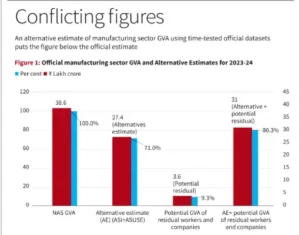
The National Accounts Statistics (NAS) 202324 reported manufacturing GVA at ₹38.6 lakh crore, while Alternative Estimate (AE) showed ₹27.4 lakh crore, highlighting a significant statistical gap.
What is GVA and GDP
- Gross Value Added (GVA): Measures the value of goods and services produced in a sector minus intermediate consumption. It reflects sectoral contribution to the economy.
- Gross Domestic Product (GDP): Sum of GVA across all sectors plus taxes on products minus subsidies. It represents the overall economic output.
- Difference: GVA is sectorspecific, while GDP is economywide. GVA helps track sectoral performance; GDP shows aggregate national growth.
The GAP in Estimates
- NAS Estimate (202324): ₹38.6 lakh crore.
- Alternative Estimate (ASI + ASUSE): ₹27.4 lakh crore.
- Gap: 40.9% higher in NAS.
- Residual Workers: PLFS shows 697.5 lakh employed; ASI + ASUSE cover only 532.9 lakh. Contribution of 164.6 lakh residual workers may explain part of the gap.
- Residual Companies: MCA21 database includes 2,72,534 companies not covered in ASI. Their contribution estimated at ₹3.6 lakh crore.
- Adjusted Potential GVA: ₹31.0 lakh crore — still 24.5% below NAS figure, leaving ₹7.6 lakh crore unexplained.
Issues in Estimation
- Methodological Differences: NAS relies on MCA21 corporate filings, while AE uses ASI/ASUSE surveys.
- Overestimation Risk: Scaling up sample estimates of active companies may inflate output.
- Employment Mismatch: PLFS vs ASI/ASUSE definitions differ, complicating validation.
- Unaccounted Activities: NSO claims ASI misses value addition outside factory premises (marketing, R&D), though evidence is limited.
Way Forward
- Transparency: Make MCA21 datasets and NSO methodologies publicly available for independent verification.
- Integration: Harmonize ASI, ASUSE, PLFS, and MCA data for consistency.
- Validation: Use employmentbased technical ratios to crosscheck sectoral GVA.
- Capacity Building: Strengthen statistical institutions to reduce discrepancies.
- Policy Implication: Reliable manufacturing GVA is crucial for industrial policy, investment planning, and employment strategies.
Conclusion
India’s manufacturing GVA shows large statistical gaps; transparent methods, harmonized datasets, and independent checks are vital to ensure credible national accounts and sound policymaking.

ACCESSIBLE REHABILITATION AND THE NEED IN INDIA
TOPIC: (GS2) SOCIAL JUSTICE AND HEALTH: THE HINDU
India faces a rising burden of noncommunicable diseases (NCDs) such as stroke and heart disease, yet rehabilitation and physiotherapy remain inaccessible for most patients.
Introduction
- Healthcare in India often ends at saving lives in hospitals.
- But survival without rehabilitation leaves patients dependent, immobile, and unable to regain independence.
- Accessible physiotherapy is therefore a lifesaving extension of care, not an optional addon.
Current Scenario
- Demographic Shift: Elderly constitute 10.5% of India’s population (2022), expected to double by 2050.
- Health Burden: Noncommunicable diseases (NCDs) like heart disease, stroke, diabetes, and dementia dominate elderly morbidity.
- Limited Geriatric Care: Few specialized geriatric hospitals; most elderly depend on general healthcare facilities.
- Social Challenges: Rising nuclear families, migration, and urbanisation reduce traditional family support.
- Economic Vulnerability: Nearly 30% of elderly live below poverty line, with limited pensions or social security.
Importance of Rehabilitation
- Helps patients walk, stand, regain limb use, balance, and independence.
- Bridges the gap between being medically stable and becoming an active member of family and society.
- Prevents complications like contractures and longterm disability.
Challenges
- Shortage of Physiotherapists: Only 52,000 practising physiotherapists — 0.36 per 10,000 people, compared to 10 per 10,000 in Europe.
- Urban Concentration: Most physiotherapists work in cities, leaving rural and lowincome families without access.
- Economic Barriers: Travel costs and lost wages make regular therapy unaffordable for dailywage families.
- Growing NCD Burden: Stroke, heart disease, orthopaedic injuries, and ageing populations demand rehabilitation services more than ever.
Way Forward
- Communitybased learning: Encourage physiotherapy students to serve in rural and underserved areas.
- Family training: Teach caregivers simple rehabilitation techniques for home practice.
- Telerehabilitation: Use technology for followups and guidance where travel is difficult.
- Policy support: Integrate physiotherapy into primary healthcare centres and national health programmes.
- Equitable distribution: Create incentives for physiotherapists to work in villages and small towns.
Government Initiatives
- National Programme for Health Care of the Elderly (NPHCE): Provides dedicated geriatric OPDs, wards, and rehabilitation services.
- Indira Gandhi National Old Age Pension Scheme (IGNOAPS): Monthly pension for poor elderly under NSAP.
- Maintenance and Welfare of Parents and Senior Citizens Act, 2007: Legal protection for elderly against neglect.
Conclusion
Accessible rehabilitation is essential to ensure that saving lives translates into restoring quality of life. India must treat physiotherapy as a core component of healthcare, making it affordable and available to all, so no patient is left immobile simply because rehabilitation was too far or too costly.