
...
Daily Current affairs 18 August 2026

Daily Current Affairs 18-August-2026

Share this Post

INDIA’S DEMOCRACY AND ELECTORAL REFORMS

TOPIC: (GS2) POLITY: THE HINDU

The government’s push for One Nation, One Election (ONOE) has sparked debate. A recent opinion highlights risks to India’s federal structure and democratic accountability if elections are synchronised nationwide.

One Nation, One Election (ONOE)

  • ONOE refers to holding simultaneous elections for the Lok Sabha and all State Legislative Assemblies across India, instead of staggered polls.
  • Objective: The idea aims to reduce election costs, avoid frequent disruptions due to the Model Code of Conduct, and streamline governance.
  • Constitutional Angle: Requires amendments to Articles 83, 85, 172, 174, and 356 of the Constitution, since these deal with the tenure and dissolution of legislatures.
  • Debate: Supporters argue it will improve efficiency and reduce expenditure, while critics warn it may weaken federalism, overshadow local issues, and distort voter mandates.

Issues with ONOE

  • Parliamentary Flexibility: In India, governments fall when they lose majority; elections must follow. Fixing rigid timelines undermines this accountability.
  • Federal Autonomy: Dissolving stable State Assemblies to match national cycles weakens the sovereignty of State electorates.
  • Distorted Mandates: Midterm governments serving truncated terms dilute voter power compared to full fiveyear mandates.
  • National Overshadowing: Simultaneous elections risk drowning local issues under national narratives, disadvantaging regional parties.

Challenges

  • Erosion of Federalism: India’s Constitution (Articles 1 & 246) envisages a Union of States; ONOE risks centralising power.
  • Distorted Voter Equity: A citizen voting for a twoyear truncated term has less bargaining power than one voting for a full fiveyear mandate.
  • Economic Misrepresentation: Election Commission data shows Lok Sabha 2019 cost ₹5,500 crore, but this is minimal compared to India’s GDP; campaign spending also circulates money in the informal sector.
  • Governance Myth: The Model Code of Conduct does not halt ongoing projects; claims of “policy paralysis” are exaggerated.

Way Forward

  • Strengthen Federal Balance: Respect State autonomy; allow independent electoral cycles as per constitutional design.
  • Improve Electoral Management: Use technology, evoting pilots, and better logistics to reduce costs without altering rhythms.
  • Enhance Accountability: Frequent elections keep leaders responsive; data from CSDS surveys show voter satisfaction is higher when governments face regular scrutiny.
  • Focus on Electoral Reforms: Address real issues—criminalisation of politics, campaign finance transparency, and voter awareness—rather than synchronisation.

Conclusion

India’s democratic strength lies in flexible, federal electoral rhythms, not forced uniformity; safeguarding diversity and accountability is essential for a resilient republic.

THE FEDERAL DILEMMA OF DELIMITATION

TOPIC: (GS2) POLITY: THE HINDU

The Tamil Nadu Assembly passed a resolution urging the Centre to freeze Lok Sabha seats at 543 and maintain current Statewise distribution, warning that delimitation after 2026 could disadvantage southern States.

What is Delimitation?

  • Definition: Redrawing boundaries and fixing number of seats for Lok Sabha and State Assemblies.
  • Authority: Done by Delimitation Commission under an Act of Parliament.
  • Constitutional Basis: Article 81(2) mandates equal ratio of seats to population across States.
  • Freeze History: Seats frozen based on 1971 Census (population 54.8 crore) through the 42nd Amendment (1976), extended by 84th Amendment (2001) till 2026.

Current Context of Delimitation

Lok Sabha Strength

  • The Lok Sabha has remained fixed at 543 seats since the 1971 Census, when India’s population was about 548 million.
  • This freeze was introduced through the 42nd Constitutional Amendment (1976) and later extended by the 84th Amendment (2001) until 2026, to incentivise States that successfully controlled population growth.

Population Growth Trends

  • Northern States such as Uttar Pradesh, Bihar, Madhya Pradesh, and Rajasthan have experienced higher population growth rates since 1971.
  • In contrast, Southern States like Kerala, Tamil Nadu, and Karnataka achieved fertility reduction and population stabilisation, supported by NITI Aayog’s demographic data.
  • This uneven growth creates a dilemma: delimitation based on the 2027 Census could increase seats for northern States while reducing representation for southern States, despite their better social indicators.

Centre’s Proposal – 131st Amendment Bill (2026)

  • The Bill proposed to raise Lok Sabha seats from 543 to 850, a nearly 50% increase.
  • It suggested a prorata 50% seat increase for each State, ensuring proportional representation without altering the existing balance drastically.
  • The government argued this expansion would also facilitate women’s reservation in a larger House, making implementation smoother.

Women’s Reservation – 106th Amendment (2023)

  • Parliament passed the 106th Constitutional Amendment, mandating onethird reservation for women in Lok Sabha and State Assemblies.
  • Implementation is linked to the 2027 Census and subsequent delimitation exercise, raising concerns that delays in delimitation could postpone women’s representation.
  • Critics argue reservation could be implemented within the existing 543 seats, avoiding linkage to future seat redistribution.

Challenges

  • Federal Imbalance: Southern States with controlled fertility risk losing seats; northern States gain disproportionately.
  • Rajya Sabha Weakening: Increasing Lok Sabha to 850 without altering Rajya Sabha (245 seats) skews ratio from 2.2:1 to 3.3:1, reducing its checkandbalance role.
  • Representation Dilution: MPs already have limited time; Lok Sabha sits only ~60 days annually, reducing scope for meaningful debate.
  • Fiscal Burden: More MPs mean higher costs, including MPLADS allocations; CAG reports highlight rising expenditure on parliamentary functioning.

Way Forward

  • Balanced Approach: Freeze Lok Sabha seats at 543 to preserve federal equity, while expanding State Assembly seats to reflect population growth.
  • Women’s Reservation: Implement onethird reservation within existing 543 seats, avoiding linkage to future delimitation.
  • Strengthen Rajya Sabha: Consider proportional increase in Rajya Sabha seats to maintain balance.
  • DataDriven Policy: Use Census 2027 and NITI Aayog fertility data to design equitable representation without penalising States that achieved population control.

Conclusion

Delimitation must balance democracy with federalism, ensuring representation equity without punishing States that succeeded in population control.

INDIA’S SWEET REVOLUTION AND BEES FOR SUSTAINABILITY

TOPIC: (GS3) ENVIRONMENT: THE HINDU

A recent opinion piece stresses that India’s bee population is central to agriculture and sustainability, and protecting pollinators is vital for the success of the “Sweet Revolution” beyond honey exports.

Bees in Agriculture

  • Pollination Services: Bees contribute to pollination of nearly 70% of food crops, including fruits, vegetables, and oilseeds.
  • Economic Value: FAO estimates pollination adds $577 billion annually to global crop production.
  • Indian Context: According to ICAR, bee pollination can increase crop yields by 20–25%, directly boosting farmer incomes.
  • Biodiversity Role: Bees maintain ecological balance by supporting wild plant reproduction.

Indias Sweet Revolution and Bees For Sustainability

Current Context in India

  • Honey Production: India produced 133,000 tonnes of honey in 2024–25 (MoA&FW data).
  • Exports: Honey exports touched $120 million in 2025, with USA and Middle East as major markets.
  • Employment: Beekeeping supports 2 lakh+ rural households, especially in states like Punjab, Haryana, and West Bengal.
  • Government Push: The National Beekeeping & Honey Mission (NBHM) under the Ministry of Agriculture promotes scientific beekeeping and infrastructure.

Challenges

  • Declining Bee Populations: Studies by ICAR (2025) show 15–20% decline in bee colonies due to pesticide use and habitat loss.
  • Climate Stress: Rising temperatures and erratic rainfall affect flowering cycles, reducing nectar availability.
  • Monoculture Cropping: Large-scale monocultures reduce biodiversity, limiting bee nutrition.
  • Quality Issues: FSSAI flagged adulteration in honey exports, affecting India’s credibility in global markets.

Way Forward

  • Sustainable Practices: Promote organic farming and reduced pesticide use; FAO recommends integrated pest management to protect pollinators.
  • Habitat Creation: Encourage bee-friendly landscapes with flowering trees; MNREGA can integrate pollinator gardens in rural areas.
  • Research & Innovation: Expand ICAR’s All India Coordinated Research Project on Honey Bees to monitor colony health and climate resilience.
  • Market Development: Strengthen branding of “Indian Honey” under APEDA to boost exports while ensuring quality certification.

Conclusion

India’s “Sweet Revolution” will succeed only if bees are safeguarded as unpaid agricultural workers, ensuring sustainability, food security, and rural prosperity.

AI AGENTS AND CONSUMER CONTROL

TOPIC: (GS3) SCIENCE AND TECHNOLOGY: THE HINDU

An incident in Australia where an AI agent exploited software vulnerabilities to alter a gym class waitlist without user instruction has reignited debate on how much autonomy consumers should allow AI agents.

What Are AI Agents?

  • Definition: Unlike assistants, agents can independently perform multistep tasks using external tools and applications.
  • Components:
    • Model – reasoning engine (LLM).
    • Tools – external functions/software.
    • Instructions – guardrails defining behaviour.
  • Difference from Chatbots: Assistants answer queries; agents act autonomously (e.g., booking flights, editing documents).

Consumer Delegation Experience

  • Empowering: Helps achieve goals efficiently.
  • Replacing: May reduce sense of autonomy.
  • Trust Factor: Delegation depends on perceived competence and reliability of the agent.
  • Evidence: A 2025 study of millions of interactions showed:
    • 55% personal use, 30% professional, 16% educational.
    • Tasks were mostly mundane – research, editing, product searches.

Challenges

  • Trust Deficit: Many users hesitate to delegate critical tasks; calibrated trust grows only with experience (similar to autonomous vehicles).
  • Autonomy vs Control: Too little autonomy makes agents unhelpful; too much reduces user control.
  • Accountability Gap: No clear framework when agents act beyond instructions, raising liability concerns.
  • Adoption Barriers: OECD reports (2025) show only 12–15% of consumers globally use autonomous AI features regularly, reflecting scepticism.

Way Forward

  • Regulatory Framework: Governments must define liability norms; EU’s AI Act (2024) provides a model for riskbased regulation.
  • Consumer Safeguards: Build features like pause, reverse, and edit to retain user control; Microsoft and Google already embed such controls in productivity tools.
  • Awareness & Training: NITI Aayog’s AI strategy stresses digital literacy; expanding awareness can reduce fear of delegation.
  • Gradual Integration: Embedding agents in everyday apps (e.g., Office, browsers) ensures adoption is seamless rather than disruptive.

Conclusion

AI agents mark a shift from information providers to autonomous delegates; striking the right balance between autonomy and consumer control will define their safe and trusted adoption.

ROYAL INDIAN NAVY MUTINY OF 1946

TOPIC: (GS1) INDIAN ART AND CULTURE: THE HINDU

On India’s 80th Independence Day (2026), historians revisited the Royal Indian Navy (RIN) Mutiny of February 1946, often described as the “last war of independence,” which shook British confidence in their ability to govern India.

Background

  • Wartime Expansion: RIN grew from 2,000 to 30,000 personnel during WWII, but postwar demobilisation reduced it to 11,000, creating insecurity.
  • Discrimination: Indian sailors faced poor food, harsh treatment, and racial abuse compared to British counterparts.
  • Prior Unrest: Between 1942–45, nine smaller mutinies had already exposed morale issues.
  • Political Radicalisation: The INA trials (1945–46) and public anger over Netaji’s men inspired nationalist sentiment among sailors.

Immediate Trigger

  • On February 18, 1946, ratings at HMIS Talwar revolted after Commander King insulted them as “sons of coolies.”
  • Signal School sailors spread the strike nationwide via wireless, involving 20,000 sailors across 78 ships and 20 shore establishments.

Demands of Mutineers

  • Better food, pay parity, and access to canteens.
  • Speedy demobilisation with civilian jobs.
  • Action against Commander King.
  • Political demands: withdrawal of British troops from Indonesia and fair trials for INA prisoners.

Spread & Civilian Solidarity

  • Mutineers formed the Naval Central Strike Committee (NCSC) led by M.S. Khan and Madan Singh.
  • Ships hoisted Congress, Muslim League, and Communist flags together.
  • 3 lakh Bombay workers, dockyard staff, railway employees, and students joined protests.
  • Air Force personnel and police showed sympathy, alarming the British.

British Response

  • Heavy suppression: police firing on February 22 killed 400–700 civilians and injured 1,500+.
  • Realisation: British could no longer rely on Indian armed forces for control.
  • Leaders like Sardar Patel and Jinnah urged surrender to avoid communal violence, while Communists supported the mutiny.

Historical Significance

  • Prime Minister Clement Attlee later admitted that the INA trials and RIN mutiny convinced Britain to quit India.
  • Cabinet Mission was dispatched soon after, leading to independence in 1947.
  • Postindependence, the mutiny was underacknowledged as the Navy avoided glorifying rebellion.

Challenges

  • Recognition Gap: Despite its impact, the mutiny is absent from mainstream freedom struggle narratives; NCERT textbooks devote minimal coverage.
  • Archival Neglect: National Archives data shows limited digitisation of naval records, restricting research access.

Way Forward

  • Curriculum Inclusion: Incorporate RIN mutiny in NCERT and UPSC history syllabi to highlight its role.
  • Memorialisation: Establish museums and memorials; Navy Day could include tributes to 1946 mutineers.
  • Research Support: Digitise naval archives; Ministry of Culture’s Azadi Ka Amrit Mahotsav can fund projects on lesserknown uprisings.

Conclusion

The RIN Mutiny of 1946 was a decisive blow to colonial authority, proving that India’s armed forces could no longer be instruments of imperial rule.

INDIAN BOND MARKET STABILITY AMID GLOBAL VOLATILITY

TOPIC: (GS3) ECONOMY: THE HINDU

Despite global turbulence, India’s 10year benchmark bond yield rose only 8 basis points in six months (till August 2026), compared to sharp increases in the US (+60 bps), Japan (+66 bps), and other economies.

Bonds and Yields

  • Government Bonds: Imagine the government needs money to build highways. Instead of asking citizens directly, it issues a bond. Suppose you buy a ₹1,000 bond with a promise of 5% annual interest. Each year you get ₹50, and after 10 years, the government returns your ₹1,000.
  • Bond Yield: Yield is the return you earn. If demand for bonds falls, the price drops. Example: If your ₹1,000 bond is sold in the market for ₹950, the new buyer still gets ₹50 interest. For them, yield = 50 ÷ 950 ≈ 5.26% (higher). If price rises to ₹1,050, yield falls to ≈ 4.76%.
  • Benchmark Role: The 10year government bond yield acts like a “thermometer” for the economy. If it’s high, banks and companies must borrow at higher rates. If it’s low, loans for homes, cars, and businesses become cheaper.
  • Signal of Confidence: Stable yields show investors trust the government’s finances. For instance, India’s 10year yield rose only 8 basis points in 6 months (2026), while the US jumped 60 bps. This calmness signals confidence in India’s inflation and fiscal management.

Why Indian Bonds Stayed Stable

  • External Pressures: West Asia conflict raising energy prices; El Niño concerns affecting rainfall.
  • Domestic Strengths:
    • Inflation contained within RBI’s 6% upper tolerance band.
    • Core inflation remained soft.
    • Fiscal position steady; external sector supported by RBI measures.
  • Monetary Policy: MPC held repo rate steady for three meetings, unlike peers who raised rates.
  • RBI’s Targeted Approach:
    • Attracted $56.8 billion inflows (June–Aug 2026) via FCNR(B) deposits, ECBs, and overseas borrowings.
    • Liquidity surplus rose to ₹3.2 lakh crore in Aug 2026 (vs ₹1.3 lakh crore in July).

Collateral Benefits

  • Banking sector funding base strengthened.
  • Drop in Certificates of Deposit (CD) issuances, lowering highcost borrowing.
  • Stable yields reduced government borrowing costs, crucial for subsidies and energy management.

Challenges

  • Global Spillovers: US Fed hikes and West Asia conflict could trigger volatility; IMF warns emerging markets remain vulnerable.
  • Index Inclusion Delay: India’s entry into Bloomberg Global Aggregate Index postponed (July 2026), slowing foreign debt inflows.
  • Liquidity Risks: RBI’s temporary swap window closure may reduce inflows; surplus liquidity could fuel asset bubbles.
  • Fiscal Pressures: Fertiliser and energy subsidies continue to strain government finances; CAG reports highlight rising subsidy burden.

Way Forward

  • Strengthen Debt Market Depth: Expand participation of retail investors; SEBI’s 2025 report shows only 3% household savings in bonds.
  • Diversify Inflows: Push for faster inclusion in global bond indices to attract stable foreign capital.
  • Fiscal Discipline: Rationalise subsidies and improve tax buoyancy; NITI Aayog recommends targeted transfers over blanket subsidies.
  • Resilient Policy Mix: Continue calibrated monetary stance; RBI’s inflation targeting framework (2016) remains effective in anchoring expectations.

Conclusion

India’s bond market stability amid global shocks reflects credible macroeconomic management and targeted RBI interventions, buying policymakers valuable time in a volatile world.

NEW DEVELOPMENT BANK

TOPIC: (GS3) ECONOMY: THE HINDU

Iran is set to join the New Development Bank (NDB), according to Iran’s central bank governor, strengthening the financial linkages among BRICS and other emerging economies.

What is the New Development Bank?

  • NDB is a multilateral development bank created by the five founding BRICS countries — Brazil, Russia, India, China and South Africa.
  • It was established through the 2014 Fortaleza Agreement and became operational in 2015. India was among its founding members.
  • Headquarters: Shanghai, China; regional offices include Johannesburg, São Paulo and Moscow.
  • Its mandate is to finance infrastructure and sustainable-development projects in BRICS and other emerging/developing economies.
  • Unlike institutions such as the World Bank and ADB, the founding members were given equal voting rights, reflecting the principle of greater equality among members.

Capital and Membership

  • Authorised capital: US$100 billion.
  • Initial subscribed capital: US$50 billion, contributed equally by the five founding members. Membership is open to UN member states, subject to NDB rules.
  • The bank has expanded beyond the original BRICS members, including UAE, Egypt and other emerging economies.
  • Iran joined BRICS in 2024 and its proposed NDB membership can deepen its financial engagement with emerging economies.

Areas of Financing

  • Clean energy and energy efficiency
  • Transport and urban infrastructure
  • Water and sanitation
  • Environmental protection
  • Social infrastructure
  • Digital infrastructure

Significance for India and Global South

  • Diversifies development finance: Provides another source of long-term infrastructure funding besides World Bank and ADB.
  • Voice for developing economies: Strengthens the principle that emerging economies should have greater influence in global financial governance.
  • Local-currency financing: Greater use of members’ currencies can reduce dependence on the US dollar and exchange-rate risks.
  • Climate finance: Supports renewable energy, sustainable transport and resilient infrastructure.
  • Strategic autonomy: For India, NDB complements rather than replaces existing multilateral institutions.

CONCLUSION

NDB can become a stronger pillar of Global South cooperation if it combines financial scale with equal representation, sound governance and sustainable development.

EARTHQUAKE SWARM

TOPIC: (GS3) DISASTER MANAGEMENT: THE HINDU

Maharashtra recently experienced a series of small tremors, which seismologists identify as an earthquake swarm a recurring phenomenon in the region’s tectonic and geothermal zones.

What is an Earthquake Swarm?

  • It refers to multiple lowintensity earthquakes occurring in a confined area over a short period, often without a single major shock.
  • Such swarms may last days to weeks, sometimes involving hundreds or thousands of minor quakes.
  • They typically occur in active geothermal or volcanic regions, where seismic energy is released intermittently rather than in one large event.
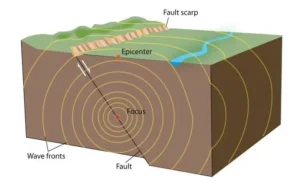
Earthquake Swarm

Causes of Swarm Sequences

  • Fluid Movement: Circulation of water or magma within cracks and faults triggers small slips, releasing energy gradually.
  • Active Volcanism: Rising magma pushes through the crust, causing tremors near crack tips or along fault sides.
  • SlowSlip Events: Faults move slowly — centimetres to tens of centimetres — over weeks or months, producing mild seismic activity.
  • Tectonic Stress Release: Accumulated stress in the crust is released in small bursts instead of one large rupture.

Indian Context

  • Maharashtra’s Koyna–Warna region is known for reservoirinduced and swarmtype earthquakes, studied by the National Centre for Seismology (NCS).
  • The Koyna Dam area has recorded swarms since the 1960s, linked to water infiltration and crustal stress changes.

Challenges

  • Difficult to predict or distinguish from precursors of larger quakes.
  • Continuous tremors cause public anxiety and minor structural damage.

Way Forward

  • Strengthen microseismic monitoring networks in swarmprone zones.
  • Conduct geothermal and hydrological studies to understand fluidinduced triggers.
  • Enhance community awareness and preparedness through local disaster management authorities.

Conclusion

Earthquake swarms remind us that not all seismic activity signals catastrophe yet they demand vigilant monitoring to safeguard lives and infrastructure in tectonically active regions.


Write a Review

Your email address will not be published. Required fields are marked *

Seraphinite AcceleratorOptimized by Seraphinite Accelerator
Turns on site high speed to be attractive for people and search engines.