

Table of Contents
ToggleINDIA’S FIRST DEDICATED IMAGING SATELLITE
TOPIC: (GS3) SCIENCE AND TECHNOLOGY: THE HINDU
The Indian Space Research Organisation (ISRO) successfully launched its advanced earth observation satellite EOS05 aboard the GSLVF17 from Sriharikota. This marks India’s first dedicated imaging satellite in geosynchronous orbit (36,000 km), providing realtime imagery for strategic and civilian applications.
About EOS05
- Weight: 2,367 kg, heaviest payload carried by GSLV so far.
- Orbit: SubGeosynchronous Transfer Orbit (SubGTO), later raised to geosynchronous orbit.
- Nicknamed “Eye in the Sky” for its realtime monitoring capability.
- Designed to provide continuous earth imagery from geosynchronous orbit.
Launch Details
- Vehicle: GSLVF17, 19th flight of the GSLV series.
- Launch Site: Satish Dhawan Space Centre, Sriharikota.
- Time: 2:55 a.m., injected into orbit in 18 minutes.
- ISRO Chairman V. Narayanan confirmed successful deployment and satellite health.
Key Features
- Persistent Coverage: Unlike lowearth orbit satellites, EOS05 can continuously monitor the same region.
- Imaging Payloads: Carries multispectral imagers, including one with 42metre resolution, the highest ever in geostationary orbit.
- Rapid Revisit: Can image the Indian subcontinent every 30 minutes, and priority targets every 5 minutes.
- Dual Use: Supports both civilian applications (agriculture, environment, disaster management) and strategic surveillance (border monitoring, defence).
Applications
- Agriculture: Crop health, irrigation monitoring, landuse changes.
- Disaster Management: Near realtime tracking of cyclones, floods, landslides, forest fires.
- Environment: Continuous observation of cloud systems, pollution, deforestation.
- Strategic Surveillance: Monitoring borders with Pakistan and China, maritime domains, and conflict zones.
Significance
- First imaging satellite in geosynchronous orbit – ensures realtime, continuous coverage unlike lowearth orbit satellites.
- Applications:
- Agriculture monitoring (crop health, irrigation).
- Disaster management (cyclones, floods, wildfires).
- Environmental studies (deforestation, pollution).
- Strategic surveillance (border monitoring, defence).
- Strengthens India’s spacebased infrastructure and reduces reliance on foreign imagery.
Relief for ISRO
- Comes after backtoback failures:
- PSLVC62/EOSN1 (Jan 2026).
- PSLVC61 (May 2025).
- ISRO had paused launches to reassess systems.
- EOS05 success restores confidence in India’s launch capabilities.
Evolution of GSLV
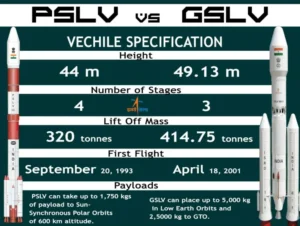
- First GSLVD1 carried 1,536 kg payload.
- Continuous improvements in structural mass optimization and propulsion systems.
- GSLVF17 carried 2,367 kg EOS05, the heaviest satellite yet.
Conclusion
The launch of EOS05 is a strategic milestone for India’s space program. It not only strengthens national security and disaster preparedness but also showcases ISRO’s resilience after recent setbacks. With EOS05, India enters a new era of realtime geosynchronous imaging, reinforcing its position in the global space community.
A PROGRESSIVE STEP IN WOMEN’S HEALTH
TOPIC: (GS1) SOCIAL ISSUES: THE HINDU
In August 2026, Tamil Nadu and Karnataka announced dedicated policies for perimenopause and menopause care. This marks the first time women’s midlife health needs are formally integrated into routine government health care.
Background
- Women’s health care in India has largely focused on reproductive age.
- Menopause: Permanent end of menstruation, confirmed after 12 months without a cycle.
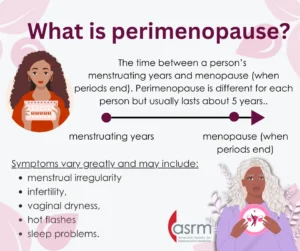
- Perimenopause: Transition phase leading to menopause, often lasting several years.
- Symptoms: Hot flashes, sleep disturbances, mood swings, joint pain, fatigue – often ignored or trivialised.
State Initiatives
- Tamil Nadu (Aug 17, 2026):
- Announced perimenopausal care policy in Assembly.
- Focus: Early identification, screening, counselling, treatment via PHCs and higher centres.
- Karnataka (Aug 4, 2026):
- Launched “Ruthu Thare”, India’s first dedicated women’s health policy.
- Strong emphasis on perimenopause and menopause care.
Policy Features
- Community Outreach: Screening and counselling at village level.
- Women’s Health Clinics: Dedicated services at district hospitals.
- Referral System: Linkages to government medical colleges for advanced care.
- Awareness Generation: Training medical professionals and sensitising families.
Significance
- Addresses Neglect: Brings midlife women’s health out of the “neglect bin”.
- Legitimises Complaints: Recognises menopausal symptoms as genuine health issues.
- Holistic Care: Integrates physical and mental health needs into public health.
- Gender Equity: Strengthens women’s health rights beyond reproductive years.
Challenges
- Implementation Gap: Effectiveness depends on execution at grassroots level.
- Medical Attitudes: Need to overcome trivialisation of menopausal symptoms.
- Awareness: Both medical community and families must be sensitised.
- Resource Allocation: Adequate funding and trained personnel are essential.
Conclusion
The perimenopause policies of Tamil Nadu and Karnataka mark a progressive shift in women’s health care, ensuring midlife needs are recognised, legitimised, and addressed within India’s public health framework.
NEPAL’S DEMAND FOR CLIMATE COMPENSATION AND A TEST OF GLOBAL CLIMATE JUSTICE
TOPIC: (GS3) ENVIRONMENT: THE HINDU
On August 26, 2026, a catastrophic glacial collapse and flash flood struck Nepal, killing over 1,200 people and crippling hydropower projects.
Climate Injustice
- Nepal contributes only 0.1% of global emissions, yet faces disproportionate impacts.
- The Hindu Kush Himalayas (“Third Pole”) are warming at twice the global average, accelerating glacier melt.
- Global “teleconnections” link Arctic warming to South Asian monsoon instability, intensifying Nepal’s vulnerability.
- Damages from the disaster are estimated at $4–7 billion, nearly 10% of Nepal’s GDP.
Country-Specific Liability
- United States: Historical responsibility, contributing over 20% of cumulative emissions since 1850.
- China: Current top emitter; accused of upstream negligence and failure to share real-time glacial data.
- India: Regional equity paradox — despite low per-capita emissions, as South Asia’s largest economy and emitter, India owes differentiated responsibility to vulnerable neighbours.
Impact on Nepal’s Economy
- Nepal’s strategy relied on 43,000 MW hydropower potential to become a regional energy exporter.
- Floods destroyed 10% of installed capacity, forcing Nepal to import power instead of exporting.
- Future projects will require climate-resilient underground engineering, raising costs by 10–12%.
Global Climate Finance Trap
- The Fund for Responding to Loss and Damage (FRLD), created at COP27, is underfunded and bureaucratic.
- Current pledges: $700 million, with grants capped at $20 million — inadequate for Nepal’s $7 billion loss.
- Hosting by the World Bank raises fears of compensation turning into debt burdens.
- Nepal’s demand exposes the ineffectiveness of current climate finance mechanisms.
Significance
- Nepal has shifted the framework from charity to liability, setting a precedent for the Global South.
- The demand challenges major emitters to confront climate justice and accountability.
- Even without immediate payouts, Nepal’s stance highlights the limits of adaptation and the urgency of structural reforms in global climate diplomacy.
Where Climate Liability is Discussed
- UNFCCC COP Summits (COP27, COP28, COP29): Liability and responsibility of major emitters are debated under the Loss and Damage agenda.
- Climate Law and Governance Initiative (CLGI): At COP29 (2024, Baku), legal experts discussed operationalising the Paris Agreement and advancing climate justice.
- International Courts: Advisory opinions from the International Court of Justice (ICJ), Inter-American Court of Human Rights, and International Tribunal for the Law of the Sea (ITLOS) have explored states’ obligations regarding climate change.
- Integrated Forum on Climate Change and Trade (IFCCT): Launched at COP30, it links trade and climate liability, providing a space for dialogue on responsibility and compensation.
Major Climate Funds Available
Fund | Established | Focus | Support for Developing Nations |
Green Climate Fund (GCF) | 2010 | Mitigation & Adaptation | Largest climate fund; aims for 50:50 balance between mitigation and adaptation; prioritises LDCs, SIDS, Africa. Funding ranges from micro (<$10m) to large (> $250m) projects. |
Adaptation Fund (AF) | 2001 | Adaptation projects | Provides grants for innovative adaptation solutions; UNEP portfolio ~$550m in 2024. |
Global Environment Facility (GEF) | 1991 | Biodiversity, climate, land, chemicals | Supports climate resilience projects through grants and blended finance. |
Least Developed Countries Fund (LDCF) & Special Climate Change Fund (SCCF) | Early 2000s | Adaptation for vulnerable nations | Focused on LDCs and small island states. |
Conclusion
Nepal’s unprecedented demand for climate compensation after the Himalayan floods is a watershed moment in climate justice. By holding major emitters accountable, Nepal has exposed the fragility of global climate finance and set a disruptive precedent that vulnerable nations may increasingly adopt.
TAIWAN ACCUSES CHINA OF ‘WOLF WARRIOR’ DIPLOMACY
TOPIC: (GS2) INTERNATIONAL RELATIONS: THE HINDU
At the 55th Pacific Islands Forum (Palau, Sept 2026), Taiwan’s Foreign Minister Lin ChiaLung accused China of “wolf warrior” diplomacy and espionage. China objected to Taiwan’s presence, claiming it is not qualified to attend.
Wolf Warrior Diplomacy
- Term originates from a Chinese movie franchise.
- Refers to aggressive, confrontational rhetoric by Chinese officials in public diplomacy.
- Departure from earlier restrained diplomatic style.
Key Developments
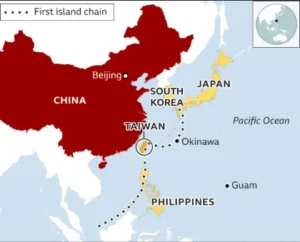
- Palau hosted the summit; one of three Pacific nations with official ties to Taiwan.
- China warned of “serious consequences” and declared Palau an “unsafe travel destination.”
- Taiwan condemned such tactics as undermining Pacific unity.
- Allegations of Chinese espionage at the summit raised security concerns.
Significance
- Highlights China–Taiwan rivalry in Pacific diplomacy.
- Reflects broader contest for influence in IndoPacific geopolitics.
- Demonstrates how small island nations become arenas for major power competition.
- Raises questions about regional security, sovereignty, and diplomatic recognition.

TAIWAN AND CHINA
The general conflict between Taiwan and China is rooted in the question of sovereignty and recognition.
Historical Background
- In 1949, after the Chinese Civil War, the Nationalist government (Kuomintang) retreated to Taiwan while the Communist Party established the People’s Republic of China (PRC) on the mainland.
- Since then, two governments claimed legitimacy:
- PRC (mainland China).
- Republic of China (Taiwan). China’s Position
- China insists on the “One China Policy”, claiming Taiwan is a province of China.
- It opposes any recognition of Taiwan as a sovereign state.
- Uses diplomatic, economic, and military pressure to isolate Taiwan internationally.
Taiwan’s Position
- Taiwan functions as a de facto independent state with its own government, military, and constitution.
- It rejects Beijing’s sovereignty claims and seeks international recognition.
- Maintains limited formal diplomatic ties (around a dozen countries), but strong informal relations with many nations.
Conclusion:
Taiwan–China conflict reflects sovereignty disputes, diplomatic isolation, and IndoPacific rivalry, with “wolf warrior” tactics intensifying regional tensions.
MANIPUR AND REPRESENTATION
TOPIC: (GS2) POLITY: THE HINDU
The Union Government has deferred the 2027 Census in Manipur, amid demands for a National Register of Citizens (NRC) first. Meitei and Naga groups support NRC before Census, while KukiZo groups oppose it. The dispute intertwines citizenship, displacement, and political representation.
Citizenship Concerns
- Civil society groups allege illegal migration from Myanmar has altered demographics.
- They demand NRC to distinguish citizens from migrants before Census enumeration.
- Manipur Assembly passed resolutions in 2022 and 2024 seeking NRC with 1951 as base year.
Displacement Factor
- Ethnic violence since May 2023 displaced thousands.
- Meitei groups argue Census now would reflect temporary displacement, not actual population.
- Hence, demand to delay Census until displaced return home.
Political Representation & Delimitation
- Manipur Assembly: 60 seats (40 valley, 20 hills).
- Last delimitation: 1973, based on 1971 Census.
- Excluded from 200208 national delimitation due to security concerns.
- Fresh delimitation could alter valleyhill balance (40:20 → 35:25 or 30:30), raising fears of reduced valley dominance.
Myanmar Factor
- Post2021 coup, thousands fled Chin State into Manipur, many ethnically linked to KukiZomi groups.
- State linked influx to new settlements, poppy cultivation, encroachment.
- Kuki organisations dispute this, warning NRC could wrongly implicate longsettled families.
- Centre scrapped Free Movement Regime with Myanmar (Feb 2024) citing demographic concerns.
Kuki-Zo Position
- NRC is a national exercise, not statespecific.
- Allegations against KukiZo community are unsubstantiated; Census should precede NRC.
- Fear that old cutoff year (1951) could disenfranchise genuine citizens.
- Support delimitation, but only on verified demographic data.
Alternative Tools
- HighLevel Committee on Demographic Change (2026).
- Electoral roll revision – excluded ~7% of voters.
- Border management, biometric registration, deportation of illegal foreigners.
NRC (NATIONAL REGISTER OF CITIZENS):
NRC is a register containing names of all genuine Indian citizens, maintained under Section 14A of the Citizenship Act, 1955.
- Purpose: Its objective is to identify and distinguish citizens from illegal immigrants, ensuring demographic accuracy and national security.
- Implementation: Prepared through verification of documents proving citizenship; Assam NRC (2019) was the first statespecific exercise, using 1951 as base year.
- Controversy: Critics argue it risks disenfranchising genuine citizens, especially marginalized groups lacking documentation, while suppor
Conclusion
While Meitei and Naga groups demand NRC as a prerequisite for Census and delimitation, KukiZo groups fear disenfranchisement. The challenge lies in sequencing NRC, Census, and delimitation in a way that balances demographic accuracy, ethnic sensitivities, and democratic fairness.
ARTICLE 142 AND SUPREME COURT’S EXTRAORDINARY POWERS
TOPIC: (GS2) POLITY: THE HINDU
The Supreme Court invoked Article 142 to quash FIRs against protestors in the NEETUG 2026 exam leak protests led by the Cockroach Janta Party (CJP). Nearly all FIRs were quashed except those involving individuals with serious criminal antecedents.
About Article 142
- Grants Supreme Court power to pass orders necessary for “complete justice” in any case.
- Origin: Section 210, Government of India Act 1935 and colonial practice of “justice, equity and good conscience.”
- Drafted as Article 118 in the Draft Constitution, adopted in 1949 without major debate.
- Scope left open for judicial interpretation, making it one of the Court’s most flexible tools.
Past Uses
- Bhopal Gas Tragedy (1989): Secured $470 million settlement, quashed criminal cases.
- Ayodhya Title Dispute: Applied to resolve ownership, awarding land to Muslim side.
- A.G. Perarivalan (2022): Ordered release of convict in Rajiv Gandhi assassination case.
- Used in divorce cases, public interest matters, and governance reforms.
- Study (19502023): 1,579 references, 791 direct invocations, mostly civil matters.
Judicial Limits
- Prem Chand Garg (1962): Orders must respect fundamental rights and existing law.
- Supreme Court Bar Association (1998): Can fill statutory gaps but not override statutes.
- Despite caution, Court often expands its scope, reinforcing its global reputation as a powerful constitutional court.
Concerns in CJP Case
- FIRs quashed collectively, bypassing individual scrutiny under Bharatiya Nagrik Suraksha Sanhita.
- Scholars argue this overrides criminal law provisions, turning judicial discretion into negotiated settlement.
- Raises fears of judicial overreach and bypassing established legal processes.
Recurring Controversy
- Critics call Article 142 a “nuclear missile” (Jagdeep Dhankhar) or “Kamdhenu” (K.K. Venugopal) granting unlimited powers.
- Suggestions include restricting invocation to fivejudge Constitution Benches for consistency.
Conclusion
Article 142 empowers the Supreme Court to deliver justice beyond statutory limits, but its openended nature risks judicial overreach. The CJP case underscores the tension between extraordinary powers and constitutional boundaries, reviving calls for clearer guidelines to balance complete justice with rule of law.