Table of Contents
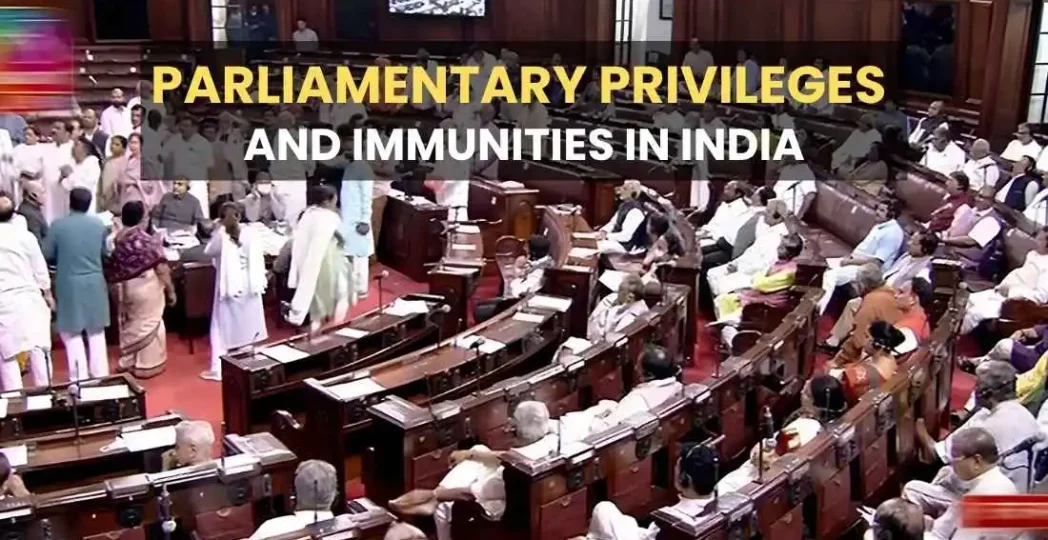
ToggleParliamentary privileges and immunities are special rights, freedoms, and protections granted to members of Parliament (MPs) and state legislators to enable them to perform their legislative duties efficiently, independently, and without fear of external interference.
- Purpose: To maintain the dignity and autonomy of the legislature, allow lawmakers to debate freely, and ensure smooth functioning of parliamentary institutions.
- Scope: Extends to both individual members (rights to speak, vote, and act) and the House collectively (procedures, disciplinary powers, and decision-making).
Origin
- Rooted in British parliamentary practices, adapted in India during colonial rule.
- Charter Act, 1833: First legal recognition of freedom of speech in legislative councils.
- Government of India Act, 1935: Expanded privileges for legislators, including immunity for speeches.
- Post-Independence India: Adopted into the Constitution of India, Articles 105, 122, 194, and 212.
Sources
Constitution of India
- Article 105: MPs have freedom of speech, cannot be sued or prosecuted for statements in Parliament, and Parliament can define its privileges.
- Article 122: Courts cannot question the validity of parliamentary proceedings on procedural grounds.
- Article 194: State legislators enjoy similar privileges as MPs.
- Article 212: Courts cannot interfere with state legislature proceedings.
- Parliamentary Conventions – Based on UK practices, including freedom of speech, rule-making powers, and disciplinary actions.
- Statutory Laws – Enacted by Parliament, giving legal backing to certain privileges and procedures.
- Rules of Procedure – Lok Sabha and Rajya Sabha Standing Orders guide usage of privileges and their enforcement.
- Judicial Interpretations – Supreme Court and High Court rulings clarify scope and limitations.
Key Features
- Purposeful Protection: Protect MPs from external pressures, interference, or legal liabilities while performing duties.
- Membership Bound: Privileges last only as long as the person remains a member.
- Individual and Collective: Safeguard both members individually and the House collectively.
- Non-Codified Nature: Mostly unwritten, based on conventions; Parliament has rejected codification.
- Flexible: Allows adaptation to changing political and social contexts.
Types of Privileges
A. Individual Privileges
Freedom of Speech
- MPs can speak freely without fear of prosecution.
- Covers debates, questions, resolutions, and motions.
Immunity from Legal Proceedings
- MPs cannot be sued, arrested, or prosecuted for votes cast or speeches delivered in the House or its committees.
Protection for Publications
- Parliamentary papers, reports, or proceedings cannot be questioned in courts.
- Enables dissemination of official proceedings for transparency.
Exemption from Judicial Inquiry
- Courts cannot question parliamentary proceedings based on procedural irregularities.
Freedom from Arrest
- MPs are immune from civil arrest during sessions and 40 days before & after sessions.
B. Collective Privileges
Publication Rights
- Parliament can authorize or restrict publication of its debates and reports.
- Exception: Press can publish accurate accounts during non-secret sessions (44th Amendment, 1978).
Secret Sittings
- Parliament can exclude outsiders during discussions of sensitive issues.
Rule-Making Authority
- Houses can frame rules of procedure, determine admissibility of motions, and regulate business.
Disciplinary Powers
- Parliament can punish breaches of privilege or contempt through reprimand, suspension, expulsion, or even imprisonment during sessions.
Right to Information
- Parliament must be informed of arrests, detentions, or convictions of members.
Inquiry Powers
- Houses can summon witnesses, demand records, and investigate matters affecting legislative functions.
Judicial Immunity
- Courts cannot intervene in parliamentary proceedings or committee actions.
Protection of Premises
- No legal action or arrest is allowed within parliamentary premises without permission of presiding officer.
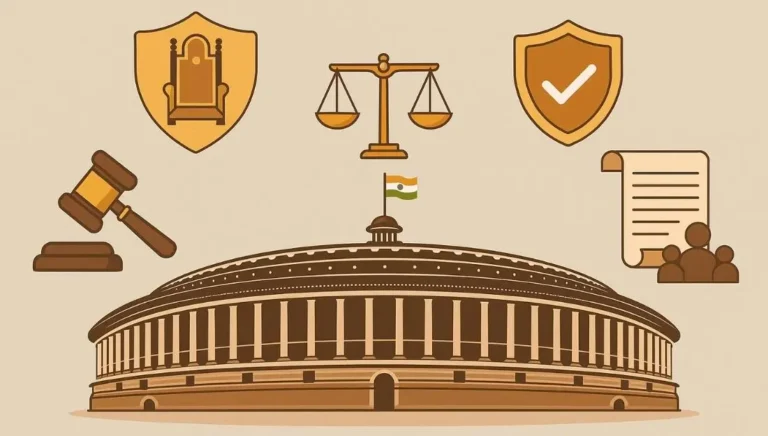
Breach of Privilege and Contempt
- Breach of Privilege: Disregard or violation of a member’s or House’s rights (e.g., ignoring orders, defamation).
- Contempt of House: Obstructing the functioning of the House, its members, or officers (e.g., publishing expunged proceedings, questioning impartiality of Chair).
Raising a Question of Privilege
- Raised with consent of Speaker/Chairman.
- Referred to Committee of Privileges (LS: 15 members, RS: 10 members).
- Committee examines breach, nature, and circumstances.
- Reports with recommendations are presented to the House.
- House accepts or rejects recommendations; action implemented if accepted.
- Only one question per sitting; must be recent and specific.
- Chairman can initiate inquiries suo-motu.
Punishment for Breach
- Reprimand, warning, imprisonment (only for session duration).
- Suspension or expulsion for MPs if necessary.
- Example: Indira Gandhi (1978) – expelled and imprisoned; resolution rescinded in 1981.
Key Judgments
Case | Year | Key Observation |
P.V. Narasimha Rao vs State | 1998 | MPs accepting bribes for votes were immune (later overturned). |
State of Kerala vs K. Ajith | 2021 | Privileges don’t exempt MPs from general laws. |
Sita Soren vs Union of India | 2024 | Immunity does not cover bribery; MPs remain accountable. |
Criticisms
- Lack of transparency.
- Potential misuse for political or personal gain.
- Ambiguity in scope.
- Conflicts with equality before law.
- Some privileges are outdated, originating from colonial-era practices.
International Practices
- UK: Freedom of speech, immunity from arrest, self-regulation.
- Canada: Privileges under Constitution Act, 1867 & Parliament of Canada Act, 1985.
- Australia: Enshrined in Constitution; freedom of speech, immunity, and procedural regulation.
Challenges
- Codification may undermine autonomy.
- Contradiction with Article 122 (judicial non-interference).
- Loss of flexibility in responding to emerging political issues.
- Codification is time-consuming and complex.
Way Forward
- Responsible Use: MPs should avoid misuse for personal or political gains.
- Respect Rights: Privileges should not infringe individual rights.
- Transparency & Accountability: Actions must be justified to the public.
- Compliance: Follow all parliamentary procedures and standing orders.
- Training & Awareness: Sensitization programs for MPs on privileges and limits.
Parliamentary Privileges and Immunities - FAQs Answered
What are Parliamentary Privileges and Immunities in India?
Parliamentary privileges and immunities are special rights and protections given to Members of Parliament and state legislators, ensuring they perform their duties freely and independently without external interference or legal consequences for their actions in the House.
What is the purpose of parliamentary privileges?
The main purpose of parliamentary privileges is to uphold the dignity, autonomy, and efficiency of the legislature. They allow MPs to debate, vote, and act freely while maintaining the independence of Parliament from judicial or executive influence.
What are the types of parliamentary privileges in India?
There are two main types of privileges:
- Individual Privileges: Freedom of speech, immunity from arrest, and protection from legal proceedings.
- Collective Privileges: Publication rights, disciplinary powers, rule-making authority, and protection of parliamentary premises.
What is a breach of privilege and how is it handled?
A breach of privilege occurs when the rights of a member or the House are violated—such as defamation, disobedience, or obstruction of proceedings. It is raised with the Speaker/Chairman’s consent and investigated by the Committee of Privileges, which recommends appropriate action.
What are some important cases related to parliamentary privileges in India?
Notable Supreme Court cases include:
- P.V. Narasimha Rao vs State (1998): MPs had immunity for votes in Parliament.
- State of Kerala vs K. Ajith (2021): Privileges don’t exempt MPs from general laws.
- Sita Soren vs Union of India (2024): Bribery not covered under immunity.