
Daily Current Affairs 15-July-2025

Share this Post

EASING FOOD PRICES DRIVE INFLATION DOWN

TOPIC: (GS3) ECONOMY: THE HINDU

Retail inflation dropped to 2.1% in June 2025, it’s lowest in 77 months, mainly due to easing food prices. Wholesale inflation also turned negative for the first time in 20 months, aided by lower crude oil rates.

What is Inflation?

  • Inflation means a general increase in the prices of goods and services in an economy over time.
  • When prices rise, the value of money falls – you get less for the same amount of money.

WPI – Wholesale Price Index

  • WPI measures the average change in prices at the wholesale level (i.e., prices at which businesses buy goods).
  • It includes bulk goods like fuel, metals, and raw materials.
  • WPI does not include the prices of services or retail items bought by consumers.
  • It is mainly used by industries and the government to track production costs.

CPI – Consumer Price Index

  • CPI tracks the average change in prices of goods and services at the retail level (what people pay in shops).
  • It includes items like food, clothing, housing, education, and medical care.
  • CPI is used to measure cost of living and to adjust salaries or pensions.
  • It is more important for common people and policy makers.

Key Highlights of Inflation Trends

Retail Inflation (CPI)

  • The Consumer Price Index (CPI) inflation dropped to 2.1% in June 2025, the lowest since January 2019.
  • This is a significant fall from 8.4% in June 2024, showing sustained moderation in prices.

  Food Price Impact

  • Food and beverages category showed a 0.2% deflation in June.
  • It marked the eighth consecutive month of falling food inflation.
  • Key items like vegetables, pulses, spices, and meat saw price drops.
  • Experts expect continued low food inflation due to good farm output and base effect.

  Fuel and Light Category

  • Inflation in fuel and light was 2.55% in June, down from 2.8% in May.
  • This slowdown came despite a negative base of -3.6% in June 2024.

  Other CPI Components

  • Inflation in housing rose slightly to 3.24% (from 3.16%).
  • Paan, tobacco, and intoxicants inflation stayed stable at 2.4%.

Wholesale Price Index (WPI) Trends

  • Overall WPI Movement: WPI contracted by -0.13% in June 2025, marking its first decline in 20 months. Last similar low was seen in October 2023.
  • Food Articles in WPI: Primary food articles fell by 3.75%, a steep reversal from 11.1% inflation last year. The entire food group in WPI (including processed food) declined by 0.3%.
  • Crude Petroleum & Natural Gas: Prices in this category dropped by 12.3%, continuing a 10-month-long fall. The last three months saw double-digit declines.

Conclusion

The significant drop in both retail and wholesale inflation is driven by easing food prices and falling crude rates. This trend may help the government and RBI maintain stability in economic policy.

WHY CORPORATE INVESTMENT IS LAGGING IN INDIA

TOPIC: (GS3) ECONOMY: THE HINDU

Despite high profits and tax cuts, corporate investment in India remains weak. Recent data shows industrial growth slowing, with Index of Industrial Production (IIP) at a nine-month low of 1.2% in June 2025.

Reasons Behind Weak Corporate Investment

Low Demand in the Economy

  • Investment depends mainly on the expected demand for the goods produced.
  • In a slowdown, when existing factories are underutilized, adding new capacity makes little sense.
  • Private companies avoid investment when there is no clear sign of rising consumer demand.

Theoretical Insight: Investment vs. Profits

  • Economist Michal Kalecki argued that firms can decide to invest, but not to earn profits.
  • Investment leads to profits, not the other way around.
  • Rosa Luxemburg explained that individual firms won’t invest unless they see rising demand, even though collective investment could revive the economy.

Government’s Efforts So Far

  • Corporate tax cuts in 2019 (from 30% to 22%) aimed to boost investment.
  • Large capital expenditure (capex) by the government in recent budgets.
  • Interest rate cuts by the RBI to make borrowing cheaper.
  • However, these steps did not trigger strong private investment.

Challenges in Current Approach

  • Delayed Impact of Infrastructure Spending: Large infrastructure projects like roads and ports take years to complete. The crowding-in effect (where public investment attracts private investment) is slow.
  • High Import Dependence: Part of government spending goes toward imported goods, which do not boost domestic demand.
  • Low Job Creation: Many capex projects use machines more than labor, leading to low employment generation. This reduces people’s purchasing power, limiting consumption growth.

Finance Alone Is Not Enough

  • Even with low interest rates, companies don’t borrow if they doubt future profits.
  • Liquidity and tax incentives are not effective without revival in demand.

Conclusion

Reviving corporate investment requires external support like public spending and boosting consumer demand. Without these, private firms remain hesitant, and the cycle of investment and growth stays broken.

DOWRY DEATHS IN INDIA

TOPIC: (GS2) INDIAN POLITY: THE HINDU

Several recent dowry-related deaths across India have brought attention back to the illegal but persistent practice of dowry, highlighting delayed investigations and low conviction rates.

DOWRY DEATHS IN INDIA

Issue at a Glance

  • In states like Uttar Pradesh and Tamil Nadu, many young brides have died due to dowry-related violence or suicides in the past few months.
  • Families of the victims reported torture, harassment, or financial pressure by in-laws.

Dowry Death Statistics (2017–2022)

  • Around 7,000 cases of dowry deaths are reported every year.
  • These are only reported figures; many cases go unreported due to fear or social stigma.

Slow Investigations

  • Only 4,500 cases were charge-sheeted annually out of 7,000 on average.
  • Rest remained pending or were closed citing lack of evidence, false cases, or miscommunication.
  • At the end of 2022, 67% of nearly 3,000 pending cases were delayed for over six months.

Delays in Charge-Sheets and Trials

  • 70% of charge-sheets filed in 2022 came after investigations lasting over two months.
  • Of the 6,500 cases sent to trial yearly, only 100 ended in convictions.
  • Over 90% of the cases remain pending, with others ending in acquittals or compromises.

States and Cities with High Dowry Deaths

  • West Bengal, Odisha, Bihar, UP, MP, Rajasthan, Jharkhand, and Haryana contributed to 80% of all cases.
  • Among cities, Delhi recorded 30% of all dowry death cases, followed by Kanpur, Bengaluru, Lucknow, and Patna.

Way Forward to Reduce Dowry in India (4 Simple Points)

  • Strict Enforcement of Laws: Ensure proper implementation of anti-dowry laws like the Dowry Prohibition Act, 1961 with fast investigation and timely punishment.
  • Public Awareness Campaigns: Launch wide-scale awareness drives in schools, colleges, and villages to promote gender equality and change societal attitudes.
  • Women Empowerment: Promote education, skill training, and employment opportunities for girls to make them financially independent and confident.
  • Social Support and Helplines: Strengthen grievance redressal systems, women’s helplines (like 181), and safe spaces for victims to seek help easily and safely.

Conclusion

Though dowry is banned by law, poor enforcement, delayed trials, and weak investigations continue to hinder justice for victims, reflecting deep-rooted gender inequality in society.

ABUSE OF RIGHT TO FREE SPEECH ON SOCIAL MEDIA

TOPIC: (GS2) INDIAN POLITY: THE HINDU

The Supreme Court has raised concern over the growing misuse of free speech on social media, stating that it threatens fraternity and dignity. The Court hinted at the need for regulatory guidelines.

Supreme Court’s Observation

  • A Bench of Justices B.V. Nagarathna and K.V. Viswanathan said free speech is being misused more often, especially online.
  • It emphasized that the right to freedom of speech (Article 19(1)(a)) comes with reasonable restrictions (Article 19(2)).
  • The Court noted that speech used to incite division or hatred online must be addressed seriously.

Need for Regulation

  • The judges stressed the need for self-regulation and legal checks on social media.
  • They clarified this is not about censorship, but protecting values like secularism, dignity, and unity.
  • The Court is considering creating a legal framework to regulate harmful and abusive content online.

Case Background

  • The case relates to a petition by Wazahat Khan of Kolkata.
  • He requested the Supreme Court to combine multiple FIRs filed in various states against him over his social media posts.
  • These FIRs followed Khan’s complaint against influencer Sharmistha Panoli, who was arrested for her online comments.

FREE SPEECH IN THE INDIAN CONSTITUTION

Article 19(1)(a) of the Indian Constitution guarantees the Right to Freedom of Speech and Expression to all citizens.

This right includes:

    • Freedom to express opinions freely
    • Right to criticize government policies
    • Freedom of the press
    • Right to silence (recognized in judicial rulings)

Reasonable Restrictions – Article 19(2)

The right to free speech is not absolute. The State can impose reasonable restrictions on the following grounds:

  • Sovereignty and integrity of India
  • Security of the State
  • Friendly relations with foreign States
  • Public order
  • Decency or morality
  • Contempt of court
  • Defamation
  • Incitement to an offence

Important Supreme Court Judgments

  • Romesh Thappar v. State of Madras (1950): Freedom of speech is at the foundation of all democratic organizations.
  • Shreya Singhal v. Union of India (2015): Struck down Section 66A of the IT Act for being vague and violating free speech online.
  • S. Khushboo v. Kaniammal (2010): Free speech includes unpopular opinions, as long as it does not cross the limits of Article 19(2).

Conclusion

The Supreme Court’s remarks reflect growing concern over how unregulated speech online can harm public harmony. A legal or policy response may soon be discussed to ensure balanced use of digital platforms.

GREEN REVOLUTION: ITS LEGACY AND INDIA’S STRATEGIC ROLE IN AGRICULTURAL R&D

TOPIC: (GS3) ECONOMY: THE HINDU

India has a historic opportunity to lead sustainable agriculture by correcting the imbalances left by the Green Revolution and investing in cutting-edge agricultural R&D to secure future food systems.

What was the Green Revolution?

  • Term coined by William S. Gaud in 1968.
  • Marked a major shift in Indian agriculture, turning food shortages into self-sufficiency.
  • Focused on high-yielding wheat and rice, intensive chemical use, and irrigation expansion, especially in Punjab, Haryana, and western Uttar Pradesh.

India’s Agricultural Achievements

  • Wheat varieties like Kalyan Sona and Sonalika introduced via CIMMYT, boosting yields to 7 tonnes/ha.
  • Rice breeding led by IARI produced iconic varieties like: Swarna (1982), Samba Mahsuri (1986), Pusa Basmati 1121 (2003)
  • In 2024–25, India exported 6.1 million tonnes of basmati rice worth $5.94 billion, mostly from IARI varieties.

Global Support & Declining Contribution

  • CIMMYT, supported by USAID, introduced early wheat strains like Sonora 63 and Lerma Rojo 64A.
  • USAID contributed $83 million in 2024, but its funding is declining post-Trump era.
  • India contributed only $0.8 million to CIMMYT and $18.3 million to IRRI, despite heavy dependence on global R&D.

Negative Legacy of Green Revolution

  • Focused on wheat and rice; ignored Eastern and Central India.
  • Caused: Groundwater depletion, Soil nutrient exhaustion, Reduced crop diversity, Monoculture and farmer debt

Corrective Policy Suggestions

  • Decentralized procurement: Buy more millets, pulses, and oilseeds, especially from underdeveloped regions.
  • Agroecological shift: Encourage regenerative farming and reduce chemical use.
  • Water-efficient crops: Support climate-resilient crops suited to local ecosystems.
  • Income diversity: Promote value-addition, cooperatives, and rural credit.
  • Balanced growth: Support neglected regions like the Northeast and Central India.

India’s Strategic R&D Role

  • Invest in AI-based breeding, gene editing, drought/heat tolerance, and nitrogen efficiency.
  • Support home-grown innovations and fund public research institutes.
  • Build on initiatives like: International Year of Millets, Green Revolution in Eastern India, Regenerative agriculture pilots

GREEN REVOLUTION IN INDIA

In the 1950s and early 1960s, India faced frequent famines, low agricultural productivity, and was dependent on food imports. To achieve self-sufficiency in food, the government adopted new farming technologies and high-yield crops.

What was the Green Revolution?

A period of rapid agricultural growth due to the use of:

    • High-Yielding Variety (HYV) seeds
    • Chemical fertilizers and pesticides
    • Irrigation development
    • Farm mechanization

Key People

  • M.S. Swaminathan: Known as the Father of Green Revolution in India.
  • Norman Borlaug: An American scientist who developed HYV wheat and helped start the global Green Revolution.

When and Where It Started

  • Began in 1966–67 in Punjab, Haryana, and Western Uttar Pradesh.
  • Focused mainly on wheat and rice production.

Major Achievements

  • India became self-reliant in food grain production by the 1970s.
  • Wheat and rice output increased significantly.
  • Helped avoid famines and reduced food imports.

Conclusion

India must shift from being a passive recipient of global agricultural research to a leader in innovation, ensuring food security and sustainability for future generations.

KAZIRANGA RECORDS HIGH DIVERSITY OF GRASSLAND BIRDS

TOPIC: (GS3) ENVIRONMENT: THE HINDU

Kaziranga National Park has recorded a high diversity of grassland birds in its first-ever survey, including several rare and threatened species. The study emphasizes the importance of wet grasslands in biodiversity conservation.
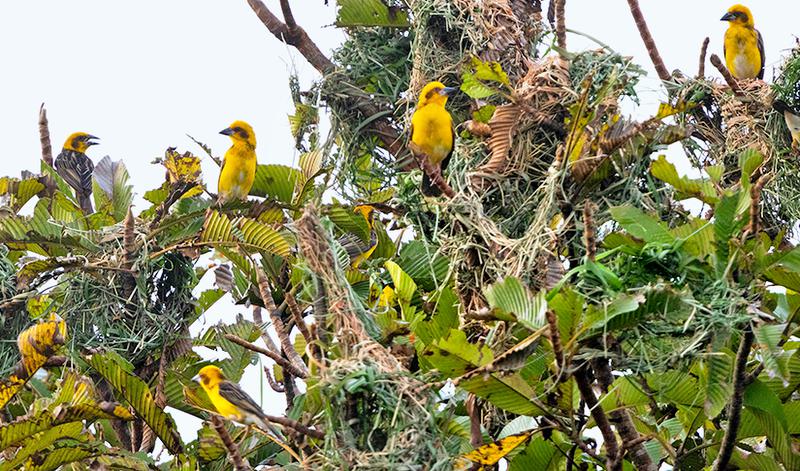
High diversity of grassland birds

About the Survey

  • Conducted between March 18 and May 25, 2025.
  • Jointly carried out by forest staff, bird experts, researchers, and conservationists.
  • Covered all three wildlife divisions of Kaziranga National Park and Tiger Reserve.
  • A total of 43 grassland bird species were recorded.

Key Species Identified

  • Critically Endangered: Bengal florican.
  • Endangered: Finn’s weaver (locally called Tukura Chorai), known for its unique tree-top nest-building.
  • Vulnerable species: Black-breasted parrotbill, Marsh babbler, Swamp francolin, Jerdon’s babbler, Slender-billed babbler, Bristled grassbird
  • Other Species: 34 additional grassland-dependent birds.

Significance of Kaziranga’s Grasslands

  • Kaziranga spans 1,174 sq. km, consisting of grasslands, forests, and wetlands.
  • The park’s wet grasslands are understudied habitats in India.
  • Kaziranga’s bird diversity can now be compared with dry grasslands of Rajasthan and Gujarat in terms of richness.

Use of Passive Acoustic Recording

  • Non-invasive audio recorders were used for the first time in this survey.
  • Enabled 24×7 bird call monitoring, even in remote or dangerous areas.
  • Helped detect shy and hidden species, improving overall accuracy.

Conclusion

Kaziranga’s grassland bird survey has highlighted the ecological value of wet grasslands, revealing the presence of rare and threatened bird species and showcasing the importance of innovative monitoring tools in wildlife conservation.


EXEMPTION OF COAL PLANTS FROM INSTALLING FGD SYSTEMS

TOPIC: (GS3) ENVIRONMENT: THE HINDU

The Ministry of Environment has exempted 78% of India’s thermal power plants from installing Flue Gas Desulphurisation (FGD) systems, raising concerns over air quality and public health.

What is FGD (Flue Gas Desulphurisation)?

  • FGD is a pollution control technology used in coal-based power plants.
  • It removes sulphur dioxide (SO₂) from exhaust gases before they are released into the air.
  • The common method involves wet scrubbers using limestone slurry, which converts SO₂ into gypsum.
  • FGDs help in reducing acid rain, improving air quality, and cutting PM2.5 pollution.

Classification of TPPs by MoEFCC

  • Category A: Around 11% of plants, located within 10 km of NCR or large cities. FGD installation is mandatory by December 2027.
  • Category B: Another 11% of plants in critically polluted areas or non-attainment cities. FGD required only with EAC approval by December 2028.
  • Category C: The remaining 78% of plants, mostly in less polluted zones, are completely exempt from FGD norms.

Global Practice

  • Countries like China and the U.S. have strict FGD mandates across all coal plants.
  • China has achieved over 95% SO₂ reduction by installing FGDs nationwide.

Major Concerns

  • Health Risks: SO₂ contributes to asthma, heart problems, and early deaths.
  • Polluter Pays Principle ignored: Exemption shifts pollution burden to the public.
  • Weakens India’s commitments under Clean Air Programme and COP26.
  • Air pollution travels 200 km, affecting distant and rural areas.

Way Forward

  • Account health costs using models like Health Impact Assessment.
  • Boost renewable energy to reduce coal dependence.
  • Uniform emission rules for all plants, regardless of location.
  • Promote local FGD production under Make in India.
  • Ensure public access to real-time pollution data for transparency.

Conclusion

A health-focused and science-driven approach to pollution control is vital. India must uphold its constitutional duty (Article 21) and global climate commitments through stronger environmental governance.

NOMINATION TO RAJYA SABHA

TOPIC: (GS2) INDIAN POLITY: THE HINDU

The President of India has nominated four new members to the Rajya Sabha based on the advice of the Council of Ministers. These individuals were chosen for their outstanding contributions in various fields.

About Rajya Sabha Nomination

  • Article 80 of the Constitution allows the President to nominate 12 members to the Rajya Sabha.
  • These members are not elected, but are appointed based on merit in: Literature, Science, Art, Social service

Purpose of Nominating Members

  • The goal is to enrich Parliamentary debates with expert insights from people who may not join politics directly.
  • Ensures that national policies are shaped with input from various professional and creative sectors.

Tenure of Nominated Members

  • Serve for a term of 6 years, same as elected Rajya Sabha members.
  • They can also be renominated after their term ends.

Rights and Powers

  • Nominated members enjoy all privileges of regular members, including: Participating in debates, Voting on bills
  • Exception: They cannot vote in Presidential elections but can vote in Vice-Presidential elections.

RAJYA SABHA

Maximum Strength: As per Article 80 of the Constitution, Rajya Sabha can have a maximum of 250 members.

  • Current Strength (2025): The actual strength is 245 members:
      • 233 are elected by State and Union Territory legislatures.
      • 12 are nominated by the President of India for their expertise in literature, science, art, and social service.
  • Recent Update: The President recently nominated 4 new members, but this does not increase the total beyond the limit of 245.
  • Tenure: Each member of Rajya Sabha serves a term of 6 years, with one-third retiring every two years

Conclusion

The nomination system in Rajya Sabha ensures that experienced individuals from outside politics can still make valuable contributions to nation-building and policymaking.

Write a Review

Your email address will not be published. Required fields are marked *