
Table of Contents
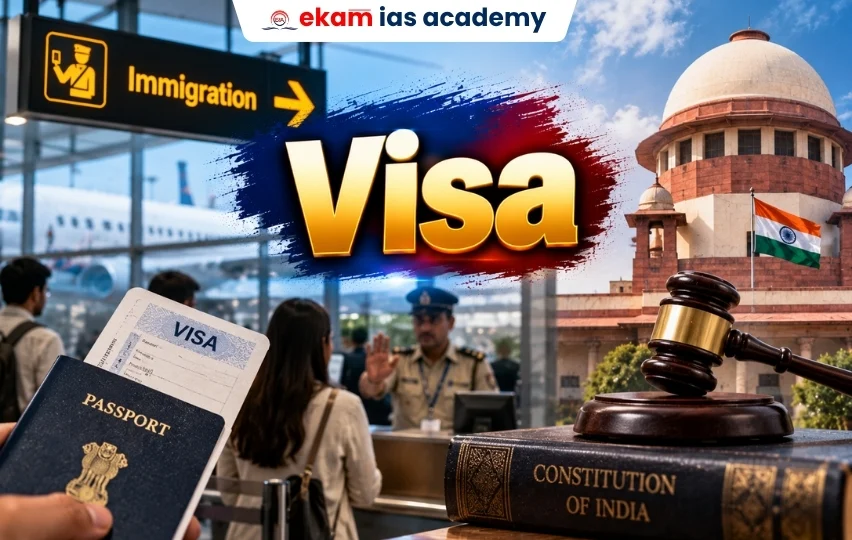
ToggleThe Delhi High Court has ruled that holding a valid visa does not, by itself, create an absolute or enforceable right for a foreign national to enter India. The judgment came in a petition filed by a Turkmenistan citizen who was denied entry at Indira Gandhi International Airport despite possessing a valid business visa.
What Happened
The petitioner arrived in India with her husband, who held a visa of the same category and was permitted to enter. She was, however, stopped by immigration authorities and sent back to Turkmenistan.
She approached the High Court seeking reasons for the denial and permission to enter India on the basis of her valid visa.
Arguments of the Petitioner
The petitioner argued that the authorities had not provided adequate reasons for refusing her entry. She also invoked Articles 14 and 21, contending that allowing her husband to enter while denying her admission amounted to discriminatory treatment and violated constitutional protections.
Centre’s Position
The Centre argued that visa issuance and permission to enter India are legally distinct. A visa allows a foreigner to seek admission but does not guarantee entry.
The government stated that adverse inputs concerning the petitioner had been received and that the decision was taken with regard to national security and public order.
What the Court Ruled
The High Court rejected the petition and held that a foreign national does not possess an inherent or legally enforceable right to enter India merely because a valid visa has been issued.
The court distinguished between obtaining a visa and receiving immigration clearance. Decisions relating to entry involve sovereign considerations such as national security, foreign policy and public order.
Article 14 Argument
The court also rejected the discrimination claim. The fact that the petitioner’s husband was admitted did not establish that both individuals were similarly situated because the adverse information related specifically to the petitioner.
Consequently, the court found no basis for granting relief under Article 226.
Legal Framework: Immigration and Foreigners Act, 2025
The Immigration and Foreigners Act, 2025 provides the statutory framework governing foreign nationals.
While Section 3 requires a valid passport or travel document and visa, admission may still be refused on grounds involving national security, sovereignty and integrity, relations with foreign states, public health and other prescribed considerations.
Immigration officers may also seek necessary information while examining documents at the point of entry.
Supreme Court Precedents
The judgment relied on earlier Supreme Court decisions, including Hans Muller of Nurenburg v. Superintendent, Presidency Jail (1955) and Louis De Raedt v. Union of India (1991), which recognise the wide powers of the State concerning foreigners.
Conclusion
The ruling reinforces an important distinction: a visa permits a foreign national to seek entry, but immigration clearance remains subject to sovereign authority. For UPSC, the case is significant for understanding Article 14, Article 21, Article 226, national security and the constitutional position of foreigners in India.


FAQs – Visa and Foreign Nationals’ Entry into India
Does holding a valid visa guarantee entry into India?
No. A valid visa allows a foreign national to seek entry, but immigration clearance remains subject to sovereign considerations such as national security, public order and foreign policy.
Why was the Turkmenistan citizen denied entry despite having a valid visa?
The Centre stated that adverse inputs concerning the petitioner had been received and that the decision was taken considering national security and public order.
Did the Delhi High Court accept the Article 14 discrimination argument?
No. The Court held that the petitioner and her husband were not necessarily similarly situated because the adverse information related specifically to the petitioner.
Which constitutional provisions are relevant to the case?
The case involves Articles 14, 21 and 226. Article 14 concerns equality, Article 21 protects life and personal liberty, and Article 226 empowers High Courts to issue constitutional writs.
Which law governs the entry of foreign nationals into India?
The Immigration and Foreigners Act, 2025 provides the statutory framework. It permits admission to be regulated on grounds including national security, sovereignty and integrity, relations with foreign states and public health.