

Table of Contents
ToggleINDUSTRIAL EMISSIONS AND AIR POLLUTION IN DELHI–NCR
TOPIC: (GS3) ENVIRONMENT: THE HINDU
The Commission for Air Quality Management (CAQM) reported that most medium and large industries in DelhiNCR have failed to comply with stricter emission norms, forcing an extension of the deadline for installing pollution control devices.
Industrial NonCompliance with Emission Norms
- Stricter PM Norms: Industries in DelhiNCR are struggling to meet the revised particulate matter limit of 50 mg/Nm³, reduced from the earlier 80 mg/Nm³.
- Extent of NonCompliance: More than 2,100 medium and large units have not installed or upgraded air pollution control devices, leaving only a small fraction compliant.
- Industry Challenges: High installation costs, procurement delays, and limited technical expertise are cited as major obstacles to compliance.
Why NCR Region Faces Severe Pollution (Facts & Data)
- Industrial Emissions: Boilers, furnaces, and coal burning contribute heavily; 91% of units noncompliant.
- Vehicular Pollution: NCR has one of the highest vehicle densities in India, adding to PM2.5 and NOx levels.
- Geography & Weather: Landlocked region with winter inversion traps pollutants, worsening smog episodes.
Why Most Polluted Cities Are in India
- Rapid Urbanisation: Cities like Ghaziabad, Noida, and Delhi recorded average winter PM2.5 concentrations of 172 μg/m³, 166 μg/m³, and 163 μg/m³ respectively in 202526 winters, far exceeding India’s NAAQS limit of 60 μg/m³.
- Dependence on Coal & Biomass Burning: Industrial hubs in Haryana and Uttar Pradesh rely heavily on coalbased power and small boilers.
- States like Rajasthan (23 of 34 cities) and Bihar (15 of 24 cities) also showed widespread exceedances due to coallinked industries.
- Weak Enforcement: Despite the National Clean Air Programme (NCAP), 92 of 94 NCAP cities breached WHO’s daily safe guideline of 15 μg/m³.
Major Air Pollutants
- PM2.5 & PM10: Fine particles causing respiratory and cardiovascular diseases.
- SO₂ & NOx: From coal combustion and vehicles, leading to acid rain.
- Ozone (O₃): Secondary pollutant formed by chemical reactions in sunlight.
- Carbon Monoxide (CO): From incomplete combustion, harmful to human health.
Government Measures
- CAQM directives for stricter emission norms in NCR industries.
- National Clean Air Programme (NCAP): Targets 40% reduction in PM levels by 2026.
- Switch to cleaner fuels: Promotion of natural gas, bioCNG, and renewables.
- Graded Response Action Plan (GRAP): Emergency measures during severe pollution episodes.
How Air Pollution is Measured
- Continuous Ambient Air Quality Monitoring Stations (CAAQMS): Track pollutants in real time.
- Manual monitoring: Conducted by CPCB and SPCBs at fixed intervals.
DIFFERENT INDICES FOR AIR POLLUTION MEASUREMENT
Air Quality Index (AQI)
- A composite measure that converts multiple pollutant concentrations into a single number for easy public understanding.
- Covers pollutants like PM2.5, PM10, SO₂, NOx, CO, and O₃.
- Categorized into ranges (Good, Satisfactory, Moderate, Poor, Very Poor, Severe).
- Example: AQI 0–50 = Good; AQI 401–500 = Severe.
- Used widely in India by CPCB (Central Pollution Control Board) through CAAQMS stations.
Pollutant Standards Index (PSI)
- Developed internationally, similar to AQI, but with slight variations in calculation.
- Focuses on major pollutants like PM, SO₂, NOx, CO, and ozone.
- Provides a standardized scale for comparing air quality across countries.
- Example: Singapore and the US use PSI to communicate daily air quality to citizens.
Particulate Matter Concentration
- Direct measurement of PM2.5 and PM10 levels in micrograms per cubic meter (µg/m³).
- PM2.5: Fine particles ≤2.5 microns, penetrate deep into lungs and bloodstream.
- PM10: Coarser particles ≤10 microns, cause respiratory irritation.
- WHO guideline: PM2.5 annual mean should not exceed 5 µg/m³; India’s standard is 40 µg/m³, showing a gap in global vs national norms.
Conclusion:
DelhiNCR’s pollution crisis stems from industrial noncompliance, vehicular emissions, and weak infrastructure, making urgent enforcement and cleaner technologies essential for sustainable air quality improvement.
YOUTH, OPPOSITION, AND INDIA’S DEMOCRATIC FUTURE
TOPIC: (GS2) POLITY: THE HINDU
Former RBI Governor Raghuram Rajan emphasized the importance of youth participation and a credible opposition in India’s democracy, and governance.
Role of Youth in Politics
- India has the largest youth population in the world, with over 65% below 35 years.
- Youth are directly impacted by issues like job creation, skill development, and automation.
- Active participation ensures fresh ideas, accountability, and innovation in governance.
- Example: Government schemes like Skill India Mission and PM Kaushal Vikas Yojana aim to harness youth potential.
Challenges
- Lack of Unity: Opposition parties remain fragmented, reducing their ability to present a collective alternative.
- Policy Alternatives Missing: Excessive focus on criticism without constructive solutions weakens credibility.
- Need for Persuasive Narratives: Rajan stresses opposition must address real concerns like unemployment and education instead of rhetoric.
- Checks and Balances: A strong opposition is vital for accountability in a parliamentary democracy.
Key Issues Highlighted
- Unemployment: India’s youth unemployment rate is 15% (ages 15–29), with nearly 1 in 3 graduates jobless. Automation threatens 20–25% of routine jobs (ILO estimates).
- Education Quality: Only 45% of engineering graduates are employable in IT (NASSCOM 2025). Rajan warns of poor training in math, science, and communication.
- Nationalism & Governance: Calls for inclusive politics, cautioning against divisive narratives that distract from economic priorities.
- Technology & Automation: AI will not replace handson jobs like plumbing or aircraft repair, but India risks shortages of skilled workers due to weak vocational training.
Broader Democratic Perspective
- Credibility of Parties: Democracy thrives when both ruling and opposition parties are accountable.
- Constructive Opposition: Ensures debates on policies rather than personalities.
- Youth Engagement: With 65% of India’s population under 35, youth participation can bridge aspirations and governance outcomes.
- Participatory Governance: NITI Aayog reports highlight citizen involvement as key to sustainable development.
Way Forward
- Political Education & Awareness:Introduce structured civic education modules in schools and universities.Encourage youth participation through platforms like National Youth Parliament Scheme (NYPS).
- IssueBased Politics: Shift focus from identity politics to employment, education, health, and climate change.
- Coalitions of Ideas: Build alliances around policy innovation rather than electoral arithmetic. Germany’s vocational training model (1.3% of GDP investment) could inspire reforms in India’s skill ecosystem.
- Transparent Governance: Expand use of digital grievance redressal platforms like CPGRAMS and MyGov. Promote open data initiatives for accountability in public spending.
Conclusion:
India’s democratic health depends on empowered youth and a credible opposition that can provide constructive alternatives, ensuring governance remains accountable and futureoriented.
BALANCING FARMER WELFARE AND FISCAL SUSTAINABILITY
TOPIC: (GS3) ECONOMY: THE HINDU
The Government of India announced procurement of 60% of the estimated summer moong crop at a Minimum Support Price (MSP) of ₹8,768 per quintal, raising debates on farmer welfare and fiscal feasibility.
MSP Implementation
- Farmer Concerns: Many farmers continue to sell below MSP due to weak procurement mechanisms, making MSP appear “only on paper.”
- Regional Demand: The demand for MSP is strongest in Punjab and Haryana, where farmers cultivate waterintensive crops like rice and wheat.
- Economic Justification: Pulses and oilseeds require fewer inputs (water, fertilizer), making MSP support more rational and resourceefficient.
- Fiscal Challenge: Largescale procurement strains government finances; India’s food subsidy bill already exceeds ₹2 lakh crore annually, raising sustainability concerns.
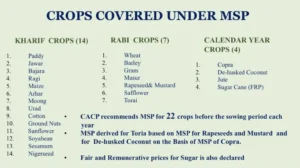
Significance of MSP for Pulses
- Encourages farmers to shift from waterintensive crops to nutrientrich pulses.
- Helps reduce India’s dependence on pulse imports (India imports ~2–3 million tonnes annually).
- Supports nutritional security, as pulses are a major protein source for lowincome households.
Why MSP Should Not Be the Sole Alternative
- Limited Coverage: MSP is announced for 23 crops, but effective procurement happens mainly for rice and wheat. Farmers growing pulses, oilseeds, or coarse cereals often sell below MSP due to weak procurement infrastructure.
- Fiscal Burden: Largescale procurement inflates the food subsidy bill (₹2 lakh crore annually), straining government finances. Expanding MSP universally is economically unsustainable.
- Market Distortion: Heavy reliance on MSP encourages cultivation of waterintensive crops like rice and wheat, worsening groundwater depletion and soil degradation.
- Inequitable Benefits: Studies show MSP benefits are concentrated in Punjab and Haryana, while farmers in eastern and southern states often lack procurement facilities.
- Alternative Support Models:
- Direct Income Support: Schemes like PMKISAN provide ₹6,000 annually to farmers, ensuring cash flow without market distortion.
- PerAcre Transfers: Suggested by economists as more equitable, compensating farmers directly for land under cultivation.
- Crop Diversification Incentives: Promote pulses, oilseeds, and millets under National Food Security Mission (NFSM) to reduce import dependence.
- Price Deficiency Payment (PDP): Adopted in Madhya Pradesh (Bhavantar Scheme), compensates farmers for the gap between MSP and market price.
WHAT IS MSP
MSP (Minimum Support Price) is a price guarantee mechanism announced by the Government of India to ensure farmers receive a minimum rate for their produce, protecting them from distress sales.
Implementing Authority:
- Recommended by the Commission for Agricultural Costs and Prices (CACP).
- Notified by the Ministry of Agriculture & Farmers Welfare.
Objective:
- To safeguard farmers against sharp price fluctuations in the market.
- To provide income security and encourage crop diversification.
Traditional Focus:
- Initially concentrated on rice and wheat, the main staples procured under the Food Corporation of India (FCI) for the Public Distribution System (PDS).
Expansion to Other Crops:
- Over time, MSP coverage extended to pulses, oilseeds, and coarse cereals to promote sustainable agriculture.
- Example: Summer moong procurement at ₹8,768 per quintal (2026) reflects diversification efforts.
Economic Rationale:
- Pulses and oilseeds require less water and fertilizer compared to rice and wheat.
- Supporting these crops under MSP helps reduce import dependence and ensures nutritional security.
Policy Linkages:
- Connected to schemes like PMAASHA (Annadata Aay Sanrakshan Abhiyan) which includes Price Support Scheme (PSS), Market Intervention Scheme (MIS), and Private Procurement & Stockist Scheme (PPSS).
- Aligns with National Food Security Mission (NFSM) to encourage pulses and millets.
Conclusion:
Ensuring MSP benefits reach farmers while balancing fiscal realities is crucial for sustainable agriculture and food security in India.
ETHICS OF DIGITAL COMMUNICATION AND ANONYMITY
TOPIC: (GS2) POLITY: THE HINDU
Digital communication has raised new ethical dilemmas around anonymity, privacy, and trust, especially when online interactions involve attention, money, or personal data.
Changing Nature of Communication
- Digital platforms have transformed how individuals introduce themselves and interact.
- Refusing or initiating communication carries ethical implications, especially when attention, trust, or money is involved.
- Example: Online marketplaces and social media interactions often blur personal and professional boundaries.
Ethical Concerns in Cyber Communication
- Anonymity: While anonymity protects privacy, it can also enable misuse such as cyberbullying or fraud.
- Trust Deficit: Online interactions often lack facetoface accountability, making trust fragile.
- Surveillance & Privacy: Growing concerns about data collection and monitoring by both state and private entities.
- Identity Issues: Fake profiles and impersonation challenge authenticity in digital spaces.
Social Dimensions
- Youth Vulnerability: Young users are more exposed to online scams and misinformation.
- Digital Divide: Rural and semiurban populations face risks due to limited awareness of cyber ethics.
- Cultural Shifts: Online anonymity changes traditional norms of communication and social trust.
Legal and Policy Framework
- Information Technology Act, 2000: Provides legal framework for cybercrimes, data protection, and digital identity.
- CERTIn Guidelines: Mandate reporting of cyber incidents within six hours.
- National Cyber Security Policy (2013): Focuses on securing cyberspace and promoting responsible digital behavior.
- Data Protection Bill (2023): Aims to balance privacy rights with digital innovation.
Way Forward
- Digital Literacy: Strengthen awareness campaigns on safe online practices.
- Ethical Frameworks: Encourage platforms to adopt transparent policies on anonymity and identity verification.
- Trust Building: Promote secure communication channels and grievance redressal mechanisms.
- Global Cooperation: Align with international norms on cyber ethics and privacy protection.
THE RIGHT TO PRIVACY
The Right to Privacy in India is a fundamental right under Article 21 of the Constitution, interpreted as intrinsic to life, liberty, and dignity.
- Protects individuals against arbitrary state intrusion and misuse of personal information.
- Privacy is not a luxury but a constitutional guarantee.
- Protects against threats like cyber harassment, deepfakes, and data misuse.
Constitutional Basis
- Article 21: “No person shall be deprived of his life or personal liberty except according to procedure established by law.”
- Interpreted to mean more than mere existence — it includes dignity, autonomy, and privacy.
- Privacy is essential for exercising freedoms like speech, association, and conscience.
Latest Court Interpretations
- K.S. Puttaswamy (2017): Established privacy as a fundamental right, protecting body, home, personal information, and decisionmaking.
- Navtej Singh Johar (2018): Decriminalized homosexuality, linking privacy with autonomy and dignity.
- Supreme Court Ruling (2026): Reaffirmed that even public officials retain privacy rights; disclosure of personal data under RTI must pass the tests of legality, necessity, and proportionality. Public interest alone cannot override privacy.
Conclusion:
In the digital age, balancing privacy, trust, and accountability is essential to ensure communication remains ethical, secure, and socially responsible.
MASS MIGRATION CRISIS AT SPAIN’S CEUTA BORDER
TOPIC: (GS2) INTERNATIONAL RELATIONS: THE HINDU
Nearly 60,000 migrants crossed into Spain’s Ceuta enclave from Morocco within 24 hours, leading to 57 deaths and raising urgent concerns about border security, humanitarian response, and migration policy in Europe.
Background of Ceuta
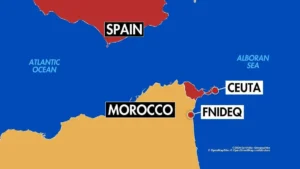
- Spanish Enclave in Africa: Ceuta is a Spanish territory located on the northern coast of Africa, directly bordering Morocco. It is one of two Spanish enclaves (Ceuta and Melilla) on the African mainland.
- Strategic Location: Situated near the Strait of Gibraltar, Ceuta lies at the narrow passage connecting the Atlantic Ocean and the Mediterranean Sea. This makes it a geopolitical hotspot and a preferred route for irregular migration into Europe.
- Migration Gateway: Its proximity to Morocco and Europe makes Ceuta a key entry point for migrants and refugees seeking access to Spain and the wider European Union.
- Border Infrastructure: The enclave is surrounded by high fences, surveillance systems, and patrols to prevent illegal crossings. However, mass influxes often overwhelm border controls, leading to humanitarian and security challenges.
- Policy Importance: Ceuta symbolizes the intersection of European migration policy, African socioeconomic pressures, and international humanitarian law, making it central to debates on migration management.
Key Issues Highlighted
- Humanitarian Concerns: 57 migrants died during the breach, showing the risks of unsafe crossings.
- Return of Migrants: Spain’s Interior Ministry reported 37,500 migrants returned to Morocco, but thousands remain in Ceuta.
- Border Security: Mass influx challenges Spain’s ability to manage borders and maintain order.
- Policy Dilemma: Balancing humanitarian obligations with strict immigration laws.
Regional and Global Dimensions
- European Union (EU): Faces pressure to strengthen external borders while upholding refugee rights under UN conventions.
- Morocco’s Role: Acts as a transit country; cooperation with Spain is crucial for managing flows.
- Migration Drivers: Poverty, unemployment, political instability, and climate stress in Africa push migrants toward Europe.
- Comparative Example: Similar crises at Lampedusa (Italy) and Lesbos (Greece) highlight Europe’s recurring migration challenge.
Way Forward
- Strengthen bilateral cooperation between Spain and Morocco for controlled migration.
- Enhance humanitarian support including shelters, medical aid, and legal assistance.
- Promote development aid in African countries to reduce push factors like poverty and instability.
- EU must adopt a balanced approach combining border security with refugee protection.
Conclusion:
The Ceuta crisis underscores the urgent need for coordinated global migration policies that balance security with humanitarian responsibility.
SPACE DEBRIS FALLING TO EARTH
TOPIC: (GS3) SCIENCE AND TECHNOLOGY: THE HINDU
In 2025–26, the U.S. Space Force issued alerts for ~820 objects reentering the atmosphere, highlighting the scale of the issue.
Background
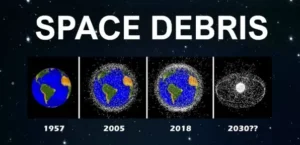
- Space Debris: Refers to defunct satellites, rocket stages, and fragments orbiting Earth.
- Uncontrolled Reentry: When debris falls without guidance, posing risks to people and property.
- Examples:
- Large metal piece crashed near Mukuku village, Kenya (2024).
- Debris found at North Carolina luxury campground (USA).
- Global Scale: Over 36,000 tracked objects in orbit; thousands reenter annually.
Causes of Rising Space Debris Risk
- Expansion of Satellite Constellations: Rapid growth of commercial networks like Starlink has multiplied the number of satellites in orbit, increasing collision and debris risks.
- Rocket Stage Abandonment: Many launch vehicles leave upper stages in orbit without deorbiting plans, adding large, uncontrolled objects to space junk.
- Lack of Binding Rules: International efforts remain voluntary; no enforceable treaty exists to ensure debris mitigation, leaving gaps in accountability.
- Solar Activity & Atmospheric Drag: Variations in solar radiation increase atmospheric drag, causing satellites and debris to fall unpredictably, complicating tracking.
Impacts of Space Debris
- Threat to Safety: Falling fragments, though mostly burning up, can still damage homes, farms, or even aircraft — as seen in Kenya (2024) and North Carolina (USA).
- Environmental Damage: Residues like aluminum and toxic fuel can contaminate soil and water, posing ecological hazards.
- Economic Burden: Property damage, insurance claims, and aviation route disruptions increase financial costs for governments and private operators.
- Strategic & Security Concerns: Space junk complicates military surveillance, satellite tracking, and raises geopolitical tensions over responsibility for debris.
Initiatives to Address Space Debris
- UN COPUOS Guidelines: Recommend that satellites be deorbited within 25 years of mission completion.
- ISRO Measures: India has also begun tracking debris through its NETRA project. Adopted debris mitigation protocols in line with international standards.
- NASA & ESA Programs: Developing active debris removal missions such as ClearSpace1 and RemoveDEBRIS. These aim to capture and deorbit large defunct satellites and rocket stages.
- US Space Force Alerts: Issues global warnings for uncontrolled reentries to minimize risk to aviation and populated areas.
Conclusion
Space debris is no longer a distant orbital issue but a direct terrestrial hazard, demanding urgent global cooperation and responsible space governance.

SAMUDRA MANTHAN
TOPIC: (GS3) ECONOMY: THE HINDU
The Union Cabinet has cleared the ₹84,084 crore “Samudra Manthan” scheme to expand offshore oil & gas exploration.
Samudra Manthan
- DeepSea Exploration Support: Financial backing for drilling in deepsea and ultradeepsea wells. Government to cover up to 50% of drilling cost or ₹675 crore per well, whichever is lower.
- Data Acquisition & Research: Large allocation for seismic surveys, offshore mapping, and geological studies. Helps identify hydrocarbon potential in unexplored basins of the Arabian Sea, Bay of Bengal, and Andaman Sea.
- Infrastructure Development: Creation of common offshore facilities like pipelines, terminals, and gas introduction systems. Establishment of designated gas zones to streamline marketing and distribution.
- Private Sector Participation: Incentives for private companies to invest in offshore exploration.
Strategic Benefits
- Energy Dependence: India currently imports nearly 85% of its crude oil, making energy security a pressing national priority.
- Exploration Deficit: Deepsea and ultradeepsea regions in the Arabian Sea, Bay of Bengal, and Andaman Sea remain underexplored compared to countries like Brazil or the U.S. Gulf of Mexico.
- Policy Alignment: The scheme supports the Hydrocarbon Exploration Licensing Policy (HELP) framework, encouraging private participation and transparent bidding.
- Climate Commitments: Exploration is balanced with India’s pledge to achieve netzero emissions by 2070, requiring integration of clean technologies and carbon management.
- Strategic Goal: The initiative seeks to reduce import reliance, strengthen domestic production, and enhance resilience against global energy shocks.
Coverage Areas
- Arabian Sea
- Bay of Bengal
- Andaman Sea
Broader Dimensions
- Economic: Potential to save billions in import bills and generate employment in coastal states.
- Strategic: Strengthens India’s energy independence and maritime presence.
- Environmental: Requires balancing exploration with ecological safeguards; aligns with India’s climate commitments.
- Global Context: Similar initiatives seen in Brazil’s deepsea oil fields and U.S. Gulf of Mexico exploration.
Conclusion
Samudra Manthan marks a decisive step towards energy selfreliance, combining exploration, infrastructure, and strategic vision to secure India’s offshore future.
NAKSHA PROJECT
TOPIC: (GS2) GOVERNANCE: THE HINDU
The Directorate of Settlement and Land Records (DSLR) has begun a monthlong pilot inquiry under the NAKSHA programme in Margao, Cuncolim, and Panaji.
About the Project
- Definition: NAKSHA (National Geospatial Knowledgebased Land Survey of Urban Habitations) is a GISbased mapping initiative for urban land parcels.
- The initiative is part of India’s push to digitize and modernize land records for urban habitations.
- Framework: Operates under the Digital India Land Records Modernization Programme (DILRMP).
- Technology: Uses aerial surveys, drones, and GIS tools to create precise digital maps of complex urban and periurban areas.
- Implementation:
- Technical support from Survey of India (aerial surveys).
- Backed by National Informatics Centre Services Inc. (NICSI).
- Nodal Ministry: Department of Land Resources (DoLR), Ministry of Rural Development.
Objectives
- Geospatial Database: Build a comprehensive digital record of urban land parcels.
- Governance: Improve land governance, streamline property records, and reduce disputes.
- Urban Planning: Support better planning, zoning, and infrastructure development.
- DecisionMaking: Enable efficient land use policies and smoother property transactions.
- Citizen Services: Facilitate transparency and ease of access for property owners and buyers.
Broader Perspective
- Economic: Reduces litigation costs and improves real estate market efficiency.
- Social: Enhances citizen trust in land governance.
- Technological: Integrates GIS, aerial mapping, and digital platforms for futureready cities.
- Comparative Example: Similar to Bhoomi Project in Karnataka and Bhudhaar initiative in Andhra Pradesh, but focused on urban habitations.
Conclusion
NAKSHA is a transformative step towards transparent, technologydriven urban land governance, ensuring cities are mapped, managed, and futureready.