

...
Daily Current affairs 03 August 2026

Daily Current Affairs 03-August-2026

Share this Post

NDPS CASES AND SPECIAL COURTS IN INDIA

TOPIC: (GS2) POLITY: THE HINDU

Recently the centre to direct states to establish exclusive NDPS courts to fasttrack narcotics trials to address rising drug abuse and trafficking concerns across India.

Why Drug Issues Are Increasing in India

  • Geopolitical location: India lies between the Golden Crescent (Afghanistan–Pakistan–Iran) and the Golden Triangle (Myanmar–Laos–Thailand), two major global drug hubs.
  • Transit routes: Porous borders in Punjab, Northeast, and Kerala’s coastline make India a natural corridor for smuggling.
  • Urban demand: Rising youth addiction due to stress, unemployment, peer pressure, and lifestyle changes.
  • Weak enforcement: Delays in trials, corruption, and lack of specialized courts reduce deterrence.
  • Economic incentives: Drug trafficking linked to organized crime, terrorism financing, and black money circulation.
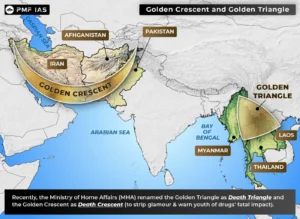
NDPS Cases and Special Courts in India

Current Situation

  • Punjab: 60,000 pending cases, no special courts, 5 proposed.
  • Kerala: 50,000 pending cases, 2 special courts, 9 proposed.
  • Odisha: 17,000 pending cases, 5 special courts, 6 proposed.
  • Tamil Nadu: 15,000 pending cases, 5 special courts, 6 proposed.
  • Karnataka: 15,000 pending cases, 3 special courts, 8 proposed.
  • National total: 3.9 lakh pending NDPS cases, highlighting the scale of judicial burden.

Why Some States Are More Affected

  • Punjab: Border state, heroin inflow from Afghanistan via Pakistan.
  • Kerala: Coastal smuggling routes; high youth addiction rates.
  • Odisha & Tamil Nadu: Ports exploited for trafficking.
  • Northeast states: Proximity to Golden Triangle; porous borders facilitate inflow.

Role of Special NDPS Courts

  • Enable fasttrack trials, reducing pendency.
  • Judges trained in specialized narcotics law ensure better handling of complex cases.
  • Dedicated infrastructure prevents overburdening of regular courts.
  • Speedy convictions act as deterrence against trafficking and abuse.

Government Measures Against Drug Menace

  • Narcotics Control Bureau (NCB): Established in 1986 under the NDPS Act, to conduct raids, seizures, and arrests, while also handling international cooperation.
  • National Action Plan for Drug Demand Reduction (NAPDDR): A Ministry of Social Justice & Empowerment initiative focusing on awareness, counseling, rehabilitation, deaddiction centers, and livelihood support for youth.
  • Border Fencing & Surveillance: Intensive fencing and patrols along Punjab and Rajasthan borders, deployment of drones and nightvision equipment, and coastal monitoring in Kerala, Tamil Nadu, and Odisha to prevent smuggling.
  • Awareness Campaigns: Nationwide initiatives in schools, colleges, and communities, supported by media and cultural programs, with the Prime Minister’s call for youth to pledge against substance abuse.

Way Forward

  • Strengthen governance: Expand special NDPS courts, improve forensic labs, enhance coordination between police, judiciary, and NCB.
  • Community & behaviour change: School and college awareness programs, family monitoring, rehabilitation centers, deaddiction services.
  • Policy reforms: Strict border control using drones and sensors, crackdown on drug money laundering, integrate health and law enforcement approaches.
  • Youth engagement: Promote sports, skill development, and employment opportunities to reduce vulnerability.

SPECIAL COURTS IN INDIA

Special courts are statutorily established courts under Article 247 of the Constitution or specific Acts (e.g., NDPS Act, PMLA, NIA Act).

  • They are designed to speed up trials in sensitive or highvolume categories of offences.

Difference from Normal Courts

  • Jurisdiction: Special courts deal with specific offences only (e.g., narcotics, terrorism, money laundering), while normal courts handle a broad spectrum.
  • Speed: Special courts are mandated for fasttrack trials, unlike normal courts which face heavy pendency.
  • Judges: Often designated from existing courts but given exclusive authority under the relevant Act.
  • Procedure: Similar to regular courts but with limited scope and priority listing of cases.
  • Impact: Helps reduce backlog and ensures specialized handling of complex cases.

Conclusion

The establishment of special NDPS courts, coupled with stronger enforcement, rehabilitation, and awareness, is essential to reduce pendency, and protect youth. A balanced approach combining judicial efficiency, and behavioural change will be the key to tackling this growing menace.

SUPREME COURT COLLEGIUM TRANSPARENCY & LIVESTREAM CONCERNS

TOPIC: (GS2) POLITY: THE HINDU

Justice Ujjal Bhuyan recently cautioned that the Supreme Court Collegium’s opaque recommendations risk poor judicial appointments, and also flagged the misuse of livestreamed court proceedings, which can distort public perception of justice.

What is the Collegium?

  • The Collegium system is a judicial mechanism for appointments and transfers of judges in the Supreme Court and High Courts.
  • It consists of the Chief Justice of India (CJI) and four seniormost judges of the Supreme Court.
  • For High Courts, the Collegium includes the CJI and two seniormost judges.
  • The system was established through the Three Judges Cases (1981, 1993, 1998), which gave primacy to the judiciary over the executive in appointments.
  • The Memorandum of Procedure (MoP) guides the functioning but remains incomplete after the NJAC (National Judicial Appointments Commission) was struck down in 2015.

Current Concerns

  • Opacity: Recommendations often lack reasons, leaving the public unaware of why certain judges are elevated or transferred.
  • Risk of unsuitable appointments: Without transparency, individuals with questionable records may enter the judiciary.
  • Public trust deficit: Citizens cannot assess merit or accountability in appointments.

Arguments for Livestreaming Collegium Meetings

  • Transparency: Livestreaming would allow the public to see deliberations, reducing secrecy.
  • Accountability: Judges would be more cautious and reasoned in discussions if proceedings were visible.
  • Public confidence: Open access could strengthen trust in judicial independence.
  • Global examples: In the US, Senate hearings for judicial appointments are public; in the UK, the Judicial Appointments Commission publishes criteria and processes.

Concerns Against Livestreaming

  • Sensationalisation risk: As seen in livestreamed court hearings, fragments of oral remarks may be misused or distorted.
  • Confidentiality: Collegium discussions often involve sensitive assessments of judges’ integrity and competence.
  • Institutional harmony: Public airing of disagreements could harm collegiality among judges.
  • Practicality: Unlike legislative hearings, judicial deliberations are not designed for public debate.
  • Memorandum of Procedure (MoP): Though evolved through the Three Judges Cases, its revision after the NJAC judgment (2015) remains incomplete, leaving transparency gaps.

Misuse of Livestreamed Content

  • Sensationalisation: Decontextualised fragments of oral observations are circulated with misleading captions.
  • Reputational harm: Judges, advocates, and litigants face distortion of their roles in proceedings.
  • Recent SC order (July 24, 2026): Clarified distinction between transparency and misuse; livestreaming continues but with safeguards.
  • Open justice principle: As per Swapnil Tripathi (2018), livestreaming expands courtroom access, reinforcing accountability.
  • SC in Subhash Chandra Agarwal (2020): Judicial independence is not secured by secrecy; transparency strengthens public faith.

Way Forward

  • Codify appointment criteria: Transparent benchmarks for merit, integrity, and diversity.
  • Strengthen MoP: Government and judiciary must finalize reforms stalled since 2015.
  • Livestream safeguards: Protocols for archiving, contextualising oral remarks, and penalising misuse.
  • Public legal literacy: Awareness campaigns to help citizens distinguish between observations and judgments.
  • Global best practices: Adopt models from UK Judicial Appointments Commission and US Federal appointment disclosures.

Conclusion

Judicial transparency is the soul of justice and without openness in appointments and accountability in technology use, public faith in the judiciary cannot be sustained.

GEN Z AS A POLITICAL CONSTITUENCY IN INDIA

TOPIC: (GS1) SOCIETY: THE HINDU

Political strategist Naresh Arora has argued that Gen Z, visible in recent Jantar Mantar protests, represents India’s first political constituency defined by mindset rather than caste, religion, or ideology.

Gen Z’s Distinctive Political Behaviour

  • Mindset over identity: Unlike earlier generations shaped by caste or religion, Gen Z rallies around issues and values.
  • Fluid support: They may back a cause today and oppose the same party tomorrow, without seeing contradiction.
  • Digital expectations: Politics is expected to function with the responsiveness of a digital platform.
  • Information consumption: Gen Z relies on social media, short videos, and peer networks rather than traditional party propaganda.

Lessons for Political Parties

  • Beyond firsttime voters: Treating Gen Z only as new voters is a mistake; they are issuedriven and demand accountability.
  • Leaderless mobilisation: The protests were decentralised, allowing participants to rally around causes rather than organisations.
  • Symbolic movements: The rise of the Cockroach Janta Party (CJP) showed that frustration can crystallise into symbolic platforms, even without strong organisational structures.
  • Moral framing: At 20, corruption is seen as a moral failure, not just administrative inefficiency.

Implications for Governance

  • Trust deficit: The protests were not only about exam leaks but about institutional credibility.
  • Government caution: Must avoid assuming the anger is limited to one examination; it reflects broader concerns about fairness.
  • Opposition caution: Public anger is not an automatic electoral dividend; Gen Z tests the entire political class.
  • Reward fairness: The party that convinces youth that hard work leads to fair rewards will gain their trust.

Comparative Perspective

  • Global parallels: Similar youthdriven movements in Hong Kong, Chile, and the US show Gen Z’s role in reshaping democratic participation.
  • Indian context: Echoes earlier youth mobilisations like the JP Movement (1970s) and Anna Hazare’s anticorruption protests (2011), but with stronger digital influence.
  • Policy response: Proposals like a National Youth Commission Bill highlight attempts to institutionalise youth voices.

Way Forward

  • Engage youth directly: Create participatory platforms for policy dialogue.
  • Transparent governance: Ensure accountability in exams, jobs, and institutions.
  • Digital outreach: Use social media responsibly to communicate policies.
  • Issuebased politics: Focus on education, employment, climate change, and corruption rather than identity politics.

Conclusion

Gen Z is redefining Indian politics as a constituency of mindset, parties that ignore their demand for fairness and responsiveness risk losing the trust of an entire generation.

PUBLIC EXAMINATIONS (PREVENTION OF UNFAIR MEANS) AMENDMENT BILL, 2026

TOPIC: (GS2) POLITY: THE HINDU

Parliament has passed the Public Examinations (Prevention of Unfair Means) Amendment Bill, 2026 after widespread protests over the NEETUG 2026 paper leak.

Background

  • NEETUG 2024 leak in Bihar and Jharkhand triggered panic when 67 students scored full marks with controversial grace marks.
  • The 2024 Act was enacted to curb exam fraud but failed to secure a single conviction in two years.
  • In 2026, another NEET paper leak led to cancellation of the exam, sparking nationwide protests and judicial intervention.
  • The government introduced stricter amendments to restore credibility in competitive examinations.

Purpose of the 2026 Bill

  • To curb exam malpractices and strengthen deterrence against organized crime syndicates.
  • To ensure timebound investigations and speedy trials.
  • To safeguard meritbased selection and restore public trust in examinations.

Key Provisions

  • Investigation timeline: Must be completed within 60 days by police, CBI, or special task forces.
  • Trial timeline: Special fasttrack courts must conclude trials within 3 months of chargesheet filing.
  • Appeals: High Court appeals to be heard by a twojudge Division Bench and resolved within 3 months.
  • Penalties revised:
    • General offences: 5–10 years imprisonment, fine up to ₹50 lakh (earlier 3–5 years, ₹10 lakh).
    • Service providers: Fine up to ₹5 crore, debarment for 8 years (earlier ₹1 crore, 4 years).
    • Directors/senior management: Fine up to ₹5 crore, jail term 5–10 years.
    • Organized crime networks: Minimum 7 years imprisonment, fine up to ₹10 crore (earlier 5 years, ₹1 crore).

Tackling Procedural Delays

  • Courts restricted from granting adjournments beyond the next day except for exceptional reasons.
  • All pending cases under the 2024 Act transferred to new fasttrack courts.
  • States/UTs mandated to appoint special public prosecutors for these trials.

Limitations Highlighted

  • No accountability mechanism if the 60day investigation timeline is missed.
  • Could conflict with Supreme Court rulings (2002) which held rigid timelines for criminal trials are not judicially permissible.
  • Risk of procedural lapses if timelines are not realistically achievable.

Structural Challenges

  • Existing fasttrack courts already face massive backlogs (2.45 lakh pending cases by 2025).
  • Trial durations vary widely: 257 days in Andhra Pradesh vs 1,717 days in Delhi under POCSO fasttrack courts.
  • Common bottlenecks:
    • Nonproduction of undertrial prisoners.
    • Absconding accused not apprehended.
    • Frequent adjournments by advocates.
    • Nonattendance of official witnesses.
    • Shortage of judges and staff, weak case management.

Way Forward

  • Codify accountability for missed timelines, similar to Lokpal Act provisions.
  • Strengthen judicial infrastructure with more judges, staff, and digital case management.
  • Enhance police efficiency in producing accused and witnesses.
  • Public awareness to restore faith in exams and reduce malpractice incentives.
  • Global benchmarking: Adopt best practices from South Korea and Singapore, where strict exam integrity laws ensure credibility.

Conclusion

The 2026 Bill is a stronger step towards restoring fairness in public examinations, but its success depends on effective enforcement, judicial capacity, and institutional accountability.

BUILDING A CULTURE OF DISASTER DRILLS IN INDIA

TOPIC: (GS3) DISASTER MANAGEMENT: THE HINDU

Experts have called for mandatory disaster drills across India to prepare citizens for extreme weather events such as heatwaves, floods, cyclones, and landslides.

Rising Extreme Weather Risks

  • India faces heatwaves, cyclones, cloudbursts, flash floods, and landslides across different regions.
  • Studies show hot days have increased by 5–10 per decade since the 1950s, while extreme rainfall events have tripled.
  • Despite improved forecasting by IMD and NDMA, alerts do not teach response actions.
  • Example: Assam floods (2026) where a child lost his life while attempting a rescue, highlighting the need for community preparedness.

Need for Disaster Drills

  • Survival depends on immediate decisions made in the first few minutes of a disaster.
  • Drills simulate reallife emergencies, teaching people how to act, evacuate, and protect themselves.
  • Every school, college, office, and workplace should conduct two seasonal drills annually:
    • Heatwave drill before summer.
    • Monsoon drill before rainy season.

Practical Components of Drills

  • Heatwave drills:
    • Recognize symptoms like dizziness, weakness, confusion.
    • Identify shaded/cool rooms, ensure drinking water, stop outdoor activities.
    • Train staff/students on rapid cooling and medical response.
  • Monsoon drills:
    • Walk evacuation routes to higher ground.
    • Practise head counts and alternative exits.
    • Teach safe behaviour: never enter floodwaters, avoid submerged drains/wires.
    • Introduce survival swimming and rope rescue skills in floodprone districts.

Role of Institutions & Local Governance

  • Panchayats and urban wards should designate local safety points with water, first aid, toilets, backup lighting, and communication facilities.
  • District Disaster Management Authorities (DDMAs) must coordinate with schools, health departments, fire services, and volunteers.
  • NDMA already provides guidelines for school disaster plans and village drill calendars, but surveys show low compliance.

Global Examples

  • Japan (2011 tsunami): 3,000 schoolchildren survived due to years of disaster education.
  • Taiwan (2026): Multiagency drills tested responses to consecutive heatwave days.
  • Bangladesh: 76,000 coastal volunteers trained for warnings, evacuations, and first aid.

Way Forward

  • Institutionalize biannual drills nationwide.
  • Integrate disaster education into school curriculum from primary level.
  • Build community volunteer networks for rapid response.
  • Strengthen infrastructure, health services, and communication systems in vulnerable regions.
  • Promote inclusive safety points accessible to persons with disabilities.

Conclusion

India must move from warnings to preparedness and disaster drills are the key to saving lives in the first critical minutes of extreme weather events.

INDIA–CHINA TRADE RESUMES VIA SHIPKI LA

TOPIC: (GS2) INTERNATIONAL RELATIONS: THE HINDU

Crossborder trade between India and China through Shipki La in Himachal Pradesh has resumed after six years, reviving an ancient Silk Route link and opening new economic opportunities for border communities.

Shipki La Trade

  • Shipki La Pass in Himachal Pradesh’s Kinnaur district connects India with Tibet.
  • Historically part of the Silk Route, facilitating barter trade of wool, salt, and agricultural goods.
  • Trade was suspended for six years due to security and administrative concerns.
  • The resumption reflects India’s effort to balance border development with diplomatic engagement.
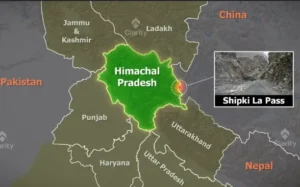
India-China Trade Resumes via Shipki la

Key Developments in 2026

  • Flagging off traders: Revenue & Horticulture Minister Jagat Singh Negi inaugurated the trade, presenting ceremonial Khataks to 16 traders.
  • Barter system: Exchange of goods permitted for 72 hours in Tibet.
  • Trade mart inaugurated: Chhuppan Trade Mart built at ₹1.70 crore to facilitate transactions.
  • Goods permitted: 72 items from India, 30 items from Tibet side.
  • Regulatory compliance: Traders instructed to follow Union Commerce Ministry’s importexport rules.

Economic & Social Significance

  • Boost to border economy: Enhances livelihood opportunities for Kinnaur’s local communities.
  • Employment generation: Creates selfemployment avenues for youth in remote areas.
  • Cultural revival: Strengthens traditional ties through ceremonial exchanges and barter practices.
  • Infrastructure push: State government focusing on roads, communication, and amenities in border villages.

Challenges

  • Security concerns: Border tensions may disrupt continuity.
  • Limited scope of goods: Traders seek expansion beyond current lists.
  • Dependence on barter system: May restrict modern trade practices.
  • Need for transparency: Strict adherence to customs and trade regulations essential.

Way Forward

  • Expand trade basket: Include more agricultural and handicraft products.
  • Strengthen border infrastructure: Roads, digital connectivity, and logistics hubs.
  • Community empowerment: Skill training and cooperative societies for traders.
  • Diplomatic engagement: Use trade as a confidencebuilding measure with China.
  • Sustainable development: Ensure ecological balance in fragile Himalayan terrain.

Conclusion

Resumption of Shipki La trade is a vital step in reviving ancient economic links, empowering border communities, and balancing India’s regional diplomacy with China.

SOUTH CHINA SEA DISPUTE

TOPIC: (GS2) INTERNATIONAL RELATIONS: THE HINDU

China has issued new management rules for the Huangyan Dao (Scarborough Shoal) National Nature Reserve in the South China Sea, reigniting tensions with the Philippines and bringing the maritime dispute back into focus.

China’s New Measures

  • Establishment of a routine patrol system to monitor and penalize violations.
  • Ban on fishing, mining, coral extraction, and other activities without prior approval.
  • Entry restricted to conservation or management purposes only.
  • Rules jointly issued by China’s Ministry of Natural Resources, Coast Guard, and Hainan provincial government.

Strategic Importance of the South China Sea

  • Global trade hub: Connects the Indian Ocean and Pacific; ~22% of world trade and ~60% of maritime trade passes through.
  • Energy resources: Estimated 11 billion barrels of oil and 190 trillion cubic feet of natural gas beneath the seabed.
  • Fishing grounds: More than half of the world’s fishing vessels operate here, supporting millions of livelihoods.
  • Military significance: Control of the sea enhances regional dominance and naval reach.

The NineDash Line

  • Originated in 1947 as an “elevendash line,” later simplified to nine dashes.
  • Encompasses ~90% of the South China Sea, extending up to 2,000 km from China’s mainland.
  • Based on “historical maritime rights,” but lacks clear coordinates.
  • Contradicts UNCLOS (United Nations Convention on the Law of the Sea), which China has signed.
  • Rejected by the Permanent Court of Arbitration (2016) in a case brought by the Philippines, but China continues to enforce it.
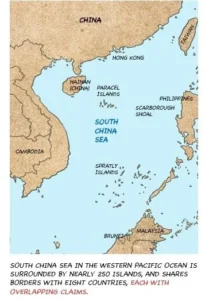
South China Sea Dispute

Disputed Islands

  • Spratly Islands, Paracel Islands, Scarborough Shoal, and Natuna Islands are contested.
  • Claimants include China, Philippines, Vietnam, Malaysia, Brunei, Taiwan, and Indonesia.
  • China has expanded its presence by building artificial islands and military bases.

India’s Perspective

  • India advocates freedom of navigation and adherence to UNCLOS.
  • Through SAGAR (Security and Growth for All in the Region) and MAHASAGAR doctrines, India emphasizes cooperative maritime security.
  • India’s interest lies in unhindered trade routes and maintaining balance in the IndoPacific.

Conclusion

The South China Sea dispute is not just a regional issue but a global challenge—China’s new rules intensify tensions, making adherence to international law and cooperative security essential for stability.


INDIA ROAD ACCIDENT FATALITIES

TOPIC: (GS2) GOVERNANCE: THE HINDU

Recently, India’s road accident fatalities came into news as official figures for 2024 showed discrepancies between reports released by the Ministry of Road Transport and Highways (MoRTH) and the National Crime Records Bureau (NCRB), raising concerns over data consistency and reliability for policy planning.

Sources of Road Accident Data

  • Police records: Primary source, as police are first responders.
  • MoRTH data collection: Through its Transport Research Wing (TRW), using formats under the UNESCAP Asia-Pacific project.
  • Information gathered: Accident identification, road conditions, vehicles, driver details.
  • Shift to eDAR/iRAD: Designed for real-time reporting, but state-level delays persist.
  • NCRB data: Compiled via State Crime Record Bureaus (SCRBs), District Crime Record Bureaus (DCRBs), and local police stations.

Legal Basis of Road Accident Data Recording

  • Section 106 of Bharatiya Nyaya Sanhita: Fatal road accidents caused by negligence are registered under this section (earlier covered under IPC Section 304-A).
  • WHO Global Practice: Nearly half of the countries worldwide rely primarily on police data for accident reporting.

Reasons for Discrepancies

  • Different reporting channels: NCRB (Home Ministry) vs MoRTH (coordination with States).
  • Mandatory reporting bias: Police must report to NCRB, but MoRTH depends on state cooperation.
  • Data limitations: TRW formats restrict details, leading to gaps.
  • Under-reporting risks: Victims dying after 30 days often not updated.
  • Subjective bias: Police judgments may affect accuracy.
  • Persistent challenges: Despite eDAR/iRAD, states report inconsistently.

India’s Global Position

  • India has the highest total fatalities worldwide, followed by China and the USA.
  • Countries like Iran report higher per capita death rates.
  • Several developing nations (Pakistan, Nigeria, Ethiopia, China) show lower per capita fatality rates compared to India.

Measures to Improve Data Accuracy

  • Unified Reporting System: Establish a single national platform integrating police, transport, and health departments to ensure consistency.
  • Real-time Digital Tools: Strengthen use of e-DAR/iRAD systems with mandatory updates from all states to reduce delays and mismatches.
  • Standardized Formats: Adopt uniform templates across ministries and states for accident reporting to avoid variation in categories and definitions.
  • Health Department Integration: Include hospital and emergency care data to capture fatalities occurring after the accident, reducing under-reporting.

Conclusion

Reliable statistics are essential for effective policy design, infrastructure planning, and enforcement strategies. Strengthening real-time reporting systems, harmonising data channels, and reducing under-reporting are critical to addressing India’s road safety crisis.

Write a Review

Your email address will not be published. Required fields are marked *

Seraphinite AcceleratorOptimized by Seraphinite Accelerator
Turns on site high speed to be attractive for people and search engines.