
THE COURSE AHEAD FOR TRUMP’S GAZA CEASEFIRE PLAN
TOPIC: (GS2) INTERNATIONAL RELATIONS: THE HINDU
U.S. President Donald Trump announced a 20-point Gaza ceasefire plan before the second anniversary of the Hamas-Israel war (October 7, 2023). Hamas responded positively but demanded changes, while Israel expressed dissatisfaction.
Background
- The Gaza conflict continues after Hamas’s 2023 attacks and Israel’s prolonged military operations.
- A previous U.S.-brokered ceasefire in January 2025 collapsed due to Israel’s unilateral withdrawal.
- Trump’s new plan is seen as a “last chance for peace” but lacks clear commitments from Israel.
Trump’s 20-Point Plan
- Ceasefire & Hostage Release: Hamas must release all Israeli hostages within 72 hours of ceasefire.
- Hamas Obligations: Disarmament and withdrawal from Gaza.
- Palestinian Authority (PA): Urged to reform or face exclusion.
- Governance Structure: Gaza to be run by technocrats under an International Board of Peace led by Trump.
- Security: International Stabilisation Force to maintain order.
Major Concerns & Gaps
- No clear timelines for Israeli military withdrawal or territorial control.
- West Bank issue and Palestinian statehood ignored.
- Monitoring mechanism absent — U.S. and Israel retain control over implementation.
- Plan shifts responsibility to Hamas, while reducing pressure on Israel.
- Fighting may continue during implementation, undermining ceasefire credibility.
Political & Regional Reactions
- Hamas: Accepts negotiation but rejects international governance of Gaza.
- Israel: Unhappy with conditions; prioritises hostage return.
- Gulf Countries: Limited involvement due to strategic ties with U.S. and Israel.
Implications
- The plan risks becoming a tool of surrender, not a peace roadmap.
- Could legitimise Israel’s continued presence in Gaza.
- Lacks path to elections or self-determination for Palestinians.
- Two-state solution sidelined, contrary to UN resolutions.
Conclusion
Trump’s ceasefire plan provides a framework but not a genuine peace deal. Without binding timelines, balanced obligations, and international oversight, it may fail to restore stability or address the core Palestinian question.
TREAT EMPLOYMENT AS A NATIONAL PRIORITY
TOPIC: (GS3) ECONOMY: THE HINDU
India is entering a critical phase of its demographic dividend, expected to add 133 million workers by 2043. However, lack of a comprehensive national employment framework threatens to waste this opportunity.
Background
- India is the world’s most populous and youngest country.
- Working-age population will peak around 2043, making job creation urgent.
- Quality employment can drive inclusive growth, reduce inequality, and strengthen economic resilience.
Need for a National Priority
- Employment is key to: Poverty reduction and social equity. Sustained economic growth through wider consumption.
- Current schemes are fragmented; India needs an Integrated National Employment Policy.
Proposed National Employment Policy (NEP)
- Comprehensive Approach: Merge existing programmes on skills, social security, migration, and industry. Coordination among Centre, States, ministries, and industry bodies.
- Clear Governance: Oversight by an Empowered Group of Secretaries. Local execution via District Planning Committees.
- Focus Areas: Set time-bound goals for job creation. Identify high-potential sectors (textiles, tourism, agro-processing, real estate, healthcare).
Labour Market Reforms
- Ensure timely implementation of the four Labour Codes with smooth transition support.
- Promote worker mobility through a unified migration policy.
- Encourage “One India” employment ecosystem.
Sectoral Focus
- MSMEs: Employ 25+ crore people; need access to credit, tech, and markets.
- Gig Economy: Currently 80 lakh–1.8 crore workers; could grow to 9 crore by 2030. Needs national policy, worker registry, social protection, and fair contracts.
- Urban Jobs: Pilot urban employment guarantee in select cities.
Improving Job Quality
- Ensure decent wages, safe workplaces, and social security.
- Promote female labour participation through: Childcare, ELI incentives, and formalising ASHA/Anganwadi roles.
- Offer affordable housing near workplaces.
- Encourage remote jobs and rural internships.
Employment Data & Monitoring
- Create a task force for real-time, accurate data.
- Cover informal and rural sectors; reduce reporting delays.
Employment generation schemes
- Mahatma Gandhi National Rural Employment Guarantee Act (MGNREGA)
- Pradhan Mantri Employment Generation Programme (PMEGP)
- Deen Dayal Antyodaya Yojana – NRLM / NULM
- Skill India Mission (2015): Aims to train 40 crore youth by 2025.
- Pradhan Mantri Kaushal Vikas Yojana (PMKVY): Offers short-term skill courses aligned with National Skills Qualification Framework (NSQF).
Conclusion
To harness its demographic dividend, India must adopt employment as a central economic goal. A unified policy, sectoral push, and inclusive reforms can make India’s growth both equitable and sustainable, paving the way for Viksit Bharat 2047.
ALTERNATIVE DISPUTE RESOLUTION (ADR)
TOPIC: (GS2) INDIAN POLITY: THE HINDU
The Law Minister recently emphasized strengthening Alternative Dispute Resolution (ADR) to address India’s judicial delays and ensure faster, affordable justice.
India’s Judicial System
- As per the National Judicial Data Grid (NJDG): 4.57 crore total pending cases. 81,768 in Supreme Court; 62.9 lakh in High Courts.
- Vacancy rates: 33% in High Courts, 21% in District Courts.
- Uttar Pradesh, Andhra Pradesh, Bihar among states with highest backlog.
- Many cases have been pending for over 10 years, demanding alternative mechanisms.
What is ADR?
Alternative Dispute Resolution refers to non-judicial methods of settling disputes through:
- Arbitration – Binding decision by a neutral arbitrator.
- Conciliation – Informal settlement with help of a conciliator.
- Mediation – Voluntary negotiation with a neutral mediator.
- Lok Adalat – People’s court for amicable pre-litigation settlement.
These methods aim for speed, affordability, and mutual agreement without lengthy court trials.
Legal and Constitutional Support
- Article 39A: Mandates equal justice and free legal aid.
- Section 89, CPC (1908): Recognizes ADR processes in civil disputes.
- Arbitration and Conciliation Act, 1996 (amended 2021): Sets 180-day limit for resolution and Provides for Indian Arbitration Council.
- Legal Services Authorities Act, 1987: Governs Lok Adalats.
How ADR Reduces Court Delays
- Pre-litigation mediation prevents disputes from reaching courts.
- Lok Adalat decisions are final, reducing appeals.
- Low cost and informal setting promote quick settlements.
- Social inclusion: Solutions in local language, respecting emotions.
Functioning of Lok Adalats
- First Lok Adalat: Gujarat, 1999.
- Include National Lok Adalats, Permanent Lok Adalats, and e-Lok Adalats.
- Decisions are binding with no appeal, but dissatisfied parties may approach regular courts.
Way Forward
- Enhance public awareness about ADR benefits.
- Expand mediation centres and digital platforms.
- Encourage pre-litigation settlement in civil and commercial cases.
- Improve infrastructure and training for mediators and arbitrators.
Conclusion
ADR embodies India’s ancient Panchayat tradition of consensus-based justice. Strengthening ADR can reduce pendency, enhance access to justice, and align dispute resolution with constitutional values of equality and fairness.
TELANGANA TOPS IN UPI TRANSACTION INTENSITY
TOPIC: (GS3) ECONOMY: THE HINDU
A recent RBI bulletin paper revealed that Telangana has the highest per capita UPI transaction intensity in India. The study used PhonePe data to measure UPI usage across states.
Key Findings
UPI Usage Intensity Across States
- Telangana ranks first in UPI usage per person.
- Other states with high UPI intensity: Karnataka, Andhra Pradesh, Delhi, Maharashtra
- These regions have large urban populations, economic hubs, and migrant workforce, boosting digital payment adoption.
Data Source and Coverage
- The study used data from PhonePe, which accounts for: 58% of UPI transaction volume, 53% of UPI transaction value
- This makes it a reliable proxy for assessing nationwide UPI usage.
Shift from Cash to Digital Payments
- Decline in cash demand observed as UPI gains popularity.
- ATM withdrawals as % of GDP have fallen steadily.
- People increasingly use UPI for low-value daily transactions.
Transaction Trends
- Majority of Peer-to-Merchant (P2M) payments are below ₹500.
- Average transaction size is reducing, showing wider daily usage.
- UPI is now dominant for retail and micro-payments.
Regional Variation in Cash Dependence
- Higher cash withdrawal intensity seen in: Northeastern States, Kerala, Goa, and Delhi
- Reasons include: Tourism and service-based economies, Remittance inflows, Rural cash preference
Implications
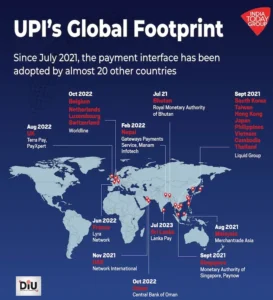
- Reflects India’s digital payment revolution led by UPI.
- Indicates urban-rural divide in digital adoption.
- Suggests need for: Strengthening digital infrastructure in lagging regions Promoting financial literacy and UPI awareness
UPI
- Full Form: Unified Payments Interface.
- Launch: 2016 by National Payments Corporation of India (NPCI) under RBI guidance.
- Purpose: Enable instant, real-time, 24×7 interbank payments through mobile phones.
- Features:
- Immediate transfer between bank accounts using a mobile number, virtual ID (UPI ID), or QR code.
- Single platform for multiple bank accounts.
- Supports peer-to-peer (P2P) and peer-to-merchant (P2M) payments.
- Promotes financial inclusion, reduces cash dependence, and encourages digital economy growth.
- Major Players: PhonePe, Google Pay, Paytm, BharatPe.
National Payments Corporation Of India (NPCI)
Established in 2008 under RBI and IBA, NPCI is a not-for-profit organisation that operates retail payment systems in India.
Key Functions of NPCI
- Digital Payment Platforms: Operates UPI, IMPS (Immediate Payment Service), Bharat Bill Payment System (BBPS), AePS (Aadhaar Enabled Payment System), and RuPay Cards.
- Standardisation & Security: Ensures uniform technical standards and security protocols across banks.
- Clearing & Settlement: Handles transaction clearing and settlement between banks for digital payments.
Conclusion
The RBI study highlights Telangana’s leadership in UPI adoption and a nationwide trend toward digital, low-value transactions. Continued focus on inclusion and infrastructure will accelerate India’s shift toward a less-cash economy.
INDIA’S DIRECTION FOR DISASTER RESILIENCE
TOPIC: (GS3) DISASTER MANAGEMENT: THE HINDU
India is witnessing frequent heatwaves and extreme rainfall events, making disaster resilience a national priority. The NDMA and Home Ministry are implementing a multi-hazard strategy guided by the Prime Minister’s 10-Point Agenda (2016) for Disaster Risk Reduction (DRR).
Background
- India faces multiple natural hazards — floods, cyclones, landslides, droughts, and heatwaves.
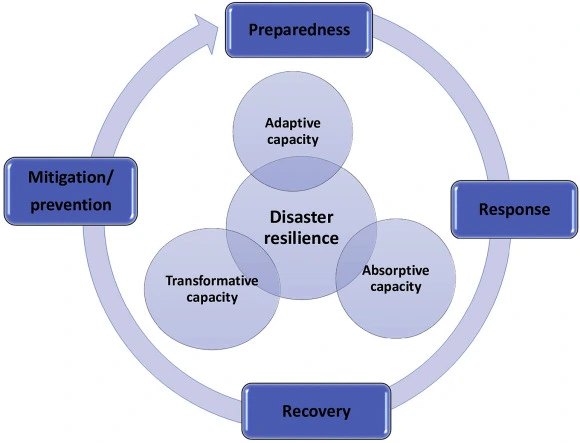
- DRR now focuses not just on response but also prevention, preparedness, and capacity building.
- The 15th Finance Commission (2021) allocated ₹2.28 lakh crore over five years to strengthen DRR measures.
15th Finance Commission’s DRR Approach
Balanced Funding:
- 30% for pre-disaster measures: 10% for preparedness & capacity building, 20% for mitigation
- 70% for post-disaster actions: 40% for response 30% for reconstruction
Objectives:
- Integrate science-based mitigation into public finance.
- Build Centre–State–institutional synergy.
- Establish light-touch regulation and avoid duplication.
Pre-Disaster Phase Initiatives
- Fire safety modernisation: ₹5,000 crore allocation.
- Volunteer networks: Apda Mitra and Yuva Apda Mitra – 2.5 lakh trained volunteers.
- Capacity building: Geo-spatial labs, faculty-led research, and a standardised 36-stream DM course at NIDM.
- Goal: mainstream disaster education up to the panchayat level.
Mitigation Measures (20% Allocation)
- ₹10,000 crore projects sanctioned for nature-based solutions.
- Focus areas:
- Urban flood control through water body revival.
- Glacial lake monitoring via remote sensing.
- Bio-engineering for landslide-prone slopes.
- Beel rejuvenation in Brahmaputra valley.
- Forest fire prevention through fuel breaks and water lines.
- Cyclone Mitigation Programme (2011–22) reduced coastal vulnerability via shelters, embankments, and early warning systems.
Reconstruction & Response
- ₹5,000 crore packages approved for Uttarakhand, Himachal Pradesh, Sikkim, Assam, Kerala.
- Scientific damage assessments underway for monsoon-affected areas.
Early Warning & Community Preparedness
- Multi-media alert system in local languages.
- Mock drills, school safety drives, and training institutes (NIDM, NDRF Academy, NFSC) enhance readiness.
Global Cooperation
- India leads Coalition for Disaster Resilient Infrastructure (CDRI).
- Active role in G20, SCO, BIMSTEC, IORA on DRR initiatives.
- Focus on sharing best practices and nature-based solutions globally.
MITIGATION
Definition: Actions taken to reduce or prevent the causes of climate change, especially by lowering greenhouse gas emissions or enhancing carbon sinks.
Objective: Limit the severity of climate change and its long-term impacts.
Examples:
- Switching from fossil fuels to renewable energy (solar, wind).
- Promoting energy efficiency in industries and households.
- Afforestation and reforestation to absorb CO₂.
- Carbon pricing or carbon trading policies.
ADAPTATION
Definition: Actions aimed at adjusting human or natural systems to cope with the impacts of climate change that are already occurring or expected.
Objective: Reduce vulnerability and enhance resilience to climate risks.
Examples:
- Building flood-resistant infrastructure.
- Developing drought-resistant crop varieties.
- Creating early warning systems for cyclones, floods, or heatwaves.
- Promoting water conservation and rainwater harvesting.
Conclusion
India’s DRR strategy is shifting from reactive relief to proactive resilience, combining scientific innovation, nature-based mitigation, and community participation. With strong finance, capacity, and global partnerships, India is building a disaster-resilient future.
INDIA–PAKISTAN TENSIONS OVER SIR CREEK
TOPIC: (GS3) SEQURITY: THE HINDU
Defence Minister Rajnath Singh recently cautioned Pakistan against any military misadventure near Sir Creek, following intelligence inputs of increased Pakistani troop activities in the region.
Background
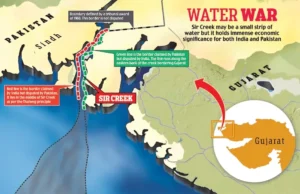
- Sir Creek is a disputed estuarine marshland between Gujarat (India) and Sindh (Pakistan).
- It is a strategic zone for oil, gas exploration, and fishing rights.
- Despite being uninhabited and hard to access, it holds security significance due to proximity to Mundra and Kandla ports.
Recent Developments
- Reports suggest Pakistan’s military buildup and Chinese-backed projects near the Rann of Kutch, raising India’s concerns.
- Operation Sindoor saw Pakistan deploy 400 drones across multiple locations, including Sir Creek; many were neutralised by Indian forces.
- Mr. Singh warned that any aggression will invite a strong Indian response.
Strategic Concerns
- Difficult Terrain: Marshy land, shifting tides; large-scale ground operations are nearly impossible.
- Security Importance: Close to major Indian ports; layered defence already in place (Army, BSF, Coast Guard, IAF).
- China Factor: Chinese involvement in Pakistani projects could pose future strategic risks.
India’s Position
- Prefers dialogue to resolve disputes peacefully.
- Advocates measured strategy, avoiding escalation.
- Stresses that security strategy must remain free from domestic politics.
Way Forward
- Use diplomacy and intelligence cooperation to manage risks.
- Monitor China–Pakistan collaboration closely.
- Strengthen coastal and aerial surveillance.
- Keep channels of communication open with Pakistan.
Conclusion
Sir Creek remains a sensitive flashpoint. While India must stay vigilant, diplomatic engagement and strategic restraint are essential to prevent unnecessary conflict in a region of limited tactical gain.
EXERCISE KONKAN-25: INDIA-UK MARITIME DRILL
TOPIC: (GS3) DEFENCE: THE HINDU
The Indian Navy and Royal Navy commenced the four-day Exercise Konkan-25 in the Western Indian Ocean, marking the first joint exercise The drill aims to enhance maritime cooperation, interoperability, and regional security.

Exercise Konkan
- First Held: 2004, traditionally a biennial India-UK naval drill.
- Duration: 4 days.
- Participants: Indian Navy and U.K. Carrier Strike Group (CSG).
- Significance of 2025 Edition:
- First-ever exercise involving aircraft carriers of both nations, involving India’s INS Vikrant and the U.K.’s HMS Prince of Wales.
- Part of U.K.’s Operation Highmast, an 8-month global deployment.
Key Objectives
- Strengthen maritime and air operational capabilities.
- Conduct multi-domain exercises including:
- Anti-submarine warfare.
- Cross-deck flying operations.
- Air defence drills.
- Test tactics and interoperability between Indian and U.K. forces.
Strategic Importance
- Reinforces India-U.K. defence ties under Vision 2035.
- Promotes a free and open Indo-Pacific.
- Enhances regional security, stability, and rules-based order.
- Port visits to Mumbai and Goa also strengthen trade, industry, and cultural ties.
Follow-Up Exercises
- Post maritime drills, the U.K. CSG will conduct aerial defence exercises with the Indian Air Force.
- 12 other nations support Operation Highmast, highlighting multinational cooperation.
Conclusion
Exercise Konkan-25 is a key example of India-U.K. defence collaboration, enhancing operational readiness, strategic partnership, and maritime security in the Indo-Pacific region.