
Table of Contents
ToggleNFSA AMENDMENT
TOPIC: (GS2) POLITY: THE HINDU
The Union Government has proposed amending the National Food Security Act (NFSA), 2013, changing Antyodaya Anna Yojana (AAY) entitlements from 35 kg per household to 7 kg per person (max 35 kg).
National Food Security Act (NFSA), 2013
- Coverage: ~67% of India’s population under Targeted PDS (75% rural, 50% urban).
- Categories:
- AAY households → poorest families.
- Priority Households (PHH) → general poor.
- Entitlements:
- AAY → 35 kg foodgrains per household/month.
- PHH → 5 kg per person/month.
- Prices: Highly subsidised (₹3/kg rice, ₹2/kg wheat, ₹1/kg coarse grains).
- Social focus: Eldest woman as ration card head; maternity benefits (₹6,000); meals for children via Anganwadi and Mid‑Day Meal Scheme.
- Accountability: State Food Commissions, DGROs, Vigilance Committees.
Proposed Amendment
- Current: 35 kg per household (fixed).
- Proposed: 7 kg per person, capped at 35 kg per household.
- Rationale:
- Household‑based system creates inequity → small families get more per capita, large families get less.
- Aim: equitable per capita distribution, rationalised allocation, better nutritional alignment.
Opposition by Tamil Nadu & Kerala
- Tamil Nadu:
- Universal free rice scheme since 2011.
- Estimates AAY allocation drop from 65,261 tonnes → 42,040 tonnes/month.
- 15.75 lakh of 18.64 lakh AAY households have <5 members → lose entitlement.
- Kerala:
- Oldest organised PDS (since 1962).
- Argues AAY families are the poorest and need special protection.
- Civil society (Right to Food Campaign):
- Warns of North–South disparity → larger northern families benefit, smaller southern families lose.
Issues Involved
- Equity vs Protection: Per capita fairness vs safeguarding vulnerable small households.
- Federal Concerns: Uniform criteria ignore demographic diversity.
- Food Security: Reduced allocations may worsen nutrition among poorest families.
- Fiscal Angle: Union subsidy burden may reduce, but poor households face higher market costs.
Way Forward
- Consultation: Wider dialogue with States, experts, civil society.
- Balanced Alternative: Example – fixed 30 kg per household, irrespective of size, ensuring minimum security.
- Principles: Blend equity, nutrition, fiscal sustainability, cooperative federalism.
- Policy Learning: Draw from Tamil Nadu’s universal PDS and Kerala’s early PDS model for inclusive design.
Conclusion
The NFSA amendment debate highlights the tension between equity and protection, reminding policymakers that food security must balance fairness with compassion for the poorest.
SUB MISSION ON AGRICULTURAL MECHANIZATION (SMAM)
TOPIC: (GS3) ECONOMY: THE HINDU
The Union Government has reported progress under the Sub‑Mission on Agricultural Mechanization (SMAM), highlighting its role in expanding access to modern farm equipment for small farmers, women, and disadvantaged groups.
About SMAM
- Launch: 2014–15.
- Type: Centrally Sponsored Scheme under Rashtriya Krishi Vikas Yojana (RKVY).
- Objective: “Reach the unreached” → extend mechanization benefits to small/marginal farmers, women, SC/ST, FPOs, SHGs, rural entrepreneurs.
- Focus: Promote inclusive, efficient, and affordable mechanization to overcome constraints of small landholdings and high capital costs.
Key Features
- Custom Hiring Centres (CHCs): Provide farm machinery on rental basis → affordable access for small farmers.
- Hi‑Tech Hubs: Support for advanced equipment hubs to promote precision farming.
- Distribution Support: Assistance for supplying farm machinery in underserved regions.
- Testing & Certification: Ensures quality and safety of agricultural equipment.
- IEC Activities: Awareness campaigns to encourage adoption among farmers.
Significance
- Equity: Enables marginalized groups to access modern tools.
- Productivity: Mechanization reduces drudgery and enhances efficiency.
- Regional Focus: Targets areas with low farm power availability.
- Employment: CHCs and hubs create opportunities for rural entrepreneurs.
- Sustainability: Promotes resource‑efficient practices (e.g., precision sowing, water‑saving technologies).
Examples
- Tamil Nadu & Punjab: CHCs widely used for paddy transplanting and combine harvesters.
- ICAR & State Agricultural Universities: Collaborate for machinery testing and farmer training.
- Alignment with SDGs: Supports SDG‑2 (Zero Hunger) and SDG‑8 (Decent Work & Economic Growth).
Conclusion
SMAM reflects India’s push for inclusive mechanization, ensuring that technology reaches even the smallest and most vulnerable farmers.
INDIA–AUSTRALIA PARTNERSHIP ON CRITICAL TECHNOLOGIES AND SUPPLY CHAINS (PACTS)
TOPIC: (GS3) SCIENCE AND TECHNOLOGY: THE HINDU
India and Australia have launched the Partnership on Critical Technologies and Supply Chains (PACTS), replacing the 2020 cyber cooperation framework.
PACTS
- Launch: 2026, replacing the 2020 Framework Arrangement on Cyber and Cyber‑Enabled Critical Technology Cooperation.
- Oversight: Jointly managed by India’s Deputy National Security Advisor and Australia’s Deputy Secretary (International & Security Group).
- Objective: Build secure, trusted, and resilient systems in technology, cyber, and defence domains.
Pillars of PACTS
- Supply Chain Resilience:
- Secure and diversified technology supply chains.
- Cooperation on undersea cable security via Quad’s Cable Connectivity initiative.
- India lead: National Security Council Secretariat (NSCS).
- Critical Technologies:
- Collaboration in AI, space, telecom, biotechnology, advanced materials.
- India lead: NSCS.
- Cybersecurity:
- Joint efforts against cybercrime, protection of critical infrastructure.
- Plans for a bilateral cyber cooperation mechanism and cyber‑tech skill incubator.
- India lead: Cyber Diplomacy Division, MEA.
- Digital Resilience:
- Expand cooperation in Digital Public Infrastructure (DPI) across Indo‑Pacific.
- Support partner nations in adopting India’s DPI model (e.g., UPI, Aadhaar‑based systems).
- India lead: MEA Oceania Division.
- Defence Research:
- Collaboration between DRDO (India) and DST Group (Australia).
- Focus on maritime surveillance, advanced materials, defence start‑ups.
- India lead: Ministry of Defence.
Significance
- Strengthens India–Australia Comprehensive Strategic Partnership.
- Enhances Indo‑Pacific security architecture alongside Quad initiatives.
- Promotes trusted technology ecosystems and reduces dependence on adversarial supply chains.
- Supports workforce development in cyber and digital skills.
- Aligns with India’s Digital Public Infrastructure diplomacy and Australia’s Indo‑Pacific strategy.
Conclusion
PACTS marks a strategic leap in India Australia ties, ensuring secure technologies and resilient supply chains for a stable Indo‑Pacific future.
E20 AND INDIA’S PUSH FOR ETHANOL
TOPIC: (GS3) ECONOMY: THE HINDU
The Government of India has reaffirmed its commitment to the E20 fuel blend (20% ethanol + 80% petrol) despite concerns about mileage reduction and engine compatibility.
Ethanol Blending in India
- Ethanol Blending Programme (EBP): Initiated to reduce dependence on fossil fuels and cut carbon emissions.
- E20 Blend: Introduced in 2023, with a target of nationwide adoption by 2025.
- Policy Goal: Achieve 20% ethanol blending in petrol as part of India’s energy transition strategy.
Advantages of E20
- Cleaner Emissions: Lower carbon monoxide and hydrocarbon release.
- Higher Octane Rating: Improves fuel efficiency in compatible engines.
- Energy Security: Reduces crude oil imports, saving foreign exchange.
- Farm Sector Boost: Expands demand for sugarcane, maize, and other feedstock crops, supporting farmers.
- Alignment with SDGs: Contributes to SDG‑7 (Affordable & Clean Energy) and SDG‑13 (Climate Action).
Challenges & Concerns
- Mileage Drop: Vehicles may show reduced fuel efficiency with E20.
- Engine Compatibility: Older vehicles risk damage; auto industry seeks phased adaptation.
- Supply Chain Issues: Need for adequate ethanol production and distribution infrastructure.
- Regional Variations: States with limited ethanol feedstock face supply constraints.
- Economic Impact: Consumers may bear higher maintenance costs initially.
Policy Context
- NITI Aayog & Petroleum Ministry: Stress long‑term benefits of reduced emissions and import savings.
- Automobile Industry: Working on E20‑compatible engines; some models already certified.
- Global Example: Brazil successfully adopted ethanol blends decades ago, showing feasibility.
- Future Plans: Gradual move towards E25 and higher blends as technology matures.
Conclusion
India’s E20 policy reflects a strategic balance between energy security and environmental sustainability, positioning ethanol as a key pillar of its green transition.
HYDROGEN AS A FUEL
TOPIC: (GS3) ENVIRONMENT: THE HINDU
India launched its first hydrogen‑powered train service in July 2026, showcasing hydrogen’s role as a clean alternative fuel.
How Hydrogen Works as Fuel
- Fuel Cell Technology: Hydrogen reacts with oxygen in a fuel cell → produces electricity, with water vapour as the only by‑product.
- Combustion Use: Can also be directly burned in modified internal combustion engines.
- Storage & Transport: Stored as compressed gas or liquid; requires specialised infrastructure.
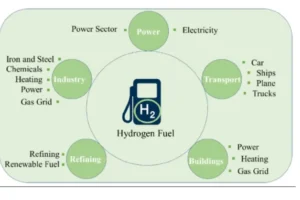
Uses of Hydrogen
- Transport Sector: Hydrogen trains, buses, and cars (hydrail, fuel‑cell vehicles). Reduces dependence on fossil fuels.
- Industry: Steel production (green steel), ammonia for fertilizers, petrochemicals. Replaces coal and natural gas in high‑emission processes.
- Power Generation: Used in turbines or blended with natural gas. Enables storage of renewable energy.
- Space & Defence: Rocket fuel in ISRO launches. Potential for military vehicles and submarines.
Policy Context
- National Hydrogen Mission (2021): Targets production of green hydrogen using renewable energy.
- Global Example: Germany and Japan already operate hydrogen trains and buses.
- India’s Strategy: Focus on transport, fertilizer, and refinery sectors as early adopters.
Challenges
- High Cost: Green hydrogen production remains expensive compared to fossil fuels.
- Infrastructure Gaps: Need for hydrogen pipelines, refuelling stations, and storage facilities.
- Safety Concerns: Hydrogen is highly flammable, requiring strict handling protocols.
Conclusion
Hydrogen offers India a pathway to zero‑emission energy security, making it a cornerstone of the country’s green transition.
AI + DIGITAL PUBLIC INFRASTRUCTURE
TOPIC: (GS3) SCIENCE AND TECHNOLOGY: THE HINDU
A recent editorial highlights how combining Artificial Intelligence (AI) with Digital Public Infrastructure (DPI) can transform governance, strengthen state capacity, and accelerate India’s economic growth.
Digital Public Infrastructure (DPI)
- United Nations & Quad Principles: DPI is a set of shared digital systems that form the backbone of modern societies, enabling seamless interaction between citizens, businesses, and governments.
- It is open, interoperable, and inclusive, designed to serve as a public good rather than a closed proprietary platform.
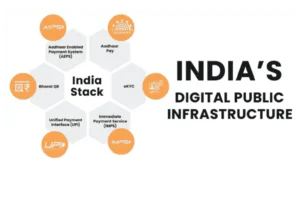
Core Components of DPI
- Digital Identity: Aadhaar provides unique identification for over 1.4 billion people, supporting subsidy delivery, voter registration, and secure banking.
- Digital Payments: UPI enables instant, low‑cost transactions, now operational in multiple countries.
- Data Exchange: Platforms like DigiLocker and Account Aggregator allow safe sharing of documents and financial data.
- Together, these create interoperable public rails that support welfare delivery, e‑governance, and private innovation.
Potential Benefits
- Enhanced Governance: AI can analyse large datasets from DPI systems to identify leakages, fraud, and inefficiencies. Example: Using AI in PDS records to detect duplicate ration cards.
- Economic Growth: AI‑enabled DPI can boost digital payments, logistics, and e‑commerce. Example: UPI transactions combined with AI fraud detection → secure financial ecosystem.
- Social Inclusion: AI tools integrated with DPI can personalise welfare schemes for vulnerable groups. Example: Predictive models for healthcare delivery via Ayushman Bharat Digital Mission.
- Capacity Building: AI‑driven DPI can support skill development and employment platforms. Example: Skill India portals enhanced with AI for job matching.
Challenges
- Data Privacy: Need strong safeguards under Digital Personal Data Protection Act, 2023.
- Bias in AI Models: Risk of exclusion if algorithms are not transparent.
- Infrastructure Gaps: Rural areas require better connectivity to fully benefit.
- Coordination: Requires alignment between Centre, States, and private sector.
Global Context
- Estonia: Uses AI + DPI for e‑governance.
- Singapore: Smart Nation initiative integrates AI with public infrastructure.
- India’s model is unique due to scale and affordability, serving over a billion citizens.
Conclusion
The fusion of AI with DPI represents India’s next leap in governance and development, ensuring smarter, inclusive, and resilient state capacity.
ELECTORAL ROLL DELETIONS AND VOTING RIGHTS IN INDIA
TOPIC: (GS2) POLITY: THE HINDU
Concerns have been raised after the case of R. Rajagopal, former editor of The Telegraph, whose name was deleted from the electoral roll. This incident has sparked debate on citizenship rights, voter exclusion, and accountability in India’s electoral process.
Background
- Electoral Roll: Foundation of India’s democratic process; ensures universal adult suffrage.
- Issue: Large‑scale deletions reported in states like Assam, Bihar, and Tamil Nadu.
- Supreme Court: Has emphasised that wrongful deletions undermine the right to vote, a basic democratic entitlement.
- Election Commission of India (ECI): Assures corrective measures but concerns persist about transparency.
Key Concerns
- Citizenship & Identity: Electoral roll deletion can indirectly question citizenship. Exclusion affects access to welfare schemes linked to voter ID.
- Administrative Challenges: Errors in verification, reliance on outdated records. Lack of grievance redressal mechanisms at grassroots level.
- Social Impact: Vulnerable groups (migrants, poor, minorities) disproportionately affected. Creates distrust in democratic institutions.
Examples & Context
- Assam NRC Process: Highlighted risks of exclusion when documentation is weak.
- Bihar & Tamil Nadu: Reports of mass deletions during roll revision exercises.
- Global Comparison:
- USA: “Voter purges” often criticised for disenfranchising minorities.
- UK: Electoral roll linked with national insurance records to reduce errors.
Issues Involved
- Democratic Integrity: Wrongful deletions weaken universal suffrage.
- Federal Dimension: States differ in implementation capacity.
- Technology Use: AI‑based verification risks bias if not transparent.
- Human Rights: Voting is not just a political right but linked to dignity and inclusion.
Way Forward
- Transparency: Public disclosure of deletion criteria and audit trails.
- Grievance Redressal: Strengthen District Grievance Redressal Officers (DGROs).
- Technology + Accountability: Use Aadhaar/biometric checks with safeguards.
- Social Audits: Community monitoring to prevent targeted exclusion.
- Cooperative Federalism: Better coordination between ECI, judiciary, and state governments.
Conclusion
Electoral roll integrity is the bedrock of democracy, and protecting it ensures that no citizen is denied their fundamental right to vote.
LANDSLIDE RISK & EARLY WARNING SYSTEMS IN INDIA
TOPIC: (GS3) DISASTER MANAGEMENT: THE HINDU
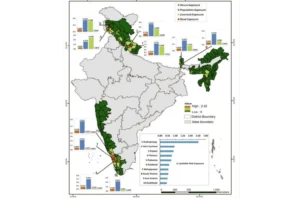
Research institutions like IIT Mandi and Amrita University are developing early warning systems for landslides in vulnerable regions such as Wayanad, Manipur, and Mizoram. These efforts aim to reduce disaster impact by using sensors and predictive models to alert communities in advance.
Geographical & Environmental Context of Landslides in India
- Nature of Hazard: Landslides are frequent in hilly and seismic regions, triggered by intense rainfall, deforestation, unplanned construction, and earthquakes.
- High‑Risk States: Himachal Pradesh, Uttarakhand, Kerala, Manipur, and Mizoram are particularly vulnerable due to fragile geology and high rainfall.
- National Vulnerability: India is among the most landslide‑prone countries globally, with the Himalayan belt and Western Ghats facing recurrent disasters.
- Human Factors: Road building, mining, and urban expansion in ecologically sensitive zones increase slope instability.
- Climate Linkages: Rising extreme rainfall events due to climate change amplify landslide frequency and severity.
Early Warning Systems
- Sensors & Accelerometers: Installed in vulnerable slopes to detect vibrations, soil movement, and micro‑seismic activity.
- Predictive Data Models: Use rainfall intensity, soil moisture, and geological parameters to forecast slope instability.
- Community Alert Mechanisms: Real‑time warnings via sirens, SMS, mobile apps, and village information centres.
- Institutional Integration: Linked with NDMA guidelines and ISRO satellite imagery for monitoring and mapping.
- Global Practices: Japan and Switzerland integrate weather forecasting with sensor networks, offering models for India.
Challenges
- Infrastructure Deficit: Remote hilly regions lack reliable communication networks for timely alerts.
- Maintenance & Funding: Sensors need regular calibration, technical expertise, and sustained financial support.
- Community Awareness: Local populations often unaware of protocols, reducing effectiveness of warnings.
- Climate Change Impact: Intensifying rainfall events and unpredictable weather patterns make forecasting more complex.
- Coordination Issues: Effective collaboration between central agencies, state governments, and local bodies is still evolving.
Significance
- Lives Saved: Early alerts reduce casualties in landslide‑prone villages.
- Economic Protection: Prevents damage to roads, railways, and hydropower projects.
- Policy Linkages: Supports Sendai Framework for Disaster Risk Reduction and India’s National Landslide Risk Management Strategy (2020).
- Global Example: Japan and Switzerland use advanced landslide monitoring systems integrated with weather forecasting.
Conclusion
Early warning systems for landslides are vital to strengthen India’s disaster resilience and safeguard vulnerable communities.