

...
Daily Current affairs 09 September 2026

Daily Current Affairs 09 September 2026

Share this Post

GRAM SABHA CONSENT AND TRIBAL LAND RIGHTS

TOPIC: (GS2) POLITY: THE HINDU

The Committee on Public Undertakings has suggested that projects in tribal areas require consent from only a majority of affected gram sabhas, rather than all, as envisaged under the Forest Rights Act (FRA). This proposal has triggered concerns about weakening tribal rights and democratic safeguards.

Forest Rights Act, 2006

  • Objective: Enacted to correct “historical injustices” faced by Scheduled Tribes and other traditional forest dwellers, ensuring livelihood security and cultural rights.
  • Recognition of Rights: Grants rights over land for habitation and cultivation, minor forest produce, grazing, and community forest resources.
  • Supremacy Clause: Contains a nonobstante clause, overriding all earlier forest laws inconsistent with FRA provisions.
  • Protection Against Eviction: Prohibits eviction/removal of forest dwellers until their claims are fully verified and recognised.
  • Role of Gram Sabha: Statutory authority to initiate claims, verify rights, and safeguard against violations; empowers local selfgovernance in forest management.

Issues and Concerns

  • Democratic Dilution: Allowing 70–75% consent enables bypassing directly affected villages, eroding participatory democracy.
  • Regulatory Vacuum: The Tribal Affairs Ministry’s refusal to claim jurisdiction leaves unchecked state power to divert forest land.
  • Displacement Risks: Projects like TeestaIV highlight how infrastructure expansion can displace communities without adequate safeguards.
  • Identity and Livelihood: Land is central to tribal culture, autonomy, and survival; weakening consent threatens their existence.

Wider Implications

  • Climate Commitments: Tribal communities provide vital environmental services, contributing to India’s climate goals.
  • Legal Safeguards: Dilution undermines FRA, Panchayats (Extension to Scheduled Areas) Act (PESA), and Land Acquisition, Rehabilitation and Resettlement Act.
  • Political Manipulation: Redefining community membership can split assemblies, engineering consent for projects.

Way Forward

  • Strengthen Gram Sabha Powers: Ensure veto rights remain intact for all affected assemblies.
  • Transparent Legislation: Any change must be debated openly in Parliament, not through bureaucratic manoeuvres.
  • Integrated Safeguards: Align FRA with PESA and LARR to protect tribal autonomy.
  • Inclusive Development: Balance infrastructure growth with rights of indigenous communities, ensuring rehabilitation and fair compensation.

GRAM SABHA

A Gram Sabha is the cornerstone of India’s grassroots democracy, it is the assembly of all adult voters in a village, empowered to make decisions on local governance, development, and resource management.

  • Constitutional Basis: Defined under Article 243(b) of the Constitution, inserted by the 73rd Amendment Act, 1992.
  • Meaning: A Gram Sabha consists of all persons registered in the electoral rolls of a village within the area of a Gram Panchayat.
  • Nature: It is a permanent body of direct democracy, unlike Gram Panchayat which is an elected body.

Membership

  • Eligibility: Every person aged 18 years or above, residing in the village, and listed in the electoral rolls.
  • Inclusivity: No elections or nominations, membership is automatic for all eligible voters.

Functions

  • Local Governance: Approves plans, programmes, and projects for village development before implementation by the Gram Panchayat.
  • Accountability: Certifies utilisation of funds by the Panchayat.
  • Social Justice: Identifies beneficiaries for poverty alleviation schemes.
  • Scheduled Areas: Under the PESA Act, 1996, Gram Sabhas safeguard tribal traditions, prevent land alienation, manage minor forest produce, and regulate village markets.

Meetings

  • Frequency: At least 2–4 times a year, often on national days like Republic Day, Independence Day, Labour Day, and Gandhi Jayanti.
  • Organisation: Convened by the Panchayat Secretary with approval of the Sarpanch.

Importance

  • Direct Democracy: Empowers villagers to participate directly in decisionmaking.
  • Decentralisation: Strengthens the Panchayati Raj system by ensuring accountability at the grassroots.
  • Tribal Rights: Acts as a veto power in Scheduled Areas, protecting land, culture, and livelihoods.

Conclusion

The proposal to dilute gram sabha consent represents a perilous retreat from democratic safeguards. Protecting tribal land rights is not merely a legal obligation but a moral imperative, essential for livelihoods, identity, and India’s environmental commitments. Strengthening gram sabha powers ensures development does not come at the cost of dispossession.

INDIA–JAPAN DEFENCE COOPERATION

TOPIC: (GS2) INTERNATIONAL RELATIONS: THE HINDU

Japan’s Defence Minister Shinjiro Koizumi visit saw agreements on defence technology transfer, and joint exercises, reflecting a shift from strategic declarations to practical capability building.

India–Japan Defence Relations

  • Institutional Framework: Defence ties institutionalised through annual dialogues, 2+2 ministerial meetings, logistics agreements, and defence technology discussions since the early 2010s.
  • Strategic Convergence: Shared concerns over freedom of navigation, maritime security, and coercive status quo changes in the IndoPacific drive cooperation.
  • Technology & Industrial Cooperation: 2015 agreement on defence equipment and technology transfer; projects like UNICORN antenna system mark progress in codevelopment.
  • Joint Exercises: Regular naval and air exercises (e.g., Veer Guardian 2026) enhance interoperability, with growing focus on unmanned systems and special forces.


Key Areas of Cooperation

  • Maritime Domain Awareness: Enhanced information sharing across the Indian Ocean and East China Sea to create a continuous strategic picture.
  • Naval Shipbuilding: Exploration of joint ship design and reciprocal ship repair facilities under Make in India.
  • Defence Technology Transfer: Implementation of the UNICORN integrated communications antenna project, codeveloped with Bharat Electronics Limited.
  • Joint Exercises: Japan’s fighter aircraft joined India’s Veer Guardian exercise (Sept 2026); plans to integrate unmanned systems and special forces cooperation.

Strategic Context

  • Both nations oppose unilateral actions impeding navigation or altering the status quo, implicitly referencing China.
  • Cooperation extends beyond a Chinacentric lens, encompassing supply chain resilience, defence industrial capacity, and thirdcountry collaboration.
  • Japan’s engagement with India’s Western Naval Command highlights India’s growing role in the western Indian Ocean, critical for energy flows and sea lanes.

Challenges

  • Implementation Gap: Past agreements, like the 2015 defence technology transfer pact, saw slow progress.
  • Industrial Synergy: Combining Japan’s technological expertise with India’s production capacity can strengthen defence manufacturing.
  • Regional Security Architecture: Defence cooperation complements broader strategic ties in economic security, critical technologies, and resilient supply chains.

Conclusion

India–Japan defence relations are moving from declarations to deliverables. The real test lies in implementation, ensuring that convergence translates into usable capability and contributes to a resilient IndoPacific security architecture.

FOOD PRICE HIKES IN INDIA

TOPIC: (GS3) ECONOMY: THE HINDU

Retail sugar prices surged by 41% between August 2025 and August 2026, reaching ₹65/kg. The Union government allowed dutyfree imports of 10 lakh MT of raw sugar for the first time in a decade to ease availability.

Why Food Prices Hike Suddenly

  • Supply Shocks: Weather events like droughts, floods, or El Niño reduce crop yields, tightening availability.
  • Global Market Trends: Lower production in major exporters (e.g., Brazil for sugar) raises international prices, impacting imports.
  • Domestic Production Fluctuations: Overestimation of crop output leads to shortages when actual production falls short.
  • Festive Demand & Hoarding: Seasonal spikes in demand, coupled with speculative hoarding, push retail prices higher.
  • Diversion to Other Uses: Crops like sugarcane diverted for ethanol blending reduce availability for food markets.
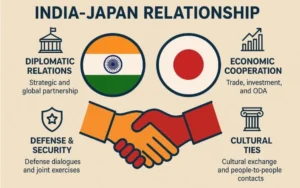
India-Japan Defence Cooperation

Government Measures to Control Food Prices

  • Buffer Stock Management: Release of wheat, rice, pulses, and onions under the Open Market Sale Scheme (OMSSD) to stabilise retail prices.
  • Price Stabilisation Fund (PSF): Used to procure and release onions, pulses, and potatoes during price spikes.
  • Import & Export Policy Adjustments: Dutyfree imports during shortages; export bans or restrictions on wheat, sugar, and pulses to maintain domestic supply.
  • Consumer Schemes: Launch of Bharat Atta, Bharat Dal, Bharat Rice brands to provide affordable staples.
  • Price Monitoring System: Daily tracking of 40 essential commodities across 578 centres guides timely interventions.

Way Forward

  • Strengthen crop forecasting systems to avoid gaps between estimates and actual production.
  • Enhance storage and distribution infrastructure to reduce wastage and buffer volatility.
  • Promote climateresilient agriculture to mitigate weatherrelated shocks.
  • Balance ethanol blending targets with food security needs.
  • Ensure transparent communication between ministries to avoid regulatory gaps.

Conclusion

Sudden food price hikes, like the recent surge in sugar, stem from a mix of domestic production shortfalls, global supply pressures, and demand spikes. Strengthening forecasting, infrastructure, and climate resilience is essential to ensure food security and price stability.

FREIGHT CORRIDORS IN INDIA

TOPIC: (GS3) ECONOMY: THE HINDU

Prime Minister Narendra Modi has inaugurated key sections of the Western Dedicated Freight Corridor (WDFC), connecting Jawaharlal Nehru Port in Navi Mumbai with Dadri in Uttar Pradesh, marking the project’s completion.

What are Freight Corridors?

  • Freight Corridors are dedicated railway networks designed exclusively for goods movement, aimed at decongesting passenger lines and improving logistics efficiency.
  • Objective: Reduce logistics costs, improve supply chain efficiency, and support industrial growth.
  • India’s ambitious Dedicated Freight Corridor (DFC) project, launched in 2006, is one of the largest infrastructure initiatives in the rail sector.
  • Design: Tracks are wider, stronger, and equipped with modern signalling to handle heavier loads.
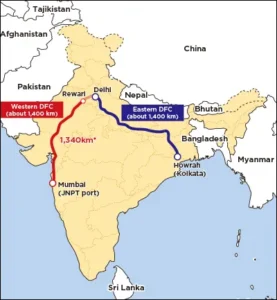
Freight Corridors in India

Types in India

  • Western Dedicated Freight Corridor: Connects Jawaharlal Nehru Port (Mumbai) to Dadri (Uttar Pradesh), covering ~1,500 km.
  • Eastern Dedicated Freight Corridor: Connects Ludhiana (Punjab) to Dankuni (West Bengal), covering ~1,800 km.
  • Together, they form the backbone of India’s freight modernization plan.

Significance

  • Efficiency: Enables faster, cheaper, and reliable movement of coal, cement, steel, and containers.
  • Economic Impact: Reduces logistics cost from 13–14% of GDP to ~8–9%.
  • Environmental Benefits: Cuts carbon emissions by shifting freight from road to rail.

Conclusion

Freight Corridors represent a transformational step in India’s infrastructure, boosting trade competitiveness, reducing costs, and aligning with sustainable transport goals. Their completion marks a milestone in India’s journey toward becoming a global logistics hub.


STUDENT HOUSING AND URBAN DISASTER RISKS IN DELHI

TOPIC: (GS3) DISASTER MANAGEMENT: THE HINDU

The collapse of a fivestorey private hostel near Delhi University’s South Campus killed seven students and injured five, exposing the dangers of unregulated urban development and unsafe student housing.

Background

  • Student Housing Demand: Over 70,000 students join Delhi University annually; nearly half require affordable accommodation.
  • Institutional Gap: The University cites lack of land, leaving private hostels and PGs to fill the void.
  • Unsafe Practices: Matchboxsized rooms, poor ventilation, and violation of building bylaws and fire safety norms are common.

Disaster Management Concerns

  • Urban Vulnerability: Densely populated colonies with unsafe structures increase disaster risk.
  • Regulatory Failure: Lack of monitoring of private hostels and PG accommodations.
  • Fire and Structural Safety: Absence of fire exits, emergency planning, and compliance with National Building Code.
  • Psychosocial Impact: Students pay not only financially but with safety, security, and mental health.

Policy and Institutional Response

  • Delhi Government’s Ambition: Plans to make Delhi a national education hub clash with weak civic infrastructure.
  • Disaster Preparedness: Need for mandatory safety audits, evacuation drills, and integration with NDMA guidelines.
  • Affordable Housing Schemes: Publicprivate partnerships to create regulated, affordable student hostels.
  • Urban Planning: Enforcement of zoning laws and stricter penalties for illegal constructions.

Way Forward

  • Strengthen Regulation: Mandatory licensing and safety certification for private hostels and PGs.
  • Institutional Responsibility: Universities must expand hostels or collaborate with regulated housing providers.
  • Community Awareness: Students and parents should be informed about safety standards before renting.
  • Technology Use: GIS mapping of unsafe structures and AIbased monitoring for compliance.
  • Integration with Disaster Management: Align student housing safety with NDMA’s urban disaster risk reduction framework.

Conclusion

Without regulated housing and strict enforcement of safety norms, Delhi’s ambition to be an education hub risks being undermined by recurring urban tragedies. A futureproof pathway requires balancing student demand with resilient infrastructure and proactive disaster governance.

CONCERNS OVER CENSUS 2027 QUESTIONNAIRE

TOPIC: (GS2) POLITY: THE HINDU

The Central government has notified 40 questions for the population enumeration phase of the 2027 Census, including details such as nationality, Aadhaar, voter ID, bank accounts, and vaccination history. This has raised concerns about confidentiality, relevance, and digression from statistical objectives.

Census in India

  • Purpose of Census: As per the UN definition, a census is meant to collect demographic, economic, and social data at the smallest geographic level for policy and planning.
  • Legal Framework: Conducted under the Census Act, 1948, which ensures confidentiality of individual information, aligned with the UN Fundamental Principles of Official Statistics.
  • Traditional Practice: Earlier censuses avoided personal identifiers like names, Aadhaar, voter ID, or passport numbers, focusing only on statistical data relevant for governance.
  • Confidentiality Principle: Individual data collected is strictly confidential and used exclusively for statistical purposes, not for surveillance or administrative targeting.

Census 2027 Questionnaire

  • Data Quality Concerns: Overloaded questionnaires with irrelevant personal details risk casual or inaccurate responses, undermining the reliability of statistical data.
  • Trust Deficit: Citizens may hesitate to share sensitive identifiers like Aadhaar, voter ID, or passport numbers, eroding confidence in the confidentiality of the Census.
  • Policy Misalignment: Instead of aiding planning, inclusion of nonstatistical questions dilutes focus on core areas such as housing, health, education, and employment.
  • Federal Concerns: States may resist deploying staff for NPRlinked data collection, citing lack of legal mandate, creating friction between Centre and States.

Challenges

  • Confidentiality Risks: Collecting Aadhaar, voter ID, and passport numbers may compromise privacy and violate statistical principles.
  • Relevance of Questions: Data on COVID19 vaccination or multiple bank accounts adds little statistical value.
  • Operational Burden: Enumerators may struggle to collect complex personal details, leading to errors and respondent fatigue.
  • Overlap with NPR: Questions on nationality, parents’ names, and permanent address resemble National Population Register (NPR) requirements, raising fears of indirect NRC linkage.
  • Institutional Households: Hostels, oldage homes, and prisons may find it impossible to provide such personal identifiers.

Way Forward

  • Limit Questions to Statistical Needs: Focus on demographic and socioeconomic indicators.
  • Ensure Transparency: Any NPRrelated data collection must be legislated separately, not embedded in Census.
  • Strengthen Confidentiality: Reaffirm that individual identifiers will not be stored or shared.
  • Simplify Questionnaire: Reduce descriptive questions to avoid respondent fatigue and enumerator overload.

Conclusion

The Census is India’s most vital statistical exercise. Diluting its credibility with irrelevant or intrusive questions risks undermining both data quality and public trust. A transparent, legally sound, and statistically focused approach is essential to preserve the Census as a tool for policy and planning, not surveillance.

NOTEBOOK INDUSTRY AND APPEAL FOR GOVERNMENT SUPPORT

TOPIC: (GS3) ECONOMY: THE HINDU

The All India Notebook Manufacturers Association has warned of an “existential crisis” facing the domestic notebook sector, citing dutyfree imports from ASEAN countries and the GST rate revision of 2025 as key triggers.

Background

  • ASEAN FTA Impact: Imports of finished notebooks from Indonesia, Thailand, and Malaysia enter India without Basic Customs Duty, creating an uneven playing field.
  • Structural Disadvantage: ASEAN producers benefit from economies of scale, subsidised forestry, and integrated supply chains, lowering costs significantly.
  • GST Revision: In 2025, GST on notebooks was reduced from 12% to Nil to support education, but this created an inverted duty structure, raising costs for domestic manufacturers.

Industry Concerns

  • Employment: The sector comprises 1,500 units and employs 1.25 lakh workers, now at risk.
  • Survival Threat: Cheap imports and tax asymmetry penalise domestic production while incentivising imports.

Proposed Measures

  • Minimum Import Price (MIP): To prevent dumping of lowcost notebooks.
  • AntiDumping Investigation: Focused on imports from Indonesia.
  • Export Refund Streamlining: To ease liquidity for manufacturers.
  • Paper Mills Probe: Address alleged profiteering by domestic suppliers.

Conclusion

The notebook industry’s crisis highlights the unintended consequences of trade liberalisation and tax rationalisation. Balancing affordable education with the survival of domestic manufacturing requires calibrated policies, ensuring fair competition and protecting employment.

Write a Review

Your email address will not be published. Required fields are marked *

Seraphinite AcceleratorOptimized by Seraphinite Accelerator
Turns on site high speed to be attractive for people and search engines.