

...
Daily Current affairs 01 October 2026

Daily Current Affairs 01 October 2026

Share this Post

INDIA’S MONSOON DEFICIT AND PREPAREDNESS

TOPIC: (GS1) GEOGRAPHY: THE HINDU

IMD reported that India’s 2026 southwest monsoon rainfall was 12.6% below normal, the lowest since 2015.
Rainfall Pattern

  • India received 759.4 mm, against the normal 868.6 mm.
  • East and Northeast India experienced their driest monsoon since 1901; the southern peninsula also faced a substantial shortfall.
  • June was particularly dry, while July recovered. This shows why rainfall timing and regional distribution matter alongside seasonal totals.

Important Geographical Concepts

  • Long Period Average (LPA): Average rainfall over a reference period; IMD currently uses 1971–2020 for these forecasts.
  • El Niño: Unusual warming of the central and eastern equatorial Pacific, which can alter atmospheric circulation and weaken India’s southwest monsoon.
  • However, El Niño does not guarantee drought; other ocean conditions and local weather systems influence rainfall.

Wider Implications

  • Agriculture: Dry spells can delay kharif sowing, reduce yields and leave insufficient soil moisture for rabi crops.
  • Water and energy: Poor recharge can increase groundwater dependence and pressure on drinking water, irrigation and hydropower.
  • Economy and society: Crop losses may raise food prices, reduce rural incomes and increase hardship for small farmers.
  • Environment: Reduced river flows can stress aquatic habitats; seasonal deficits can still coexist with damaging local floods.

Way Forward

  • Activate ICAR’s district contingency plans; promote suitable short-duration crops, such as millets and pulses.
  • Repair farm ponds, improve irrigation efficiency and coordinate reservoir use.
  • Deliver timely weather advisories and crop insurance support.
  • Link forecasts with district-level agriculture, water and livelihood decisions.

MONSOON

Indias Monsoon Defict and Preparedness

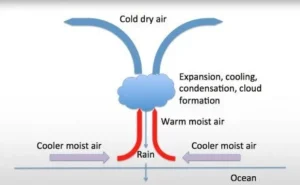
  • Monsoon is the seasonal change in wind direction, which produces distinct rainy and dry seasons.
  • Southwest monsoon brings most of India’s rainfall, mainly from June to September.
  • It develops as the land heats faster than the ocean, creating low pressure that draws moisture-rich ocean winds towards India.
  • It has two main branches: the Arabian Sea branch and the Bay of Bengal branch.
  • It supports farming, fills reservoirs and recharges groundwater; weak rainfall can cause water shortages, while heavy rainfall can cause floods.

Conclusion:

India must turn early weather warnings into timely local action to protect water security and farmers’ livelihoods.

INDIA–EFTA PARTNERSHIP AND SUSTAINABLE GROWTH

TOPIC: (GS2) INTERNATIONAL RELATIONS: THE HINDU

The India–EFTA Trade and Economic Partnership Agreement (TEPA) completes one year of implementation on October 1, 2026.

About the Agreement

  • EFTA members: Iceland, Liechtenstein, Norway and Switzerland; EFTA is separate from the European Union.
  • Signed on March 10, 2024, TEPA became operational on October 1, 2025.
  • It covers goods, services, investment, intellectual property and sustainable development.
  • EFTA’s concessions cover 92.2% of tariff lines, while India’s cover 82.7%; these include phased reductions, rather than immediate removal of every duty.

Investment and Economic Significance

  • EFTA states aim to increase investment from their investors into India by $100 billion over fifteen years and facilitate one million direct jobs.
  • These are future objectives, not investments and jobs already delivered.
  • India gains access to wealthy markets, specialised machinery and industrial knowledge.
  • Partnerships can strengthen domestic manufacturing, services exports and the participation of small businesses in global supply chains.

Iceland’s Contribution: Three Opportunities

  • Geothermal energy: Underground heat can support fruit drying, greenhouses and building heating, beyond electricity generation. The article’s Tapri example illustrates how processing can reduce farmers’ dependence on immediate harvest sales.
  • Carbon management: Carbon Capture, Utilisation and Storage (CCUS) captures carbon dioxide for reuse or underground storage. Iceland’s experience offers lessons for Indian industrial projects; geological suitability requires local testing.
  • Circular fisheries: Using fish skin, bones and other by-products for oils, feed and medical materials can increase value without increasing catches. Better refrigeration and processing can also reduce waste.

Climate and Strategic Dimensions

  • The Union Budget 2026–27 proposed ₹20,000 crore over five years for CCUS, supporting emissions reduction in industries such as steel and cement.
  • Cooperation can support India’s energy security and net-zero ambition while creating technical skills.
  • Arctic engagement adds a scientific dimension: India became an Arctic Council Observer in 2013, adopted its Arctic Policy in 2022 and operates Himadri in Svalbard.

Challenges and Way Forward

  • Track actual investment and employment through transparent reviews.
  • Help exporters meet quality standards and rules of origin.
  • Address technology costs, licensing barriers and shortages of trained workers.
  • Assess CCUS energy needs, water use and storage safety; captured carbon reused as fuel can return to the atmosphere.
  • Prioritise research, environmental safeguards and local benefits.
  • Strengthen investment facilitation through the dedicated EFTA Desk.

Conclusion:

TEPA’s success will depend on converting trade preferences into productive investment, cleaner industries and lasting livelihoods.

INDIA’S EV TRANSITION AND CHARGING NETWORK

TOPIC: (GS3) ECONOMY: THE HINDU

Rising electric vehicle registrations have highlighted uneven access to public charging facilities across Indian States.

Charging infra in India

  • The supplied analysis places EVs and hybrids at 12.7% of new registrations during the period examined.
  • However, “alternative fuels” also include CNG and LPG; their combined sales cannot be treated as electric vehicle sales.
  • Battery EVs run entirely on electricity. Hybrids combine an engine with an electric motor; conventional hybrids do not require external charging.
  • Electric three-wheelers contribute substantially to adoption in several States, so overall registration shares can hide slower electrification of cars and two-wheelers.
Indias Ev Transition and Charging Network

Regional and Infrastructure Gaps

  • The article identifies stronger adoption in Kerala, Delhi and Karnataka, alongside growth driven by three-wheelers elsewhere.
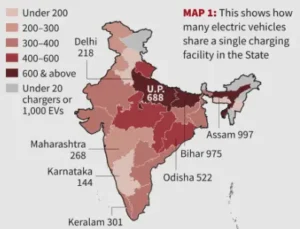
  • Its comparison shows roughly 997 EVs per public charging location in Assam, against 144 in Karnataka.
  • Bengaluru’s concentration of charging facilities illustrates how State-level totals can conceal gaps in smaller towns and rural areas.
  • Maharashtra’s higher charging electricity consumption indicates stronger usage, while numerous locations alone do not establish adequate service.

Why Charging Matters

  • Consumer confidence: Reliable chargers reduce range anxiety—the fear of running out of battery before reaching a charging point.
  • Livelihoods: Accessible charging supports e-rickshaw drivers, delivery workers and commercial fleets.
  • Environment: Battery EVs eliminate exhaust emissions during operation, but total climate benefits depend on electricity generation and battery production.
  • Energy security: Electrification can reduce oil dependence while increasing demand for batteries, critical minerals and grid capacity.

Government Measures

  • PM E-DRIVE allocates ₹2,000 crore for public charging infrastructure.
  • The Ministry of Power’s 2024 charging guidelines encourage a connected, interoperable network, including battery swapping.
  • Establishing charging stations is an unlicensed activity, subject to applicable technical and safety requirements.

Way Forward

  • Address land costs, delayed electricity connections, unreliable equipment and uncertain commercial returns.
  • Plan chargers around vehicle type, travel routes and actual demand; charging locations, connectors and charging capacity are different indicators.
  • Expand facilities at workplaces, apartment complexes, transport hubs and highways.
  • Coordinate State governments, municipalities, distribution companies and private operators.
  • Track charger uptime and accessibility, rather than installation numbers alone.
  • Strengthen battery recycling and domestic manufacturing.

Conclusion:

India’s EV transition needs dependable, affordable and widely accessible charging—not merely higher vehicle sales.

FAO COMMITTEE ON FORESTRY

TOPIC: (GS3) ENVIRONMENT: THE HINDU

India highlighted its forest and landscape restoration efforts at COFO 28, taking place in Rome from 28 September to 2 October 2026, alongside the 10th World Forest Week.

Institutional Profile

  • COFO (Committee on Forestry) functions under the Food and Agriculture Organization of the United Nations.
  • It is FAO’s highest global intergovernmental forum on forestry.
  • The 16th FAO Conference established it in 1971 through Resolution 10/71.
  • It serves as a technical committee of the FAO Council.

Membership and Meetings

  • It currently has 128 Members, including India.
  • Membership is open to FAO Members after written notification to the Director-General; it is not automatic.
  • Regular sessions occur once every two years, generally at FAO headquarters in Rome, Italy.
  • Additional sessions may be convened when necessary.

Governance

  • Reports to the FAO Council on programme and budget matters.
  • Reports to the FAO Conference on policy and regulatory matters.
  • Six Regional Forestry Commissions contribute regional priorities.
  • Their chairpersons also serve as COFO’s vice-chairpersons and join its Steering Committee.

Main Functions

  • Reviews FAO’s forestry work programmes.
  • Examines international forestry problems and recommends coordinated action.
  • Supports policy dialogue, technical guidance and sustainable forest management.
  • Its Working Group on Dryland Forests and Agrosilvopastoral Systems promotes ecosystem protection and restoration.
  • Agrosilvopastoral systems combine crops, trees and livestock.

PRAMAAN

TOPIC: (GS3) ECONOMY: THE HINDU

India’s first PRAMAAN certificates were presented on September 29, 2026, marking the scheme’s practical implementation.
Institutional Framework

  • PRAMAAN: Programme for Recognition and Accreditation of Sustainable Management Practices for Agroforestry and Natural Forestry Resources.
  • It operates under the Indian Forest and Wood Certification Scheme (IFWCS), launched by MoEFCC in December 2023.
  • Operating agency: Indian Institute of Forest Management, Bhopal.
  • Coverage includes forests, wood and non-timber forest products.
  • Recipients included Andhra Pradesh Forest Development Corporation and an Odisha bamboo farmer.

Certification Categories

  • Forest Management: Assesses recorded forests and forest plantations against sustainable management standards.
  • Trees Outside Forests: Covers agroforestry and plantations outside designated forests.
  • Chain of Custody: Tracks certified products through processing and trade, from origin to buyer.
  • For example, certified farm-grown bamboo can enter a traceable supply chain for furniture manufacturing.

Standards and Verification

  • Forest standards draw upon the National Working Plan Code, 2023.
  • Independent certification bodies conduct audits; self-declaration alone is insufficient.
  • NABCB, under the Quality Council of India, accredits these bodies.

Significance and Priorities

  • Supports biodiversity conservation, responsible sourcing and market access.
  • Can benefit farmers, tribal communities and forest-based enterprises.
  • Effective implementation requires affordable audits, reliable traceability and safeguards against misleading sustainability claims.
  • Certification supports compliance but does not automatically replace importing countries’ legal requirements.

Conclusion:

PRAMAAN can connect credible forest stewardship with stronger livelihoods and responsible trade.

CYBERCRIME POLICING AND THE GAP BETWEEN REPORTING AND JUSTICE

TOPIC: (GS2) GOVERNANCE: THE HINDU

The Status of Policing in India Report 2026 finds widespread dissatisfaction among surveyed cybercrime victims with police handling.

Key Findings

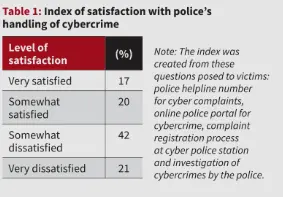
  • The Lokniti-CSDS–Common Cause study reports 63% dissatisfaction with complaint handling.
  • Satisfaction falls from 50% for helplines to 43% during investigations, indicating declining confidence after initial contact.
  • 26% of women, compared with 18% of men, report being very dissatisfied.
  • Five or more police visits were reported by 38% of rural victims, against 19% of urban victims.
  • These are survey findings; they should not be treated as administrative counts covering every victim.

Governance Concerns

  • Access versus outcomes: Easier reporting does not automatically ensure timely investigation or recovery.
  • Unequal burdens: Repeated visits impose travel costs and lost wages, especially on rural households.
  • Gender sensitivity: Privacy concerns and insensitive responses can worsen victims’ distress.
  • Technical complexity: Fraudsters exploit multiple bank accounts, digital platforms and jurisdictions, requiring coordinated investigation.
Cybercrime Policing and the Gap Between Reporting and Justice

Existing Institutional Framework

  • Indian Cyber Crime Coordination Centre (I4C): Under the Ministry of Home Affairs, coordinates national responses.
  • National Cyber Crime Reporting Portal: Accepts complaints, including offences against women and children.
  • Helpline 1930 and CFCFRMS: Enable quick financial-fraud reporting and coordinated efforts to prevent stolen funds moving further.
  • Police and public order are State subjects; States lead investigations while the Centre supports coordination and capacity.

Reform Priorities

  • Provide complaint acknowledgements, tracking numbers and regular progress updates.
  • Train personnel in digital evidence, financial tracing and respectful communication.
  • Strengthen cooperation with banks, platforms and police across States.
  • Offer local-language assistance, confidential reporting and support for rural complainants.
  • For example, prompt reporting of an investment scam should trigger rapid transaction tracing.

Conclusion:

Effective cyber policing must turn accessible reporting into timely action, fair treatment and accountable justice.


NATIONAL PANCHAYAT AWARDS

TOPIC: (GS2) GOVERNANCE: THE HINDU

The National Panchayat Awards (NPA) were recently announced, highlighting the role of Panchayati Raj Institutions (PRIs) in advancing local governance and Sustainable Development Goals (SDGs).

Background

  • Instituted under the Incentivization of Panchayats (IoP) scheme, a key component of the Rashtriya Gram Swaraj Abhiyan (RGSA).
  • Revamped in 2022 to align with 9 themes of Localization of SDGs (LSDGs), covering all 17 SDGs.
  • Objective: To assess Panchayat performance, encourage competitive spirit, and catalyze the process of achieving LSDGs by 2030.

Themes for Evaluation

Panchayats are ranked based on performance under nine LSDG themes:

  • Poverty-free Panchayat and enhanced livelihoods.
  • Healthy Panchayat.
  • Child-friendly Panchayat.
  • Water-sufficient Panchayat.
  • Clean and Green Panchayat.
  • Self-sufficient infrastructure in Panchayat.
  • Socially just and secured Panchayat.
  • Good governance Panchayat.
  • Women-friendly Panchayat.

Award Categories

  • Deen Dayal Upadhyay Panchayat Satat Vikas Puraskar (DDUPSVP): Recognises outstanding Gram Panchayats across the nine LSDG themes.
  • Nanaji Deshmukh Sarvottam Panchayat Satat Vikas Puraskar (NDSPSVP): Awarded to the best-performing Panchayats at District, Block, and Gram Panchayat levels on an overall basis.

Significance

  • Promotes grassroots democracy and strengthens local governance.
  • Encourages Panchayats to act as agents of SDG localization.
  • Enhances accountability and transparency in developmental outcomes.
  • Builds momentum for inclusive and sustainable rural development.

Conclusion

By rewarding innovation and efficiency, these awards reinforce the role of PRIs as the foundation of India’s democratic and developmental framework.

Write a Review

Your email address will not be published. Required fields are marked *

Seraphinite AcceleratorOptimized by Seraphinite Accelerator
Turns on site high speed to be attractive for people and search engines.