
...
Daily Current affairs 24 September 2026

Daily Current Affairs 24 September 2026

Share this Post

SPECIAL INTENSIVE REVISION AND ELECTORAL ROLL INTEGRITY

TOPIC: (GS2) POLITY: THE HINDU

The Special Intensive Revision (SIR) of electoral rolls has raised concerns over verification procedures, deletions and the transparency of the revision process.

What is Special Intensive Revision?

  • SIR is a detailed exercise to verify and update electoral rolls, including identification of eligible voters and correction or removal of ineligible entries.
  • Section 21(3) of the Representation of the People Act, 1950 empowers the Election Commission to order a special revision, with reasons recorded.
  • The objective is to maintain accurate, updated and credible electoral rolls.

Constitutional Importance

  • Article 324: Entrusts the Election Commission with superintendence, direction and control of elections.
  • Article 325: Provides for one general electoral roll and prohibits exclusion on grounds only of religion, race, caste or sex.
  • Article 326: Establishes elections to Lok Sabha and State Assemblies on the basis of adult suffrage.
  • Therefore, electoral-roll revision must ensure both electoral integrity and inclusion.

Issues Raised During SIR

  • Reports have highlighted concerns regarding software-generated discrepancies, deletion of names and the burden of documentary verification.
  • Questions have also been raised about coordination between centralised databases and local Electoral Registration Officers.
  • Critics have argued that large-scale deletion before adequate verification could affect genuine electors.
  • At the same time, the ECI maintains that SIR is intended to identify eligible electors and improve roll accuracy.

Supreme Court’s Role

  • In May 2026, the Supreme Court upheld the ECI’s authority to conduct the West Bengal SIR, recognising its statutory power under Section 21(3).
  • Subsequent proceedings also addressed acceptable documents and verification procedures, including Aadhaar and specified educational records.
  • This illustrates judicial oversight of the balance between administrative efficiency and voter inclusion.

Key Challenges

  • Exclusion risk: Genuine voters may face difficulty proving eligibility.
  • Digital dependence: Database errors can affect large numbers of records simultaneously.
  • Documentation gap: Poor and migrant households may lack easily available documents.
  • Public trust: Electoral processes require transparency and confidence across political and social groups.

Way Forward

  • Ensure notice, hearing and appeal opportunities before final deletion of voter names.
  • Conduct independent database audits and sample-based verification of automated discrepancies.
  • Strengthen the capacity of Electoral Registration Officers and Booth Level Officers.
  • Publish clear methodologies and data on deletions, restorations and appeals.
  • Use technology as a verification aid, while retaining accountable human oversight.

Conclusion

Electoral-roll purification must strengthen election integrity without turning verification into an avoidable barrier to universal adult participation.

PROGRESSING TOWARDS UNIVERSAL HEALTH COVERAGE IN INDIA

TOPIC: (GS2) GOVERNANCE: THE HINDU

Recent government data show wider coverage under AB-PMJAY, Ayushman Arogya Mandirs and digital health initiatives, highlighting India’s continuing UHC journey.

What is Universal Health Coverage?

  • Universal Health Coverage (UHC) means ensuring that everyone can obtain the healthcare services they need without suffering financial hardship.
  • It has three major dimensions:
    • Availability and access: Services should reach people when and where required.
    • Quality: Treatment should be safe, effective and affordable.
    • Financial protection: Medical expenses should not push households into poverty.
  • UHC covers the complete healthcare cycle, including prevention, diagnosis, treatment, rehabilitation and palliative care.
  • It is also SDG Target 3.8, making UHC an important global development commitment.

Why Does India Need UHC?

  • High household spending: Although India’s out-of-pocket expenditure has declined, families still bear a substantial share of healthcare costs.
  • Regional inequality: Rural, tribal and remote regions often have fewer specialists, diagnostic facilities and advanced hospitals.
  • Disease transition: India faces both communicable diseases and rising non-communicable diseases such as diabetes, cancer and hypertension.
  • Preventive healthcare: Strong primary healthcare can detect diseases early and reduce expensive hospitalisation.

Constitutional and Policy Foundation

  • Article 21: The Supreme Court has interpreted the right to health as part of the right to life.
  • Article 39(e): Protects the health and strength of workers.
  • Article 42: Provides for humane working conditions and maternity relief.
  • Article 47: Directs the State to improve nutrition, living standards and public health.
  • National Health Policy 2017: Envisaged increasing public health expenditure towards 2.5% of GDP.

Progress and Remaining Gaps

  • Government data show OOPE declined from 62.6% of total health expenditure in 2014-15 to 43.4% in 2022-23.
  • However, insurance coverage alone cannot guarantee UHC because people also need nearby facilities, medicines, diagnostics and adequate health workers.
  • WHO notes that stronger public financing is important for reducing dependence on direct household payments.

Challenges

  • Infrastructure gaps: Unequal availability of hospitals, laboratories and primary-care facilities.
  • Human resources: Shortages and uneven distribution of doctors, nurses and specialists.
  • State-level variation: Health is primarily a State subject, creating differences in implementation and outcomes.
  • Private-sector dependence: Ensuring uniform quality, reasonable costs and effective regulation remains difficult.
  • Preventive-care gap: Greater emphasis is required on nutrition, sanitation, vaccination and early disease detection.

Way Forward

  • Increase and efficiently utilise public health expenditure, particularly for primary and preventive care.
  • Strengthen health workers, telemedicine and referral systems in underserved districts.
  • Integrate PM-JAY, Ayushman Arogya Mandirs and digital health into a seamless continuum of care.
  • Expand free medicines and diagnostics to reduce household expenditure.
  • Use district-level health data to identify underserved populations and improve targeted interventions.

GOVERNMENT INITIATIVES

  • AB-PMJAY: Provides ₹5 lakh annual health cover per family for secondary and tertiary hospitalisation. As of June 2026, it had authorised 12.69 crore hospital admissions worth ₹1.92 lakh crore.
  • Ayushman Arogya Mandirs: Bring comprehensive primary healthcare closer to communities. Services include NCD screening, maternal care, mental health, essential medicines and diagnostics.
  • PM-ABHIM: Strengthens health infrastructure, laboratories, critical-care facilities and disease-surveillance capacity.
  • Digital Health: ABHA provides a digital health identity and facilitates the linking and sharing of health records across participating facilities.

Conclusion

India’s UHC journey must move beyond insurance coverage towards accessible, quality primary care and genuine financial protection for every household.

PARTNERS FOR MULTILATERALISM (P4M)

TOPIC: (GS2) INTERNATIONAL RELATIONS: THE HINDU

Partners for Multilateralism (P4M) was launched on 21 September 2026 during the 81st UN General Assembly.   

What is P4M?

  • P4M is an open and flexible diplomatic platform, rather than a military alliance or treaty-based organisation.
  • India joined Australia, Barbados, Brazil, Canada, the EU and Kenya to promote multilateral cooperation, international law, peace and inclusive prosperity.
  • It seeks to bring countries from different regions and political systems together for:
    • Dialogue and coalition-building.
    • Practical cooperation on global challenges.
    • Strengthening the rules-based international order.
  • Its declaration reaffirms sovereign equality, territorial integrity, peaceful settlement of disputes and prohibition of force.

Why is P4M Needed?

  • Changing global power structure: Institutions created after World War II do not fully reflect today’s economic and political realities.
  • Geopolitical fragmentation: Conflicts, protectionism, economic coercion and strategic rivalry are weakening international cooperation.
  • Transnational challenges: Climate change, pandemics, AI, cyber risks and supply-chain disruptions cannot be managed by individual countries alone.
  • Weakening global trust: Countries increasingly seek reforms that make international institutions more representative, transparent and effective.
  • The UN itself is pursuing institutional reform through the UN80 Initiative, which aims to make the UN system more efficient, coherent and responsive.

Major Areas of Cooperation

  • Reform of Multilateral Institutions: Promotes more representative, inclusive, effective global governance and stronger international institutions worldwide.
  • Peace and International Law: Promotes peaceful dispute settlement, UN Charter compliance, humanitarian law, and fundamental freedoms.
  • Economic Cooperation: Promotes diversified supply chains, predictable trade, and reforms in international financial architecture.
  • Emerging Technologies: Encourages international cooperation on AI, digital transformation, cybersecurity, and emerging technology risks.

Significance for India

  • Voice of Global South: India can highlight concerns relating to development finance, food and energy security, technology access and climate equity.
  • Reformed multilateralism: It supports India’s long-standing demand for more representative global institutions, including UN Security Council reform.
  • Strategic autonomy: P4M provides India another platform for cooperation without requiring membership in a rigid strategic bloc.
  • Bridge-building role: India’s participation alongside countries from different regions can support its role as a bridge between developed and developing economies.

Challenges

  • Different national interests: Members may have different positions on conflicts, trade, technology and major-power relations.
  • Implementation gap: A flexible platform may generate political commitments without strong mechanisms for implementation.
  • Forum proliferation: Overlapping international groupings can create duplication and dilute attention.
  • Consensus difficulties: Greater diversity among participants can make common positions harder to achieve.

Way Forward

  • Keep P4M open, inclusive and representative rather than turning it into another exclusive bloc.
  • Convert broad declarations into specific projects on health, climate, AI, trade and supply-chain resilience.
  • Give greater space to developing-country priorities, especially development finance and technology access.
  • Coordinate with existing institutions such as the UN, G20 and regional organisations to avoid duplication.

Conclusion

P4M can help translate the idea of reformed multilateralism into practical cooperation suited to an increasingly interconnected and multipolar world.

QUALITY CONTROL ORDERS AND INDIA’S MANUFACTURING GROWTH

TOPIC: (GS3) ECONOMY: THE HINDU

India is reassessing Quality Control Orders (QCOs) to reduce supply-chain disruptions and excessive compliance costs for manufacturers.

What are Quality Control Orders?

  • QCOs make compliance with specified Indian Standards mandatory for selected products.
  • They are issued by the government under the BIS Act, 2016 for public safety, health, environmental protection and preventing unfair trade practices.
  • Products covered by QCOs generally require the relevant BIS licence or conformity certification before manufacture, sale or import.

Why are QCOs Important?

  • Consumer protection: Prevents circulation of unsafe or substandard products.
  • Industrial quality: Encourages firms to adopt better production and testing standards.
  • Import quality: Ensures imported products meeting mandatory standards do not undermine domestic quality norms.
  • Export competitiveness: Internationally accepted standards can help Indian firms integrate into global value chains.

Emerging Concern: Quality versus Manufacturing Costs

  • Rapid expansion of QCOs has raised concerns where regulations cover intermediate goods, rather than only final consumer products.
  • Certification requirements can:
    • Increase input costs and compliance expenses.
    • Reduce availability of essential industrial inputs.
    • Delay production when certified suppliers are limited.
    • Affect MSMEs more severely because of their smaller financial capacity.
  • For example, chemicals are important inputs for pharmaceuticals, electronics, rubber and plastics; restrictions on their availability can affect several downstream industries.

Recent Government Approach

  • The government has increasingly reviewed, deferred or withdrawn selected QCOs where implementation could create supply-chain difficulties.
  • The Transition Facilitation (Quality Control) Order, 2026 provides an interim mechanism for eligible firms facing difficulties in obtaining specified BIS certification, subject to prescribed conditions.
  • BIS certification itself involves assessment of manufacturing facilities, process controls and testing capabilities.

Impact on MSMEs and Value Addition

  • MSMEs can face disproportionately high certification and testing expenses.
  • Higher input costs may reduce profit margins and domestic value addition.
  • Large firms may have greater capacity to absorb compliance costs, while smaller firms may reduce production or investment.
  • Therefore, QCO policy should consider the entire supply chain, not merely the quality of the regulated product.

Way Forward

  • Risk-based regulation: Apply stricter standards to products with greater safety or health risks.
  • Input-sensitive review: Examine QCOs for intermediate goods for availability, price and downstream effects.
  • MSME support: Provide affordable testing facilities, faster certification and transition periods.
  • Global integration: Align Indian standards with international norms wherever appropriate to facilitate exports.
  • Regular review: Use industry data to assess whether QCOs improve quality without unnecessarily restricting competition.

Conclusion

India needs quality regulation that protects consumers while simultaneously enabling affordable inputs, competitive firms, MSME growth and deeper integration into global value chains.

WHY THE US FEDERAL RESERVE RAISED INTEREST RATES

TOPIC: (GS3) ECONOMY: THE HINDU

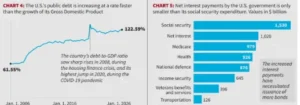
The US Federal Reserve raised its federal funds rate by 25 basis points to 3.75–4% on September 16, 2026, citing elevated inflation.

What is the Federal Funds Rate?

  • It is the interest rate at which banks lend reserve balances to one another overnight in the US financial system.
  • It is the Fed’s key short-term policy rate and broadly comparable to the RBI’s repo rate in its role in monetary policy.
  • A rate hike generally makes borrowing costlier and reduces excessive demand.
  • A rate cut makes credit cheaper and can support consumption and investment.
Why the US Federal Reseve Raised Intrest Rates

Why Did the Fed Raise Rates?

  • Persistent Inflation: Inflation remains above the Fed’s 2% target, requiring continued monetary tightening to restore price stability.
  • Inflation Expectations: Persistent price pressures can raise wage and pricing expectations, making inflation harder to control effectively.
  • Long-Term Bond Yields: Rising inflation expectations increase Treasury yields, raising borrowing costs for governments and private businesses.
  • Rising Public Debt: Growing government debt increases refinancing needs and interest payments, reducing fiscal space for future spending.

How Does a Rate Hike Affect the Economy?

Rate hike → Costlier credit → Lower consumption/investment → Lower aggregate demand → Reduced inflationary pressure

  • However, excessive tightening can also weaken economic activity, employment and private investment.
  • Hence, central banks attempt to balance price stability with sustainable growth.

Global and Indian Implications

  • Higher US rates can increase the attractiveness of US dollar-denominated assets.
  • This may encourage capital flows towards the US and create pressure on emerging-market currencies.
  • For India, potential effects include:
    • Exchange-rate pressure on the rupee
    • Capital-flow volatility
    • Higher external financing costs
    • Possible imported inflation through commodity prices
  • However, India’s impact depends on domestic inflation, growth, capital flows and RBI monetary policy.

Conclusion

The Fed’s rate decision reflects the need to restore price stability while carefully managing the growth, debt and financial-market consequences of tighter monetary policy.

SUPER EL NINO AND HEAT-RELATED MORTALITY IN INDIA

TOPIC: (GS1) GEOGRAPHY: THE HINDU

A Climate Impact Lab assessment estimates around 15,800 additional heat-related deaths in India during September 2026–February 2027.

What is El Niño?

  • El Niño is a periodic climate phenomenon in which the surface waters of the central and eastern tropical Pacific Ocean become unusually warm.
  • This warming changes atmospheric circulation and can influence weather patterns across the world.

How does El Niño occur?

  • Normal Conditions
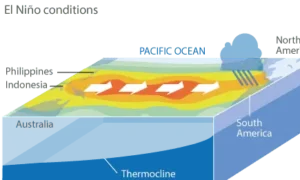
    • Normally, trade winds blow from east to west across the tropical Pacific.
    • They push warm surface water towards Indonesia and Australia.
    • Cold, nutrient-rich water rises near the western coast of South America. This is called upwelling.
  • During El Niño
    • Trade winds become weaker than normal.
    • Warm water moves back towards the central and eastern Pacific.
    • Upwelling of cold water decreases.
    • Sea-surface temperatures in the eastern Pacific become unusually warm.
  • Atmospheric Changes
    • The warmer Pacific releases additional heat and moisture into the atmosphere.
    • This changes the movement of air, clouds and rainfall.
    • As a result, weather conditions can change far beyond the Pacific region.
Super EL NINO and Heat-Related Mortality in India

Why is the Current Event Important?

  • The report describes the present event as “Super El Niño”, an informal term for exceptionally strong El Niño conditions.
  • Climate Impact Lab estimates additional deaths by comparing forecast temperatures with average conditions during 1996–2025.
  • Such estimates depend on temperature–mortality relationships and regional differences in vulnerability and adaptation.

Implications for India

  • Extreme heat raises heatstroke, respiratory illness, dehydration, and cardiovascular stress among vulnerable.
  • Irregular rainfall reduces soil moisture, irrigation availability, and crop productivity, worsening losses.
  • Hotter weather increases cooling demand, electricity consumption, fuel requirements, and power emissions.
  • Heat reduces labour productivity, working days, household incomes, while increasing health-related expenses.

Climate Change Connection

  • El Niño is a natural climate phenomenon, while global warming is driven mainly by increasing greenhouse-gas concentrations.
  • Their interaction can produce more severe heat risks because a warmer baseline means extreme events begin from higher temperatures.
  • Thus, El Niño provides an important warning about India’s future heat vulnerability.

Government Response and Way Forward

  • Strengthen Heat Action Plans at State and city levels with early-warning systems.
  • Expand cool shelters, drinking-water facilities and public awareness during extreme heat.
  • Improve urban planning through green spaces, cool roofs and heat-resilient infrastructure.
  • Promote climate-resilient agriculture, efficient irrigation and better weather-based advisories.
  • Integrate heat-risk assessment into health, labour, energy and disaster-management policies.

Conclusion

El Nino may trigger temporary extremes, but stronger adaptation is essential as climate change raises India’s long-term heat-risk baseline.


Write a Review

Your email address will not be published. Required fields are marked *

Seraphinite AcceleratorOptimized by Seraphinite Accelerator
Turns on site high speed to be attractive for people and search engines.