

Table of Contents
ToggleINDIA’S MONSOON DEFICIT AND PREPAREDNESS
TOPIC: (GS1) GEOGRAPHY: THE HINDU
IMD reported that India’s 2026 southwest monsoon rainfall was 12.6% below normal, the lowest since 2015.
Rainfall Pattern
- India received 759.4 mm, against the normal 868.6 mm.
- East and Northeast India experienced their driest monsoon since 1901; the southern peninsula also faced a substantial shortfall.
- June was particularly dry, while July recovered. This shows why rainfall timing and regional distribution matter alongside seasonal totals.
Important Geographical Concepts
- Long Period Average (LPA): Average rainfall over a reference period; IMD currently uses 1971–2020 for these forecasts.
- El Niño: Unusual warming of the central and eastern equatorial Pacific, which can alter atmospheric circulation and weaken India’s southwest monsoon.
- However, El Niño does not guarantee drought; other ocean conditions and local weather systems influence rainfall.
Wider Implications
- Agriculture: Dry spells can delay kharif sowing, reduce yields and leave insufficient soil moisture for rabi crops.
- Water and energy: Poor recharge can increase groundwater dependence and pressure on drinking water, irrigation and hydropower.
- Economy and society: Crop losses may raise food prices, reduce rural incomes and increase hardship for small farmers.
- Environment: Reduced river flows can stress aquatic habitats; seasonal deficits can still coexist with damaging local floods.
Way Forward
- Activate ICAR’s district contingency plans; promote suitable short-duration crops, such as millets and pulses.
- Repair farm ponds, improve irrigation efficiency and coordinate reservoir use.
- Deliver timely weather advisories and crop insurance support.
- Link forecasts with district-level agriculture, water and livelihood decisions.
MONSOON
- Monsoon is the seasonal change in wind direction, which produces distinct rainy and dry seasons.
- Southwest monsoon brings most of India’s rainfall, mainly from June to September.
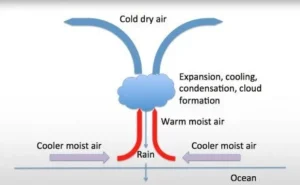
- It develops as the land heats faster than the ocean, creating low pressure that draws moisture-rich ocean winds towards India.
- It has two main branches: the Arabian Sea branch and the Bay of Bengal branch.
- It supports farming, fills reservoirs and recharges groundwater; weak rainfall can cause water shortages, while heavy rainfall can cause floods.
Conclusion:
India must turn early weather warnings into timely local action to protect water security and farmers’ livelihoods.
INDIA–EFTA PARTNERSHIP AND SUSTAINABLE GROWTH
TOPIC: (GS2) INTERNATIONAL RELATIONS: THE HINDU
The India–EFTA Trade and Economic Partnership Agreement (TEPA) completes one year of implementation on October 1, 2026.
About the Agreement
- EFTA members: Iceland, Liechtenstein, Norway and Switzerland; EFTA is separate from the European Union.
- Signed on March 10, 2024, TEPA became operational on October 1, 2025.
- It covers goods, services, investment, intellectual property and sustainable development.
- EFTA’s concessions cover 92.2% of tariff lines, while India’s cover 82.7%; these include phased reductions, rather than immediate removal of every duty.
Investment and Economic Significance
- EFTA states aim to increase investment from their investors into India by $100 billion over fifteen years and facilitate one million direct jobs.
- These are future objectives, not investments and jobs already delivered.
- India gains access to wealthy markets, specialised machinery and industrial knowledge.
- Partnerships can strengthen domestic manufacturing, services exports and the participation of small businesses in global supply chains.
Iceland’s Contribution: Three Opportunities
- Geothermal energy: Underground heat can support fruit drying, greenhouses and building heating, beyond electricity generation. The article’s Tapri example illustrates how processing can reduce farmers’ dependence on immediate harvest sales.
- Carbon management: Carbon Capture, Utilisation and Storage (CCUS) captures carbon dioxide for reuse or underground storage. Iceland’s experience offers lessons for Indian industrial projects; geological suitability requires local testing.
- Circular fisheries: Using fish skin, bones and other by-products for oils, feed and medical materials can increase value without increasing catches. Better refrigeration and processing can also reduce waste.
Climate and Strategic Dimensions
- The Union Budget 2026–27 proposed ₹20,000 crore over five years for CCUS, supporting emissions reduction in industries such as steel and cement.
- Cooperation can support India’s energy security and net-zero ambition while creating technical skills.
- Arctic engagement adds a scientific dimension: India became an Arctic Council Observer in 2013, adopted its Arctic Policy in 2022 and operates Himadri in Svalbard.
Challenges and Way Forward
- Track actual investment and employment through transparent reviews.
- Help exporters meet quality standards and rules of origin.
- Address technology costs, licensing barriers and shortages of trained workers.
- Assess CCUS energy needs, water use and storage safety; captured carbon reused as fuel can return to the atmosphere.
- Prioritise research, environmental safeguards and local benefits.
- Strengthen investment facilitation through the dedicated EFTA Desk.
Conclusion:
TEPA’s success will depend on converting trade preferences into productive investment, cleaner industries and lasting livelihoods.
INDIA’S EV TRANSITION AND CHARGING NETWORK
TOPIC: (GS3) ECONOMY: THE HINDU
Rising electric vehicle registrations have highlighted uneven access to public charging facilities across Indian States.
Charging infra in India
- The supplied analysis places EVs and hybrids at 12.7% of new registrations during the period examined.
- However, “alternative fuels” also include CNG and LPG; their combined sales cannot be treated as electric vehicle sales.
- Battery EVs run entirely on electricity. Hybrids combine an engine with an electric motor; conventional hybrids do not require external charging.
- Electric three-wheelers contribute substantially to adoption in several States, so overall registration shares can hide slower electrification of cars and two-wheelers.
Regional and Infrastructure Gaps
- The article identifies stronger adoption in Kerala, Delhi and Karnataka, alongside growth driven by three-wheelers elsewhere.
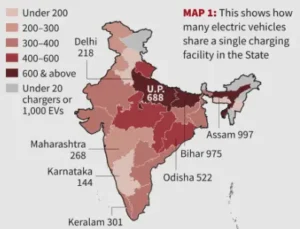
- Its comparison shows roughly 997 EVs per public charging location in Assam, against 144 in Karnataka.
- Bengaluru’s concentration of charging facilities illustrates how State-level totals can conceal gaps in smaller towns and rural areas.
- Maharashtra’s higher charging electricity consumption indicates stronger usage, while numerous locations alone do not establish adequate service.
Why Charging Matters
- Consumer confidence: Reliable chargers reduce range anxiety—the fear of running out of battery before reaching a charging point.
- Livelihoods: Accessible charging supports e-rickshaw drivers, delivery workers and commercial fleets.
- Environment: Battery EVs eliminate exhaust emissions during operation, but total climate benefits depend on electricity generation and battery production.
- Energy security: Electrification can reduce oil dependence while increasing demand for batteries, critical minerals and grid capacity.
Government Measures
- PM E-DRIVE allocates ₹2,000 crore for public charging infrastructure.
- The Ministry of Power’s 2024 charging guidelines encourage a connected, interoperable network, including battery swapping.
- Establishing charging stations is an unlicensed activity, subject to applicable technical and safety requirements.
Way Forward
- Address land costs, delayed electricity connections, unreliable equipment and uncertain commercial returns.
- Plan chargers around vehicle type, travel routes and actual demand; charging locations, connectors and charging capacity are different indicators.
- Expand facilities at workplaces, apartment complexes, transport hubs and highways.
- Coordinate State governments, municipalities, distribution companies and private operators.
- Track charger uptime and accessibility, rather than installation numbers alone.
- Strengthen battery recycling and domestic manufacturing.
Conclusion:
India’s EV transition needs dependable, affordable and widely accessible charging—not merely higher vehicle sales.
FAO COMMITTEE ON FORESTRY
TOPIC: (GS3) ENVIRONMENT: THE HINDU
India highlighted its forest and landscape restoration efforts at COFO 28, taking place in Rome from 28 September to 2 October 2026, alongside the 10th World Forest Week.
Institutional Profile
- COFO (Committee on Forestry) functions under the Food and Agriculture Organization of the United Nations.
- It is FAO’s highest global intergovernmental forum on forestry.
- The 16th FAO Conference established it in 1971 through Resolution 10/71.
- It serves as a technical committee of the FAO Council.
Membership and Meetings
- It currently has 128 Members, including India.
- Membership is open to FAO Members after written notification to the Director-General; it is not automatic.
- Regular sessions occur once every two years, generally at FAO headquarters in Rome, Italy.
- Additional sessions may be convened when necessary.
Governance
- Reports to the FAO Council on programme and budget matters.
- Reports to the FAO Conference on policy and regulatory matters.
- Six Regional Forestry Commissions contribute regional priorities.
- Their chairpersons also serve as COFO’s vice-chairpersons and join its Steering Committee.
Main Functions
- Reviews FAO’s forestry work programmes.
- Examines international forestry problems and recommends coordinated action.
- Supports policy dialogue, technical guidance and sustainable forest management.
- Its Working Group on Dryland Forests and Agrosilvopastoral Systems promotes ecosystem protection and restoration.
- Agrosilvopastoral systems combine crops, trees and livestock.
PRAMAAN
TOPIC: (GS3) ECONOMY: THE HINDU
India’s first PRAMAAN certificates were presented on September 29, 2026, marking the scheme’s practical implementation.
Institutional Framework
- PRAMAAN: Programme for Recognition and Accreditation of Sustainable Management Practices for Agroforestry and Natural Forestry Resources.
- It operates under the Indian Forest and Wood Certification Scheme (IFWCS), launched by MoEFCC in December 2023.
- Operating agency: Indian Institute of Forest Management, Bhopal.
- Coverage includes forests, wood and non-timber forest products.
- Recipients included Andhra Pradesh Forest Development Corporation and an Odisha bamboo farmer.
Certification Categories
- Forest Management: Assesses recorded forests and forest plantations against sustainable management standards.
- Trees Outside Forests: Covers agroforestry and plantations outside designated forests.
- Chain of Custody: Tracks certified products through processing and trade, from origin to buyer.
- For example, certified farm-grown bamboo can enter a traceable supply chain for furniture manufacturing.
Standards and Verification
- Forest standards draw upon the National Working Plan Code, 2023.
- Independent certification bodies conduct audits; self-declaration alone is insufficient.
- NABCB, under the Quality Council of India, accredits these bodies.
Significance and Priorities
- Supports biodiversity conservation, responsible sourcing and market access.
- Can benefit farmers, tribal communities and forest-based enterprises.
- Effective implementation requires affordable audits, reliable traceability and safeguards against misleading sustainability claims.
- Certification supports compliance but does not automatically replace importing countries’ legal requirements.
Conclusion:
PRAMAAN can connect credible forest stewardship with stronger livelihoods and responsible trade.
CYBERCRIME POLICING AND THE GAP BETWEEN REPORTING AND JUSTICE
TOPIC: (GS2) GOVERNANCE: THE HINDU
The Status of Policing in India Report 2026 finds widespread dissatisfaction among surveyed cybercrime victims with police handling.
Key Findings
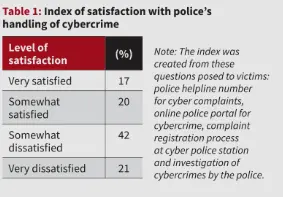
- The Lokniti-CSDS–Common Cause study reports 63% dissatisfaction with complaint handling.
- Satisfaction falls from 50% for helplines to 43% during investigations, indicating declining confidence after initial contact.
- 26% of women, compared with 18% of men, report being very dissatisfied.
- Five or more police visits were reported by 38% of rural victims, against 19% of urban victims.
- These are survey findings; they should not be treated as administrative counts covering every victim.
Governance Concerns
- Access versus outcomes: Easier reporting does not automatically ensure timely investigation or recovery.
- Unequal burdens: Repeated visits impose travel costs and lost wages, especially on rural households.
- Gender sensitivity: Privacy concerns and insensitive responses can worsen victims’ distress.
- Technical complexity: Fraudsters exploit multiple bank accounts, digital platforms and jurisdictions, requiring coordinated investigation.
Existing Institutional Framework
- Indian Cyber Crime Coordination Centre (I4C): Under the Ministry of Home Affairs, coordinates national responses.
- National Cyber Crime Reporting Portal: Accepts complaints, including offences against women and children.
- Helpline 1930 and CFCFRMS: Enable quick financial-fraud reporting and coordinated efforts to prevent stolen funds moving further.
- Police and public order are State subjects; States lead investigations while the Centre supports coordination and capacity.
Reform Priorities
- Provide complaint acknowledgements, tracking numbers and regular progress updates.
- Train personnel in digital evidence, financial tracing and respectful communication.
- Strengthen cooperation with banks, platforms and police across States.
- Offer local-language assistance, confidential reporting and support for rural complainants.
- For example, prompt reporting of an investment scam should trigger rapid transaction tracing.
Conclusion:
Effective cyber policing must turn accessible reporting into timely action, fair treatment and accountable justice.

NATIONAL PANCHAYAT AWARDS
TOPIC: (GS2) GOVERNANCE: THE HINDU
The National Panchayat Awards (NPA) were recently announced, highlighting the role of Panchayati Raj Institutions (PRIs) in advancing local governance and Sustainable Development Goals (SDGs).
Background
- Instituted under the Incentivization of Panchayats (IoP) scheme, a key component of the Rashtriya Gram Swaraj Abhiyan (RGSA).
- Revamped in 2022 to align with 9 themes of Localization of SDGs (LSDGs), covering all 17 SDGs.
- Objective: To assess Panchayat performance, encourage competitive spirit, and catalyze the process of achieving LSDGs by 2030.
Themes for Evaluation
Panchayats are ranked based on performance under nine LSDG themes:
- Poverty-free Panchayat and enhanced livelihoods.
- Healthy Panchayat.
- Child-friendly Panchayat.
- Water-sufficient Panchayat.
- Clean and Green Panchayat.
- Self-sufficient infrastructure in Panchayat.
- Socially just and secured Panchayat.
- Good governance Panchayat.
- Women-friendly Panchayat.
Award Categories
- Deen Dayal Upadhyay Panchayat Satat Vikas Puraskar (DDUPSVP): Recognises outstanding Gram Panchayats across the nine LSDG themes.
- Nanaji Deshmukh Sarvottam Panchayat Satat Vikas Puraskar (NDSPSVP): Awarded to the best-performing Panchayats at District, Block, and Gram Panchayat levels on an overall basis.
Significance
- Promotes grassroots democracy and strengthens local governance.
- Encourages Panchayats to act as agents of SDG localization.
- Enhances accountability and transparency in developmental outcomes.
- Builds momentum for inclusive and sustainable rural development.
Conclusion
By rewarding innovation and efficiency, these awards reinforce the role of PRIs as the foundation of India’s democratic and developmental framework.