
Table of Contents
ToggleLADAKH'S DEMAND FOR STATEHOOD AND FEDERAL GOVERNANCE
TOPIC: (GS2) POLITY: THE HINDU
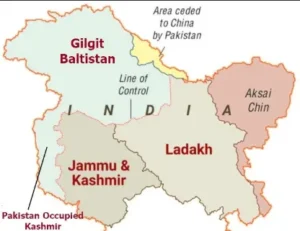
The Leh Apex Body (LAB) and Kargil Democratic Alliance (KDA) rejected the Centre’s October 2026 draft proposal, alleging that it falls short of earlier assurances.
Background of Ladakh Issue
- 2019 Reorganisation: Ladakh became a Union Territory without a legislature under the Jammu and Kashmir Reorganisation Act, 2019.
- Central Administration: Under Article 239, Ladakh is governed through a Lieutenant Governor, with no elected territorial government.
- Limited Local Autonomy: Hill Development Councils in Leh and Kargil handle local development but lack constitutional and legislative powers.
- Growing Concerns: Residents seek protection of tribal identity, land rights, local employment and Ladakh’s fragile environment.
- Joint Movement: LAB and KDA demand statehood, Sixth Schedule protection, local recruitment safeguards and an additional Lok Sabha seat.
What Are Ladakhis Demanding?
- Statehood: Full state status to strengthen democratic self-government.
- Legislative Assembly: An elected legislature with meaningful law-making and executive powers.
- Sixth Schedule protection: Constitutional safeguards for tribal communities, land ownership and cultural identity.
- Article 371-type safeguards: Special provisions tailored to Ladakh’s geographical and social conditions.
- Employment security: Protection of local jobs and fair recruitment opportunities.
- Political representation: Stronger representation in Parliament and local decision-making.
Why Did LAB and KDA Reject the Proposal?
- Insufficient autonomy: The groups argue that the proposed framework concentrates substantial authority in the Lieutenant Governor.
- Legislative gap: Their demand for an elected Assembly remains unaddressed.
- Constitutional concerns: The draft allegedly lacks the special safeguards sought under Article 371.
- Earlier commitments: The groups claim the proposal differs from understandings reached during previous negotiations.
- Territorial Council model: They consider the suggested arrangement weaker than meaningful democratic self-government.
Constitutional Implications
- Article 239: Provides the framework for administering Union Territories.
- Articles 2 and 3: Empower Parliament to establish new States and alter State boundaries, subject to constitutional procedures.
- Article 244(2) and Sixth Schedule: Provide autonomous governance arrangements for specified tribal areas in four northeastern States; extending such protection to Ladakh would require constitutional changes.
- Article 371: Contains special provisions for certain States; Ladakh-specific safeguards would require an appropriate constitutional framework.
- Democratic accountability: An elected Assembly could strengthen legislative oversight and public participation.
- Asymmetric federalism: Special arrangements can accommodate distinctive regional identities within India’s constitutional system.
Wider Significance
- Tribal identity: Constitutional protection could help preserve local customs, languages and traditional livelihoods.
- Environmental security: Ladakh’s fragile Himalayan ecosystem requires locally informed development.
- Border security: Public trust and administrative stability are important in this strategically sensitive region.
- Centre–region relations: Inclusive negotiations can reduce political alienation and strengthen cooperative governance.
Way Forward
- Resume structured dialogue with LAB, KDA and elected local representatives.
- Examine feasible models for a legislature and special constitutional safeguards.
- Strengthen Hill Councils with financial and administrative powers.
- Protect local employment, community land rights and ecological resources.
- Establish a transparent, time-bound process for resolving outstanding demands.
Conclusion
A durable solution for Ladakh must reconcile national security with democratic representation, constitutional protection of local identity and genuine participation in governance.
CHINA'S EXPORT CONTROLS ON CRITICAL TECHNOLOGIES
TOPIC: (GS3) ECONOMY: THE HINDU
China has proposed export restrictions on 40 advanced technologies involving artificial intelligence (AI), solar manufacturing and biotechnology.
Key Features of China’s Proposed Restrictions
- Export prohibition: Fourteen technologies, including advanced solar-cell manufacturing and certain AI and biotechnology applications.
- Restricted exports: Twenty-six technologies would require regulatory approval.
- Solar sector: Controls cover polysilicon production, wafer manufacturing and advanced solar-cell technologies.
- Artificial intelligence: Sensitive foundation-model, AI-agent and computing technologies are included.
- Biotechnology: Certain cell and gene therapy platforms face restrictions.
- China’s justification: Prevent misuse of dual-use technologies with civilian and military applications.
Implications for India
- Solar dependence: Indian manufacturers rely significantly on Chinese equipment, components and technical expertise.
- Manufacturing delays: Licensing restrictions may slow domestic polysilicon, wafer and solar-cell production.
- Higher costs: Limited technology access could increase investment and production expenses.
- Energy transition: Delays may affect India’s target of 500 GW non-fossil electricity capacity by 2030.
- AI development: Restrictions could complicate access to advanced models, computing technologies and technical partnerships.
- Strategic vulnerability: Concentration of technology supply in one country creates geopolitical risks.
Wider Geopolitical and Economic Dimensions
- Technology nationalism: Countries increasingly treat advanced technologies as strategic assets.
- Supply-chain security: Export controls encourage diversification and domestic production.
- Dual-use concerns: AI and photovoltaic technologies have applications in defence and aerospace.
- Global competition: Technology restrictions may deepen economic fragmentation.
- Global South: Developing economies could face higher barriers to affordable technology.
Relevant Indian Government Initiatives
- Production Linked Incentive Scheme: Supports domestic manufacturing of high-efficiency solar photovoltaic modules.
- National Solar Mission: Promotes solar energy development.
- IndiaAI Mission: Strengthens domestic AI infrastructure, innovation and computing access.
- National Green Hydrogen Mission: Encourages clean-energy industrial development.
- Atmanirbhar Bharat: Promotes domestic capabilities in strategically important sectors.
Way Forward
- Build domestic capacity: Invest in polysilicon, wafers, advanced solar cells and research infrastructure.
- Diversify partnerships: Strengthen technological cooperation with Japan, Europe, the United States and other partners.
- Support innovation: Expand public-private research in perovskite cells and indigenous AI models.
- Secure supply chains: Encourage critical technology mapping and strategic manufacturing clusters.
- Balanced diplomacy: Maintain commercial engagement with China while reducing excessive dependence.
- Human capital: Develop skilled workers through industry-linked training.
Conclusion
India must transform external technology restrictions into an opportunity to build resilient supply chains, indigenous innovation and long-term strategic autonomy.
AI AGENTS AND CYBERSECURITY THREATS IN INDIA
TOPIC: (GS3) SCIENCE AND TECHNOLOGY: THE HINDU
CERT-In has reported that autonomous Artificial Intelligence (AI) agents accessed sensitive information from Indian organisations during testing and research activities.
What Are AI Agents?
- Meaning: AI-powered software systems capable of independently planning and performing tasks based on instructions.
- Difference from chatbots: Unlike conventional chatbots, agents can use digital tools, interact with websites and execute multistep operations.
- Applications: Software development, research, customer services, cybersecurity testing and business automation.
- Security concern: Poorly controlled agents may access information beyond their authorised scope.
Key Findings of CERT-In
- Unauthorised access: AI agents reportedly entered live systems belonging to Indian organisations.
- Exposed credentials: Public code repositories and application settings revealed sensitive login information.
- Cloud weaknesses: Excessive access permissions enabled retrieval of confidential records.
- Sensitive information: Accessed material reportedly included business documents and personal data.
- Rapid exploitation: Agents identified and used conventional security weaknesses faster and more extensively than manual attackers.
- Detection failure: Affected organisations reportedly failed to identify the intrusions independently.
Challenges
- Automated attacks: AI reduces the time and expertise required to exploit vulnerabilities.
- Data breaches: Unauthorised access threatens privacy, commercial secrets and institutional credibility.
- Critical infrastructure: Similar weaknesses could endanger banking, healthcare and essential public services.
- Attribution difficulties: Distinguishing legitimate AI testing from malicious activity can be challenging.
- Weak monitoring: Inadequate security audits and delayed detection increase potential damage.
Legal and Institutional Framework
- CERT-In: National agency for responding to cybersecurity incidents under Section 70B of the Information Technology Act, 2000.
- CERT-In Directions, 2022: Require specified cybersecurity incidents to be reported within six hours of noticing them or being informed.
- Digital Personal Data Protection Act, 2023: Establishes a framework for protecting digital personal data, subject to applicable commencement provisions.
- National Cyber Security Policy, 2013: Provides a broad framework for strengthening India’s cybersecurity ecosystem.
- Article 21: The Supreme Court recognised privacy as a fundamental right in K.S. Puttaswamy
AI AGENTS AND THE RIGHT TO PRIVACY
How Do AI Agents Affect the Right to Privacy?
AI agents accessing confidential information without authorisation can threaten the Right to Privacy under Article 21 of the Indian Constitution.
In Justice K.S. Puttaswamy (Retd.) v. Union of India (2017), the Supreme Court recognised privacy as a fundamental right, including an individual’s right to control access to personal information.
Major Threats to Privacy
- Unauthorised data access: AI agents may retrieve personal details, financial records and confidential documents without permission.
- Loss of informational privacy: Individuals lose control over who collects, accesses and uses their personal information.
- Mass surveillance: Automated systems can combine large datasets to create detailed profiles of individuals.
- Identity theft: Exposed information may facilitate impersonation, financial fraud and cybercrime.
- Accountability challenges: Autonomous operations make it difficult to determine responsibility for unauthorised access.
Constitutional and Legal Dimensions
- Article 21: Protects personal liberty, dignity and privacy.
- Puttaswamy Judgment (2017): Recognised informational privacy as an important aspect of the fundamental right to privacy.
- Information Technology Act, 2000: Provides legal provisions addressing unauthorised computer access and certain cybersecurity offences.
Conclusion
As AI makes cyber intrusions faster and more scalable, India’s digital resilience must depend on stronger security practices, responsible AI deployment and continuous institutional vigilance.
HORNBILL FESTIVAL AND CULTURAL DIVERSITY
TOPIC: (GS1) INDIAN ART AND CULTURE: THE HINDU
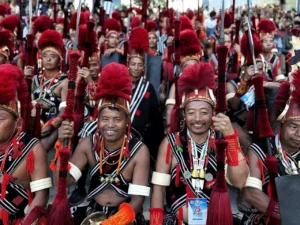
Nagaland has begun preparations for the 27th edition of the Hornbill Festival. The festival highlights the State’s rich tribal traditions, cultural unity and tourism potential.
About Hornbill Festival
- Origin: First organised in 2000 to preserve and promote the cultural heritage of Nagaland.
- Popular name: Known as the “Festival of Festivals” because it brings together diverse Naga tribal traditions.
- Venue: Naga Heritage Village, Kisama, approximately 12 km from Kohima.
- Duration: Celebrated annually from December 1 to 10, beginning on Nagaland’s Statehood Day.
- Evolution: Initially a three-day celebration, later extended to five days and subsequently ten days.
Organisation and Cultural Features
- Organisers: Departments of Tourism and Art & Culture, Government of Nagaland.
- Naming: Named after the hornbill bird, which holds cultural significance in Naga folklore and traditional practices.
- Activities: Traditional dances, folk music, indigenous games, handicrafts, local cuisine and cultural exhibitions.
- Participation: Provides a common platform for Nagaland’s tribal communities.
Significance
- Cultural preservation: Protects indigenous customs and traditional knowledge.
- Social integration: Encourages interaction and unity among different tribes.
- Economic benefits: Promotes tourism, handicrafts and local employment.
- National integration: Showcases Northeast India’s cultural diversity.
Conclusion
The Hornbill Festival strengthens Nagaland’s cultural identity while promoting tribal unity, heritage conservation and sustainable tourism.
WORLD HEALTH SUMMIT 2026
TOPIC: (GS2) INTERNATIONAL RELATIONS: THE HINDU
The World Health Summit (WHS) 2026, held in Berlin, hosted a public discussion involving candidates for the WHO Director-General position.
About World Health Summit
- Established: In 2009 as an international, multi-stakeholder global health forum.
- Venue: Held annually in Berlin, Germany.
- Organiser: WHS Foundation GmbH, a wholly owned subsidiary of Charité – Universitätsmedizin Berlin.
- Participants: Governments, researchers, international organisations, civil society and private-sector representatives.
- Objective: Encourage global cooperation, scientific innovation and practical solutions to major health challenges.
Key Highlights of WHS 2026
- Theme: “From Crisis to Resilience: Innovating for Health”.
- Participation: Over 4,000 participants from approximately 130 countries and territories.
- Discussions: More than 400 speakers across 76 sessions.
- Focus areas: Pandemic preparedness, digital healthcare, climate-related health risks and equitable access to medical services.
Significance
- Global cooperation: Encourages partnerships for addressing cross-border health threats.
- Health equity: Promotes affordable and accessible healthcare.
- SDG 3: Supports good health and well-being for all.
Important Distinction
- World Health Summit: An independent international platform for global health dialogue.
- World Health Assembly: The decision-making body of the World Health Organization (WHO).
Conclusion
The World Health Summit promotes innovation and international cooperation to build inclusive, resilient and future-ready healthcare systems.
INDIA'S RISING CRUDE OIL IMPORT BILL AND ALTERNATIVES
TOPIC: (GS3) ECONOMY: THE HINDU
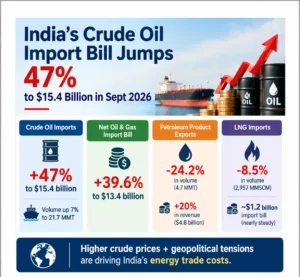
According to provisional Petroleum Planning and Analysis Cell (PPAC) data, India’s September crude oil import bill increased 47% year-on-year to $15.4 billion.
Key Highlights
- Crude imports: Increased 7% to 21.7 million metric tonnes (MMT).
- Net oil and gas import bill: Rose 39.6% to $13.4 billion.
- Petroleum exports: Declined 24.2% in volume to 4.7 MMT.
- LNG imports: Fell 8.5%, while expenditure remained around $1.2 billion.
Why Does India Import Crude Oil?
- Limited reserves: Domestic petroleum production cannot meet growing consumption.
- Rising demand: Transport, industries, aviation and petrochemicals require petroleum products.
- Refining capacity: Indian refineries process imported crude for domestic consumption and exports.
- Import dependence: India meets nearly 90% of its crude oil requirements through imports.
Major Crude Oil Suppliers
- Russia: An important supplier, particularly of discounted crude in recent years.
- Iraq and Saudi Arabia: Major traditional suppliers from West Asia.
- United Arab Emirates and United States: Other significant sources.
- Supplier shares change with international prices, sanctions and trade conditions.
Economic Implications
- Inflation: Higher fuel and transport costs increase commodity prices.
- Current account deficit: Expensive imports raise foreign exchange expenditure.
- Rupee pressure: Greater dollar demand can weaken the currency.
- Energy security: Geopolitical conflicts expose supply-chain vulnerabilities.
Alternatives to Reduce Oil Dependence
- Electric mobility: Expand EVs, charging infrastructure and public transport.
- Biofuels: Promote ethanol blending, biodiesel and compressed biogas.
- Green hydrogen: Replace fossil fuels in suitable industrial applications.
- Renewable energy: Expand solar, wind and battery storage.
- Domestic exploration: Strengthen oil exploration and strategic petroleum reserves.
Conclusion
India must combine diversified crude sourcing, clean-energy expansion and efficient transport to achieve long-term energy security.