
Table of Contents
TogglePROPOSED U.S. IMMIGRATION REFORMS
TOPIC: (GS2) INTERNATIONAL RELATIONS: THE HINDU
The U.S. government has announced major immigration reforms affecting the H1B visa, Green Cards, OPT/CPT, and H4 work permits. These changes will significantly impact Indian IT professionals and students, who form the largest beneficiary group of these pathways.
Changes in H1B Visa Programme
- Stricter Eligibility: Reduced exemptions for universities/research organisations.
- ThirdParty Deployment Rules: Indian IT firms face tighter compliance when placing workers at client sites.
- Employer Obligations: Must prove genuine employeremployee relationship and submit detailed documentation.
- Impact on India: With Indians receiving 71–74% of H1B visas, reforms directly affect India’s IT services and consulting sector.
EmploymentBased Green Cards
- Higher Wage Thresholds: Entrylevel wage benchmark raised from 17th percentile → 34th percentile.
- Consequences:
- Employers must offer higher salaries.
- Sponsorship costs rise, discouraging smaller firms.
- Could reduce hiring of entrylevel foreign professionals.
International Students
- Fixed Stay Rule: Replaces “duration of status” with fixed periods requiring extensions.
- Indian Context: India is now the largest source of U.S. students (~3.3 lakh in 202324).
- Regional Impact: Nearly 50% from Telangana & Andhra Pradesh, making these states highly vulnerable.
OPT & CPT Pathways
- Proposed Tightening (2027): Stricter rules for Optional Practical Training (OPT) and STEM OPT extension.
- Implication: Reduced poststudy work opportunities, weakening the educationtoemployment pipeline for Indian graduates.
H4 Visa Holders
- End of Automatic Extensions: Spouses of H1B holders must wait for formal approval.
- Risk: Processing delays may cause temporary job loss and income disruption.
Broader Implications for India
- Economic: Higher compliance costs for IT firms; reduced entrylevel hiring.
- Education: U.S. may become less attractive as a study destination if work opportunities shrink.
- Migration Diversification: Skilled Indians may shift towards Canada, Australia, UK, Germany.
- Bilateral Relations: Immigration will remain a sensitive issue in India–U.S. strategic and economic ties, especially regarding skilled mobility.
Conclusion
The proposed U.S. immigration reforms highlight the need for India to strengthen global mobility options and safeguard opportunities for its skilled workforce.
INDIA’S DEMOGRAPHIC DIVIDEND AND PRODUCTIVE GROWTH
TOPIC: (GS3) ECONOMY: THE HINDU
A recent analysis has warned that India’s demographic dividend is at risk due to delays in public recruitment, inadequate skill development, limited formal employment, and gaps in welfare delivery.
What is India’s Demographic Window?
- A demographic dividend refers to the economic growth potential arising from a higher proportion of working-age population (15–64 years) compared to dependents.
- Around 65% of India’s population falls within the working-age group, offering a unique opportunity for rapid economic growth.
- However, this advantage is time-bound and is expected to decline as the population ages and fertility rates continue to fall by the early 2040s.
Present Status
- Around 65% of India’s population is in the working-age group.
- More than 30 crore workers are registered on the e-Shram Portal, indicating a large informal workforce.
- Only about 3% of workers have received formal vocational training.
- Educated youth unemployment is estimated at around 18% after accounting for discouraged job seekers.
- Urban female youth unemployment remains high, while female labour force participation continues to be relatively low.
Major Challenges
- Delayed Public Recruitment: Recruitment by government agencies often takes 3–4 years due to litigation and administrative delays.
- Skill Deficit: Limited industry-oriented vocational education reduces employability. Existing skill programmes often focus on certification rather than practical training.
- Growth of Informal Employment: A significant share of workers remain in informal or contractual jobs. Contract employment often lacks job security, social protection and career progression.
- Hidden Unemployment: Official unemployment surveys may not capture candidates preparing for competitive examinations or discouraged job seekers. This masks the actual extent of youth unemployment.
- Gaps in Welfare Delivery: Delays in schemes such as PMAY and PM-KISAN reduce the effectiveness of social protection.
Global Best Practices
- South Korea: Linked industrial incentives with employment generation and export performance.
- Germany: Promoted long-term apprenticeships through close industry–education partnerships.
- Brazil: Bolsa Família connected welfare benefits with education and healthcare outcomes.
- Kerala: People’s Plan Campaign strengthened local governance through decentralised planning and community monitoring.
Way Forward
- Introduce time-bound recruitment calendars with legal accountability.
- Strengthen apprenticeship-based vocational education aligned with industry demand.
- Expand quality manufacturing and service sector employment under Make in India and Production Linked Incentive (PLI) schemes.
- Improve female workforce participation through safe workplaces, childcare facilities and flexible employment.
- Ensure timely implementation of welfare schemes using digital governance platforms.
- Formalise employment by expanding social security through e-Shram, Code on Social Security, 2020, and digital labour databases.
- Promote labour-intensive sectors such as textiles, food processing, tourism and MSMEs.
- Strengthen coordination between the National Education Policy (NEP) 2020, Skill India Mission, and industry requirements.
Government Initiatives
- Production Linked Incentive (PLI) Scheme
- National Education Policy (NEP), 2020
- Code on Social Security, 2020
Constitutional Provisions
- Article 41: Right to work, education and public assistance.
- Article 39(a): Adequate means of livelihood.
- Article 43: Decent working conditions and living wage.
SDGs
- SDG 4: Quality Education
- SDG 5: Gender Equality
- SDG 8: Decent Work and Economic Growth
- SDG 10: Reduced Inequalities
Conclusion
India’s demographic dividend will become its greatest strength only if every young citizen is equipped with timely education, skills, employment opportunities and efficient governance.
INDIA–NEW ZEALAND RELATIONS & ROADMAP TO 2030
TOPIC: (GS2) INTERNATIONAL RELATIONS: THE HINDU
The Indian Prime Minister’s visit to New Zealand—the first in 40 years—elevated bilateral ties to a Strategic Partnership and adopted a Roadmap to 2030. This marks a renewed phase in cooperation across trade, defence, maritime security, and peopletopeople ties.
Strategic Partnership & Roadmap to 2030
- Formal elevation of ties to Strategic Partnership.
- Anchored in democratic values, rule of law, economic collaboration, defence cooperation, and cultural exchange.
- Symbolises a new era of engagement after decades of limited highlevel visits.
Economic Cooperation & FTA
- Trade Target: Double bilateral trade to NZ$7 billion (~₹35,000 crore) by 2030.
- FTA Benefits: Expands market access, supports industries, farmers, and youth.
- Investment: New Zealand pledged USD 20 billion in India over 15 years, focusing on infrastructure, technology, and emerging sectors.
- Supply Chains: Commitment to build transparent, resilient, diversified supply chains.
Defence & IndoPacific Cooperation
- Maritime Security Dialogue and Joint Working Group on CounterTerrorism established.
- Cooperation significant amid concerns over proKhalistan extremism and New Zealand’s role in Five Eyes alliance.
- Shared vision of a free, open, inclusive IndoPacific, aligned with UNCLOS (1982).
- Highlighted joint role in Combined Task Force150 (2025) combating narcotics trafficking and maritime terrorism.
Sectoral Cooperation
- Agriculture & Animal Husbandry: Agreements on dairying, technical collaboration, and best practices.
- Kiwifruit Action Plan: Centres of Excellence in Nagaland and Uttarakhand.
- Sports Collaboration: Joint Action Plan on highperformance sports, medicine, and athlete development.
- Scientific Research: Enhanced cooperation in Antarctic studies and knowledge exchange.
- Cultural Linkages: Māori festival Matariki linked with India’s ancient Kritika constellation.
Diplomatic & PeopletoPeople Ties
- Diplomatic relations since 1952, upgraded to High Commissions.
- Indian diaspora in New Zealand: ~250,000, 3rdlargest ethnic community.
- India is the 2ndlargest source of international students (~8,000) in New Zealand.
- Past strategies: “Opening Doors to India” (2011) and “India–NZ 2025” policy.
Conclusion
India–New Zealand ties have entered a strategic phase, blending economic growth, security cooperation, and cultural exchange to shape a resilient IndoPacific partnership.
GLOBAL LIVEABILITY INDEX 2026
TOPIC: (GS3) ECONOMY: THE HINDU
The Global Liveability Index 2026 released by the Economist Intelligence Unit (EIU) ranked Delhi at 120 among 173 cities, followed by Mumbai, Chennai, and Bengaluru. The report highlights global urban living standards and India’s challenges in healthcare, infrastructure, and environment.
Index
- Publisher: Economist Intelligence Unit (EIU).
- Purpose: Evaluates everyday living conditions, not economic size or tourist appeal.
- Coverage: Assesses 173 cities across 30 indicators.
- Parameters:
- Stability – 25%
- Healthcare – 20%
- Culture & Environment – 25%
- Education – 10%
- Infrastructure – 20%
- Scoring: Uses a 1–100 scale.
Key Highlights
- Global Average: Liveability score remained at 76.1/100.
- Healthcare: Registered strongest improvement (+0.74 points yearonyear).
- Top Cities:
- Copenhagen (Denmark) – most liveable city.
- Vienna (Austria) and Melbourne (Australia) follow closely.
- India’s Ranking:
- Delhi – 120
- Mumbai – 121
- Chennai – 123
- Bengaluru – 127
Implications for India
- Urban Governance: Rankings highlight gaps in healthcare, pollution control, and infrastructure.
- Policy Context: Linked to Smart Cities Mission and National Clean Air Programme (NCAP).
- Global Comparison: Indian metros lag behind Asian peers like Singapore and Tokyo, reflecting challenges in urban planning.
- Exam Relevance: Demonstrates India’s urbanisation issues and need for sustainable city models.
Conclusion
India’s performance in the Global Liveability Index underscores the urgency of strengthening urban infrastructure, healthcare, and environmental management to make its cities truly worldclass.
PHU QUOC ISLAND
TOPIC: (GS1) GEOGRAPHY: THE HINDU
A tourist boat accident near Phu Quoc Island in Vietnam led to the death of 15 Indian nationals, raising concerns about safety in international tourism. The incident has spotlighted the island’s growing popularity among global visitors and its strategic maritime location.
Geographical Profile
- Location: Lies in the Gulf of Thailand, geographically closer to Cambodia than mainland Vietnam.
- Size: Largest Vietnamese island, covering 567 sq. km, comparable to Singapore.
- Topography: Teardropshaped with Mount Chua (630 m) as the highest point.
- Protected Areas: Large parts fall under Phu Quoc National Park, recognised as a UNESCO Biosphere Reserve.
Tourism & Economy
- Known as Pearl Island, famous for white sand beaches, scuba diving, snorkeling, and ecotourism.
- Fishing Villages: Ham Ninh showcases traditional maritime heritage.
- Local Products: Renowned for fish sauce (nước mắm) and black pepper, exported globally.
- Climate: Distinct dry season (Nov–Apr) and rainy season (May–Oct), shaping tourism flows.
Strategic Importance
- Anchors an archipelago of 22 islands, enhancing Vietnam’s maritime presence.
- Serves as a tourism hub and contributes significantly to Vietnam’s economy.
- Its proximity to Cambodia makes it a geopolitically sensitive location in Southeast Asia.
Implications for India
- The tragedy highlights the need for stronger international tourist safety protocols.
- With rising outbound tourism from India, ensuring consular support and awareness campaigns becomes critical.
- Reflects broader issues of tourism management, maritime safety, and disaster preparedness in global destinations.
Conclusion
Phu Quoc Island is both a tourism jewel and strategic maritime hub, but the recent accident underscores the urgent need for robust safety standards in international tourism.
OTT CONTENT REGULATION & STREAMING
TOPIC: (GS2) GOVERNANCE: THE HINDU
The film Satluj, based on activist Jaswant Singh Khalra, was removed from ZEE5 in India after government intervention citing security concerns. This incident highlights India’s parallel regimes for regulating films and OTT platforms, raising questions on free expression and oversight.
Satluj Case
- Chronicles the life of Jaswant Singh Khalra, who exposed illegal cremations during Punjab militancy.
- Faced 127 cuts by CBFC under the Cinematograph Act; makers refused, so no theatrical release.
- Released on OTT without cuts, later blocked under IT Rules, 2021 and Section 69A of IT Act.
Film Regulation – Cinematograph Act
- CBFC Certification: Mandatory for theatrical release under the Cinematograph Act, 1952.
- Categories: U, UA, A, S; UA split into agebased subcategories in 2023 amendment.
- CBFC can refuse certification or demand cuts if content threatens sovereignty, security, public order, morality, or foreign relations.
- Appeals shifted to High Courts after abolition of FCAT, making redressal slower and costlier.
OTT Regulation – IT Rules, 2021
- OTT platforms not covered by Cinematograph Act (private viewing vs public exhibition).
- Governed by Part III of IT Rules, 2021: Code of Ethics for publishers. selfregulation, industry bodies, government oversight.
- Government can block content under Section 69A of IT Act, requiring written reasons and review.
- Current framework under challenge in Bombay & Madras High Courts.
Key Issues
- Regulatory Gap: Films face strict CBFC scrutiny, but OTT content falls under IT Rules with less clarity.
- Judicial Oversight: Lack of specialised tribunal (FCAT) weakens speedy appeals.
- Freedom vs Security: Balancing Article 19(1)(a) rights with reasonable restrictions under Article 19(2).
- Policy Uncertainty: Withdrawal of Broadcasting Services Bill, 2023 leaves OTT regulation unsettled.
Implications
- For Filmmakers: OTT offers bypass to CBFC cuts but risks sudden takedowns.
- For Viewers: Raises concerns about transparency and consistency in content regulation.
- For Governance: Highlights need for a coherent, rightsrespecting framework across platforms.
- Global Context: Other democracies (e.g., UK’s Ofcom, EU’s Audiovisual Media Services Directive) provide clearer OTT oversight.
Conclusion
India’s dual regime for films and OTT platforms underscores the urgent need for a unified, transparent content regulation system that balances creative freedom with national security.
GREATER ONEHORNED RHINOCEROS
TOPIC: (GS3) ENVIRONMENT: THE HINDU
The Standing Committee of the National Board for Wildlife (SCNBWL), chaired by the Union Environment Minister, has approved a DNAbased indexing system for the Greater OneHorned Rhinoceros. This marks a landmark step in strengthening conservation and antipoaching measures for India’s iconic species.
Species
- Scientific Name: Rhinoceros unicornis (Indian Rhinoceros).
- Largest Rhino Species: Weighs 1,800–2,700 kg, length up to 12.5 ft, height around 6.5 ft.
- Distinct Features:
- Single horn (8–25 inches), made of compressed keratin fibers.
- Thick greybrown hide with armorlike folds aiding heat regulation.
- Semiprehensile upper lip for grazing tall grasses.
Habitat & Distribution
- Preferred Ecosystem: Humid grasslands, river valleys, and marshy shrublands.
- Geographic Range: Concentrated in Kaziranga National Park (Assam) hosting over 70% of global population, and Terai grasslands of Nepal.
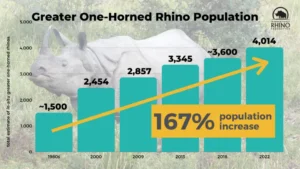
- Population: Approx. 4,000 individuals worldwide.
- IUCN Status: Vulnerable (VU).
Conservation Journey
- Historical Decline: Numbers fell to ~200 in early 20th century due to hunting and habitat loss.
- Recovery Success: India’s rhino conservation is considered one of Asia’s most successful wildlife stories.
- Legal Protection: Listed in Schedule I of Wildlife Protection Act, 1972; also covered under CITES Appendix I.
- Flagship Species: Symbol of biodiversity in the IndoGangetic and Brahmaputra plains.
DNABased Indexing
- Unique Genetic ID: Each rhino will have a DNA profile, preventing illegal trade in horns.
- AntiPoaching Tool: Helps track individuals and detect trafficking networks.
- Scientific Value: Supports genetic diversity studies and better management of fragmented populations.
- Policy Linkages: Aligns with National Rhino Conservation Strategy (2019) and global biodiversity targets under CBD (Convention on Biological Diversity).
Behavior & Ecology
- Diet: Strict grazer – elephant grasses, aquatic plants, fruits, shrubs.
- Social Traits: Mostly solitary; congregate peacefully at wallows and grazing grounds.
- Ecological Role: Maintains grassland ecosystems, supporting prey base for other species.
Conclusion
The DNA indexing initiative for the Greater OneHorned Rhinoceros represents a fusion of science and conservation, ensuring longterm survival of India’s “armorplated giant.”