

Table of Contents
ToggleNITI AAYOG REPORT ON MANUFACTURING SECTOR
TOPIC: (GS3) ECONOMY: THE HINDU
NITI Aayog has released a report titled “Key Sectors to Position India as a Global Manufacturing Hub”, identifying priority industries and recommending clusterbased growth, deeper value addition, and profitled investment.
Manufacturing Sector in India
- Economic Role: Accounts for ~17–18% of GVA; secondary sector (manufacturing + construction + utilities) contributed 25.8% of GVA in 202425, growing at 8%.
- Industrial Base: Provides ~11.4% of total employment (MoSPI SDG framework, 202324).
- Key Industries: Automobiles, pharmaceuticals, textiles, chemicals, electronics, machinery, food processing, metals.
Scope of NITI Aayog Study
- Shortlisted 12 sectors for global leadership by 2047: electronics, telecom, solar PV, pharmaceuticals, chemicals, automotive, defence & drones, steel, capital goods, textiles, food processing, leather & footwear.
- First volume focuses on chemicals, textiles, telecom equipment, solar PV.
- Methodology: Market potential, competitiveness, strategic relevance, benchmarking global best practices, sectorspecific roadmaps.
SectorWise Highlights
Chemicals
- Priority products: phenol, methanol, acetic acid.
- Focus: Import substitution, expand downstream industries, conserve foreign exchange, and stabilise supply chains.
Textiles
- Contribution: 2% of GDP, 11% of manufacturing GVA, 9% of exports.
- Employment: Supports 45+ million workers.
- Strategy: Shift towards manmade fibres, raise labour productivity via skilling, apprenticeships, and ethical labour certification.
Telecom Equipment
- Market: 1.2 billion subscribers, 85% penetration.
- Policy target: Double GDP share, exports, and jobs by 2030.
- Priorities: Localisation, joint ventures, strong testing & certification, and skill development.
Solar Photovoltaic
- Capacity: 106 GW installed (2025); target 280 GW by 2030.
- Concern: 97% export dependence on the US.
- Recommendation: Move upstream into polysilicon and wafers; diversify export destinations to reduce vulnerability.
CrossCutting Recommendations
- Clusterbased Manufacturing: Develop integrated industrial parks with shared utilities, streamlined approvals, and common infrastructure to reduce costs and build scale.
- Reduce Import Dependence : Provide targeted incentives and viability gap funding to encourage domestic production of critical inputs.
- Enhance Value Addition: Promote technology transfer, joint ventures, and deeper integration across the value chain to strengthen competitiveness.
- Boost Labour Productivity: Invest in skilling, apprenticeships, and adoption of advanced technologies to raise efficiency and output.
- Diversify Export Markets: Expand trade partnerships, negotiate balanced FTAs, and reduce reliance on single geographies to mitigate external risks.
Significance
- Evidencebased Prioritisation: Provides a structured framework to identify highpotential sectors instead of dispersing efforts across all industries.
- Shift to Profitled Growth: Moves away from subsidydriven expansion, emphasising private investment viability and commercial sustainability.
- Address Export Risk: Highlights vulnerabilities like solar sector’s dependence on a single market, urging diversification.
- Employment Linkages: Connects manufacturing expansion directly to job creation for India’s young workforce, strengthening socioeconomic stability.
Conclusion
The report underscores that India’s manufacturing future depends on clusterbased growth, profitdriven investment, and global competitiveness rather than headline GDP targets.
CONSTITUTIONAL LIMITS ON ARREST AND SAFEGUARDING LIBERTY
TOPIC: (GS2) POLITY: THE HINDU
The Supreme Court in Vihaan Kumar v. State of Haryana (2025) reinforced that an arrested person must be clearly informed of the grounds of arrest, strengthening constitutional protections under Articles 21 and 22.
Key Judicial Holdings
- Grounds of Arrest: Failure to inform the accused directly violates Article 22(1) and BNSS Section 47. Relatives being told is insufficient.
- Invalid Arrests: If the initial arrest is unconstitutional, subsequent remand orders are also illegal.
- Arrest Memo: Must record time of arrest; person must be produced before a magistrate within 24 hours (Article 22(2), BNSS Section 58).
- Right to Dignity: Court condemned degrading treatment in custody, linking it to Article 21 protections.
Arrest vs. Detention
- Arrest: Formal custody based on probable cause; cognisable offences allow arrest without warrant.
- Detention: Temporary holding for investigation; preventive detention governed by Article 22.
- Preventive Detention: Permitted up to 3 months; beyond that requires Advisory Board approval.
Judicial Guidelines Against Misuse
- Arnesh Kumar v. State of Bihar (2014)
- Arrest should be an exception in offences punishable with less than 7 years.
- Police must justify necessity under BNSS Section 35.
- Routine arrests without necessity are unconstitutional.
Constitutional Framework
- Article 21: Protects life and personal liberty; arbitrary arrest violates due process.
- Article 22: Provides safeguards: right to be informed, right to lawyer, right to magistrate within 24 hours.
- Golden Triangle (Maneka Gandhi, 1978): Articles 14, 19, and 21 together ensure substantive and procedural justice; arbitrary arrests breach this constitutional triangle.
ARTICLE 21 AND PREVENTIVE DETENTION
Article 21 – Right to Life and Personal Liberty
- Core Provision – “No person shall be deprived of his life or personal liberty except according to procedure established by law.”
- Scope – Initially interpreted narrowly, but expanded through judicial rulings (e.g., Maneka Gandhi v. Union of India, 1978) to include due process, dignity, privacy, health, education, and fair trial.
- Golden Triangle – Articles 14, 19, and 21 together ensure that liberty cannot be curtailed arbitrarily; any restriction must be fair, just, and reasonable.
- Practical Safeguards – Arrest and detention must follow legal procedure, judicial oversight, and respect for human dignity.
Preventive Detention – Constitutional Perspective
- Definition – Detention of a person to prevent possible future offences, not for punishment of past acts.
- Constitutional Basis – Article 22 permits preventive detention, making India one of the few democracies to constitutionally allow it.
- Duration – Up to 3 months without approval; beyond that requires clearance from an Advisory Board of judges.
- Maximum Period – Parliament can prescribe longer detention (e.g., under National Security Act, COFEPOSA).
- Safeguards – Detainee must be informed of grounds (except in sensitive cases), and detention orders are subject to judicial review.
Conclusion
Arrest in India is not a routine police power but a constitutional act requiring strict adherence to Articles 21 and 22 to safeguard liberty and dignity.
WORLD ELEPHANT DAY 2026
TOPIC: (GS3) ENVIRONMENT: THE HINDU
India marked World Elephant Day 2026 in Visakhapatnam, reaffirming its commitment to elephant conservation through technologydriven habitat protection, community participation, and measures to reduce humanelephant conflict.
About World Elephant Day
- Observance: Celebrated annually on 12 August to raise awareness about Asian and African elephant conservation.
- Origin: Initiated in 2012 by Patricia Sims (Canada) and the Elephant Reintroduction Foundation (Thailand).
- Theme 2026: “Bringing the world together to help elephants.”
- Objective: Highlight threats like habitat loss, poaching, ivory trade, conflict, and mistreatment in captivity; promote coexistence and habitat protection.
Key Initiatives Announced (2026)
- Regional Action Plan: ₹500crore plan for Southern States (Karnataka, Kerala, Andhra Pradesh, Tamil Nadu) focusing on corridors, restoration, earlywarning systems, and community involvement.
- Model Conservation Plan: Released for Nilgiri Elephant Reserve to guide scientific management.
- Captive Welfare Guidelines: Publication on sciencebased husbandry practices.
- Gaj Gaurav Awards: Recognised individuals for outstanding conservation work.
- Project Elephant Milestones: “30 Giant Steps” publication documenting achievements (2020–26).
- HEC Research Expansion: Phase II launched across five States to study conflict patterns.
Elephant
- Species: African Savannah, African Forest, Asian elephant.
- India’s Role: Hosts ~60% of global wild Asian elephants (22,446 as per SAIEE 2021–25).
- Social Structure: Matriarchal leadership; tusks used for feeding, digging, defence.
- Population Decline: 90% of African elephants lost in last century; Asian elephant numbers halved.
India’s Conservation Measures
- Project Elephant: Flagship programme for habitat protection, conflict mitigation, AIenabled monitoring, radiocollaring, and genetic databases.
- DNAbased Census: SAIEE 2021–25 used genetic fingerprinting of dung samples for accurate population estimates.
- Elephant Corridors: 150 corridors identified across 14 States; 19 interState and 6 transboundary (India–Nepal).
- Reserve Expansion: Network expanded to 80,777 km²; improved connectivity and scientific management.
- Management Effectiveness Evaluation: Framework launched in 2023 to assess reserve performance; pilot tested in Shivalik, Kaziranga–Karbi Anglong, Mayurbhanj, Nilgiri.
- Railway Collision Mitigation: Surveys of 127 stretches; AIenabled early warning systems; deaths reduced from 26 (2013) to 12 (2024).
Conclusion
India’s elephant conservation reflects a blend of tradition, science, and community action, ensuring coexistence while safeguarding biodiversity and civilisational heritage.
EMPOWERING GOVERNANCE THROUGH DIGITAL INFRASTRUCTURE
TOPIC: (GS2) POLITY: THE HINDU
On India’s 80th Independence Day, the Government highlighted how Digital Public Infrastructure (DPI) is transforming governance, boosting service delivery, and advancing the vision of Viksit Bharat.
Strengthening Digital SelfReliance
- Electronics Manufacturing
- Production rose from ₹1.9 lakh crore (2014–15) to ₹13.11 lakh crore (2025–26).
- Exports grew elevenfold to ₹4.24 lakh crore, making electronics India’s thirdlargest export sector.
- Employment: ~25 lakh jobs, with 30% women workforce.
- Policy support: PLI, ECMS, India Semiconductor Mission, EMC 2.0.
- Semicon 2.0: ₹1.27 lakh crore outlay to deepen semiconductor ecosystem.
- Mobile Phone Manufacturing
- India is now the secondlargest global producer.
- Production expanded 33fold to ₹6.27 lakh crore.
- Exports surged 165fold to ₹2.59 lakh crore.
- Employment: ~12 lakh jobs, with women forming 70% of workforce.
Expanding Telecom & Internet Connectivity
- Telecom Growth: Telephone connections rose to 134.8 crore; teledensity reached 94.31%.
- Internet Access: Subscribers grew from 25 crore (2014) to 109 crore (2026).
- Affordable Data: Costs fell from ₹308/GB (2014) to ₹7.51/GB (2026).
- Faster Speeds: Mobile broadband speed rose to 132 Mbps (2025).
- 5G Expansion: Available in 99.9% districts; 5.63 lakh BTS installed.
- Rural Coverage: 6.31 lakh villages connected with 4G; BharatNet linked 2.21 lakh Gram Panchayats.
Digital Payments
- Global Leadership: UPI handles ~50% of global realtime payments.
- Transaction Scale: 24,161 crore transactions worth ₹314 lakh crore in FY 2025–26.
- Domestic Reach: 55 crore users, 6.5 crore merchants, 731 banks.
- International Expansion: Accepted in 11 countries including Singapore, UAE, France.
Digital Commerce & Procurement
- ONDC: Interoperable network with 20 crore buyers, 5 lakh sellers, 90 lakh monthly transactions.
- GeM: Transparent procurement; ₹18.4 lakh crore GMV, 11 lakh MSMEs onboarded.
- SWAYATT: Promotes startups, women, youth enterprises; womenled firms secured ₹83,323 crore orders.
EGovernance Platforms
- DigiLocker: 72 crore users; 934 crore documents issued.
- UMANG: Expanded to 2,585 services; 798 crore transactions.
- Aadhaar: 145 crore enrolments; backbone for DBT and authentication.
- CSC Network: 5.16 lakh centres providing G2C services.
- Direct Benefit Transfer: Covers 318 schemes; ₹52 lakh crore transferred directly to beneficiaries.
Conclusion
India’s digital infrastructure is reshaping governance and economy, but sustaining progress requires bridging divides, ensuring cybersecurity, and promoting digital literacy for inclusive growth.
RENAMING KERALA TO KERALAM
TOPIC: (GS2) POLITY: THE HINDU
Parliament has passed the Kerala (Alteration of Name) Bill, 2026, officially renaming the State of Kerala as “Keralam”, following a unanimous resolution of the Kerala Legislative Assembly.
Constitutional Procedure for Renaming a State
- Article 3: Empowers Parliament to form new States or alter names, boundaries, or areas.
- Presidential Recommendation: Required before introduction of such a Bill.
- State Legislature’s Views: President refers the Bill to the concerned State Legislature; its opinion is advisory, not binding.
- Article 4: Provides that laws under Article 3 are not constitutional amendments under Article 368; only a simple majority is needed.
- Final Step: After passage and Presidential assent, the First Schedule is amended to reflect the new name.
- Examples: Uttaranchal → Uttarakhand (2007); Orissa → Odisha (2011).
Constitutional Changes in the Bill
- Amends the First and Fourth Schedules to update the name.
- Consequential changes made to Articles 31A and 290A for consistency in constitutional and administrative records.
Historical Background of “Keralam”
- Ancient References: Ashoka’s Rock Edict II (257 BCE) mentions “Keralaputra,” linked to the Chera dynasty.
- Linguistic Roots: Scholar Herman Gundert traced “Keralam” to “Cheram” or “Cheralam” (cher = join, alam = land).
- Aikya Kerala Movement (1920s): Advocated for a unified Malayalamspeaking state.
- States Reorganisation Commission (1956): Integrated Malayalamspeaking regions to form Kerala on 1 November 1956 (Kerala Piravi Day).
- Anglicised Name: Constitution adopted “Kerala” instead of native “Keralam.”
Conclusion
The renaming of Kerala to Keralam symbolizes India’s commitment to linguistic identity and cultural authenticity within constitutional democracy.
HERITAGE DEVELOPMENT UNDER PRASAD SCHEME
TOPIC: (GS1) INDIAN ART AND CULTURE: THE HINDU
The authorities of Srikalahasteeswara Temple in Andhra Pradesh have submitted a ₹114.06 crore proposal to the Centre under the PRASAD scheme for upgrading pilgrim and tourist facilities.
Srikalahasti Temple
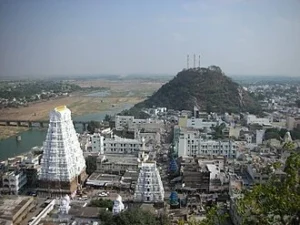
- Location: Situated in Srikalahasti town, Tirupati district, on the banks of the Swarnamukhi River, adjoining a hill.
- Religious Significance: Known as Dakshina Kailasam (Southern abode of Shiva); one of the most revered Shaivite temples.
- Historical Background:
- Inner shrine constructed in the 5th century.
- Outer temple expanded by Chola emperor Rajendra Chola I in the 11th century.
- Gopurams built by Kulottunga Chola I.
- Vijayanagara rulers in the 16th century constructed the 120m high Rajagopuram.
- Architecture: Exemplifies Dravidian style with intricate carvings and sculptures.
PRASAD Scheme (Now PRASHAD)
- Launch: Initiated by Ministry of Tourism as a Central Sector Scheme.
- Objective: Integrated development of pilgrimage and heritage destinations.
- Renaming: In 2017, renamed National Mission on Pilgrimage Rejuvenation and Spiritual Heritage Augmentation Drive (PRASHAD).
- Financial Assistance: Centre supports States/UTs for infrastructure development.
- Facilities Covered: Entry points, lastmile connectivity, ecofriendly transport, lighting, parking, drinking water, toilets, waiting rooms, craft bazaars, WiFi, and digital services.
Significance of the Proposal
- Pilgrim Amenities: Better sanitation, cloakrooms, waiting halls, and drinking water facilities.
- Tourism Boost: Enhances visitor experience, promoting Andhra Pradesh’s cultural tourism.
- Economic Impact: Generates local employment through craft bazaars, souvenir shops, and hospitality services.
- Cultural Preservation: Supports conservation of one of India’s oldest Shaivite temples, reinforcing heritage identity.
- Comparative Example: Similar PRASAD projects have upgraded Kashi Vishwanath Corridor (UP) and Kamakhya Temple (Assam), showing nationwide impact.
Conclusion
The PRASAD proposal for Srikalahasti Temple shows how heritage conservation and modern infrastructure can work together to enrich pilgrim experience and strengthen cultural tourism.