

Daily Current affairs 17 September 2026

Daily Current Affairs 17 September 2026

Share this Post

CRIMINALISATION OF POLITICS AND DELAYS IN TRIALS AGAINST LEGISLATORS

TOPIC: (GS2) POLITY: THE HINDU

A recent report submitted to the Supreme Court has highlighted that special courts established to fast-track criminal cases against MPs and MLAs have not substantially reduced pendency. Background

  • In Ashwini Kumar Upadhyay v. Union of India (2017), the Supreme Court directed the establishment of 12 special courts across 10 States/UTs for speedy disposal of cases involving legislators.
  • Priority was accorded to offences punishable with life imprisonment and crimes carrying five years or more of imprisonment.
  • High Courts were directed to monitor progress and ensure minimal adjournments.

What is Criminalisation of Politics?

  • It refers to the increasing participation of individuals with criminal backgrounds in electoral politics.
  • Serious criminal cases include non-bailable offences or offences punishable with five years or more imprisonment.
  • According to declared affidavits:
    • 251 of 543 Lok Sabha MPs have pending criminal cases.
    • 170 MPs face serious criminal charges.
    • 75 of 233 Rajya Sabha MPs have criminal cases pending.
    • 2,098 of 4,111 MLAs have declared criminal cases, with 1,286 facing serious charges.

Reasons for Criminalisation of Politics

  • Weak Legal Framework: The Representation of the People Act, 1951 disqualifies candidates only after conviction.
  • Judicial Delays: Trials often continue for years, enabling accused politicians to contest multiple elections.
  • Identity-Based Voting: Electoral choices are often influenced by caste, religion, or regional loyalties over criminal records.
  • Crime-Politics Nexus: The Vohra Committee Report (1993) highlighted links among criminals, politicians, and bureaucratic networks.

Impact on Democracy

  • Weakens democratic institutions and reduces public trust in governance.
  • Promotes corruption, voter intimidation, and misuse of money power during elections.
  • Undermines rule of law, allowing lawmakers with criminal cases to shape public policy.
  • Erodes citizen confidence in electoral processes and representative democracy.

Major Recommendations

  • Law Commission (244th Report, 2014): Disqualify candidates once charges are framed for offences punishable with five years or more.
  • Establish fast-track courts for cases involving elected representatives.
  • National Commission to Review the Working of the Constitution (2002): Strengthen transparency in political funding and candidate disclosures.
  • Indrajit Gupta Committee (1998) and Second ARC (2007): Advocate partial state funding of elections to reduce black-money influence.

Supreme Court Interventions

  • Lily Thomas Case (2013): Immediate disqualification upon conviction resulting in imprisonment of two years or more.
  • Public Interest Foundation Case (2018): Mandated disclosure of candidates’ criminal records.
  • 2020 Supreme Court Directions: Political parties must publish criminal antecedents and reasons for selecting such candidates within 48 hours of nomination.

Way Forward

  • Establish independent prosecution mechanisms insulated from political interference.
  • Ensure time-bound disposal of cases, appeals, and stay petitions.
  • Strengthen implementation of the Witness Protection Scheme, 2018.
  • Deploy digital case-tracking systems for monitoring investigations and trials.

Conclusion

The persistence of criminal cases against legislators reflects a serious challenge to India’s democratic framework. Curbing criminalisation is essential for preserving the integrity, credibility, and effectiveness of democratic governance in India.

U.S. ACKNOWLEDGES DEPLOYING WEAPONS IN SPACE

TOPIC: (GS2) INTERNATIONAL RELATIONS: THE HINDU

The United States has publicly acknowledged the deployment of active weapons in outer space, marking the first official admission by any country regarding the placement of weapons in space. What is Weaponisation of Space?

  • Weaponisation of space refers to the deployment or use of weapons in outer space for military purposes.
  • It involves capabilities to destroy or disable satellites, space stations, or other space-based assets.
  • Space-based systems may also be used to target terrestrial military infrastructure.
  • Cyberattacks and electronic warfare systems can disrupt satellite communications, navigation, and surveillance networks.
  • Such capabilities have become increasingly important in modern warfare due to reliance on satellite-based services.

Major Forms of Space Weapons

  • Anti-Satellite (ASAT) Weapons: Designed to destroy or disable satellites operating in orbit. Demonstrated by the United States, Russia, China, and India through successful ASAT tests.
  • Space-Based Strike Systems: Weapons stationed in orbit capable of targeting assets on Earth or in space.
  • Electronic and Cyber Warfare: Jamming satellite signals can disrupt military communications and navigation systems.

Legal Framework Governing Space

  • Outer Space Treaty (1967): Serves as the cornerstone of international space law. Prohibits the placement of nuclear weapons and other weapons of mass destruction (WMDs) in outer space.
  • Existing Gaps: The treaty does not prohibit conventional weapons in space. No explicit restrictions exist on anti-satellite weapons or earth-to-space weapons.
  • Artemis Accords: A voluntary framework led by the United States and NASA. India is among the signatories.

Implications of Space Weaponisation

  • Increases the risk of an arms race among major powers.
  • Creates security dilemmas in the Indo-Pacific and beyond.
  • ASAT tests generate dangerous space debris, threatening civilian and commercial satellites.
  • Raises concerns over the safety of critical services such as navigation, communication, weather forecasting, and disaster management.

Impact on India

  • India’s communication, navigation, defence, and remote-sensing capabilities increasingly depend on satellites.
  • Growing militarisation of space necessitates enhanced space situational awareness and satellite protection measures.
  • Strengthens the importance of institutions such as Defence Space Agency (DSA) and ISRO’s space security initiatives.
  • Requires active participation in shaping future global norms on responsible space behaviour.

Way Forward

  • Develop a comprehensive international treaty regulating conventional weapons in space.
  • Strengthen transparency and confidence-building measures among space-faring nations.
  • Promote global norms against destructive ASAT testing.
  • Enhance international cooperation through the UN Committee on the Peaceful Uses of Outer Space (COPUOS).
  • Encourage responsible and sustainable use of outer space resources.

Conclusion

Strengthening global governance mechanisms and ensuring the peaceful use of outer space will be essential to prevent an arms race beyond Earth and preserve space as a shared global commons.

CHINA’S STRATEGY AMID WEST ASIA’S EMERGING SECURITY ORDER

TOPIC: (GS2) INTERNATIONAL RELATIONS: THE HINDU

Chinese President Xi Jinping’s visit to Egypt (September 2026) and his proposal for a new regional security architecture signal a significant evolution in China’s approach towards West Asia. Background

  • During his visit to Egypt, Xi Jinping outlined a four-point framework for regional security in West Asia.
  • The proposal comes amid:
    • The U.S.-Israel conflict with Iran.
    • Growing instability in Gulf security arrangements.
    • Rising tensions between Türkiye and Israel.
    • Disruptions in energy supplies and maritime trade routes.
  • The emergence of the Mecca Joint Defence Agreement (2026) involving Pakistan, Saudi Arabia, and Türkiye has further altered the regional security landscape.

China’s Four-Point Security Framework

  • Regional Ownership of Security: Regional countries should take primary responsibility for peace and security. China advocates reducing dependence on external powers and foreign intervention.
  • Comprehensive Political Dialogue; Regional disputes should be resolved through dialogue and negotiation. China continues to support a two-state solution to the Israel-Palestine conflict.
  • Development as the Foundation of Security: Economic development is viewed as the key to long-term stability.
  • Central Role of the United Nations: China emphasises resolving regional issues through the UN framework and multilateral mechanisms.

China’s Strategic Calculations

  • Beijing perceives a gradual decline in the credibility of the United States as the sole security guarantor in West Asia.
  • Gulf countries are increasingly pursuing strategic autonomy and diversifying their security partnerships.
  • China seeks to support regional security initiatives without becoming entangled in military conflicts.
  • This approach aligns with China’s Global Security Initiative (GSI), which advocates cooperative and non-bloc security arrangements.

China’s Interests in West Asia

  • Energy Security: West Asia remains a crucial source of China’s energy imports.
  • Economic and Technological Influence: China has strengthened trade, infrastructure, and technology partnerships across the region.
  • Defence Cooperation: China maintains growing defence ties with Pakistan, Saudi Arabia, Türkiye, and Egypt.
  • Defence exports and military technology cooperation provide both economic and strategic advantages.

Implications for India

  • China’s expanding influence may reshape geopolitical dynamics in India’s extended neighbourhood.
  • Greater Chinese engagement in West Asia could affect India’s energy security and strategic interests.
  • India must strengthen ties with Gulf countries through initiatives such as I2U2, IMEC, and broader West Asia outreach.

Challenges for China

  • Regional actors may eventually seek stronger security guarantees that China remains reluctant to provide.
  • Balancing relations with Iran, Saudi Arabia, Israel, and Türkiye simultaneously remains a difficult diplomatic task.
  • Any escalation of regional conflicts could threaten Chinese economic investments.

Way Forward

  • Encourage inclusive regional dialogue mechanisms.
  • Promote economic cooperation alongside maritime security initiatives.
  • Strengthen multilateral diplomacy through the United Nations.
  • Develop stable regional frameworks that reduce conflict while preserving strategic autonomy.

Conclusion

By supporting indigenous security arrangements while avoiding direct military commitments, Beijing seeks to expand its influence at relatively low cost. Whether China can sustain this balancing act without assuming greater security responsibilities will be a critical question in the emerging geopolitical landscape of West Asia.

E20 ETHANOL BLENDING AND THE PROMISE OF CLEANER AND CHEAPER FUEL

TOPIC: (GS3) ENVIRONMENT: THE HINDU

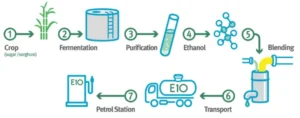
India is rapidly expanding the use of E20 petrol, containing 20% anhydrous ethanol and 80% gasoline.

What is E20?

  • E20 refers to petrol blended with 20% ethanol. India began its E20 rollout in February 2023 through public-sector oil marketing companies at selected outlets.
  • The policy forms part of India’s broader ethanol-blending programme aimed at reducing dependence on imported crude oil and promoting domestic biofuel production.
E20 Ethanol

Key Concerns

Impact on Consumers

  • Ethanol contains less energy per litre than gasoline. Therefore, higher ethanol blending can reduce vehicle mileage.
  • The Ministry of Road Transport and Highways, citing an ARAI-SIAM-IOCL study, has stated that E20 may reduce fuel economy by 2%–6%, depending on vehicle category and vintage.
  • Thus, even if the price per litre remains unchanged, consumers may require more fuel to cover the same distance. A reported estimate suggests that Indian households incurred an additional ₹88,234 crore over three years because of reduced mileage.

Uncertain Emission Benefits

  • Ethanol can reduce the carbon intensity of fuel. However, the actual benefit depends on fuel efficiency and vehicle technology.
  • If mileage falls significantly, more fuel is required to travel the same distance. Hence, emission savings may be smaller than expected and could potentially reverse for some older vehicles.
  • Therefore, the overall environmental impact depends on the vehicle fleet, ethanol production methods and actual mileage loss.

Food Security and Foreign Exchange

  • Ethanol production increasingly depends on sugarcane and maize. Diverting agricultural output towards fuel can create competition between food and fuel uses.
  • Higher domestic demand for these crops may affect prices and export availability. Consequently, reduced agricultural exports or increased imports could offset part of the foreign-exchange savings achieved through lower crude imports.

Way Forward

  • Provide consumers with greater choice between suitable ethanol blends, particularly during the transition period.
  • Ensure transparent testing of E20 across different vehicle categories and vintages.
  • Promote second-generation ethanol from agricultural residues and waste rather than food crops.
  • Expand sustainable feedstock cultivation without threatening food security.

Conclusion

E20 can support India’s energy transition, but its success should be assessed through full life-cycle emissions, consumer costs, food security and net foreign-exchange gains, rather than ethanol substitution alone.

GLOBAL GENDER GAP INDEX 2026

TOPIC: (GS1) SOCIAL ISSUES: THE HINDU

India has retained its 131st position among 145 countries in the World Economic Forum’s (WEF) Global Gender Gap Index 2026.

Key Highlights

  • India’s overall gender parity score stands at 64.5%, which is below the global average of 69.2%.
  • Iceland, Finland, and Norway retained the top three positions globally.
  • India has improved its gender parity by 4.3 percentage points since 2006, mainly due to gains in educational attainment.
  • The WEF estimates that achieving full global gender parity could take approximately 120 years at the current pace.

India’s Performance Across Indicators

  • Educational Attainment: India recorded a strong parity score of 96.6%, with near-equal enrolment levels across educational stages.
  • Health and Survival: The score improved to 95.6%, reflecting gradual progress in health outcomes.
  • Economic Participation and Opportunity: Parity remains low at 41.2%, indicating limited workforce participation and leadership representation for women.
  • Political Empowerment: India ranked relatively better, placing 67th globally with a parity score of 24.5%.

Major Challenges

  • Low female labour-force participation.
  • Underrepresentation of women in senior management and decision-making positions.
  • Persistent wage gaps and unequal economic opportunities.
  • Gender disparities in political and corporate leadership.

Way Forward

  • Increase women’s participation in the workforce through skill development and employment incentives.
  • Promote gender-sensitive workplace policies and equal pay.
  • Strengthen implementation of schemes such as Beti Bachao Beti Padhao, Mission Shakti, and women-led entrepreneurship initiatives.
  • Enhance women’s representation in governance and leadership roles.

Conclusion

India has made notable progress in education and health, but significant gaps persist in economic and political empowerment. Bridging these disparities is essential for achieving inclusive growth, social justice, and the objectives of Sustainable Development Goal (SDG)-5: Gender Equality.

BUILDING AN EVIDENCE-BASED SCIENCE SYSTEM IN INDIA

TOPIC: (GS3) SCIENCE AND TECHNOLOGY: THE HINDU

A recent U.S. policy report on strengthening its science ecosystem has renewed attention on metascience, which studies how scientific research systems function.

What is Metascience?

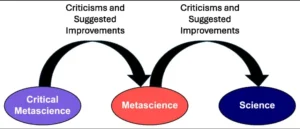
Metascience, or the “science of science,” applies methods from economics, sociology, public policy, scientometrics and organisational studies to understand how research is funded, conducted, evaluated and translated into outcomes.

It asks questions such as:

  • Which funding models produce better research outcomes?
  • How effective is peer review?
  • Do existing incentives encourage quality or merely publication numbers?
  • How should researchers and institutions be evaluated?
Metascience

India’s Research Blind Spot

  • Indian metascience-related publications have remained a small share of global output, with research outside scientometrics particularly limited.
  • Changes in institutional leadership can result in the loss of knowledge about what worked, what failed and why.
  • Publicly accessible analytical studies tracking the evolution and performance of India’s research policies remain limited.
  • Consequently, policy decisions may depend heavily on institutional experience and expert judgement rather than long-term evidence.

Why It Matters

  • Evidence-based evaluation can help determine whether competitive grants, institutional funding or researcher-level support produce better outcomes.
  • Assessment systems that excessively emphasise publication counts may create incentives for quantity over originality, collaboration or societal impact. Metascience can identify such unintended effects.
  • Maintaining systematic records of research policies, funding experiments and their outcomes can help future policymakers learn from past successes and failures.
  • India needs both mission-oriented research for national priorities and curiosity-driven research that may generate unexpected breakthroughs.

Way Forward

  • Establish dedicated metascience centres involving scientists, economists, sociologists and policy researchers.
  • Create open databases on research funding, publications, patents and outcomes.
  • Develop outcome-based but balanced assessment of researchers and institutions.
  • Preserve institutional knowledge through systematic documentation and long-term policy reviews.

Conclusion

India needs not only to produce more science but also to understand its science system better, so that future research policies are guided by evidence, institutional memory and long-term national priorities.


Write a Review

Your email address will not be published. Required fields are marked *