
Table of Contents
ToggleCASTE CENSUS IN INDIA
TOPIC: (GS2) POLITY: THE HINDU
Why in News?
The Government of India is conducting caste enumeration along with Census 2027, making it the first official nationwide caste count since 1931.
What is a Caste Census?
- It is the systematic collection of caste-wise population data during the national Census.
- It records the social identity of individuals along with other demographic information.
- The exercise helps determine the size and distribution of different caste groups.
Background
- 1881: First synchronous Census conducted in British India.
- 1931 Census: Last Census to publish detailed data for all castes.
- 1941 Census: Conducted during World War II; caste data was not fully compiled.
- After Independence (1951 onwards):
- The Census records only Scheduled Castes (SCs) and Scheduled Tribes (STs) as required for constitutional provisions.
- Comprehensive data for Other Backward Classes (OBCs) and other castes has not been published.
- Socio-Economic and Caste Census (SECC), 2011:
- Collected socio-economic and caste information.
- However, the caste data contained lakhs of caste and sub-caste entries, resulting in inconsistencies.
- Therefore, the caste figures were not officially released.
Need for a Caste Census
1. Evidence-Based Policy Making
- Provides accurate demographic data for designing welfare programmes.
- Enables better allocation of public resources.
2. Effective Reservation Policy
- Helps assess whether reservation benefits are reaching deserving communities.
- Supports periodic review of affirmative action policies.
3. Social Justice
- Identifies communities that remain socially and economically disadvantaged.
- Helps reduce exclusion from development programmes.
4. Better Targeting of Welfare Schemes
- Improves identification of beneficiaries.
- Minimises inclusion and exclusion errors.
5. Academic and Administrative Planning
- Provides reliable information for research, planning, and governance.
- Assists governments in framing long-term development strategies.
6. Transparent Governance
- Reduces dependence on outdated estimates.
- Encourages data-driven public decision-making.
Challenges of Conducting a Caste Census
Data Standardisation
- India has thousands of castes and sub-castes with different regional names.
- Similar communities may use different identities in different States.
Classification Issues
- Difficulty in merging multiple spellings and local variations into standard categories.
Political Sensitivity
- Caste figures may influence electoral politics and demands for reservation.
Administrative Complexity
- Requires extensive training of enumerators.
- Verification and coding of millions of caste responses is time-consuming.
Risk of Social Polarisation
- Public debate over caste numbers may intensify social divisions if not handled carefully.
Privacy and Data Security
- Sensitive personal information must be protected through secure digital systems.
Recent Developments
- The Government of India has decided to include caste enumeration in Census 2027.
- The Census will be conducted in two phases.
- It will be India’s first fully digital Census, using mobile applications, digital data collection, geo-referenced mapping, and self-enumeration facilities.
- The government is exploring methods such as self-declaration in an open field or standardised caste lists to improve data quality.
Conclusion
A credible, transparent, and scientifically conducted Caste Census can strengthen inclusive governance, social justice, and evidence-based policymaking while preserving social harmony.
QUAD AND THE FREE & OPEN INDO-PACIFIC (FOIP)
TOPIC: (GS2) INTERNATIONAL RELATIONS: INDIAN EXPRESS
Why in News?
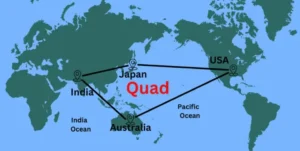
The Quad Foreign Ministers’ Meeting (July 2026, Manila) reaffirmed their commitment to a Free and Open Indo-Pacific (FOIP) while emphasizing ASEAN centrality, maritime security, and regional stability amid growing strategic challenges.
What is the Quad?
- The Quad is a strategic grouping of India, United States, Japan and Australia.
- It is not a military alliance like NATO.
- Decisions are based on consensus, and there is no permanent secretariat or treaty obligation.
- The grouping focuses on ensuring a rules-based regional order and strengthening cooperation in the Indo-Pacific.
What is the Free and Open Indo-Pacific (FOIP)?
The FOIP is a strategic vision that seeks to maintain the Indo-Pacific as an open, inclusive, stable, and rules-based region.
Core Principles
- Freedom of navigation and overflight
- Respect for international law, especially the United Nations Convention on the Law of the Sea (UNCLOS), 1982
- Peaceful settlement of disputes
- Respect for sovereignty and territorial integrity
- Unhindered lawful trade
- Inclusive regional cooperation
- Connectivity based on transparency and sustainability
Objectives of the Quad
1. Promote a Rules-Based Order
- Support adherence to international law.
- Encourage peaceful resolution of maritime disputes.
2. Ensure Maritime Security
- Enhance cooperation in the Indian Ocean and Pacific Ocean.
- Combat piracy, illegal fishing, maritime terrorism, and trafficking.
3. Strengthen Supply Chain Resilience
- Reduce excessive dependence on a single country.
- Diversify supply chains for critical minerals, semiconductors, and strategic goods.
4. Advance Critical and Emerging Technologies
- Cooperation in Artificial Intelligence (AI), 5G/6G, quantum computing, biotechnology, and cybersecurity.
5. Climate and Disaster Management
- Improve Humanitarian Assistance and Disaster Relief (HADR).
- Promote climate resilience and clean energy transitions.
6. Health Security
- Strengthen pandemic preparedness and healthcare cooperation.
Significance of the Quad for India
Strategic Importance
- Strengthens India’s role as a leading Indo-Pacific power.
- Supports India’s vision of Security and Growth for All in the Region (SAGAR).
- Enhances strategic balancing in the Indo-Pacific.
Economic Importance
- Promotes resilient global supply chains.
- Encourages investments in infrastructure and advanced technologies.
- Improves economic connectivity.
Security Benefits
- Enhances maritime domain awareness.
- Strengthens naval interoperability through exercises like Exercise Malabar.
- Supports secure sea lanes essential for India’s trade.
Technological Cooperation
- Facilitates collaboration in semiconductors, AI, cybersecurity, and space technologies.
Key Outcomes of the 2026 Quad Foreign Ministers’ Meeting
- Reaffirmed commitment to a Free and Open Indo-Pacific.
- Emphasized ASEAN centrality and support for the ASEAN Outlook on the Indo-Pacific (AOIP).
- Called for respect for sovereignty, territorial integrity, and international law.
- Opposed unilateral attempts to change the status quo through force or coercion.
- Strengthened cooperation in Maritime security, Critical technologies,Critical minerals, Economic security, Humanitarian assistance and Disaster response.
- Reiterated support for the complete denuclearization of North Korea.
- Committed to expanding practical cooperation that benefits the wider Indo-Pacific region.
Challenges Before the Quad
- No Formal Institutional Structure: Lack of a treaty or permanent secretariat may limit implementation.
- Different National Priorities: Member countries have varying strategic and economic interests.
- Chinese Opposition: China views the Quad as an attempt to contain its strategic influence.
- Resource Constraints: Large-scale infrastructure and technology initiatives require sustained funding.
- Balancing Inclusivity: The Quad must avoid perceptions of forming an exclusive geopolitical bloc.
Way Forward
- Deepen cooperation in maritime domain awareness and naval coordination.
- Accelerate collaboration in AI, semiconductors, cybersecurity, and critical minerals.
- Strengthen supply chain resilience to reduce strategic vulnerabilities.
- Enhance partnerships with ASEAN, Pacific Island countries, and Indian Ocean states.
- Promote transparent, sustainable, and rules-based infrastructure development.
- Institutionalize implementation mechanisms while preserving the Quad’s flexible nature.
- Ensure that cooperation remains inclusive, development-oriented, and consistent with international law.
Conclusion
A strong, inclusive, and rules-based Quad can play a vital role in ensuring a peaceful, secure, and prosperous Indo-Pacific while advancing India’s strategic and economic interests.
ANTIBIOTIC USE IN INDIA AND ANTIMICROBIAL RESISTANCE (AMR)
TOPIC: (GS3) SCIENCE AND TECHNOLOGY: INDIAN EXPRESS
Why in News?
A Lancet Infectious Diseases study reported that India is using a high proportion of ‘Watch’ antibiotics, while many patients still lack access to essential ‘Access’ antibiotics, raising concerns over Antimicrobial Resistance (AMR).
What are Antibiotics?
- Antibiotics are medicines used to kill or inhibit the growth of bacteria.
- They are ineffective against viral infections such as the common cold, influenza, or dengue.
- Antibiotics should be taken only on medical advice and for the prescribed duration.
WHO AWaRe Classification of Antibiotics
The World Health Organization (WHO) introduced the AWaRe Classification to promote the responsible use of antibiotics.
Category | Purpose | Examples |
Access | First-choice antibiotics for common bacterial infections; should be widely available and affordable. | Amoxicillin, Penicillin |
Watch | Broad-spectrum antibiotics with a higher risk of promoting resistance; use only for specific infections. | Ciprofloxacin, Ceftriaxone, Azithromycin |
Reserve | Last-resort antibiotics used for multidrug-resistant infections. | Colistin, Linezolid, Ceftazidime-Avibactam |
WHO recommends that at least 60% of national antibiotic consumption should come from the “Access” group to reduce the development of resistance.
What is Antimicrobial Resistance (AMR)?
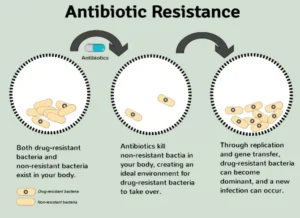
AMR occurs when bacteria, viruses, fungi, or parasites evolve and no longer respond to medicines designed to eliminate them.
As a result:
- Infections become difficult to cure.
- Treatment becomes longer and more expensive.
- Mortality and complications increase.
- Advanced medical procedures become riskier.
Reasons for Rising Antibiotic Misuse in India
1. Over-Prescription
- Antibiotics are often prescribed even when not medically necessary.
- Broad-spectrum antibiotics are preferred over narrow-spectrum drugs.
2. Self-Medication
- Easy availability of antibiotics without proper prescription.
- Patients discontinue medicines once symptoms improve.
3. Inappropriate Use in Hospitals
- Excessive preventive (prophylactic) antibiotic use.
- Duplicate antibiotic prescriptions.
- Poor infection control practices.
4. Use in Livestock and Agriculture
- Antibiotics are used to promote animal growth and prevent disease.
- Drug-resistant bacteria can spread to humans through food and the environment.
5. Lack of Diagnostic Testing
- Doctors may prescribe antibiotics before confirming the exact infection.
6. Poor Public Awareness
- Many people wrongly believe antibiotics work against viral infections.
India’s Initiatives to Combat AMR
1. National Action Plan on AMR (NAP-AMR)
- Launched in 2017.
- Based on the One Health Approach, integrating human, animal, and environmental health.
2. National Programme on AMR Surveillance
- Implemented through the Indian Council of Medical Research (ICMR).
- Monitors antibiotic resistance trends across India.
3. Antimicrobial Stewardship Programme (AMSP)
- Encourages hospitals to promote rational antibiotic prescribing.
4. Red Line Campaign
- Antibiotic packs carry a red line to remind consumers that these medicines should only be taken with a doctor’s prescription.
5. Schedule H1 Drugs
- Certain antibiotics can only be sold on a valid prescription under the Drugs and Cosmetics Rules.
Global Initiatives
- WHO Global Action Plan on AMR (2015)
- Global Antimicrobial Resistance and Use Surveillance System (GLASS)
- Quadripartite Collaboration involving WHO, FAO, UNEP, and WOAH (World Organisation for Animal Health) under the One Health framework.
Conclusion
Rational antibiotic use, strong surveillance, and a One Health approach are essential to control antimicrobial resistance and safeguard the effectiveness of life-saving medicines for future generations.
TAX EXEMPTIONS, SAME-SEX COUPLES AND THE INCOME TAX ACT
TOPIC: (GS3) ECONOMY: INDIAN EXPRESS
Why in News?
The Union Government opposed a petition before the Karnataka High Court seeking to interpret the term “spouse” under the Income Tax Act, 1961, to include same-sex partners for claiming tax exemptions.
Background
- Under the Income Tax Act, 1961, gifts received from specified relatives are exempt from tax.
- The term “relative” includes a spouse, parents, siblings, lineal ascendants, descendants, and certain other family members.
- Since same-sex marriages are not legally recognized in India, same-sex partners are not treated as spouses under the Act.
- Consequently, gifts exchanged between same-sex partners may be taxed if they exceed the prescribed exemption limit.
Constitutional Provisions Involved
Article 14
- Guarantees Equality before Law and Equal Protection of Laws.
Article 15
- Prohibits discrimination on grounds of religion, race, caste, sex, or place of birth.
- The Supreme Court has interpreted “sex” broadly to include sexual orientation in certain contexts.
Article 19
- Protects freedom of expression, personal autonomy, and choice.
Article 21
- Guarantees the Right to Life and Personal Liberty, including privacy, dignity, and individual autonomy.
Judicial Background
Navtej Singh Johar v. Union of India (2018)
- The Supreme Court decriminalized consensual same-sex relations by reading down Section 377 of the Indian Penal Code.
- Recognized the rights to dignity, privacy, equality, and non-discrimination for LGBTQIA+ persons.
Supriyo v. Union of India (2023)
- The Supreme Court did not legalize same-sex marriage.
- Held that the creation of a legal framework for marriage or civil unions is the responsibility of Parliament.
- However, the Court reaffirmed that LGBTQIA+ persons are entitled to equal dignity and constitutional protection.
Arguments of the Petitioners
Violation of Equality
- Denial of tax exemptions treats same-sex couples differently from heterosexual married couples.
Indirect Discrimination
- Tax provisions disproportionately affect individuals based on sexual orientation.
Recognition of Stable Relationships
- Long-term same-sex relationships involve shared finances and mutual support similar to marriage.
Constitutional Morality
- Laws should evolve to reflect constitutional values of equality, dignity, and inclusion.
Government’s Stand
Legal Relationship is the Basis
- Tax exemptions are linked to legally recognized relationships, not merely emotional or personal relationships.
Parliament’s Role
- Any expansion of the definition of spouse requires legislative amendment.
Need for Legal Certainty
- Recognized relationships provide objective standards for tax administration and reduce disputes.
Administrative Practicality
- Existing provisions rely on verifiable legal status, making implementation easier.
Significance of the Issue
Constitutional Perspective
- Tests the balance between fundamental rights and legislative competence.
Social Perspective
- Highlights the ongoing discussion on LGBTQIA+ rights and legal inclusion.
Legal Perspective
- May influence future debates on inheritance, adoption, succession, pensions, insurance, and taxation.
Administrative Perspective
- Raises questions regarding documentation, verification, and implementation of family-based benefits.
Way Forward
- Parliament may consider reviewing family-related laws to ensure they remain consistent with constitutional values.
- Introduce a wider public consultation involving legal experts, civil society, and stakeholders.
- Ensure that taxation policies are guided by fairness, legal certainty, and administrative efficiency.
- Continue strengthening legal protections against discrimination based on sexual orientation.
- Promote awareness and sensitivity towards the rights of LGBTQIA+ individuals while respecting constitutional processes.
Conclusion
A balanced legal framework that upholds constitutional equality while respecting Parliament’s legislative role is essential for addressing issues relating to same-sex couples and tax laws.
HARISHCHANDRAGAD FORT
TOPIC: (GS1) GEOGRAPHY: THE HINDU
Why in News?
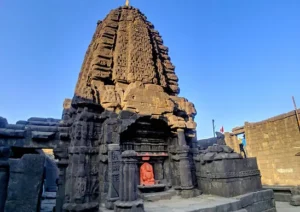
Harishchandragad Fort was recently in the news after four tourists were seriously injured in a landslide while descending the fort.
Location
- Located in Ahilyanagar (Ahmednagar) district, Maharashtra.
- Lies in the Sahyadri (Western Ghats) mountain range.
- Elevation: Approximately 1,422 metres above mean sea level.
- Forms part of the Western Ghats UNESCO World Heritage landscape.
Historical Background
- The earliest fortifications are believed to date back to the 6th century CE, during the Kalachuri dynasty.
- Several rock-cut caves were excavated around the 11th century CE.
- The famous saint Changdev Maharaj is believed to have meditated here during the 13th–14th century.
- The fort later came under the Mughals before being captured by the Marathas in 1747 CE.
- Archaeological evidence indicates the presence of Microlithic human settlements, showing prehistoric occupation.
- References to the fort are found in Matsya Purana, Agni Purana, and Skanda Purana.
Architectural Features
Harishchandreshwar Temple
- Dedicated to Lord Shiva.
- Built in the Hemadpanti style of architecture, known for the use of large stone blocks without mortar.
- Houses a Shivling and a massive Nandi statue.
Kedareshwar Cave
- Contains a large Shivling surrounded by water.
- Supported by four stone pillars, symbolizing the four Yugas according to local beliefs.
Konkan Kada
- A spectacular semi-circular overhanging cliff overlooking the Konkan region.
- Famous for the rare Brocken Spectre, where a person’s shadow appears on clouds surrounded by a rainbow-like halo.
Ancient Caves and Water Tanks
- Numerous caves served as shelters for monks and travellers.
- Natural rock-cut tanks provide perennial water.
ALLOGRAPHA
TOPIC: (GS3) SCIENCE AND TECHNOLOGY: PIB
Why in News?
Researchers have recently discovered five new species of Allographa from the Western Ghats, highlighting India’s rich but underexplored lichen diversity.

About Allographa
- Belongs to the Graphidaceae family.
- Comprises more than 200 species worldwide.
- Characterized by elongated script-like fruiting bodies, giving them a distinctive appearance.
- In India, these species are mainly reported from the Western Ghats.
- Recently, five new species were identified:
- Allographa keralensis
- Allographa paraconsanguinea
- Allographa persistinspersa
- Allographa semicarbonisata
- One additional newly identified species from the same study.
What are Lichens?
- Lichens are composite organisms formed by:
- A fungus (mycobiont) that provides protection and structure.
- A photosynthetic partner (photobiont), usually a green alga or cyanobacterium, which produces food through photosynthesis.
- This is an example of mutualistic symbiosis, where both partners benefit.
Ecological Importance
Bioindicators
- Extremely sensitive to air pollution.
- Used to monitor sulphur dioxide, heavy metals, and atmospheric quality.
Soil Formation
- Break down rocks into smaller particles.
- Contribute to the formation of fertile soil.
Nutrient Cycling
- Participate in nutrient recycling within forest ecosystems.
Biodiversity Support
- Provide food and shelter to insects and small organisms.
Climate Change Indicators
- Their distribution reflects long-term environmental changes.