

Table of Contents
ToggleSUPREME COURT ON CITIZENSHIP DETERMINATION
TOPIC: (GS2) POLITY: THE HINDU
The Supreme Court of India has overturned Gauhati High Court rulings that upheld Foreigners Tribunal orders declaring individuals as foreigners.
Procedural fairness in citizenship adjudication
- Core issue: Whether individuals can be declared “foreigners” through tribunal orders made in their absence, without proper notice or a real chance to be heard.
- Dueprocess gap: Many decisions rest on nonappearance or procedural defaults rather than on tested, substantive evidence.
- Service of notice: Valid adjudication requires proof that notices were effectively delivered and understood.
- Delay does not cure injustice: Long gaps in challenging orders do not automatically validate proceedings that lacked fairness.
- Access to remedy: Lack of legal aid, inability to file written statements, or absence of witness examination undermines justice.
Observations of the Supreme Court
- Citizenship & Article 21: Section 9 of the Foreigners Act places the evidential burden on the person, but this cannot override Article 21 procedural safeguards.
- Ex Parte Orders: Require strict scrutiny; tribunals must ensure proper notice and opportunity to present evidence.
- Natural Justice: Principle of audi alteram partem (right to be heard) is essential in citizenship cases.
- Burden vs. fairness: Evidentiary standard: Claims of citizenship must be decided on documentary and testimonial merit, not hearsay or enquiryofficer reports alone.
Supreme Court Directions
- Set aside 27 Gauhati High Court judgments.
- Remanded cases to Foreigners Tribunals for fresh adjudication.
- Directed tribunals to provide:
- Opportunity to file written statements.
- Submission of documentary evidence.
- Witness examination if required.
- Fair hearing in line with constitutional principles.
Significance of the Judgment
- Reinforces due process: Affirms that citizenship questions must follow fair procedures protected by Article 21, not summary or perfunctory orders.
- Protects fundamental rights: Recognises that citizenship disputes affect dignity, liberty and security, including risks of detention or deportation.
- Strengthens tribunal accountability: Directs stricter judicial scrutiny of Foreigners Tribunals, improving transparency and fairness in Assam’s adjudications.
- Balances statute and constitution: Clarifies that statutory rules (e.g., Section 9, Foreigners Act) cannot override constitutional safeguards in practice.
- Promotes evidencebased decisions: Emphasises that determinations must rest on substantive documentary and testimonial proof, not on procedural defaults or hearsay.
Foreigners Tribunals
Quasijudicial bodies set up to determine whether a person is a foreigner under Indian law. Their decisions decide if an individual is not an Indian citizen and therefore subject to deportation, detention or other consequences.
Legal basis
- Constituted under the Foreigners Act, 1946 and related state rules.
- Function to apply statutory tests of nationality and to examine evidence of citizenship.
Primary functions
- Adjudicate nationality disputes brought by state/central authorities or on reference.
- Examine documentary and oral evidence (birth records, land records, voter lists, passports, witness testimony).
- Issue orders declaring a person a foreigner or not a foreigner.
Conclusion
The Supreme Court ruling underscores that citizenship cannot be stripped on technicalities—only through fair, evidencebased, and constitutionally sound procedures.
INDIA’S MOVE TO NEARUNIVERSAL BIRTH AND DEATH RECORDING
TOPIC: (GS2) POLITY: THE HINDU
The Office of the Registrar General and Census Commissioner reported that birth registration reached 99.1% and death registration 99.4% in 2024, signalling a major rise in coverage.
What is the Civil Registration System (CRS)?
- Definition: Continuous, compulsory recording of births, deaths and stillbirths under the Registration of Births and Deaths Act, 1969 (amended 2023).
- Purpose: Provides official vital statistics used for mortality, fertility and sexratio estimates and for issuing legal identity documents.
- Timelines: Events should be reported within 21 days; hospitals and authorised officials must report institutional events.
Key Facts
- 2024 registrations: ~25.47 million births and ~8.94 million deaths recorded; coverage matched over 99% of SRSbased estimates.
- State performance: 18 States/UTs achieved 100% birth registration; 21 reached 100% death registration.
- Historical trend: Birth LOR rose from 56% (2000) to 99% (2024); death LOR improved even faster in recent years.
Why this matters
- Administrative governance: Districtlevel CRS data enable targeted health, education and welfare planning.
- Public health: Timely death registration supports mortality surveillance (useful during pandemics and heat/pollution events).
- Legal identity: Birth certificates are foundational for schooling, Aadhaar and entitlements; death certificates enable pensions, insurance and property transfer.
Drivers of Improvement
- Institutional deliveries and mandatory documentation for services increased birth reporting.
- Digitisation and the 2023 amendment to the RBD Act strengthened registration processes and linkages with other ID systems.
Challenges
- Regional gaps: Several large States still lag on timely and complete registration.
- Timeliness and quality: Many events are registered late; medically certified cause of death remains incomplete, limiting epidemiological use.
- Infant death underreporting: Urban–rural imbalances suggest underregistration of infant deaths in rural areas.
Way Forward
- Focus shift from coverage to quality: Improve timeliness, medical certification of deaths, and districtlevel completeness.
- Integrate CRS with health and ID systems for realtime planning and social protection.
Conclusion:
Nearuniversal CRS coverage is a landmark administrative success, but real value depends on improving data quality, timeliness and medical certification to inform policy and protect rights.
BIOGAS ENERGY SECURITY AND INDIA’S ENERGY INDEPENDENCE
TOPIC: (GS3) ENVIRONMENT: THE HINDU
Global instability in West Asia has highlighted India’s import vulnerability, renewing interest in compressed biogas (CBG) as a domestic, renewable fuel. Despite policy initiatives, actual CBG rollout lags targets, prompting calls for stronger incentives and safeguards.
Compressed Biogas (CBG)
- What CBG is: Biogas purified and compressed to pipeline/vehicle fuel quality; composition is mainly methane and is chemically equivalent to CNG.
- Primary uses: Can replace fossil gas in transport (vehicles) and piped natural gas networks for households and industries.
- Renewable fuel: Produced from organic waste through anaerobic digestion, making it a sustainable energy source.
- Carbon advantage: When used instead of fossil fuels, CBG lowers net greenhousegas emissions, contributing to climate goals.
- Waste management solution: Converts agricultural residues, livestock dung and urban organic waste into usable energy, reducing openburning and landfill loads.
Policy landscape and targets
- SATAT (2018): Targeted 5,000 CBG plants; actual commissioning has been far lower, with only ~114–132 plants operational by recent counts.
- GOBARdhan & support: Central schemes provide grants, biomass aggregation machinery funding and pipeline support to link CBG to city gas networks. Financial assistance packages have been sanctioned across states.
Ground realities and constraints
- Slow deployment: Many projects remain at LOI stage; private investment is limited due to high upfront costs, feedstock logistics and bankability issues.
- Infrastructure gaps: Lack of aggregation, transport and injection pipelines reduces offtake certainty. Government pipeline grants aim to address this.
- Risk of crop diversion: International experience (Germany) shows incentives can spur energycrop cultivation (maize), threatening food security — India must avoid similar perverse outcomes.
Multidimensional implications
- Energy security: CBG reduces import dependence and exposure to geopolitical shocks.
- Rural economy: Creates value from cattle dung and agrowaste; aligns with circular economy goals.
- Environment: Lowers greenhouse gases and openburning of residues.
- Food security tradeoff: Incentives must not encourage largescale monoculture for feedstock; prefer waste and manurebased models (Denmark model).
Policy recommendations
- Prioritise waste feedstock: Incentivise manure, crop residue and urban organic waste, not energy crops.
- Financial instruments: Offer viability gap funding, concessional credit, accelerated depreciation and guaranteed offtake to attract private capital.
- Infrastructure push: Fasttrack pipeline and CGD synchronisation; strengthen GOBARdhan implementation and monitoring.
- Safeguards: Monitor cropping patterns and align biofuel pricing to avoid maizeled distortions.
Conclusion:
CBG can bolster India’s energy resilience and rural livelihoods, but success requires wastefirst feedstock policies, stronger incentives, and careful safeguards against crop diversion.
DRAFT REGULATIONS FOR USE OF AI IN COURTS
TOPIC: (GS2) POLITY: THE HINDU
The Supreme Court’s AI Committee released a draft national framework on 3 June 2026 and invited public comments to regulate AI tools in courts. The draft aims to enable responsible AI adoption while protecting judicial independence, fairness and personal liberty.
What the Draft Says
- Human primacy: No judgment, order or finding may be made solely by an algorithm; judges retain final authority.
- Transparency & explainability: Highrisk systems must be explainable in nontechnical terms to judges and litigants.
- Data protection & minimisation: Judicial tools must collect only necessary personal data and follow privacy norms.
- Accountability & auditability: Regular inhouse audits and an AI Register and AI Incident Database are mandated.
Permitted and Prohibited Uses
- Permitted: Administrative automation (filing checks), transcription, translation, legal research assistance, accessibility tools and docket management.
- Prohibited: Automated adjudication, sentencing, behavioural risk scoring, opaque “blackbox” systems, continuous surveillance, and undisclosed AI evidence.
Institutional Design & Safeguards
- Apex Body at SC: A permanent body with judges, MeitY officials and domain experts to govern rollout and approvals.
- Controlled testing: Timelimited trials in isolated environments before wider deployment.
- Vendor rules: Private vendors barred from training proprietary models on sensitive judicial data; strict procurement audits required.
- Litigant rights: Mandatory notice to parties when AI materially assists a judge; remedies available for harms from prohibited AI use.
Multidimensional Significance
- Rule of law: Balances efficiency with Article 21 safeguards (fair trial, dignity).
- Access to justice: Translation and transcription tools can widen access, especially for regional languages.
- Risk management: Prevents “hallucinated” precedents and preserves legal integrity; courts have warned of zero tolerance for fabricated AI authorities.
Practical Issues & Way Forward
- Implementation gap: Coordination with 25 High Courts and varied administrative autonomy may cause uneven adoption.
- Capacity building: Funding for court secretariats, training judges and inhouse audit teams is essential.
Conclusion:
The draft frames a cautious, rightscentred path for judicial AI technology to assist, never replace, human judgment.
SPECIAL BENCHES TO CLEAR OLDEST SUPREME COURT CASES
TOPIC: (GS2) POLITY: THE HINDU
Chief Justice Surya Kant has notified a fresh roster creating four special Division Benches to exclusively hear the Court’s longestpending civil and criminal matters.
What the initiative is
- Four dedicated benches: Two benches for the oldest civil matters; two for the oldest criminal matters.
- Working days: These benches sit on Tuesdays, Wednesdays and Thursdays (nonmiscellaneous days) to allow uninterrupted hearings.
- Scale: About 800 longpending cases (≈200 per bench) have been identified initially.
Why this matters (UPSC perspective)
- Rule of law: Timely disposal is integral to Article 21 (reasonable time for justice) and public trust.
- Access to justice: Resolving old cases reduces human cost—litigants waiting decades for closure.
- Systemic reform: Institutionalises docket management rather than adhoc listing; aligns with prior tech efforts (SCJUDICARE).
How it works (operational features)
- Exemption from miscellaneous lists: Benches are shielded from fresh preliminary matters to focus on full hearings.
- Structured listing: Fresh matters are distributed across subject rosters so other benches handle new filings.
- Use of technology: Case grouping and automated classification (NJDG/SCJUDICARE) help bundle similar issues for collective hearings.
Challenges and considerations
- Resource intensity: Long hearings require judicial time, research support and registry coordination.
- Backlog paradox: Clearing old cases must not slow disposal of new matters; balance is essential.
- Monitoring: Success depends on measurable targets, periodic review and transparency (NJDG metrics).
Examples and precedents
- Thematic benches & Lok Adalats: Past targeted drives (deathpenalty references, Lok Adalat weeks) show focused calendars can accelerate disposal.
Conclusion:
The specialbench roster is a pragmatic, institutional step to reduce decadesold pendency its success will hinge on sustained judicial focus, administrative support and transparent performance tracking.
NIDAR 2.0 BUILDING INDIA’S INDIGENOUS DRONE BRAIN
TOPIC: (GS3) SCIENCE AND TECHNOLOGY: THE HINDU
The Ministry of Electronics and Information Technology (MeitY), with the Drone Federation of India (DFI), launched NIDAR 2.0 (2026–27) to push student teams to design homegrown avionics, autonomy and microchip solutions for drones.
What is NIDAR 2.0
- National innovation challenge for engineering students to design, prototype and test advanced drone systems.
- Aim: Move India from assembling airframes to manufacturing critical drone electronics, autopilots and secure operating intelligence.
- Part of SwaYaan: Operates under MeitY’s SwaYaan capacitybuilding programme for Unmanned Aircraft Systems (UAS).
Structure and tracks
- Track 1 — Systemlevel innovation: Autonomous swarm operations, GPSdenied navigation and mission autonomy for disaster response and industrial inspection.
- Track 2 — Component innovation: Build indigenous flight controllers and autopilots using the VEGA microprocessor (CDAC standard).
- Support: Top 100 teams receive two VEGA development kits each; incubation, mentoring and a prize pool exceeding ₹65 lakh.
Importance
- Strategic autonomy: Reduces reliance on foreign avionics and secure software for defence and critical infrastructure.
- Economic valuechain: Encourages domestic manufacturing of chips, sensors and control boards — higher value capture than mere assembly.
- Skill development: Complements SwaYaan’s hubandspoke training network (IISc, IITs, NITs, IIITs, CDAC) that has trained tens of thousands.
- Civil applications: Enables precision agriculture, mapping, disaster relief and lastmile logistics with secure, local tech.
challenges
- Supply chain: Domestic microchip fabrication and specialised sensors remain limited; scaling requires industry incentives.
- Standards & certification: Need clear testing, airworthiness and cybersecurity standards to move prototypes to production.
- Funding & incubation: Earlystage firms need concessional finance, procurement preferences and market pull from government projects.
- Ethical and regulatory safeguards: Ensure privacy, safe BVLOS operations and counterdrone measures are integrated.
Policy recommendations
- Link procurement to MakeinIndia: Government tenders to prefer VEGAcompliant systems for public projects.
- R&D incentives: Tax breaks, grants and seed funding for chip and sensor startups.
- Certification labs: Expand CDAC/NIELIT testbeds and fasttrack civil aviation approvals for validated prototypes.
- Industryacademia bridge: Strengthen incubation at SwaYaan hubs and create industry mentorship cells.
Conclusion:
NIDAR 2.0 is a strategic push to indigenise drone brains success will depend on supplychain strengthening, clear standards and sustained market support.
LAHDC ACT
TOPIC: (GS2) GOVERNANCE: THE HINDU
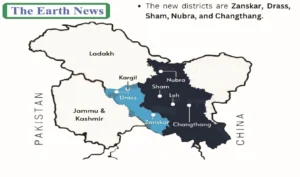
Ladakh has notified 17 new tehsils and will roll LAHDC provisions out to all seven districts, expanding elected local governance beyond Leh and Kargil.
Purpose and Legal Basis
- Objective: Decentralise governance and empower local communities in Ladakh’s difficult terrain.
- Statute: Enacted as the Ladakh Autonomous Hill Development Councils Act, 1997; originally covered Leh and Kargil.
Institutional Design
- Council as corporate body: Each Council is a legal entity with perpetual succession and a common seal.
- Composition: 26 elected members from singlemember constituencies; up to 4 nominated (minorities/women); MPs/MLAs are exofficio nonvoting members.
- Executive: A Chief Executive Councillor (CEC) and four executive members run daytoday functions.
Powers and Functions
- Local administration: Control over local development, planning and district plans; Council acts as District Planning Board.
- Land & forests: Authority over allocation and use of Khalsa Sarkar land and management of certain undemarcated forests.
- Finance: Own Council Fund, can levy specified local taxes and fees; receive government grants and loans. [3]
Safeguards and Oversight
- Term & quorum: Fiveyear term; quorum rules and majority voting for decisions.
- Governor’s power: Governor may dissolve a Council for maladministration after notice; reconstitution within six months.
Multidimensional Significance
- Democratic deepening: Extending LAHDC to new districts strengthens grassroots representation and local recruitment control.
- Economic impact: Local taxation and district funds enable tailored development in fragile highaltitude economies.
- Security and culture: Local control over land and recruitment helps preserve cultural identity and manage strategic border areas.
- Implementation challenge: Requires delimitation, administrative capacity building and clear rules to avoid centrelocal friction.
INDIA ROAD ACCIDENT FATALITIES
TOPIC: (GS2) GOVERNANCE: THE HINDU
Recently, India’s road accident fatalities came into news as official figures for 2024 showed discrepancies between reports released by the Ministry of Road Transport and Highways (MoRTH) and the National Crime Records Bureau (NCRB), raising concerns over data consistency and reliability for policy planning.
Sources of Road Accident Data
- Police records: Primary source, as police are first responders.
- MoRTH data collection: Through its Transport Research Wing (TRW), using formats under the UNESCAP Asia-Pacific project.
- Information gathered: Accident identification, road conditions, vehicles, driver details.
- Shift to eDAR/iRAD: Designed for real-time reporting, but state-level delays persist.
- NCRB data: Compiled via State Crime Record Bureaus (SCRBs), District Crime Record Bureaus (DCRBs), and local police stations.
Legal Basis of Road Accident Data Recording
- Section 106 of Bharatiya Nyaya Sanhita: Fatal road accidents caused by negligence are registered under this section (earlier covered under IPC Section 304-A).
- WHO Global Practice: Nearly half of the countries worldwide rely primarily on police data for accident reporting.
Reasons for Discrepancies
- Different reporting channels: NCRB (Home Ministry) vs MoRTH (coordination with States).
- Mandatory reporting bias: Police must report to NCRB, but MoRTH depends on state cooperation.
- Data limitations: TRW formats restrict details, leading to gaps.
- Under-reporting risks: Victims dying after 30 days often not updated.
- Subjective bias: Police judgments may affect accuracy.
- Persistent challenges: Despite eDAR/iRAD, states report inconsistently.
India’s Global Position
- India has the highest total fatalities worldwide, followed by China and the USA.
- Countries like Iran report higher per capita death rates.
- Several developing nations (Pakistan, Nigeria, Ethiopia, China) show lower per capita fatality rates compared to India.
Measures to Improve Data Accuracy
- Unified Reporting System: Establish a single national platform integrating police, transport, and health departments to ensure consistency.
- Real-time Digital Tools: Strengthen use of e-DAR/iRAD systems with mandatory updates from all states to reduce delays and mismatches.
- Standardized Formats: Adopt uniform templates across ministries and states for accident reporting to avoid variation in categories and definitions.
- Health Department Integration: Include hospital and emergency care data to capture fatalities occurring after the accident, reducing under-reporting.
Conclusion
Reliable statistics are essential for effective policy design, infrastructure planning, and enforcement strategies. Strengthening real-time reporting systems, harmonising data channels, and reducing under-reporting are critical to addressing India’s road safety crisis.