

...
Daily Current affairs 26 August 2026

Daily Current Affairs 26-August-2026

Share this Post

ENDING THE CULTURE OF SECRECY IN JUDICIAL APPOINTMENTS

TOPIC: (GS2) POLITY: THE HINDU

The debate on transparency in judicial appointments has resurfaced after Justice Ujjal Bhuyan observed that greater openness in the collegium process would strengthen public confidence and ensure merit-based selection.

What is the Collegium System?

  • The Collegium system is a judicial innovation, not a constitutional provision.
  • It is the mechanism by which judges of the Supreme Court and High Courts are appointed and transferred.
  • The system evolved through landmark Supreme Court judgments, collectively known as the Three Judges Cases.

Evolution Through Cases

  • First Judges Case (1981): Held that the executive (government) had primacy in judicial appointments. The Chief Justice of India’s recommendation was not binding.
  • Second Judges Case (1993): Overruled the 1981 judgment. Gave primacy to the Chief Justice of India and senior judges in appointments. Established the Collegium system formally.
  • Third Judges Case (1998): Expanded the Collegium to a five-member body: the CJI and four senior-most judges of the Supreme Court. Made consultation among judges mandatory, strengthening judicial independence.

Criticism of the Collegium

  • Opacity: No clear criteria for selection, lack of transparency in recommendations.
  • No vacancy notifications or eligibility benchmarks.
  • Nepotism concerns: Allegations of favoritism in appointments.
  • Even Fali Nariman, one of its architects, later criticized the system for being non-receptive and opaque.

Transparency Deficit

  • Resolutions Without Reasons: Collegium resolutions initially included brief reasons (2017), but since 2024, they stopped disclosing member participation or reasoning.
  • Contradiction: The Supreme Court itself held in the MediaOne case (2023) that secrecy is antithetical to transparency, yet its own appointments remain shielded.
  • Nepotism Allegations: Reports suggest nearly 30% of Supreme Court judges have familial links to former judges. Former CJI R.M. Lodha remarked that one in three High Court judges could be an “uncle judge.”
  • Equality Concerns: Articles 14 and 16 demand fairness in public appointments. In Umadevi (2006), the Court mandated transparent recruitment for public offices — a principle not extended to judicial appointments.

Comparative Perspective

  • United Kingdom: Judicial Appointments Commission advertises vacancies and conducts structured interviews.
  • South Africa: Judicial Service Commission invites public nominations and conducts televised interviews.
  • Lesson: Transparency and independence can coexist; openness strengthens legitimacy.

Contemporary Challenges

  • Collegium decisions are scrutinized instantly on social media, amplifying public distrust.
  • Allegations of favoritism and lack of accountability erode legitimacy.
  • Contempt jurisdiction cannot suppress widespread digital scrutiny, making reform inevitable.

Proposed Reforms

  • Vacancy Notifications: Publish anticipated vacancies in advance.
  • Eligibility Matrix: Define objective criteria for selection.
  • Application Process: Invite applications from eligible advocates.
  • Reasoned Recommendations: Disclose why one candidate was preferred over another.
  • Confidentiality Balance: Protect sensitive integrity inputs while ensuring openness in process.

Way Forward

  • Reform does not mean dismantling the collegium but modernizing it.
  • Independence must coexist with accountability; secrecy undermines trust.
  • The debate has shifted from executive vs judiciary (1990s) to opacity vs transparency (2020s).
  • Judicial legitimacy depends on embracing reform voluntarily rather than resisting public scrutiny.

Conclusion

India’s judiciary stands at a crossroads: independence without accountability risks eroding legitimacy. A transparent, reasoned, and participatory appointment process will ensure that judicial independence and constitutional accountability remain complementary values, not adversaries.

INDIA’S YOUTH AND EXAMINATION REFORM

TOPIC: (GS2) POLITY: THE HINDU

Recent youth agitations forced the resignation of the Union Education Minister and prompted the government to announce free online coaching for competitive examinations. While this addresses exam preparation costs, the deeper crisis lies in the absence of jobs.

The coaching infrastructure

  • Rising Costs: MoSPI data shows coaching consumes 16% of family education expenditure, up from 12.5% in 2018.
  • Limited Seats: Over 22 lakh aspirants competed for just 1.4 lakh medical seats in 2026, with fewer than 10,000 in top colleges.
  • Declining Enrolment: Undergraduate enrolment fell by 93,322 in 202324, especially among young men, with Uttar Pradesh witnessing the sharpest decline.
  • Employment Reality: PLFS data reveals that out of 100 graduates aged 15–29, only 26 secured regular salaried jobs, and just 4 had contracts with social security.

Structural Economic Problems

  • Manufacturing Stagnation: Despite promises, manufacturing contributes only ~16% of GVA, far below the targeted 25%.
  • Private Sector Retreat: Corporate investment fell from 17.3% of GDP (200708) to 10.3% (202425), despite tax cuts.
  • Jobless Growth: High GDP growth rates (6–6.5%) have not translated into employment opportunities.
  • Medium Enterprises Hit: Regulatory zeal and selective enforcement disproportionately affect jobcreating midsized companies.

Policy Imperatives

  • Public Investment: Expand industrial capacity through governmentled infrastructure and manufacturing projects.
  • ExportDriven Industry: Support sectors disciplined by global competitiveness rather than domestic protectionism.
  • Balanced Regulation: Temper enforcement to encourage entrepreneurship and reduce compliance burdens on MSMEs.
  • Skill Diversification: Move beyond examcentric preparation to vocational training, apprenticeships, and industryaligned education.

Global Lessons

  • Vietnam’s Example: Strategic public investment, exportoriented manufacturing, and integration into global supply chains created largescale jobs.
  • India’s Opportunity: Replicating such models could absorb millions of graduates into productive employment.

Conclusion

India’s youth crisis stems from structural job scarcity, not exam reform. Free coaching reduces costs, but without industrial expansion, exportdriven growth, and balanced regulation, the demographic dividend risks becoming a burden unless largescale employment opportunities are created.

INDIA’S SPACE SECTOR AND ITS RELIABILITY

TOPIC: (GS3) SECURITY: THE HINDU

On the third National Space Day, marking Chandrayaan3’s lunar south pole landing, Prime Minister Narendra Modi urged space startups to build an “aura” to attract global talent. However, experts argue that India’s space sector must prioritize reliability and regular launches over imagebuilding.

Historical Context

  • In the 20th century, space launches symbolized national pride, much like football for Argentina or Brazil.
  • India, despite poverty and food insecurity, invested in rockets and atomic energy as a bet on future technological strength.
  • Earlier, the symbolism of launches mattered more than payload utility; today, satellites and rockets are critical infrastructure for navigation, banking, weather, and defence.

Current Challenges

  • High Launch Costs: A 2025 study found India’s launch cost at $13,302/kg to lowearth orbit, far higher than China ($5,809) and the U.S. ($3,225).
  • Low Frequency: India conducted only five launches in 2025, far below the projected 30, limiting economies of scale and reliability.
  • Dependence on Foreign Launchers: Heavy payloads like GSATN2 and satellites from startups Pixxel and Digantara were launched on SpaceX’s Falcon 9.
  • Global Competition: SpaceX alone carried 75% of global payloads in 2025, highlighting its dominance and India’s lag.

Strategic Imperatives

  • Reliability First: Regular, successful launches are essential to build global trust and attract clients.
  • HeavyLift Capability: Expand and upgrade rockets like LVM3 to handle larger payloads, reducing dependence on foreign launchers.
  • Private Sector Integration: Encourage startups to move beyond “aura” and focus on jobs, capital investment, and tax revenues.
  • Global Market Entry: Compete with SpaceX and China by offering costeffective, reliable launch services.
  • Balanced Vision: Moon bases and interplanetary missions are important but should remain ornaments, not engines of the sector.

Conclusion

India’s space journey can no longer rely on romance or aura. Its future lies in scaling launch frequency, reducing costs, and ensuring reliability — the true escape velocity needed to transform India into a global space leader.

THE LIMITS OF AIR POWER AND IMPLICATIONS FOR THEATREISATION

TOPIC: (GS3) SCIENCE AND TECHNOLOGY: THE HINDU

The limits of air power have been exposed in recent conflicts in Ukraine and Iran, where air superiority failed to deliver decisive outcomes. This has direct implications for India’s ongoing debate on theatreisation of armed forces, as reliance on air power alone may not suffice against adversaries like China.

Limits of Air Power

  • Denial of Airspace:
    • Ukraine’s success lay not in aircraft numbers but in networked air defence systems.
    • For India, integrated air defence could deny China control of skies, but equally, India risks exposure if adversaries deploy similar systems.
  • Dominance Without Decisive Outcome:
    • In Iran, allied forces controlled the skies but failed to break Tehran’s resistance.
    • Against Pakistan, air campaigns yielded quick results due to limited depth; against China, with greater resilience, air dominance may not suffice.
  • Cost Arithmetic:
    • Drones like Iran’s Shahed cost $20,000–$50,000, while interceptors cost millions.
    • India faced this imbalance during Operation Sindoor (2025) against Pakistan’s drones.
    • Against China, the scale of this imbalance could be far greater.

IAF’s Case Against Theatreisation

  • Flexibility Principle:
    • IAF argues flexibility worked in Balakot (2019) and Sindoor (2025).
    • Against China, however, India’s 460–520 combat aircraft face PLA Air Force’s 65 squadrons, compounded by mountainous terrain and limited bases.
  • Integration Deficit:
    • Joint force generation and peacetime jointness remain weak.
    • Gaps exposed in Kargil (1999) and Ladakh (2020) persist.
  • Institutional Resistance:
    • Concerns about career progression and rank parity across services hinder joint command structures.
    • The U.S. overcame this by mandating joint postings.
  • Consultative Authority:
    • IAF’s proposal for a Joint Coordination Centre relies on consensus, which is impractical in crises.
    • Theatre commands, as adopted by the U.S., China, and Israel, place one commander in charge for faster decisions.

The Cost of Delay

  • If simultaneous crises erupt in Ladakh and Siachen, decisions on deploying limited assets like Rafales and S400s must be immediate.
  • Without theatreisation, Integrated Battle Group commanders may lack assured air support, risking territorial integrity.
  • Delay in reform could leave India unprepared for a multifront war scenario.

Way Forward

  • Theatreisation does not dilute IAF’s flexibility; it provides the structural backbone to preserve it in crises.
  • India must modernize its command system, integrate air power with ground and naval forces, and ensure joint planning and execution.
  • Political leadership must drive reform, as the stakes extend beyond service doctrines to national security and readiness.

Conclusion

Air power remains indispensable but insufficient alone. India’s challenge lies in adapting its military structure to face China’s scale and resilience. Theatreisation offers the missing framework to integrate flexibility with jointness, ensuring India’s armed forces are prepared for the wars of tomorrow.

KARNATAKA’S DRAFT SIR ROLLS

TOPIC: (GS2) POLITY: THE HINDU

The Special Intensive Revision (SIR) draft electoral rolls in Karnataka have revealed unprecedented levels of voter deletions, raising concerns about transparency, accuracy, and the integrity of the electoral process.

Scale of Deletions

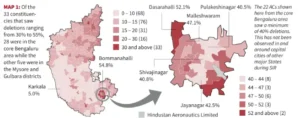
  • Karnataka witnessed the deletion of 1.08 crore names from its rolls.
  • The State’s electoral list shrank by 19.5%, from 5.13 crore to 4.46 crore voters.
  • This means one in every five voters was removed.
  • Among major States, Karnataka recorded the secondhighest deletion rate, after Telangana (21.7%).
Karnatakas Draft Sir Rolls

ConstituencyWise Patterns

  • Five constituencies in Bengaluru — Bommanahalli (54.8%), Dasarahalli (52.1%), BTM Layout (51.6%), Vijayanagar (51.1%), and C.V. Raman Nagar (51.1%) — saw over half their rolls deleted.
  • 36 constituencies accounted for 50% of total deletions, with 28 in Bengaluru’s core area.
  • Urban districts were worst affected: 29 highly urbanised districts saw 41.5% deletions.
  • Even rural areas showed high deletions under the “Shifted” category, raising doubts about methodology.

Transparency Concerns

  • The Election Commission of India (ECI) did not release the ElectorstoPopulation (EP) ratio, citing lack of Census data.
  • Karnataka’s draft rolls are 67 lakh short of the estimated eligible population.
  • Around 44 lakh voters are likely to be served notices for discrepancies.
  • The CEO’s website hosted deletion lists in nonsearchable Google Drive links, only in English, without old booth numbers — making verification difficult.
  • Unlike other States, Karnataka has not released genderwise deletion data, leaving gaps in understanding the impact on women voters.

Implications

  • Democratic Integrity: Largescale deletions risk disenfranchising genuine voters.
  • Urban Bias: Concentration of deletions in Bengaluru raises suspicion of targeting urban constituencies.
  • Administrative Weakness: Poor website maintenance and lack of searchable data hinder citizen oversight.
  • Legal Concerns: Without EP ratio and transparent methodology, deletions may violate principles of universal adult franchise.

Way Forward

  • Ensure EP ratio publication during every revision to track underenrolment.
  • Provide searchable, multilingual voter deletion lists with booth numbers for easy verification.
  • Conduct independent audits of deletion categories, especially “Shifted” voters in rural areas.
  • Release genderwise data to assess impact on women’s participation.
  • Strengthen grievance redressal mechanisms to restore wrongly deleted names before elections.

Conclusion

Karnataka’s draft SIR rolls highlight a serious electoral challenge: mass deletions, concentrated in urban constituencies, coupled with poor transparency. Unless corrected, these gaps risk undermining citizens’ right to vote and the credibility of India’s democratic process.

YOUTH VOTE AND ITS ELECTORAL IMPACT

TOPIC: (GS2) POLITY: THE HINDU

The Jantar Mantar protests led by the Cockroach Janta Party (CJP) and the BJP’s defeats in Bankipur and Daita byelections have drawn attention to the role of young voters (Gen Z) in shaping India’s electoral outcomes. With Assembly elections due in seven States, including Uttar Pradesh, Punjab, and Gujarat, the youth vote has become a critical factor in political analysis.

Youth Participation Patterns

  • Turnout Variation: In the 2024 Lok Sabha elections, turnout among 18–21 yearolds was about 6 percentage points lower than average, while 22–25 yearolds recorded higher participation (68%).
  • State Differences:
    • Bihar: Only 41% of 18–21 yearolds voted, against overall turnout of 67.3%.
    • Uttar Pradesh: Youth turnout at 51%, below the average of 61.1%.
    • Madhya Pradesh, Punjab, Gujarat: Youth turnout exceeded overall turnout (77–89%).
    • West Bengal & Tamil Nadu: Extremely high youth participation (90–93%).
  • Age Variation: Participation rises with age; 22–25 yearolds often more active than the youngest group.

Is There a Single Youth Vote?

  • No uniform “youth vote” exists; preferences vary across States and age groups.
  • West Bengal: Shift from AITC+ dominance in 2021 to BJP support (51%) among 18–21 yearolds in 2026.
  • Uttar Pradesh: In 2022, BJP+ led with 44% among youth, but SP+ remained competitive with 38–39%.
  • Youth choices are dynamic, shaped by political context and electoral competition.

Do Young Voters Back Winning Parties?

  • Not always.
    • Uttarakhand (2022): Congress gained youth support (48% among 18–21 yearolds), but BJP won overall.
    • Bihar (2020): Mahagathbandhan led among youth (39% vs NDA’s 24%), yet lost the election.
    • By 2025, youth preferences shifted towards NDA (50% among 18–21 yearolds).

Youth Driving Political Change

  • Punjab (2022): AAP secured 47% among 18–21 yearolds, defeating Congress.
  • Tamil Nadu (2026): TVK gained 69% youth support, showing strong appeal among new voters.
  • Delhi (2015 & 2020): AAP dominated across age groups, with particularly strong youth backing (58–59%).
  • These cases show youth can catalyze political change, especially when mobilized around new parties or reformist agendas.

A Dynamic Electorate

  • Youth participation varies by State, age group, and election cycle.
  • Preferences can shift rapidly, as seen in West Bengal and Bihar.
  • The “youth vote” is not a fixed bloc but a moving part of India’s electoral landscape, capable of influencing outcomes when mobilized strongly.

Conclusion

India’s youth electorate is dynamic, diverse, and unpredictable. Their influence lies in timing, context, and collective strength. Though not always aligned with winners, youth voters can decisively reshape outcomes, as seen in Punjab, Tamil Nadu, and Delhi.

ROHINGYAS

TOPIC: (GS3) SEQURITY: THE HINDU

The UN Committee on the Elimination of Racial Discrimination (UNCERD) recently flagged violations against Scheduled Castes, Scheduled Tribes, and Rohingya refugees in India, drawing global attention to the plight of the Rohingyas.

Origins of the Rohingyas

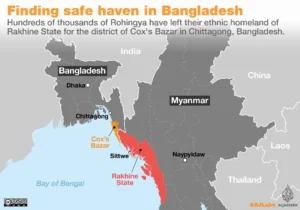
  • The Rohingyas are a Muslim minority group primarily from Rakhine State in Myanmar.
  • They trace their ancestry to centuries of settlement in the region, but Myanmar does not recognize them as citizens under its 1982 Citizenship Law, rendering them stateless.
  • The Myanmar government classifies them as “illegal immigrants” from Bangladesh, despite their long presence in Rakhine.

Persecution and Displacement

  • Rohingyas have faced systematic discrimination, denial of citizenship, restrictions on movement, and limited access to education and healthcare.
  • Violence escalated in 2017, when Myanmar’s military launched operations following insurgent attacks.
  • The UN described these actions as ethnic cleansing, forcing over 700,000 Rohingyas to flee to Bangladesh.
  • Today, nearly 1 million Rohingyas live in refugee camps in Bangladesh, with smaller populations in India, Malaysia, and other countries.
Rohingyas

Rohingyas in India

  • India hosts around 40,000 Rohingya refugees, settled in states like Jammu & Kashmir, Delhi, Hyderabad, and Haryana.
  • Many lack formal refugee status, facing challenges in accessing housing, healthcare, and employment.
  • Security concerns have led to increased surveillance and detention, especially after incidents like the 2025 Pahalgam terror attack.
  • Reports highlight racial profiling, arbitrary arrests, and prolonged detention without due process.

Global Human Rights Concerns

  • The Rohingya crisis is considered one of the largest stateless refugee crises in the world.
  • International bodies, including the UN and Amnesty International, have urged countries to ensure protection, accountability, and humanitarian support.
  • Their plight underscores broader issues of statelessness, minority rights, and refugee protection in international law.

Conclusion

Rohingyas, a persecuted stateless minority from Myanmar, face violence and displacement. Their presence in India underscores balancing humanitarian duties, national security, and international law to protect vulnerable communities.

VAISHYA TEKRI EXCAVATION AND TRACING ASHOKA IN UJJAIN

TOPIC: (GS1) INDIAN ART AND CULTURE: THE HINDU

The Madhya Pradesh government has initiated new excavations at Vaishya Tekri, Ujjain, to restore Buddhist monuments linked to Ashoka, reviving scholarly interest in his viceroyalty and Ujjain’s historical significance.

Vaishya Tekri Stupa

  • Largest stupa at the site: 350 feet base, 100 feet high, larger than Sanchi’s 54-foot stupa.
  • Initial excavations (1938–39) uncovered large bricks and punch-marked coins, dating it to the Mauryan period.
  • Historians urge caution, noting reliance on Alexander Cunningham’s accounts and the need for updated evidence.
  • Nearby Kumhar Tekri also holds significance, associated with burial grounds and Xuanzang’s account of Ashoka’s “hellish prison.”

Vaishya Tekri Stupa

Ashoka and Ujjain

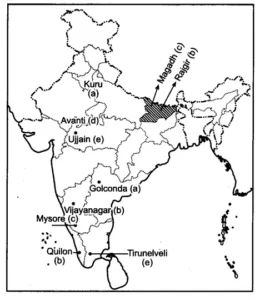
  • Ujjain (Ujjayini) was capital of Avanti, a major trade hub connecting western ports like Broach and Sopara with Pataliputra.
  • Ashoka served as viceroy in Avanti around 282 BCE, spending nearly a decade here.
  • En route, he met Devi at Vidisha, daughter of a merchant, with whom he had children Mahinda and Samghamitta.
  • His edicts later mention a kumara stationed at Ujjain, corroborating his posting.
  • Ujjain was already an urban centre with centuries of history, fortifications, and astronomical importance called the “Greenwich of India.”
Ashoka and Ujjain

Traditions and Evidence

  • Vaishya Tekri & Devi: Local traditions associate the stupa with Devi’s merchant (Vaishya) family background.
  • Xuanzang’s Account: The 7thcentury Chinese pilgrim recorded Kumhar Tekri as the site of Ashoka’s “hellish prison.”
  • Archaeological Findings: Excavations revealed burial-cum-cremation grounds dating to the 3rd century BCE, supporting textual traditions.
  • Evidence Gap: No Ashokan pillars or edicts have been discovered in Ujjain, leaving uncertainty about direct Mauryan inscriptions.

Conclusion

Vaishya Tekri excavation offers insights into Ashoka’s Ujjain viceroyalty and Buddhism in Malwa, but requires contextual, landscape-level study beyond old evidence to ensure reliable historical conclusions.


Write a Review

Your email address will not be published. Required fields are marked *

Seraphinite AcceleratorOptimized by Seraphinite Accelerator
Turns on site high speed to be attractive for people and search engines.