

Table of Contents
ToggleSHADOW TRANSHIPMENT NETWORK REPORT
TOPIC: (GS3) ECONOMY: THE HINDU
The US administration released a report titled “The Great Transhipment Scam” alleging that India is part of a global network helping China bypass tariffs. India has been placed in the highestrisk tier, raising concerns during ongoing IndiaUS trade negotiations.
Shadow Transhipment
- Definition: Practice of sending goods through third countries to disguise their true origin and avoid import tariffs.
- Process: Goods undergo minor assembly, relabelling, or repackaging in transit hubs before being shipped onward, making them appear as exports of the transit country.
- Trigger: Expanded significantly after 2018 when the US imposed steep tariffs on Chinese imports, prompting exporters to reroute shipments.
- Impact:
- Helps Chinese goods enter US markets at lower cost.
- Undermines tariff enforcement and reduces US customs revenue.
- Creates suspicion around genuine exports from countries flagged as transit hubs.
US Report Classification
- Tier 1 (High Risk): India, Mexico, Canada, EU – risk embedded in large trade volumes.
- Tier 2 (Medium Risk): Vietnam, Malaysia, Thailand – tightly linked with Chinese supply chains.
- Tier 3 (Low Enforcement): Cambodia, Panama, UAE – weak customs systems.
- Revenue Loss: US estimates ~$28 billion lost tariff revenue in 2025 due to rerouted goods.
IndiaSpecific Allegations
- Corridor Flagged: Pune–Gujarat–Chennai industrial belt accused of routing pumps & compressors.
- US Impact: Allegedly hurting industries in Cincinnati, Dayton, and Columbus.
- CounterEvidence (GTRI):
- India exported liquid pumps worth $1.61 billion globally; $414.5 million went to the US.
- Imports from China were only $326.4 million, showing independent capacity.
- Air pumps & compressors exports: $1.48 billion globally; $335.4 million to US.
- Imports from China: $1.63 billion – but India has strong domestic production base.
- Inference: India’s export scale suggests genuine manufacturing, not mere rerouting.
Similar Allegations Against Others
- Vietnam: Electrical switching equipment → affects US Midwest industries.
- Malaysia: Plastics cluster → impacts Akron & Canton.
- Indonesia: Plastic packaging goods.
- Thailand: Thermostats linked to Ayutthaya corridor.
MultiDimensional Analysis
- Economic: Risk of stricter scrutiny on Indian exports; possible tariff hikes under Section 301.
- Diplomatic: India must contest report’s methodology while keeping trade talks constructive.
- Legal: WTO norms require distinction between genuine value addition and illegal transhipment.
- Strategic: India’s “Make in India” and PLI schemes highlight domestic manufacturing strength.
- Comparative Example: Similar accusations against Vietnam show US targeting multiple hubs, not India alone.
Conclusion
The report reflects Washington’s strategy of shifting tariff pressure from China to its partners; India must defend its manufacturing credibility while carefully negotiating trade commitments.
INDIA’S 100 GW NUCLEAR TARGET AND CHIP FUTURE
TOPIC: (GS3) ECONOMY: THE HINDU
PM Modi, in his Independence Day speech (2026), announced a 100 GW nuclear capacity target by 2047 and commissioning of five new reactors this decade, linking nuclear power to India’s rising electricity demand from AI, semiconductors, and data centres.
Background
- SHANTI Act 2025: Replaced older nuclear laws, enabled private participation, and gave statutory backing to the Atomic Energy Regulatory Board (AERB).
- Draft Rules (DAE): Cover licensing, safety, liability, and captive generation for private players.
- Global Interest: Russia, US, and France have shown interest in supplying nuclear technology.
Why Nuclear Expansion is Needed
- Digital Economy Demand: AI, semiconductor fabs, and data centres require continuous, highdensity electricity.
- Carbon Neutrality: Nuclear provides baseload clean energy, complementing renewables.
- Land & Storage Limits: Unlike solar/wind, nuclear requires less land and avoids large battery storage costs.
- Energy Security: Reduces dependence on coal imports and volatile fossil fuel markets.
Two-Pronged Strategy
- Large Reactors: Expansion of Pressurised Heavy Water Reactors (PHWRs) and imported Light Water Reactors (LWRs).
- Small Modular Reactors (SMRs): Flexible, quicker to deploy, suited for industrial decarbonisation and repurposing old thermal sites.
Current Nuclear Status
- Operational: 25 reactors, ~8.7 GWe.
- Under Construction: 10 reactors, ~8 GWe.
- PreProject Stage: 10 units, ~6.6 GWe.
India’s Three-Stage Nuclear Programme
- Stage 1: PHWRs using natural uranium.
- Stage 2: Fast Breeder Reactors (FBRs) — convert thorium into fissile Uranium233.
- Stage 3: Thoriumbased advanced reactors for longterm selfreliance.
- Recent Milestone: Kalpakkam FBR achieved criticality in April 2026, marking progress toward thorium utilisation.
Significance
- Economic: Supports semiconductor & AI industries, reduces import bills.
- Strategic: Enhances energy independence, strengthens global nuclear partnerships.
- Environmental: Aligns with India’s Net Zero 2070 pledge.
- Social: Repurposing old thermal sites avoids displacement, ensures community acceptance.
- International Relations: Nuclear cooperation with Australia, Canada, Russia, Central Asia ensures uranium supply security.
Conclusion
India’s nuclear roadmap combining thorium selfreliance, SMR innovation, and private participation is set to become the backbone of its AIdriven, carbonneutral future.
GREEN INDIA MISSION & CAG AUDIT
TOPIC: (GS3) ENVIRONMENT: THE HINDU
The Comptroller and Auditor General (CAG) has released a performance audit highlighting major gaps in the Green India Mission (GIM), including poor funding, weak convergence with other schemes, and shortfalls in forestcover targets.
Green India Mission
- Launch: Initiated in 2014 under the National Action Plan on Climate Change (NAPCC); implementation began in 201516.
- Approach: Landscapebased strategy focusing on afforestation, ecorestoration, and livelihood support.
- Objectives:
- Increase forest & tree cover by 5 million ha.
- Improve quality of another 5 million ha.
- Enhance biodiversity, water security, and carbon sequestration.
- Support forestdependent communities with livelihood opportunities.
Achievements
- Funding Released: ₹1,019.26 crore released till March 2026, covering ~1.55 lakh ha of plantations.
- Forest Cover Trends:
- ISFR 2023: Forest & tree cover = 25.17% of India’s area.
- Increase of 4.83% since 2013.
- Global Recognition: India ranked 3rd globally in annual net forest gain (FAO 2025).
- Livelihood Support: Plantation & ecorestoration activities linked to income generation for forest communities.
Link to Climate Commitments
- NDC Target: Create additional carbon sink of 2.5–3 billion tonnes CO₂ equivalent by 2030.
- Role of Forests: Carbon sequestration, biodiversity conservation, water regulation, soil protection, and climate resilience.
CAG Audit Findings
- Funding Deficit: Against proposed ₹10,600 crore, only ₹1,149.14 crore received (2015–25).
- Weak Convergence: Poor integration with CAMPA, MGNREGS, Nagar Van Yojana, and School Nursery Yojana.
- Financial Controls:
- 8 States/UTs did not maintain annual accounts.
- Several accounts unaudited or with discrepancies.
- Monitoring Gaps: Weak outcomebased tracking; survival rates of plantations not adequately measured.
- Overall Shortfall: Targets under GIM interventions significantly underachieved despite national forest cover increase.
COMPTROLLER AND AUDITOR GENERAL (CAG)
- Constitutional Authority: Established under Article 148 of the Constitution, the CAG is a constitutional office responsible for auditing the accounts of the Union and States.
- Functions & Duties: As per Articles 149–151, the CAG audits receipts and expenditure of the government, public sector undertakings, and bodies substantially financed by government funds.
- Independence & Safeguards: Appointed by the President; removal process is the same as that of a Supreme Court Judge, ensuring autonomy. Salary and service conditions are charged on the Consolidated Fund of India.
- Accountability Mechanism: CAG submits reports to the President or Governor, which are then placed before Parliament or State Legislature. These reports are examined by the Public Accounts Committee (PAC), strengthening legislative oversight.
Conclusion
The audit shows that financial support alone is insufficient; India must strengthen institutional convergence, monitoring, and ecological outcome measurement to make GIM a true pillar of its climate strategy.
FOREIGN ASSETS OF SMALL TAXPAYERS
TOPIC: (GS2) POLITY: THE HINDU
The government has notified a onetime voluntary disclosure scheme (FASTDS) under the Finance Act, 2026, allowing small taxpayers to declare undisclosed foreign assets and income with immunity from prosecution.
About the Scheme
- Nature: Onetime voluntary disclosure, contained in Chapter IV of Finance Act, 2026.
- Coverage: Immovable property, jewellery, artistic works, shares, securities, or any other foreign asset/income.
- Objective: Encourage compliance, reduce litigation, and bring hidden foreign wealth into the tax net.
Categories of Disclosure
- Category 1:
- Undisclosed foreign asset/income not offered to tax earlier.
- Threshold: ≤ ₹1 crore.
- Taxpayer pays 30% tax + 30% additional tax (penalty substitute).
- Immunity from prosecution under Black Money Act, 2015.
- Category 2:
- Assets already taxed or acquired when taxpayer was nonresident but not reported in return schedules.
- Threshold: ≤ ₹5 crore.
- Fee: ₹1 lakh.
- Immunity from both penalty and prosecution.
Significance
- Compliance Tool: Helps small taxpayers regularise past omissions without harsh penalties.
- Climate of Trust: Encourages voluntary disclosure, reducing fear of prosecution.
- Policy Link: Complements Black Money Act, 2015 and India’s global commitments under FATCA & OECD’s CRS framework.
- Broader Impact: Strengthens transparency in foreign asset reporting, aids in curbing illicit wealth flows, and supports India’s tax base.
Conclusion
FASTDS reflects India’s effort to balance tax enforcement with compliance facilitation, offering small taxpayers a structured path to disclosure while reinforcing credibility in global financial governance.
SUBANSIRI RIVER
TOPIC: (GS1) GEOGRAPHY: THE HINDU
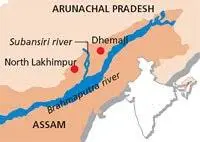
The Subansiri River in Arunachal Pradesh’s Upper Subansiri district has risen to unusually high levels despite no rainfall, raising safety concerns among local communities.
About Subansiri River
- Origin: Formed in Tibet by the confluence of Lokong Chu, Chayal Chu, and Tsari Chu streams.
- Course:
- Flows eastward in Tibet (~170 km).
- Enters India near Taksing (Arunachal Pradesh).
- Cuts deep gorges through Miri Hills before descending into Assam Valley at Dulangmukh.
- Meanders ~86 km in plains, passes near Majuli Island, and joins the Brahmaputra at Jamurighat (Assam).
- Length & Basin: ~442 km long; basin area ~32,000 sq. km.
- Type: TransHimalayan and antecedent river (older than Himalayas, maintained course through uplift).
- Unique Feature: Known as “Gold River” due to gold dust in its waters.
Hydrology
- Fed by snowmelt from Tibetan headwaters and monsoon rains (June–September).
- Major tributaries: Laro, Nye, Yume, Tsari, Kamla, Jiyadhol, Ranganadi, Dikrong.
Hydroelectric Project
- Lower Subansiri Hydroelectric Project:
- 2000 MW runoftheriver project at Gerukamukh (Arunachal–Assam border).
- Will be India’s largest hydroelectric plant once completed.
- Seen as vital for clean energy but faces ecological and seismic safety concerns.
Conclusion
The Subansiri River is both a lifeline and a challenge—its hydropower potential is immense, but managing floods, ecological balance, and community safety remains crucial for sustainable development.
CHIPS TO STARTUP (C2S) PROGRAMME
TOPIC: (GS3) ECONOMY: THE HINDU
The Ministry of Electronics and IT (MeitY) reported that over 68,000 students have been trained in semiconductor chip design under the Chips to Startup (C2S) Programme, a flagship initiative launched in 2022.
About the Programme
- Launch: Started in 2022 by MeitY as an umbrella initiative for semiconductor skill development.
- Funding: ₹250 crore outlay over five years.
- Target: Train 85,000 industryready professionals across UG, PG, and PhD levels.
- Startup Focus: Incubate 25 startups and enable 10 technology transfers.
⚙Key Features
- SMART Labs: Access to advanced chip design and testing facilities.
- Training Goal: One lakh students trained; 50 patents generated; 2,000 research publications supported.
- Innovation Push: Encourages academic institutions to contribute to India’s semiconductor ecosystem.
- Employability: Enhances job readiness in chip design, fabrication, and testing.
Programme Approach
- Handson Training: Collaboration with industry partners for practical sessions.
- Access to Tools: Students use advanced EDA software, fabrication facilities, and semiconductor foundries.
- Prototype Development: R&D projects for ASICs, SoCs, and IP Core designs.
- Mentorship: Guidance from industry experts to bridge academiaindustry gap.
Achievements So Far
- Students Trained: 68,000+ by 2026.
- Research Output: Multiple patents and publications emerging from supported institutions.
- Startup Ecosystem: Early incubation of semiconductor startups aligned with India’s Digital India and Semicon India vision.
Conclusion
The C2S Programme is a cornerstone of India’s semiconductor selfreliance, linking skill development, innovation, and startup incubation to power the nation’s digital future.
INDIA’S SPACE LAUNCH COSTS
TOPIC: (GS3) SCIENCE AND TECHNOLOGY: THE HINDU
A recent study has revealed that India’s perunit space launch cost is the highest globally, raising questions about its reputation as a costeffective launcher.
India’s Space Launch Costs
- PerUnit Launch Cost (2025): India – $13,302/kg, Russia – $6,682/kg, China – $5,809/kg, Japan – $5,287/kg, USA – $3,225/kg, Global Average – $3,868/kg
Factors Behind India’s High Costs
- Small Rocket Dependence: Heavy reliance on PSLV, which carries smaller payloads, spreads fixed costs inefficiently.
- Low Launch Frequency: Only 5 launches in 2025, compared to SpaceX’s 90+, limiting economies of scale.
- Efficiency Gap: Unlike US and Europe, India has not achieved significant cost reductions through cumulative launches.
- Payload Limitation: Larger satellites (e.g., GSATN2, 4,700 kg) require foreign launchers like Falcon 9, adding dependency costs.
India’s Launch Record
- Only five launches in 2025, far below expectations.
- Private Sector Growth: Over 400 startups registered with INSPACe since 2020.
- Milestone: In July 2026, Skyroot Aerospace launched India’s first privately built orbital rocket, making India the third nation after US & China with private orbital launch capability.
Dependence on Foreign Launchers
- GSATN2 (2024): Launched on SpaceX Falcon 9 due to payload size (4,700 kg).
- Startups Pixxel & Digantara (2025): Used SpaceX rideshare missions.
- Future Plans: GalaxEye and others booked Falcon 9 slots for 2026.
⚠Geopolitical Concerns
- SpaceX Dominance: Accounted for 75% of global payload in 2025.
- Risk: US could leverage launch dependency in global negotiations, creating strategic vulnerabilities for India.
Challenges
- High PerUnit Cost: India’s launch cost is $13,302/kg vs global average of $3,868/kg, mainly due to reliance on smaller rockets like PSLV.
- Low Launch Frequency: Only 5 launches in 2025, limiting economies of scale compared to SpaceX’s 90+ launches.
- Dependence on Foreign Launchers: GSATN2 (4,700 kg) had to be launched on SpaceX Falcon 9, showing India’s payload limitations.
- Geopolitical Risk: SpaceX carried 75% of global payload in 2025, creating strategic vulnerability if India remains dependent.
Way Forward
- Scale Launch Frequency: Aim for 15–20 launches annually to reduce perunit costs, similar to China’s 60+ launches per year.
- Develop Larger Rockets: Upgrade LVM3 and invest in heavylift vehicles to handle >5,000 kg payloads, reducing reliance on foreign launchers.
- Boost Private Participation: Encourage startups like Skyroot, Agnikul, Bellatrix; already 400+ registered with INSPACe, can expand launch capacity.
- International Collaboration: Partner with EU, Japan, and Australia for joint launches and technology sharing, diversifying beyond US dependence.
Conclusion
India must scale up launches, build heavylift capacity, and integrate private players to cut costs and secure its position as a credible global space power.
INDIA ROAD ACCIDENT FATALITIES
TOPIC: (GS3) SCIENCE AND TECHNOLOGY: THE HINDU
A recent study has revealed that India’s perunit space launch cost is the highest globally, raising questions about its reputation as a costeffective launcher.
India’s Space Launch Costs
- PerUnit Launch Cost (2025): India – $13,302/kg, Russia – $6,682/kg, China – $5,809/kg, Japan – $5,287/kg, USA – $3,225/kg, Global Average – $3,868/kg
Factors Behind India’s High Costs
- Small Rocket Dependence: Heavy reliance on PSLV, which carries smaller payloads, spreads fixed costs inefficiently.
- Low Launch Frequency: Only 5 launches in 2025, compared to SpaceX’s 90+, limiting economies of scale.
- Efficiency Gap: Unlike US and Europe, India has not achieved significant cost reductions through cumulative launches.
- Payload Limitation: Larger satellites (e.g., GSATN2, 4,700 kg) require foreign launchers like Falcon 9, adding dependency costs.
India’s Launch Record
- Only five launches in 2025, far below expectations.
- Private Sector Growth: Over 400 startups registered with INSPACe since 2020.
- Milestone: In July 2026, Skyroot Aerospace launched India’s first privately built orbital rocket, making India the third nation after US & China with private orbital launch capability.
Dependence on Foreign Launchers
- GSATN2 (2024): Launched on SpaceX Falcon 9 due to payload size (4,700 kg).
- Startups Pixxel & Digantara (2025): Used SpaceX rideshare missions.
- Future Plans: GalaxEye and others booked Falcon 9 slots for 2026.
⚠Geopolitical Concerns
- SpaceX Dominance: Accounted for 75% of global payload in 2025.
- Risk: US could leverage launch dependency in global negotiations, creating strategic vulnerabilities for India.
Challenges
- High PerUnit Cost: India’s launch cost is $13,302/kg vs global average of $3,868/kg, mainly due to reliance on smaller rockets like PSLV.
- Low Launch Frequency: Only 5 launches in 2025, limiting economies of scale compared to SpaceX’s 90+ launches.
- Dependence on Foreign Launchers: GSATN2 (4,700 kg) had to be launched on SpaceX Falcon 9, showing India’s payload limitations.
- Geopolitical Risk: SpaceX carried 75% of global payload in 2025, creating strategic vulnerability if India remains dependent.
Way Forward
- Scale Launch Frequency: Aim for 15–20 launches annually to reduce perunit costs, similar to China’s 60+ launches per year.
- Develop Larger Rockets: Upgrade LVM3 and invest in heavylift vehicles to handle >5,000 kg payloads, reducing reliance on foreign launchers.
- Boost Private Participation: Encourage startups like Skyroot, Agnikul, Bellatrix; already 400+ registered with INSPACe, can expand launch capacity.
- International Collaboration: Partner with EU, Japan, and Australia for joint launches and technology sharing, diversifying beyond US dependence.
Conclusion
India must scale up launches, build heavylift capacity, and integrate private players to cut costs and secure its position as a credible global space power.