
Table of Contents
ToggleEcological Recovery of Manasbal Lake
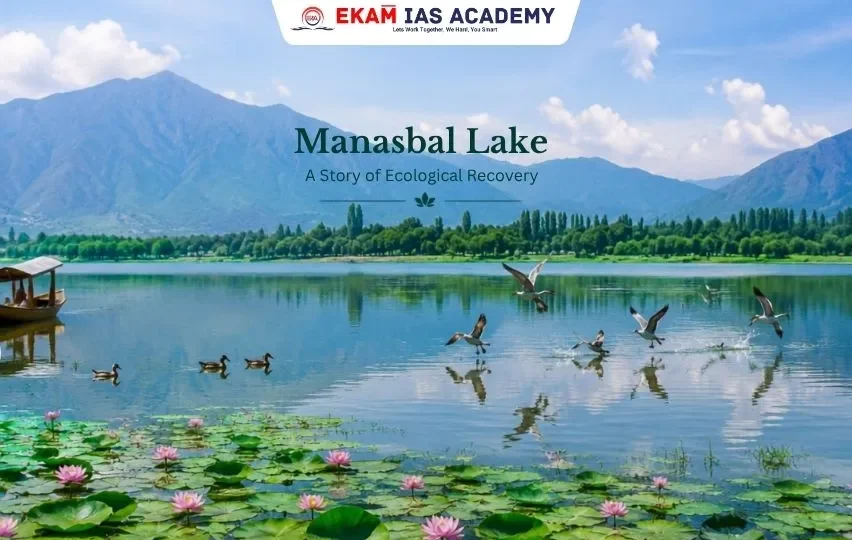
Manasbal Lake in Jammu and Kashmir is witnessing a remarkable ecological recovery, demonstrated by the return of diverse migratory bird species after years of habitat restoration and scientific water management. The revival reflects the success of conservation initiatives undertaken by the Wullar-Manasbal Development Authority (WMDA) and other agencies to improve the lake’s ecological health through dredging, pollution control, hydrological management, and community participation.
Known as the “Supreme Gem of Kashmir Lakes,” Manasbal Lake is India’s deepest freshwater lake and supports rich aquatic biodiversity, making it one of the country’s most significant wetland ecosystems.
For UPSC aspirants, this topic is important under Environment & Ecology, Wetland Conservation, Biodiversity, Ramsar Sites, and Sustainable Development.
Why is Manasbal Lake in the News?
Manasbal Lake has gained attention due to its significant ecological recovery, marked by the resurgence of migratory birds and improved water quality following targeted restoration measures.
The successful conservation efforts demonstrate the importance of integrated wetland management in restoring fragile aquatic ecosystems.
About Manasbal Lake
Manasbal Lake is a spring-fed freshwater lake located in the Ganderbal district of Jammu & Kashmir.
It is widely known as:
- India’s deepest freshwater lake (approximately 13 metres deep)
- “Supreme Gem of Kashmir Lakes”
- A famous destination for its extensive lotus blooms
- A biodiversity-rich wetland supporting numerous aquatic species
The lake is primarily sustained by:
- Rainfall
- Groundwater springs
- Surface runoff
Together, these sources create a highly productive freshwater ecosystem.
Geographical Features
- Location: Ganderbal District, Jammu & Kashmir
- Type: Alkaline, spring-fed freshwater lake
- Maximum Depth: Approximately 13 metres
- Major Characteristics:
- Rich aquatic vegetation
- Extensive lotus fields
- High fish diversity
- Important bird habitat
Avian Biodiversity
Manasbal Lake supports more than 46 bird species belonging to 23 different families.
Some important bird species include:
- Mallard
- White-headed Duck
- Eurasian Hoopoe
- Horned Grebe
- Long-eared Owl
The return of migratory birds is considered a positive indicator of:
- Improved water quality
- Better ecological balance
- Successful habitat restoration
Habitat Restoration Measures
The Wullar-Manasbal Development Authority (WMDA) has implemented several restoration initiatives.
Targeted Dredging
Dredging has helped:
- Restore natural water circulation
- Increase water depth
- Remove accumulated sediments
Weed Removal
Excessive aquatic weeds have been removed to:
- Improve oxygen availability
- Enhance aquatic biodiversity
- Facilitate better water flow
Together, these measures have significantly improved the ecological health of the lake.
Hydrological Management
To ensure sustainable water management, the Jammu & Kashmir Water Resources Regulatory Authority is undertaking water budgeting.
Objectives of Water Budgeting
- Assess the lake’s carrying capacity
- Evaluate current water withdrawals
- Estimate surplus water availability
- Maintain ecological water balance
Supporting infrastructure includes:
- Mechanized gates
- Gauge meters
- Continuous monitoring of water levels
These measures help maintain optimal ecological conditions throughout the year.
Pollution Mitigation Measures
A comprehensive pollution control strategy has been introduced.
Sewerage Treatment Plant (STP)
The STP treats wastewater before it enters the lake, reducing pollution.
Solid Waste Management
An integrated waste management facility helps prevent the accumulation of solid waste around the wetland.
Trash Guards
Trash interception systems have been installed near the Lar Irrigation Canal to prevent:
- Plastic waste
- Floating debris
- Domestic effluents
from entering the lake.
Community-Based Conservation
Local participation has become a key component of restoration efforts.
Major initiatives include:
- Celebration of World Wetlands Day
- Bird-watching festivals
- Environmental awareness campaigns
- Promotion of eco-friendly tourism
- Community involvement in conservation activities
These programmes encourage sustainable use of the wetland while reducing human pressure on the ecosystem.
Major Lakes of Kashmir
Wular Lake
- Asia’s second-largest freshwater lake
- Ramsar Site
- Important for flood regulation
- Supports fisheries and biodiversity
Dal Lake
- Famous urban lake of Kashmir
- Known for houseboats and shikaras
- Popular tourist destination
- Surrounded by Mughal gardens
Manasbal Lake
- India’s deepest freshwater lake
- Rich aquatic biodiversity
- Successful wetland restoration model
- Important habitat for migratory birds
Surinsar–Mansar Lakes
- Ramsar Sites
- Freshwater lakes of ecological importance
- Known for scenic beauty and cultural heritage
Significance of the Restoration
The ecological recovery of Manasbal Lake contributes to:
- Wetland conservation
- Biodiversity protection
- Improved water quality
- Sustainable tourism
- Climate resilience
- Conservation of migratory birds
- Long-term ecosystem restoration
It also demonstrates how scientific management combined with community participation can successfully restore degraded wetlands.
UPSC Prelims Quick Facts
| Topic | Fact |
|---|---|
| Lake | Manasbal Lake |
| Location | Ganderbal, Jammu & Kashmir |
| Type | Alkaline, spring-fed freshwater lake |
| Special Feature | India’s deepest freshwater lake |
| Nickname | Supreme Gem of Kashmir Lakes |
| Restoration Agency | Wullar-Manasbal Development Authority (WMDA) |
| Key Activity | Water budgeting |
| Bird Diversity | Over 46 species |
| Importance | Wetland restoration & biodiversity conservation |
UPSC Mains Perspective
GS Paper III
- Wetland Conservation
- Biodiversity Conservation
- Sustainable Water Management
- Ecosystem Restoration
- Climate Resilience
Environment & Ecology
- Freshwater Ecosystems
- Migratory Birds
- Pollution Control
- Community-Based Conservation
Conclusion
The ecological recovery of Manasbal Lake is a notable success story in India’s wetland conservation efforts. Through habitat restoration, scientific hydrological management, pollution control, and active community participation, the lake has regained its ecological vitality, as reflected in the return of migratory birds and improved water quality. As India’s deepest freshwater lake and a biodiversity hotspot, Manasbal serves as a model for sustainable wetland restoration. For UPSC aspirants, this topic is highly relevant under Environment & Ecology, Wetland Conservation, Biodiversity, Water Resource Management, and Sustainable Development Goals (SDGs).



Frequently Asked Questions (FAQs) About the Ecological Recovery of Manasbal Lake
Why is Manasbal Lake in the news?
Manasbal Lake is in the news because it is witnessing a significant ecological recovery, marked by the return of diverse migratory bird species after habitat restoration, hydrological management, and pollution control measures undertaken by the Wullar-Manasbal Development Authority (WMDA).
Where is Manasbal Lake located, and why is it important?
Manasbal Lake is located in the Ganderbal district of Jammu & Kashmir. It is India’s deepest freshwater lake, known as the “Supreme Gem of Kashmir Lakes” for its lotus blooms, rich aquatic biodiversity, and importance as a habitat for migratory birds.
What measures have been taken to restore Manasbal Lake?
Key restoration measures include targeted dredging, aquatic weed removal, water budgeting, installation of mechanized gates and gauge meters, establishment of a Sewerage Treatment Plant (STP), solid waste management, trash guards, and promotion of community-based conservation and eco-friendly tourism.
Why is the return of migratory birds to Manasbal Lake significant?
The return of migratory birds such as Mallards, White-headed Ducks, Eurasian Hoopoes, Horned Grebes, and Long-eared Owls indicates improved water quality, healthier habitats, and the successful restoration of the lake’s ecosystem, making them important indicators of ecological recovery.
What is the importance of Manasbal Lake for UPSC preparation?
Manasbal Lake is an important UPSC topic under Environment & Ecology because it covers wetland conservation, biodiversity, habitat restoration, freshwater ecosystems, migratory birds, pollution control, sustainable tourism, and community-led conservation, making it relevant for both Prelims and GS Paper III (Mains).