

...
Daily Current affairs 20 August 2026

Daily Current Affairs 20-August-2026

Share this Post

SUPREME COURT ON NTA REFORMS

TOPIC: (GS2) POLITY: THE HINDU

The Supreme Court has stressed that reforms in the National Testing Agency (NTA) must be institutionalised and enduring, following the NEETUG 2026 paper leak that affected over 23 lakh aspirants.

Background

  • Recurring Failures: NEETUG 2026 leak exposed systemic lapses in NTA’s exam conduct.
  • Committees: Centre formed a new Nandan Nilekani Task Force for technological reforms, but SC questioned why earlier K. Radhakrishnan Committee recommendations were sidelined.
  • Public Examinations Act 2026: Introduced strict penalties for malpractice, seen as a landmark measure.

Supreme Court Observations

  • Institutional Memory: Reforms must be sustained across successive officers, not undone with transfers.
  • Continuity in Reforms: Avoid “committee hopping” and ensure earlier findings are implemented.
  • Comparison with UPSC: Highlighted UPSC’s consistent record in conducting exams without disruption.
  • Technological Preparedness: Court asked about cybersecurity, storage systems, and infrastructure readiness.

Challenges

  • Systemic Weakness: Repeated leaks show lack of robust exam security.
  • Implementation Gap: Recommendations of expert panels often ignored.
  • Trust Deficit: Student protests reflect declining confidence in NTA.
  • Operational Scale: NTA conducts exams for crores of candidates; lapses affect national credibility.

Way Forward

  • Permanent Mechanism: Establish a standing reform body within NTA to ensure continuity.
  • Technology Integration: Adopt secure digital platforms, AIbased monitoring, and encrypted paper transmission.
  • Accountability Framework: Independent audits and fasttrack courts for malpractice cases.
  • Student-Centric Approach: Transparent communication, advance notice of exam changes, and grievance redressal systems.

Conclusion

Enduring reforms, not temporary fixes, are essential to make NTA a credible and resilient institution for India’s future.

SURROGATE ADVERTISING AND CONSUMER PROTECTION

TOPIC: (GS2) POLITY: THE HINDU

The Maharashtra FDA Commissioner has initiated action against celebrity endorsements of Vimal Elaichi, arguing that such promotions amount to surrogate advertising of tobacco products, raising questions of regulatory scope under COTPA and consumer law.

Surrogate Advertising in India

  • Surrogate advertising means promoting a legally permitted product (e.g., elaichi, soda, music CDs) to indirectly advertise restricted goods such as tobacco or alcohol.
  • It exploits loopholes in advertising laws to maintain brand recall.
  • Legal Framework: The Cigarettes and Other Tobacco Products Act (COTPA), 2003 prohibits both direct and indirect promotion of tobacco products.
  • Surrogate ads are treated as unfair trade practices under consumer protection laws.
  • Judicial Precedent: In DGHS vs Som Pan Product Pvt. Ltd. (Delhi High Court, 2024), the Court held:
      • The State must prove surrogate advertising with clear evidence.
      • Mere brand registration or existence of a technically legal product is not sufficient proof.
    • This ruling emphasised the need for evidencebased enforcement rather than presumptions.

Key Issues

  • Celebrity Endorsements: Stars like Shah Rukh Khan, Ajay Devgn, and Tiger Shroff face scrutiny under Consumer Protection Act 2019, which imposes endorser liability.
  • Public Health Impact: India bears the highest global burden of oral cancer (ICMR data, 2025). Tobacco-linked surrogate ads worsen health risks.
  • Fragmented Regulation: Multiple laws — COTPA, Food Safety and Standards Act (2006), Consumer Protection Act (2019) — create overlapping enforcement challenges.

Challenges

  • Proof Burden: Regulators must establish clear evidence linking surrogate products to banned goods.
  • Regulatory Overreach: Excessive bans risk judicial pushback and may weaken enforcement credibility.
  • Market Practices: Companies exploit loopholes with products like elaichi, soda, or music CDs to sustain brand recall.

Way Forward

  • Evidence-Based Enforcement: FDA must build strong cases under COTPA and FSS Act to withstand judicial scrutiny.
  • Unified Framework: Consolidate fragmented laws into a single advertising regulation code.
  • Celebrity Accountability: Enforce endorser liability with financial penalties and mandatory disclosures.
  • Public Awareness: Campaigns to educate consumers about surrogate advertising’s health risks.

Conclusion

Effective regulation must curb surrogate advertising without overreach, ensuring consumer health protection while maintaining legal credibility.

TRANSMISSION CONSTRAINTS AND INDIA’S RENEWABLE ENERGY EXPANSION

TOPIC: (GS3) ECONOMY: THE HINDU

ICRA has highlighted that insufficient transmission infrastructure is causing large-scale curtailment of renewable energy projects, threatening India’s target of achieving 35% power generation from renewables by 202930.

Current Situation

  • Curtailment Issue: Solar and wind projects are being forced to reduce output due to grid congestion.
  • T-GNA Dependence: 37% of affected capacity operates under Temporary General Network Access (T-GNA). These projects face 30–50% curtailment during peak daylight hours.
  • Regional Impact:
    • Western India: Curtailment peaked at 8,617 MW (Aug 2026).
    • Northern region: Curtailment reached 5,573 MW.
  • Pipeline: Over 150 GW of renewable projects under construction as of June 2026.

Trends in Bidding & PPAs

  • Decline in New Awards:
    • 40.6 GW awarded in 2024–25.
    • Fell to 14.7 GW in 2025–26.
    • Only 4.7 GW awarded till Aug 2026.
  • Pending PPAs: 40–45 GW of capacity with bids awarded still lack signed Power Purchase Agreements (PPAs).
  • Shift in Focus: New tenders emphasise Firm and Dispatchable Renewable Energy (FDRE) and RoundtheClock (RTC) supply.

Causes of Transmission Losses in India (with Data)

Technical Inefficiencies:

    • Losses occur due to resistance in conductors, aging transformers, and overloaded lines.
    • As per Central Electricity Authority (CEA, June 2026), average transmission losses are 4.27% nationally.

Grid Congestion & Infrastructure Gaps:

    • Renewable energy expansion is faster than grid buildout.
    • In Q1 2026, about 470 GWh of renewable energy was curtailed, with twothirds due to transmission constraints. Line additions are running at only ~80% of target.

Commercial & Operational Issues:

    • Electricity theft, faulty metering, and billing errors add to losses.
    • Aggregate Technical & Commercial (AT&C) losses stood at 17.6% in 202324, with states like Uttar Pradesh (19%) and J&K & Ladakh (48%) showing very high losses.

Challenges

  • Transmission Bottlenecks: Delay in intrastate and interstate grid expansion.
  • Storage Deficit: Limited battery and pumped hydro capacity to balance variability.
  • Land & PPA Delays: Slow land acquisition and unsigned PPAs hinder project viability.
  • DISCOM Finances: Weak distribution company finances reduce confidence in longterm contracts.

Way Forward

  • Accelerate Grid Expansion: Timely execution of transmission corridors under the Green Energy Corridor Project.
  • Boost Storage Capacity: Invest in battery storage and pumped hydro; NITI Aayog projects India needs 27 GW of storage by 2030.
  • Strengthen PPAs: Ensure faster signing of contracts to secure investor confidence.
  • Financial Reforms: Implement UDAYII style reforms to improve DISCOM liquidity.
  • Diversify Bidding Models: Encourage FDRE and RTC projects to ensure reliability.

Conclusion

India’s renewable energy future depends not just on generation capacity, but on robust transmission and storage systems that can deliver clean power reliably.

SOLAR IRRIGATION AND GROUNDWATER

TOPIC: (GS1) GEOGRAPHY: THE HINDU

India has installed over 2.5 million solar pumps under PM-KUSUM in the last five years. As the government prepares PM-KUSUM 2.0, concerns remain about groundwater over-extraction linked to solar irrigation.

Background

  • Groundwater Stress: Free or subsidised electricity has historically led to unsustainable pumping, worsening aquifer depletion.
  • Solar Irrigation Debate: Critics argue solar pumps may worsen groundwater use since power is nearly free.
  • Policy Challenge: The task is to expand clean energy irrigation without aggravating water scarcity.

Models and Outcomes

  • Grid-Connected Solar: Farmers can sell surplus electricity → incentive to save water.
    • Example: Gujarat’s Suryashakti Kisan Yojana (SKY) → ₹7/unit feed-in tariff; farmers earned ~₹21,900 annually; slower growth in irrigation compared to non-solar farmers.
  • Fee-for-Service Model: In Bangladesh, centralised solar pumps supply water to multiple farmers; efficient use ensured as over-irrigation reduces service capacity.
  • Standalone Pumps: Outcomes vary by water table depth, pump size, and local cropping patterns.

Regional Diversity

  • Punjab & Haryana: Already irrigated with rice/wheat → solar unlikely to worsen groundwater but can reduce subsidy burden.
  • Eastern India: Irrigation limited by energy access, not water → solar pumps improve productivity and resilience.
  • Hard-Rock Aquifer Areas: Limited storage capacity → marginal returns to irrigation remain high, solar impact minimal.

Emissions & Subsidy Burden

  • Groundwater Irrigation Emissions: Estimated 45–62 million tonnes CO₂ annually (ICAR, 2025).
  • Subsidy Costs: Agricultural electricity subsidies exceed ₹1 lakh crore/year.
  • Gujarat Data: Each solar farmer offsets ~12.3 tonnes CO₂ annually; subsidies recovered one-fourth of investment in two years.

Challenges

  • Over-Pumping Risk: Free solar power may encourage excessive groundwater use.
  • Limited Incentives: Current buyback schemes have low uptake.
  • Regional Variability: Hydrogeology and crop patterns determine outcomes, making uniform policy ineffective.

Way Forward

  • Differentiated Policy: Tailor solar irrigation models to regional water and crop conditions.
  • Water-Saving Incentives: Expand schemes like Punjab’s Pani Bachao, Paisa Kamao and Haryana’s Mera Pani Meri Virasat.
  • Strengthen Monitoring: Invest in groundwater data systems for adaptive management.
  • DISCOM Incentives: Encourage feeder-level solar transitions with support for micro-irrigation.
  • Expand Access: In rainfed regions, prioritise standalone solar pumps to improve productivity.

Conclusion

Solar irrigation is not inherently harmful; its impact depends on model design, regional context, and incentives, making smart deployment the key to balancing clean energy with groundwater sustainability.

TRIBUNALS REFORMS BILL 2026

TOPIC: (GS2) POLITY: THE HINDU

Parliament has passed the Tribunals Reforms Bill, 2026, repealing the 2021 Act and restructuring tribunal governance in line with Supreme Court directions, ending a decade-long tussle between the judiciary and the executive.

Government vs Judiciary Conflict

2017 Finance Act:

    • Empowered the Central Government to frame rules on tribunal appointments, tenure, and service conditions.
    • Criticised for giving excessive executive control, undermining judicial independence.

Rojer Mathew Case 2019:

    • A Constitution Bench of the Supreme Court struck down the 2017 rules.
    • Held that tribunal autonomy is essential to preserve judicial independence.

2021 Ordinance & Tribunals Reforms Act:

    • Fixed tenure at 4 years (instead of SCsuggested 5 years).
    • Minimum appointment age set at 50 years.
    • Selection committees required to give the government a twoname panel, allowing executive discretion.
    • Supreme Court later struck down these provisions as arbitrary and unconstitutional.

Supreme Court Verdict 2025:

    • Declared the 2021 Act an impermissible legislative override of earlier judgments.
    • Held that a 4year tenure was antimerit and increased executive interference.
    • Criticised the twoname panel system for giving undue discretion to the executive.
    • Directed the Centre to establish a National Tribunals Commission within four months to ensure transparent appointments and performance review.

Key Provisions of Tribunals Reforms Bill 2026

  • National Tribunals Commission: Oversees appointments, performance reviews, complaints, and maintains a National Tribunals Data Grid.
  • Composition: Chairperson (former SC judge/HC Chief Justice), 2 judicial members, 2 technical members. Term: 5 years or till age 70.
  • Selection Process: Search-cum-selection committee recommends one name per vacancy (plus waiting list). Govt. must appoint within 3 months.
  • Tenure & Removal:
    • Chairpersons: 5 years, max age 70.
    • Members: 5 years, max age 67.
    • Removal grounds: insolvency, conviction, incapacity, abuse of position, incompetence.

Challenges

  • Executive Control: Centre still appoints Commission members, controls funding, and frames service rules.
  • Vacancies: As of 2022, NCLT had 24 vacancies out of 32 posts; Armed Forces Tribunal had 24 out of 34 → tribunals “virtually defunct.”
  • Delay in Implementation: SC’s directive for a permanent mechanism often ignored, causing backlog.

Way Forward

  • Strengthen Independence: Ensure Commission autonomy in appointments and funding.
  • Fill Vacancies: Time-bound recruitment to reduce pendency.
  • National Tribunals Data Grid: Improve transparency and performance monitoring.
  • Learning from UPSC: Adopt UPSC-like independent functioning to avoid executive interference.

TRIBUNALS

Tribunals are quasijudicial bodies created to deliver specialised, speedy justice in technical or administrative matters, reducing the burden on regular courts.

Constitutional Basis:

    • Provided under Articles 323A and 323B of the Constitution.
    • Parliament and State Legislatures are empowered to establish tribunals for specific disputes.

Types of Tribunals:

    • Administrative Tribunals (Art. 323A): For disputes related to public service (e.g., Central Administrative Tribunal).
    • Other Tribunals (Art. 323B): For matters like taxation, industrial disputes, land reforms, elections, and foreign exchange.

Purpose:

    • Provide expert adjudication in specialised fields.
    • Ensure speedy disposal of cases.
    • Reduce pendency in regular courts.

Judicial Review:

    • Tribunal decisions are subject to review by High Courts and Supreme Court.
    • Ensures constitutional supremacy and protection of fundamental rights.

Examples:

    • National Company Law Tribunal (NCLT).
    • Armed Forces Tribunal (AFT).
    • Income Tax Appellate Tribunal (ITAT).
    • National Green Tribunal (NGT).

Conclusion

The Tribunals Reforms Bill 2026 is a step toward safeguarding judicial independence, but enduring credibility will depend on minimising executive control and ensuring institutional continuity.

THE MYTH OF THE ‘PERFECT VICTIM’ AND JUDICIAL SENSITIVITY

TOPIC: (GS2) POLITY: THE HINDU

On August 6, 2026, the Goa Bench of the Bombay High Court convicted Tarun Tejpal for rape, overturning his 2021 acquittal. The Court criticised the trial court for relying on the stereotype of a “perfect victim”, calling for greater gender sensitivity in judicial writing.

Concept of the ‘Perfect Victim’

  • Origin: Norwegian criminologist Nils Christie (1986) theorised the idea in From Crime Policy to Victim Policy.
  • Attributes:
    • Victim is weak (female, child, elderly, disabled).
    • Engaged in respectable activities.
    • Cannot be blamed for being present at the crime scene.
    • Does not know the offender.
    • Offender is “big and bad.”
  • Social Power: Victim must evoke sympathy to be recognised as legitimate.

Judicial Examples in India

  • Mathura Custodial Rape Case (1979): Survivor labelled “habituated to sex”; SC acquitted accused citing lack of resistance.
  • Bhanwari Devi Case (1992): Court held uppercaste men unlikely to rape a Dalit woman → later led to Vishakha Guidelines and POSH Act, 2013.
  • Jindal Law School Case (2017): Survivor described as having a “promiscuous attitude,” undermining credibility.
  • Tejpal Case (2021–2026): Trial court focused on survivor’s demeanour (smiling in CCTV) rather than evidence; HC corrected this bias.

Challenges

  • Stereotyping Survivors: Courts often expect a “performance of trauma.”
  • Hierarchy of Victimisation: Survivors judged by caste, class, gender, or prior sexual history.
  • Judicial Writing: Language in judgments can perpetuate bias and secondary victimisation.

Way Forward

  • Gender-Sensitive Training: National Judicial Academy must expand modules on survivorcentric adjudication.
  • Supreme Court Guidelines: August 2026 report cautioned against adverse conclusions from delayed reporting, lack of injuries, or survivor demeanour.
  • Institutional Accountability: Courts must focus on evidence, not stereotypes.
  • Data & Monitoring: NCRB (2025) recorded over 31,000 rape cases annually; judicial sensitivity is critical to ensure justice.

Conclusion

Justice in sexual violence cases requires rejecting the myth of the “perfect victim” and embracing survivorcentric, evidencebased adjudication.

CENTRAL AFRICAN REPUBLIC

TOPIC: (GS1) GEOGRAPHY: THE HINDU

Recently, a gold mining site collapsed in western Central African Republic (CAR), killing at least 30 miners and trapping several others, highlighting safety and governance challenges in the mining sector.

Central African Republic

  • Location: Landlocked nation in Central Africa.
  • Borders: Chad (North), Sudan (Northeast), South Sudan (Southeast), DRC (South), Republic of Congo (Southwest), Cameroon (West).
  • Capital: Bangui.
  • Topography: Plateau region covered with savannah grasslands.
  • Climate: Tropical climate with wet and dry seasons.
  • Rivers: Oubangui (tributary of Congo River) and Chari River (drains into Lake Chad).
  • Highest Peak: Mount Ngaoui (1,410 m) in the Karre Mountains.
  • Natural Resources: Rich in diamonds, gold, uranium, iron ore, copper, manganese.
  • UNESCO Site: DzangaSangha National Park in the southwest.
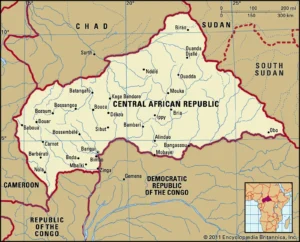
Central African Republic

Challenges

  • Mining Safety: Frequent accidents due to poor regulation and unsafe practices.
  • Governance Issues: Weak institutions and limited enforcement of mining laws.
  • Conflict & Instability: Ongoing civil strife affects resource management.
  • Economic Dependence: Heavy reliance on informal mining, with limited diversification.

Way Forward

  • Strengthen Regulation: Enforce safety standards and formalise mining operations.
  • International Support: Collaborate with UN and African Union for governance reforms.
  • Diversify Economy: Invest in agriculture and infrastructure to reduce dependence on mining.
  • Community Development: Ensure mining revenues benefit local populations through education and healthcare.

Conclusion

The mining collapse underscores the need for stronger regulation and governance in CAR, where resource wealth must translate into safety, stability, and sustainable development.

MUSHK BUDJI

TOPIC: (GS3) ECONOMY: THE HINDU

Kashmir’s indigenous rice variety Mushk Budji, granted a GI tag in July 2023, is facing falling prices as expansion into unsuitable areas has led to oversupply, worrying farmers.

Kashmir’s Aromatic Rice

  • Origin: Native shortgrain rice of Kashmir, traditionally grown at 5,000–7,000 ft altitude in the Himalayan highlands.
  • Cultural Use: Consumed during festivals and special occasions.
  • GI Tag: Received on 31 July 2023, protecting its unique identity.
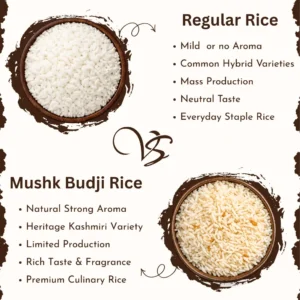
Mushk Budji

Features

  • Grain Appearance: Light ivory colour, slightly translucent.
  • Cooked Texture: Sticky, chewy, and aromatic.
  • Taste: Delicate nutty flavour.
  • Nutritional Value: Rich in carbohydrates, fibre, Bvitamins; low in fat, easily digestible.

Challenges

  • Unsuitable Expansion: Government push into nontraditional areas reduced quality and market value.
  • Price Crash: Oversupply has hurt farmer incomes despite GI protection.
  • Market Access: Limited branding and weak export channels restrict profitability.
  • Climate Sensitivity: Best suited for highaltitude conditions; unsuitable plains cultivation affects aroma and yield.

Conclusion

Preserving Mushk Budji’s heritage and quality through regionspecific cultivation and strong market support is vital to protect farmers and sustain Kashmir’s cultural identity.


Write a Review

Your email address will not be published. Required fields are marked *

Seraphinite AcceleratorOptimized by Seraphinite Accelerator
Turns on site high speed to be attractive for people and search engines.